How to Bowhunt a Doe Family Group Without Alerting the Area
Bowhunt a doe family group only when wind, entry, and exit keep your scent off every likely escape lane; if you cannot protect that alarm network, skip the setup. One slip can blow the bedding or feeding area and teach every doe to avoid it. This guide covers wind checks, stand placement, approach routes, movement control, shot timing, and clean exits.
Why a doe family group blows up fast
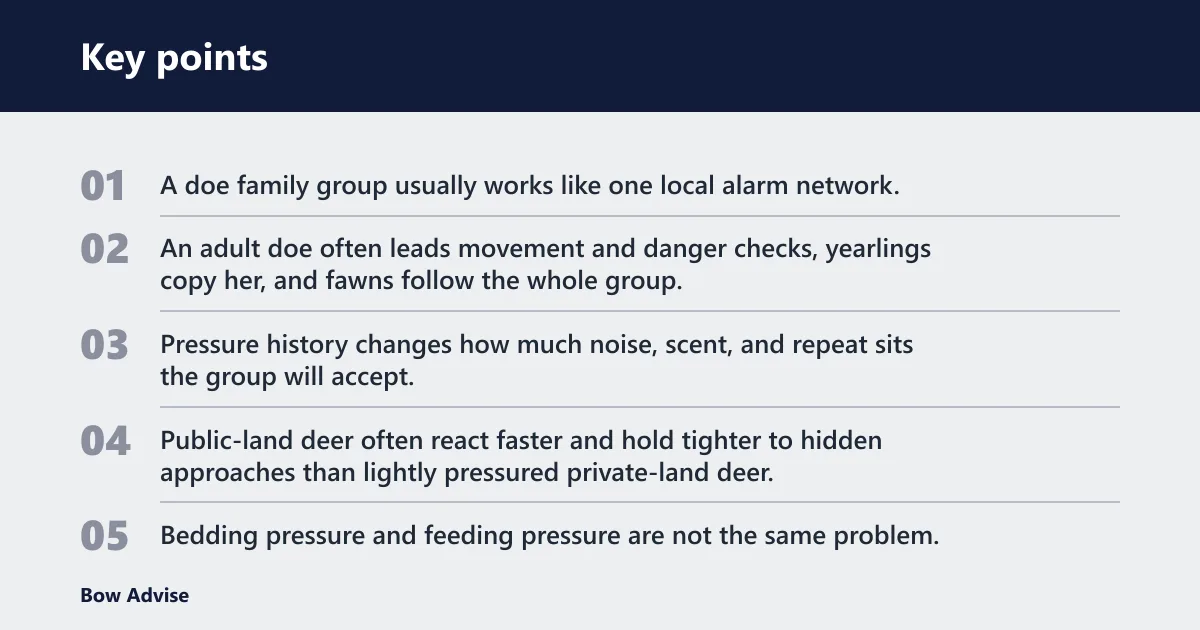


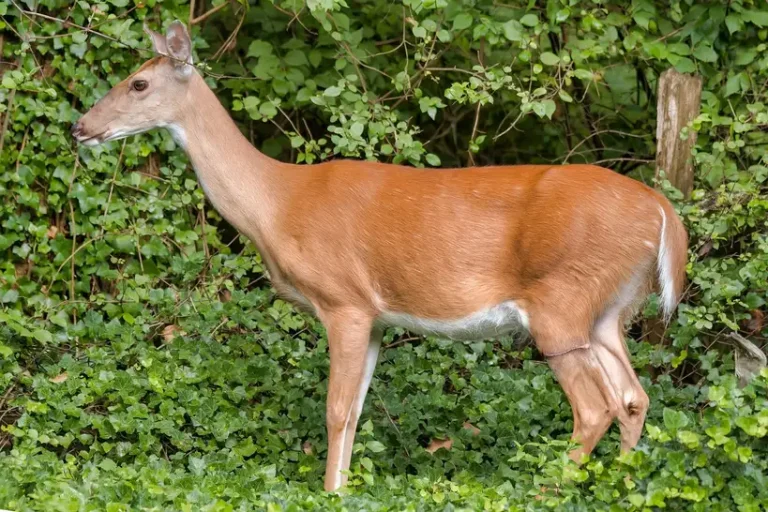
A doe family group usually works like one local alarm network. An adult doe often leads movement and danger checks, yearlings copy her, and fawns follow the whole group. If one deer smells danger, the others often leave with it, especially in pressured cover where they already expect trouble.
That is why this group is harder to treat like a single animal target. A clean shot chance can disappear if the first doe winds the setup, if a fawn catches a string of movement, or if the group circles and tests the air before committing.
How pressure history changes the group
Pressure history changes how much noise, scent, and repeat sits the group will accept. Missed shots, bumping deer from bedding cover, and noisy access can push them into darker cover, thicker edges, or spots with harder access. Public-land deer often react faster and hold tighter to hidden approaches than lightly pressured private-land deer.
Bedding pressure and feeding pressure are not the same problem. A bump near bedding usually has a faster and deeper effect because the group is exposed in its core security area. A minor disturbance near feeding ground may still burn the stand, but the recovery window can be shorter if the bedding side stays clean.
Wind and thermals decide the sit
Wind direction is the primary detection factor. Check it at the stand, on the approach, and again before the exit. Keep the scent line off likely bedding cover, feeding cover, and the travel route the group uses to leave the area.
Thermals matter just as much in hill country. In the morning, warming air often rises and can pull scent uphill. In the evening, cooling air sinks and can slide scent downhill into bedding cover, creek bottoms, or low points even when the flag says the wind looks acceptable.
Check scent at three points
- Check the stand site. Confirm the main wind will not push scent into the nearest bedding edge, trail, or feeding pocket. A crosswind or slight quartering wind usually gives more margin than a wind that blows straight at expected deer travel.
- Check the approach route. Walk the entry line with the same wind in mind. A route that keeps scent away from the bedding side matters more than a shorter route that crosses the group’s likely travel.
- Check the exit line. Plan where scent will go after dark or after a shot. A bad exit can educate deer that never saw the stand itself.
Common terrain scent problems
Side-hill setups can carry scent across the slope and into cover the hunter never meant to touch. Creek bottoms often swirl because air funnels, drops, and bends change flow. Ridges can create a clean wind on top while the air below moves in a different direction. A setup that looks good on open ground can fail once terrain reshapes the flow.
Suppose a stand sits 25 yards off a trail on the edge of a creek bottom. The wind at the treetop may feel steady, but the cooler air below can drift into the bottom and carry scent toward the bedding side. In that setup, a good wind reading at the truck means little if the low ground pulls scent the wrong way.
Where should you set the stand?
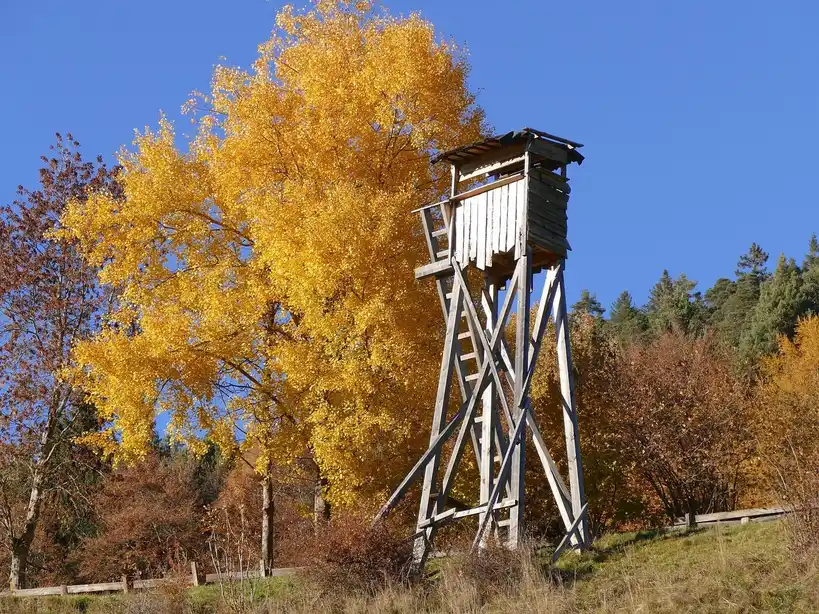
Set the stand or blind where cover hides your outline, the wind stays off the likely bedding side, and the group must use a predictable route to travel. For tree stands, a common working height is about 15 to 20 feet when the tree and shot angles allow it. That height helps break up your silhouette without forcing a bad shot angle.
Stay off the exact trail when possible. A common rule is to set stands about 15 to 25 yards off a trail in timber, then adjust for cover, wind, and shot lane. Near bedding edges, give the group more room when you can. Hitting the first edge of bedding too hard often pushes deer before legal light or on the first little sound.
When funnels beat the edge
Funnels, points, saddles, and pinch points can be better than sitting tight to the bedding edge because they concentrate movement without forcing a direct bump. That is useful when the family group uses one or two predictable lanes between beds, feeding cover, and thicker staging cover. The goal is to catch movement without sitting inside the security zone.
Use the funnel only if the access route is also clean. A perfect pinch point loses value if the walk-in crosses the same trail the deer use.
Best use of bedding and feeding edges
Hunt bedding edges with the lowest pressure possible and shorter sits if the sign is fresh. Hunt feeding edges when the deer have a wider buffer and the access route can stay hidden. The recovery window is usually longer after bedding pressure because the group may change where it sleeps, not just where it feeds.
How do you reach the setup quietly?
The best approach uses terrain, brush, or darkness to hide movement and keeps you off primary deer trails. Entry and exit routes are separate decisions from stand location. A great stand in the wrong access lane still burns the area.
Entry routes that keep deer calm
- Pick the quietest line. Use a ditch, ditch bank, ridge spine, or thick cover strip if it keeps you out of sight and scent off the main route. Avoid crossing the same trail the doe group uses whenever possible.
- Keep the line simple. Fewer turns and fewer contact points mean less noise. If a longer route stays hidden and quiet, it is usually the better choice.
- Stop before the last gap. Make final gear checks before about the last 50 to 100 yards if the cover allows it. That keeps metallic noise, clothing rub, and unnecessary movement away from the stand area.
Quiet gear and close-range control
Quiet clothing, organized gear, and reduced metallic noise matter most when deer are inside bow range. Broadhead and bow readiness should be complete before legal light or before the final approach, so there is no last-second metal click when the group is already close.
Keep release aid, rangefinder, and shooting glove or tab in the same place every time. The goal is not perfection; it is repeatable movement with no surprises.
A common first-timer mistake is climbing into a creaky stand with loose buckles and then trying to adjust after the first deer appears at 18 yards. That extra sound is often enough for the adult doe to stare, shift downwind, and take the rest of the group with her.
Stand and clothing noise at the shot
At close range, the shot process matters more than the setup brochure. Draw only when the deer’s head is turned, the group is relaxed, or a body position hides your movement. If the setup needs a shot from a tight lane, rehearse the motion until clothing, strap ends, and metal do not snag.
Doe group pressure checklist
Use this checklist to judge setup risk before the hunt. The point is not a score. One bad wind or access problem can still make the sit a no-go even if the other items look fine.
| Setup factor | Risk level | Recommended adjustment |
|---|---|---|
| Downwind bedding edge | High | Move to crosswind or higher on the edge; keep scent off the bed and shorten the sit if deer show early caution. |
| Swirling morning thermals | High | Hunt higher ground or a more stable ridge line; avoid low pockets and creek bends until the thermal cycle settles. |
| Noisy entry trail | High | Change access, slow down, and remove contact points that brush gear or boots before the final approach. |
| Open-field access | Medium | Cross at first or last light only if hidden by terrain; otherwise use a ditch, hedgerow, or timber line. |
| Creaky stand | High | Fix the noise before hunting; if it cannot be silenced, choose a ground blind or a different tree. |
| Buck/doe mix | Medium | Keep the setup focused on the doe group’s travel lane and avoid extra disturbance that can pull the whole group tight. |
| Public-land pressure | High | Use a less obvious access route, reduce sit frequency, and avoid repeating the same time and place on back-to-back hunts. |
| First-encounter sit | Low to medium | Keep movement minimal and avoid testing the spot with extra calls or extra repositioning. |
| Bumped deer | High | Leave the area alone for a longer stretch and shift to a different access lane or a different part of the property. |
| Post-bump recovery plan | High | Do not return quickly to the same access. Wait for sign to normalize or hunt a new angle that does not intersect the alert route. |
What should you do when deer appear?
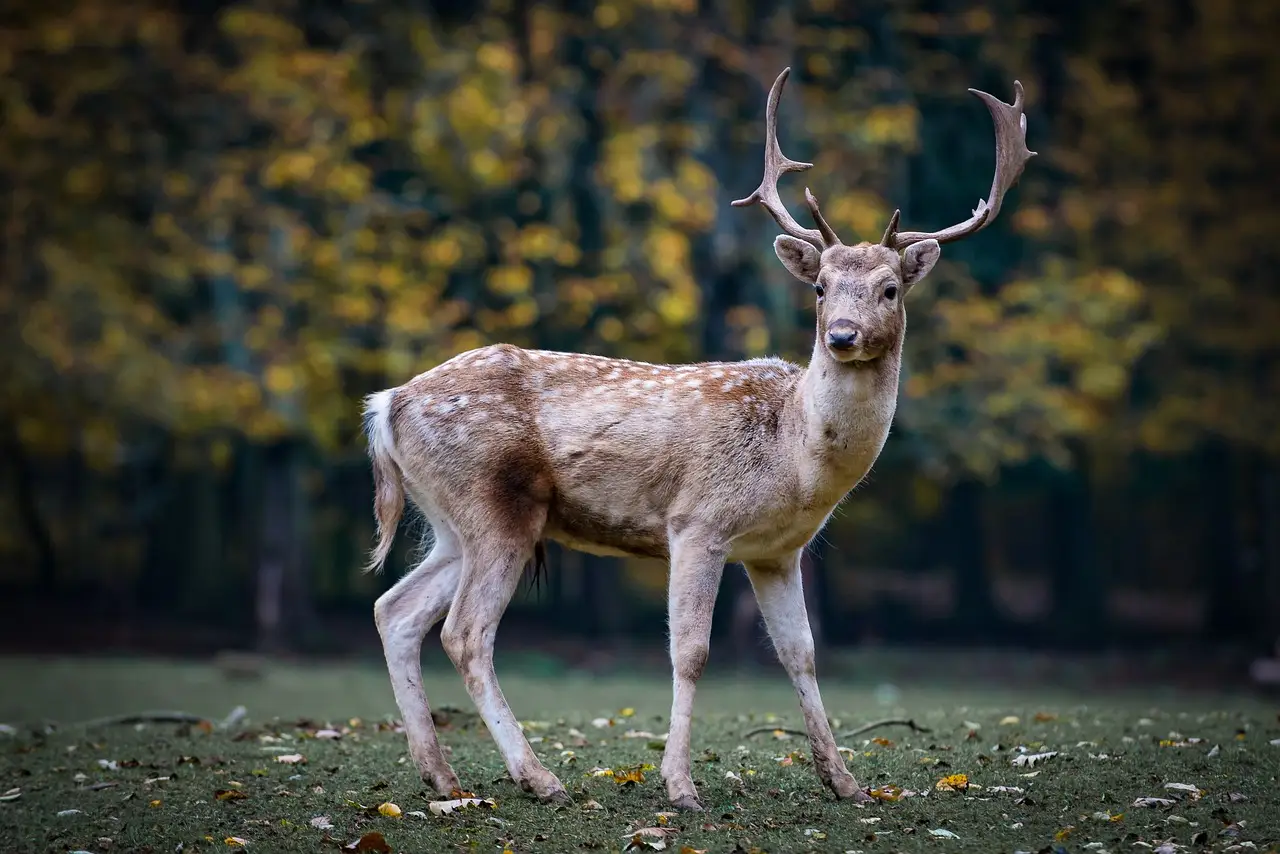
When the group appears, the first job is to avoid becoming the threat that holds them up. Hold still, keep your outline broken, and let the group settle. If a shot is coming, take only the deer that gives a clean lane without forcing the others to blow out ahead of the shot.
Do not overcall at a doe group. Blind calling can add curiosity during rut-adjacent movement, but shot-stopping is different. If a deer is already committed to leaving, a soft stop can work better than repeated calling, which often tightens the group and makes them circle downwind.
If the group stalls or circles
If the group stalls, stay motionless and let the lead doe decide whether the setup is safe. If one or two deer begin circling downwind, the setup is at high risk because the whole group may take the cue. A soft stop may pause a single deer, but it should not become a second chance to educate the herd.
- Freeze at the first stall. Do not shift feet, reach for gear, or turn your head quickly. The adult doe often decides in the next few seconds whether the group stays or leaves.
- Take the cleanest shot first. If the lane opens and the deer is broadside, shoot the deer that gives the shot now. Waiting for a better deer can let the group circle and wind the setup.
- Abort the shot when needed. If the group begins to angle downwind, let them go. A bad shot sequence can burn the entire area for days or longer.
Say your setup is 20 yards off a trail on the edge of a staging area, and the lead doe stops at 24 yards while two yearlings feed behind her. If she starts to angle toward the wind and the line of your scent, the better call is usually to let them walk. Forcing a shot there risks a blow that can carry to the rest of the cover.
Should you shoot the lead doe?
Shoot the lead doe only if the angle is clean, the lane is open, and the shot will not collapse the rest of the group into chaos. In some setups, taking the lead doe is the best move because she is about to alert the whole group anyway. In others, a safer broadside deer farther back is the better choice.
The real question is not rank. It is whether the shot can happen without a noisy draw, a shaky anchor, or a line that forces the group to blow toward bedding cover.
How do you recover after a bump?
After a bump, recovery depends on where the disturbance happened. A bump near bedding cover usually demands a longer break or a new setup altogether. A bump near feeding cover may settle down faster, but only if the access route and wind problem are corrected.
When to wait and when to leave
If deer blow once but do not fully stampede, the area is not automatically dead. The next choice depends on what caused the alert. If it was a small sound far from bedding, a short wait can sometimes work. If scent reached bedding cover, or if the group clearly marked the access route, abandon that setup for the day.
- Identify the trigger. Decide whether the alert came from scent, sight, or sound. Scent into bedding cover is the worst-case problem because it teaches the whole group where danger came from.
- Separate bedding from feeding. A feeding-area bump may allow a later sit from a different angle. A bedding-area bump often needs more time and a cleaner entry.
- Change the pressure point. If returning later, use a new access route, different wind, or a different edge. Do not repeat the same mistake and expect a different result.
How pressure history changes the next sit
On public land, a bumped doe group may shift to less obvious cover faster and may return only after several quiet days. On private land, deer may stay closer if the pressure was minor and the access lane stays quiet. In both cases, the next sit should be shorter and more disciplined than the first.
Do not overhunt the same spot after a warning event. One clean entry matters more than two rushed attempts.
Frequently asked questions
How do you bowhunt a doe family group without blowing the whole area out?
Keep your scent off the bedding, feeding, and exit lanes at the same time. Pick a stand that gives a crosswind or slight quartering wind, use a hidden entry, and leave on a route that does not cross the group’s main trail. If one piece fails, skip the setup.
Should you avoid shooting the lead doe in a family group?
Not automatically. The lead doe is the right target only when the lane is clean and the shot will not send the rest of the group circling downwind. If her body angle or alert posture is already changing, a lower-risk deer may be the better option, or no shot at all.
What is the best way to approach feeding areas without alerting deer?
Use terrain, cover, or darkness to stay hidden and avoid the main travel trail. The best access is the one that keeps scent out of the feeding pocket and noise off the deer path. In many cases, a longer route that stays concealed beats a short route that crosses open ground.
How much movement can a doe family tolerate before they leave?
Very little once they are close and alert. A relaxed group may ignore small motion at distance, but close-range movement, stand noise, or repeated adjustments can trigger the adult doe to look, shift, and lead the others out. The closer they are, the less movement they will tolerate.
Should you hunt with the wind in front of a doe group or from the side?
From the side is usually safer. A wind that blows scent toward likely bedding or feeding cover is a bad choice. A crosswind or slight quartering wind keeps the scent lane away from the group’s travel line and gives more room for the deer to pass without winding the setup.
What time of day is safest to hunt a doe family group?
There is no universal safe time. Morning thermals can rise and pull scent uphill, while evening thermals can sink into low cover. The safest time is the period when wind and thermals both keep scent away from the group’s likely route, which may be morning, evening, or neither on a given day.