How to Compare Cheap vs Premium Peep Sights Before You Buy
Compare cheap and premium peep sights by checking four points: tuning stability, visibility, maintenance, and total ownership cost. If the peep moves, dulls your sight picture, or wears out fast, the higher-priced model is usually the better buy. Missed shots and repeat tuning erase a bargain quickly.
This guide is part of our Peep sights for archery: complete guide series.
| Decision factor | How to Compare Cheap | Premium Peep Sights Before You Buy | Winner |
|---|---|---|---|
| Up-front cost | Lower price, usually the easiest entry point | Higher price, often bundled with better machining and options | How to Compare Cheap |
| Alignment stability | More likely to drift if the housing, serving fit, or tubing is basic | Usually holds center better, especially on tubeless designs with good serving fit | Premium Peep Sights Before You Buy |
| Low-light visibility | Can work well, but often with simpler aperture and housing choices | More likely to offer cleaner sight pictures, better aperture options, and less glare | Premium Peep Sights Before You Buy |
| Maintenance burden | May need more checks, tubing changes, and replacement after wear | Often simpler to keep in tune once fitted correctly | Premium Peep Sights Before You Buy |
| Total ownership cost | Cheaper at checkout, but repeat tuning or replacement can add up | Higher starting cost, but often lower follow-up cost for active hunters | Premium Peep Sights Before You Buy |
Understanding how peep sights work and what to check first
Start by checking how well each peep holds alignment, how much tuning it needs, and how clear the sight picture looks at full draw. Cheap models save money now. Premium options often cut twist risk, re-tuning, and serving wear later.
What a peep sight actually changes
A peep sight lines up the eye with the front sight or scope housing, and that affects how repeatable your aim is. The real question is simple: does it stay centered, give enough light, and fit the string without constant correction?
What you’ll need before you compare peeps
- Bow draw length and anchor point reference
- String and serving diameter
- Current peep aperture size
- Bow press or shop access for installation
- Hex keys or the tools your sight and rest already use
- A note on hunting light conditions or target distance
Bow specs to check first
Check draw length, string serving size, and whether your setup already shows peep rotation at full draw. A peep that fits one serving well can bind or slide on another, so compatibility usually matters before material, color, or brand.
How do cheap and premium peep sights differ?
Price is only one part of the story. Material, housing shape, tube or tubeless design, and aperture size all change how the sight feels at anchor, how often it needs adjustment, and how it works in dim woods or on a bright target line.
Material: aluminum, resin, or rubber
Aluminum peep sights usually give the best mix of stiffness and durability for the weight, which helps the aperture stay true. Resin is lighter and cheaper, but it can wear faster. Rubber is quiet and simple, though it is usually the least durable and can deform over time.
Housing shape: round vs angular
Round housings usually feel more natural when aligning the eye at full draw, while angular housings can make string alignment easier to read in a hurry. Comfort matters because a peep that feels awkward can push the head position off, which leads to drift.
Tube peep vs tubeless peep
Tube peeps are commonly set up with rubber tubing to pull the peep into alignment. That can make setup straightforward, but the tubing adds maintenance, wear points, and twist risk. Tubeless peeps are cleaner and simpler, yet their performance depends more on string setup, serving quality, and proper timing.
Suppose a beginner bowhunter is choosing between a simple tube peep and a tubeless model for a 28-inch draw length hunting bow. If the bow already has a stable string and the archer wants less maintenance, the tubeless option usually makes more sense; if the setup is still changing, the tube peep may be easier to live with temporarily.
Peep sight comparison matrix
This matrix separates cheap from premium by practical use, not branding. A buyer should care about how often the peep needs attention, whether it helps in low light, and whether the string system can keep it centered without extra work.
| Price tier | Material | Tube/tubeless | Low-light brightness | Twist risk | Tuning difficulty | Durability | Best-use case | Score |
|---|---|---|---|---|---|---|---|---|
| Budget | Resin or rubber | Usually tube | Moderate to low | High | Moderate | 2/5 | Backup bows, tight budgets, casual range use | 2/5 |
| Mid-range | Aluminum or better resin | Tube or tubeless | Moderate | Moderate | Moderate | 3/5 | General hunting and mixed practice | 3/5 |
| Premium | Machined aluminum | Usually tubeless | High | Low to moderate | Low to moderate | 5/5 | Low-light hunting, frequent use, and tuned setups | 5/5 |
Why the budget row scores lower
Budget peeps can be perfectly usable, especially for short-term setups or backup bows. The tradeoff is clear: cheaper materials and tube-based designs often need more attention, and that costs time as well as money.
Why the premium row scores higher
Premium peep sights usually win on consistency because the housing, material, and design are built to hold alignment and give a cleaner sight picture. That does not fix poor shooting by itself, but it usually cuts down the problems you have to sort out later.
How should I compare aperture size and low-light visibility?
Aperture size changes how bright the sight picture looks and how much precision the eye can hold at anchor. A larger opening passes more light and is easier to find in low light, while a smaller aperture can look cleaner for precision but may feel dim at dawn or dusk.
Diameter options and sight picture clarity
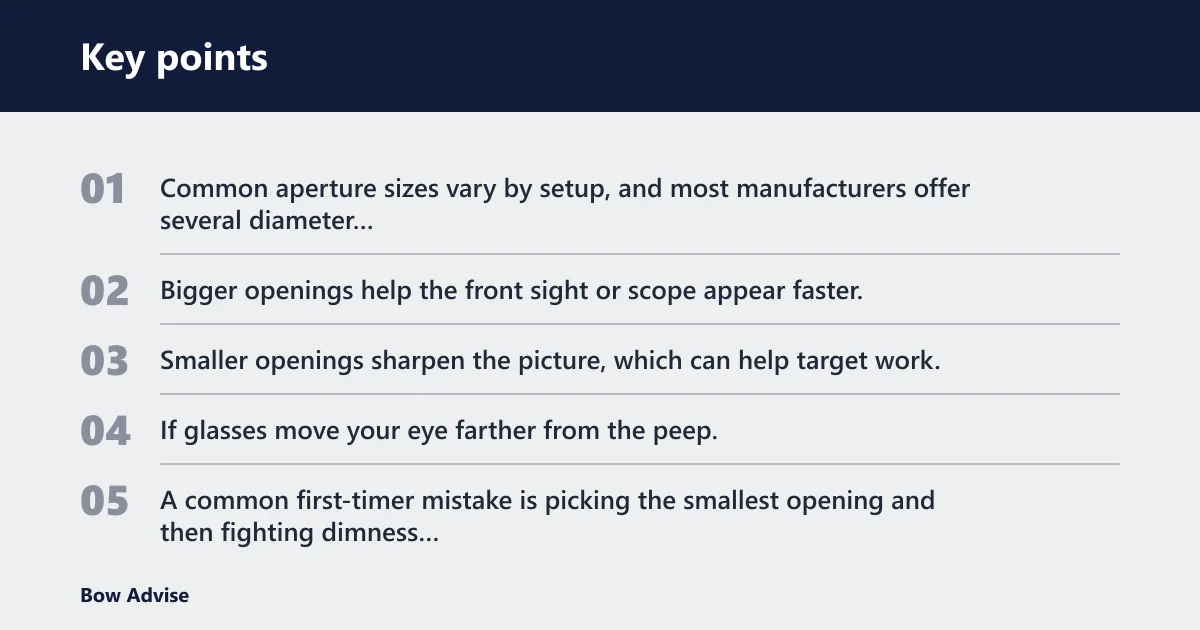
Common aperture sizes vary by setup, and most manufacturers offer several diameter choices. Bigger openings help the front sight or scope appear faster, but they can reduce edge definition. Smaller openings sharpen the picture, which can help target work, but they may make a hunting shot harder in low light.
What to check if you wear glasses or use a small aperture
If glasses move your eye farther from the peep, or if a small aperture makes the front sight disappear, move up one size before blaming the bow. A common first-timer mistake is picking the smallest opening and then fighting dimness at dawn, even though a slightly larger peep would have kept the sight picture usable.
Picture a hunter who switches from a bright field range to about 20 minutes before legal light ends in the woods. A 3/16-inch aperture may look fine in daylight, but a larger opening can help keep the sight usable when the target area turns gray and the front pin starts to fade.
Can a premium peep sight solve twist and alignment issues?
It can cut them down, but it cannot fix a poorly set up bow. Draw length, anchor consistency, string serving quality, and peep timing all affect whether the aperture centers at full draw. Premium parts help most when the rest of the system is already close.
Draw length and anchor consistency
If draw length is too long or the anchor point changes from shot to shot, the peep can appear rotated even when the hardware is fine. Face contact, head position, and release hand position all change where the eye lands relative to the string.
String serving compatibility and wear points
Serving diameter must match the peep body closely enough to hold it without chewing the serving or letting the sight slide. A bad fit creates wear points and can let the peep rotate more under load, especially on bows that are drawn hard and held at anchor often.
Rotation timing and full-draw centering
Proper timing means the peep turns into alignment as the bow reaches full draw, not after the anchor is already changing. If the peep stops short or rolls past center, the fix is usually in twist count, serving fit, or setup, not in wishful thinking about a better brand.
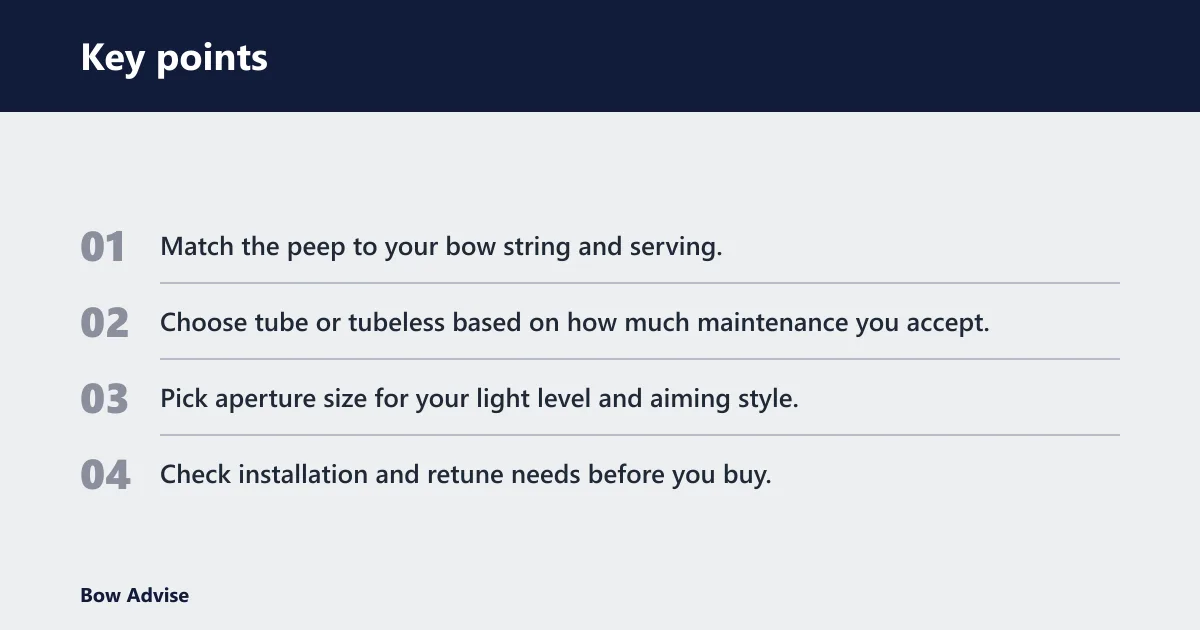
- Match the peep to your bow string and serving.
- Choose tube or tubeless based on how much maintenance you accept.
- Pick aperture size for your light level and aiming style.
- Check installation and retune needs before you buy.
Installation and tuning checks
Ask how the peep is installed, what tools are needed, and whether the setup will require a bow press. A simple replacement path matters because a peep that is hard to swap can become expensive the first time the string serving wears or the aperture size needs to change.
Common mistakes when choosing a peep sight
The most common errors are buying by price alone, ignoring string compatibility, and choosing an aperture that does not match hunting light. Those mistakes do not always show up on the first shot, which is why they often turn into frustration later at full draw.
Buying by brand or price alone
Brand reputation does not tell you whether the peep fits your serving, stays centered, or gives the right brightness. A low-cost model can be fine on the right bow, and an expensive one can be the wrong shape or aperture for the job.
Ignoring maintenance and replacement burden
Tube peeps need tubing checks and can twist more easily. Tubeless peeps usually need less ongoing attention, but they still depend on correct string setup. Choosing one without thinking about later maintenance often turns the “cheaper” option into a repeat chore.
Choose the right peep for your setup
Premium Peep Sights Before You Buy is the better pick for hunters who need stable alignment, better low-light visibility, and less follow-up tuning. How to Compare Cheap is the better pick when the bow is mainly for practice, the budget is tight, and occasional maintenance is acceptable.
Choose How to Compare Cheap if…
Choose How to Compare Cheap if the bow is a backup, the string setup is temporary, or the peep will see mostly daylight target use. A cheaper peep makes sense when replacement cost matters more than long-term convenience.
Choose Premium peep Sights Before you Buy if…
Choose Premium Peep Sights Before You Buy if you hunt at dawn or dusk, want fewer alignment problems, or prefer a cleaner tubeless setup. That choice also makes more sense if re-tuning time costs more than the price difference at checkout.
Prevention: once the peep is installed, mark the serving or note the twist count so any later movement can be checked against the original setup.
Frequently asked questions
How do I compare cheap vs premium peep sights before buying?
Compare them by fit, alignment stability, aperture size, and upkeep. If the cheaper option needs more re-tuning or twists more often, the premium option can be the better long-term buy even with a higher starting price.
What makes a premium peep sight better than a cheap one?
Better machining, steadier alignment, and cleaner aperture options are the main upgrades. Premium models are not automatically better for every bow, but they usually reduce twist risk, glare, and repeated servicing when matched to a proper string setup.
Do expensive peep sights improve accuracy or just convenience?
They usually improve consistency and visibility more than raw accuracy. A cleaner sight picture and steadier alignment can support better shot execution, but the peep alone will not fix anchor problems, poor release form, or an incorrect draw length.
Should I choose an aluminum, resin, or rubber peep sight?
Choose aluminum for the best balance of durability and shape retention, resin for a lighter budget option, and rubber only if quietness or simplicity matters more than long-term stiffness. The right choice depends on how often the bow is used and in what light.
Will a tubeless peep sight be more reliable than a tube peep sight?
Usually yes, if the string is already well tuned and the serving fit is correct. Tube peeps add alignment help but also add tubing wear and twist risk, while tubeless peeps depend more on the bow being set up cleanly from the start.
What peep sight features matter most for low-light hunting?
A larger aperture, a clean housing shape, and a design that stays centered at full draw matter most. If the sight picture turns too dark at dusk, move up one aperture size and recheck how easily the front sight appears through it.
How do I know if a peep sight will twist or stay aligned?
Check whether the serving diameter matches the peep body, whether the bow already shows rotation at full draw, and whether the peep centers without forcing head position. If alignment changes shot to shot, the issue is often setup, not just the part.
What should I check if I wear glasses or use a small peep aperture?
Confirm that the eye still sees the full housing without crowding and that the front sight stays bright enough through the opening. If the picture feels dim or hard to center, go one size larger before changing anything else on the bow.