Hamskea Peep Sight Review: Raptor for Hunting Bows
I recommend this peep for hunters who want a cleaner low-light sight picture and can work with a smaller opening that benefits from a steady anchor. In my hands, that tradeoff fits a hunting bow, especially when glare ruins the peep picture more than plain darkness.
Hamskea Raptor peep sight review: my verdict up front


This peep can be a good pick for low-light hunting if it fits your setup. I like it most on tuned bows with a consistent anchor, especially for early or late hunts where glare can be an issue. It can be less forgiving when you need brightness quickly.
Best fit for low-light whitetail hunters
That is where it shines most. The baffled interior and black Teflon finish calm bright edges and reflections, which matters when the woods are still gray and your pin housing is already fighting the first light of day. It feels like a hunting peep built for field use, not for a bench session.
Where the 3/16 aperture feels limiting
The 3/16-inch opening can feel tight when light is poor and your pin gap is already busy. I notice that more with glasses, with a longer distance to the target, and with bows that do not settle into anchor quickly. The peep can start to feel like the hole is doing its job too well.
Bottom line: buy or skip?
Buy it if you hunt early, hunt late, and want a durable metal peep that cuts glare without much fuss. Skip it if you want the brightest possible view at legal light, or if your bow setup is still changing and you need a peep that gives you more room while you dial in draw length and serving position.
According to Hamskea Raptor Peep Review – The Professional Gunfighter — The peep includes dual string groove angles of 35 and 40 degrees.
What the Hamskea Raptor peep includes and how it is built
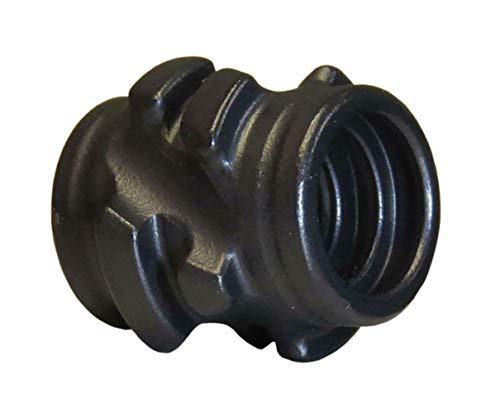
The Raptor comes as a 3/16-inch aperture peep with all-metal construction, a black Teflon finish, and dual 35 and 40 degree string groove options. Hamskea also builds it with an anti-glare baffled interior, which is the feature that matters most when a bright sky is washing out your sight picture on a hunting bow.
3/16-inch aperture and all-metal body
The 3/16 aperture sits at the center of the design. Hamskea frames it as a balance of light gathering and target clarity, and that is a fair way to think about it.
Black Teflon finish and internal baffling
The black Teflon finish may help with friction and weather resistance, which can be useful on a hunting part that gets handled and brushed against gear. The baffled interior seems to matter more. It cuts stray light bouncing inside the peep, which is what often makes a standard peep look washed out at first and last light.
35 and 40 degree groove options
Those groove angles are not fluff. They give the Raptor enough setup range to match different string angles and draw lengths on compound bows. In plain terms, the right groove helps the peep rotate into view cleanly at full draw, while the wrong one can leave you twisting your head or fighting an off-axis picture.
Is the 3/16-inch aperture the right size for hunting?
For many hunters, yes, but not all. The 3/16-inch aperture gives a good mix of target detail and light gathering, which is why it works for dawn and dusk hunting better than smaller, target-style openings. If you need maximum brightness or wear glasses that already narrow your view, it can feel tight faster than expected.
How it behaves at dawn and dusk
At legal light, this is where the Raptor earns its keep. I want a peep that lets me see my pin without flooding the inside with glare, and the 3/16 opening does that well when the bow is properly tuned. When the woods are just starting to gray out, it still gives me enough definition to settle in.
When a smaller opening slows target pickup
The tradeoff shows up when your brain needs speed. A tighter aperture can slow how fast you pick up the pin gap and the target, especially if the deer is moving or the shot lane opens suddenly. I have seen that happen more often with archers who already shoot a long bow or hold a head position that shifts from shot to shot.
What glasses wearers and low-light hunters should expect
If you wear glasses, expect a little more sensitivity to anchor height and peep centering. Lens position can make the opening feel tighter, and that matters in low light.
What are the 35 and 40 degree string grooves for?
The 35 and 40 degree grooves are there to match the peep to your bow’s string angle and draw length. They help the peep sit square at full draw instead of rolling off to one side. If the groove angle fits, the sight picture comes up naturally. If it misses, you feel it immediately.
How groove angle tracks with draw length and string angle
A shorter draw or a steeper string angle can push you toward one groove choice, while a longer draw may want the other. I use the groove choice as a first fit check, not a final answer. The goal is simple: the peep should float into place without you forcing your head position to chase it.
Signs the peep matches your setup
You are close when the peep centers at full draw with little head movement and the hole looks round instead of oval. The pin should sit in the middle without you hunting for it. If that happens repeatably, the groove angle is probably doing its job and the setup is working with you.
When the wrong groove choice shows up at full draw
You will notice it fast. The peep may sit high or low, roll out of line, or force you to turn your head to find the opening. That is where draw length and serving position matter more than people think. A peep can be mechanically good and still be wrong for the bow in front of you.
Does the Raptor actually cut glare better than a standard peep?
Yes, it usually does. The anti-glare baffled interior is the part that changes the sight picture most, and the black Teflon finish helps keep reflected light down. It is not magic, though. If you need every bit of brightness, glare control can come with a slight dimming of the view.
How the baffled interior changes the sight picture
Instead of seeing bright flare inside the peep, you get a darker and cleaner tunnel. That helps the pin housing stand out more evenly. On a standard peep, I often notice a bright ring or a washed look when the sun is at the wrong angle. The Raptor calms that down.
Where the Teflon finish matters in the field
The finish matters most when light hits the outside edge and when the peep gets handled during setup. It helps the surface stay slick against the string serving and cuts down on wear points. I would not call it flashy, but I do trust a finish that stays quiet and does not grab attention in bright woods.
Glare control versus pure brightness
This is the trade. Better glare control can mean a slightly darker picture, and that is the failure mode people miss. If your pins are already hard to see, the Raptor may feel too restrained. If glare is the main problem, it is often a better answer than a plain metal peep with an open interior.
How easy is it to install on a compound bow?
Installation is fairly straightforward, but it is not mindless. The Raptor can be easy to set up if your serving is clean, your tubing choice is right, and your bow’s string angle matches the groove you pick. The review note about easy installation is fair, but the details still matter.
Tubing, serving, and alignment basics
Compound bow peep tubing can help with alignment during install, and some archers still want that extra visual aid.The key is to seat the peep in the serving without nicking the strands or leaving it off-center at brace height.
Bowstring material and serving sensitivity
Serving interaction matters more than buyers expect. Some bowstring materials and servings tolerate a peep cleanly, while others show separation or movement if the serving is already worn. If the string is old, fuzzy, or under tension from a poor tune, a metal peep can expose those problems fast.
What can go wrong during tuning
The usual issues are rotation, head position, and nock travel hiding a bad fit. If the peep does not settle square, people blame the peep when the real problem is serving location or draw length. I have also seen archer form change after a peep swap, which is why I always recheck anchor before calling it done.
Who should buy the Hamskea Raptor, and who should skip it?
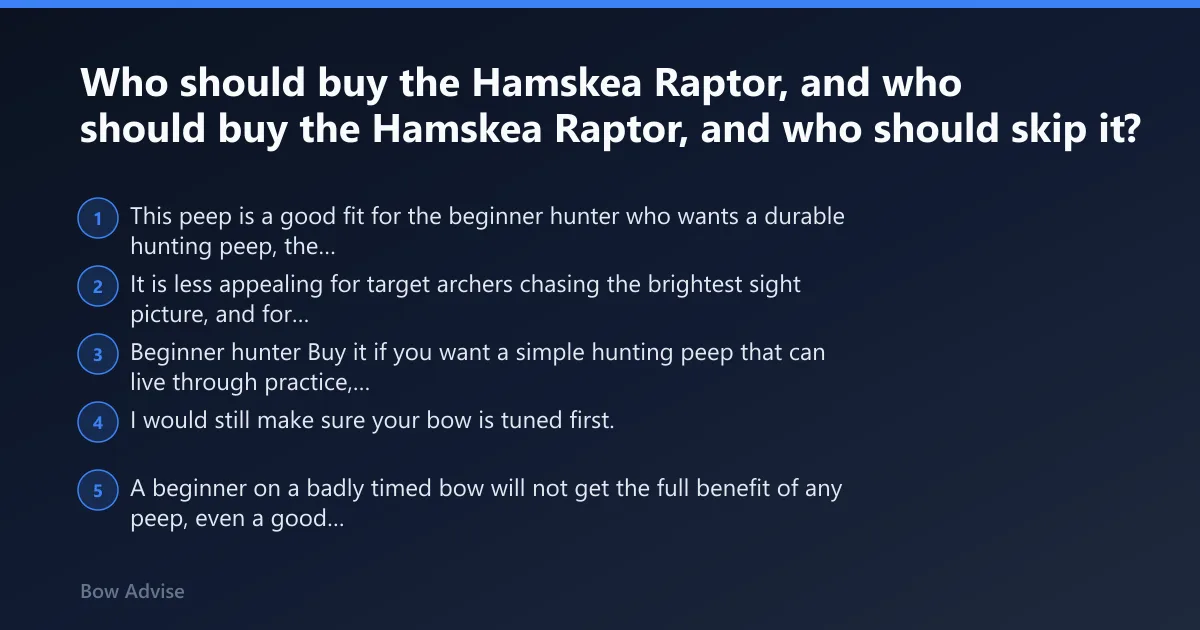
This peep is a good fit for the beginner hunter who wants a durable hunting peep, the budget buyer who still wants metal construction, and the low-light hunter who hates glare. It is less appealing for target archers chasing the brightest sight picture, and for anyone whose setup is still unstable.
Beginner hunter
Buy it if you want a simple hunting peep that can live through practice, rain, and a season of carry. I would still make sure your bow is tuned first. A beginner on a badly timed bow will not get the full benefit of any peep, even a good one.
Budget buyer
At $19.99, it lands in the low-cost range, and that makes it easier to recommend than some higher-priced options. If you are comparing it to Specialty Archery or G5 peeps on price alone, the Raptor looks more attractive. The question is whether you value its glare control more than a wider, brighter aperture.
Low-light hunter
This is the strongest fit. If your shots happen at first and last light, the anti-glare interior and 3/16 opening make sense together. I would still ask how much brightness you need to read your pin gap. If you rely on a very bright sight picture, the Raptor can feel a bit more closed-in than you want.
Tinkerer comparing peep options
If you like to swap grooves, test tubing, and tune by feel, the Raptor gives you enough variables to work with. That is good for a person who pays attention to string angle and anchor. It is not the easiest choice for a set-it-and-forget-it archer who hates revisiting setup details.
Decision checklist: match the Raptor to your bow setup
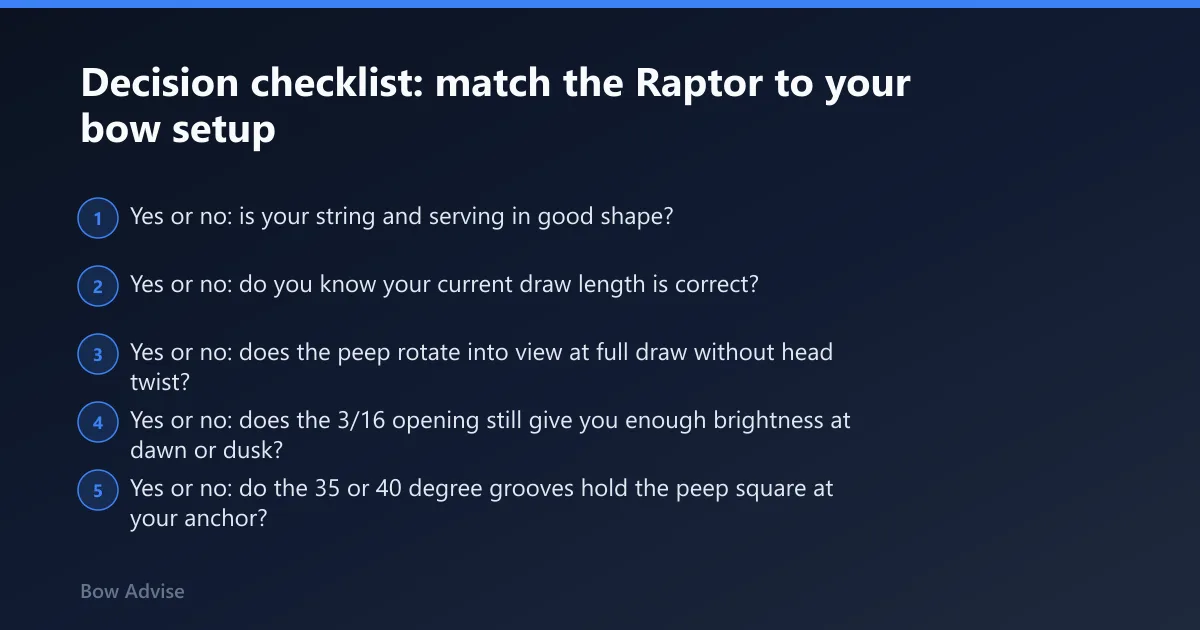
Use this as a one-page fit check before you buy or install. The Raptor works best when the hunting conditions, draw length, string angle, and eyesight all point in the same direction. If two or more answers are “no,” I would consider a different peep or a different aperture size.
| Question | Yes means the Raptor fits | No means reconsider |
|---|---|---|
| Do you hunt dawn/dusk often? | Glare control matters more than maximum brightness. | You may prefer a brighter, more open peep. |
| Is your anchor point repeatable? | The 3/16 aperture will feel natural and quick. | A tighter peep may punish inconsistent head position. |
| Do you have a stable draw length? | The 35 or 40 degree groove can be matched properly. | Wait until draw length and serving location settle. |
| Do you wear glasses or need a very bright pin view? | Try it, but test it at legal light first. | A larger aperture may be easier to live with. |
| Do you want a metal peep with low maintenance? | The all-metal body and Teflon finish make sense. | A simpler peep may be enough for your use. |
Simple yes or no install-and-tune flow
- Yes or no: is your string and serving in good shape?
- Yes or no: do you know your current draw length is correct?
- Yes or no: does the peep rotate into view at full draw without head twist?
- Yes or no: does the 3/16 opening still give you enough brightness at dawn or dusk?
- Yes or no: do the 35 or 40 degree grooves hold the peep square at your anchor?
- Yes or no: does the sight picture stay clean after a few practice ends?
Pros and cons versus Specialty Archery and G5 peeps
The Raptor wins when field durability and glare control matter more than having the brightest possible opening. Specialty Archery and G5 peeps still make sense for some archers, especially if you want more aperture options or a different feel at full draw. I view the Raptor as the hunting-first choice in that group.
Pros
- All-metal construction feels durable for hunting use.
- Black Teflon finish helps with friction and weather resistance.
- Anti-glare baffled interior is useful in bright dawn and dusk conditions.
- 3/16 aperture is a practical hunting size for many compound bows.
- 35 and 40 degree grooves add setup flexibility.
- The $19.99 price makes it easier to try without much risk.
Cons
- The 3/16 opening can feel tight when light is very low.
- Glare control can come at the cost of a less bright view.
- Setup is sensitive to draw length, serving, and string angle.
- Glasses wearers may find the sight picture more demanding.
- Target-focused archers may prefer a different peep style.
How I stack it up against Specialty Archery and G5
If I want a lower-cost hunting peep that still feels serious, the Raptor belongs in the conversation. Specialty Archery and G5 peeps often make sense when I want a different aperture choice or a more target-leaning setup. For a hunter who values glare control and a metal body, the Raptor is easier to justify.
Frequently asked questions
Is the Hamskea Raptor peep good for low-light hunting?
Yes, if your priority is a cleaner sight picture rather than maximum brightness. The baffled interior helps reduce glare, and the 3/16 aperture gives enough light for many hunting bows. If you need the brightest possible view at dawn, though, it can feel a little tight.
What aperture size does the Hamskea Raptor peep come in?
The Raptor comes in a 3/16-inch aperture size. That size is aimed at balancing light gathering and target clarity. For a hunting peep, that is a sensible middle ground, but it is not as forgiving as a larger opening when light gets thin.
Does the Hamskea Raptor peep reduce glare better than a standard peep?
The internal baffling helps keep stray light from bouncing around inside the peep, and the black Teflon finish helps reduce reflections on the outside. Compared with a basic open peep, the sight picture usually looks calmer and less washed out.
Is the Hamskea Raptor peep easy to install on a compound bow?
It is reasonably easy if your bow is already tuned and your serving is in good shape. The groove choice, tubing, and alignment still matter. If the peep does not settle square at full draw, the problem is often the setup, not the peep itself.
Will a metal peep sight affect bow speed or string wear?
A metal peep can add a little weight on the string, but I would treat speed loss as minor compared with the bigger issue: string and serving interaction. The Teflon finish helps, but old serving or poor install technique can still lead to wear or separation.
How does the Hamskea Raptor compare to Specialty Archery or G5 peeps?
The Raptor is the hunting-first option if you want a low-cost metal peep with glare control and 35 or 40 degree groove choices. Specialty Archery and G5 peeps may give you more setup paths or a different sight picture. I would pick based on bow fit, not brand name alone.