How to Fix Arrow Direction Drift From Brace Height
If drift starts right after a brace-height change, put the bow back within the manufacturer’s brace-height range and test in careful steps. If the drift changes with brace height, the problem is setup-related, not pure form. Missing that check can send you after the wrong fix and hide nock-travel or string-tension issues. This guide shows how to prove whether brace height is the cause before you retune anything.
Brace height and arrow drift
What brace height is and why it matters
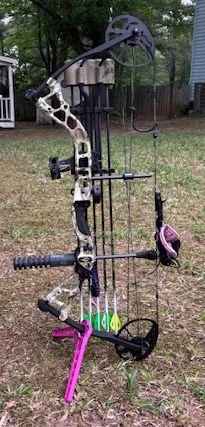
Brace height is the distance from the bow’s grip area to the string at rest; on a recurve, it is typically measured from the pivot point or deepest part of the grip to the string. The correct range varies by bow type and model, so the owner’s manual matters more than a generic number. Small changes can alter arrow speed, forgiveness, and nock travel, so a drift complaint should start with measurement, not adjustment.
Bowstring twist changes brace height. That makes it a useful fine-tuning tool on bows where the manufacturer allows it, but it can also change string behavior enough to alter timing and arrow direction. On a recurve, the change can be obvious in launch feel. On a compound, brace height is usually a factory geometry spec, and any string or cable work should follow the maker’s procedures and appropriate tools because improper changes can be unsafe.
When drift points to brace height and when it does not
Brace-height-driven drift usually appears after a setup change, a new string, or a string twist adjustment. Drift that shifts with full-draw anchor, peep alignment, rest position, or bow cant is usually not a brace-height problem by itself. That distinction matters because moving the wrong part first can make the bow harder to diagnose.
Recurve versus compound differences
Recurve bows can respond to brace-height changes with clear changes in forgiveness, noise, and left-right impact. That does not make brace height the only cause of drift, but it does make string length and twist more relevant during diagnosis. For compound bows, left-right drift is often tied to rest position, cam timing, arrow setup, or form.
For compound bows, brace height is usually treated as a design dimension rather than a primary left-right correction. If the arrow starts drifting after a brace-height-related change, the first check is still full-draw alignment, then rest, nocking point, anchor, and cam timing before any assumption about brace height itself. Compound string or cable changes should be made only with the proper tools and procedures.
How do you tell brace height from form issues?
Brace height is only one variable. If the arrow moves left or right because the anchor changes, the bow is canted, or the head tilts differently shot to shot, changing brace height will not solve the root cause. The fastest way to separate them is to keep the same shot setup every time, at full draw.
Anchor consistency at full draw
Anchor inconsistency can mimic arrow drift. A chin anchor that shifts even a little, or a release hand that lands in a different spot on the jaw, changes sight picture and impact. Keep the anchor repeatable shot to shot before judging brace height. If the point of contact changes, the tune check is already contaminated.
Bow cant and head tilt checks
Bow cant or head tilt can create an off-axis sight picture. That means the sight pin, string blur, or peep window can look off even when the setup is acceptable. Check body alignment at full draw, with the bow held in the same cant angle each shot. Then decide whether the drift follows the bow or the shooter.
Full-draw sight picture versus static setup
A common first-timer mistake is to check alignment at brace height and call it good. Brace height can look fine while the peep, anchor, or head position is wrong at full draw. If the issue appears only when the bow is drawn, the answer is probably in the shot process, not the static brace-height number.
Brace height diagnostic matrix
Use this matrix before changing parts. It separates the visible symptom from the likely cause and gives the first corrective action so the wrong component does not get moved first.
| Symptom pattern | Most likely cause | First corrective action |
|---|---|---|
| Low brace height, louder shot, less forgiveness, drift appears after a string change | Brace height below the bow’s specified range or string not settled | Measure against the manufacturer range, then add string twists only within spec |
| High brace height, slower arrow, abrupt launch feel, impact shifts after adjustment | Brace height above the recommended range for that model | Return to the listed range and retest in small steps |
| Setup changed, then groups move during the first sessions with a new string | String break-in | Retune after the string has settled, not immediately after the first few shots |
| Impact changes from shot to shot even though brace height stays constant | Anchor inconsistency | Lock in the same anchor and face contact point for every shot |
| Arrow clearance changes, tail kick, or drifting impact after a setup change | Rest or nocking-point misalignment | Recheck rest center position and nocking point height before touching brace height again |
Yes or no decision path for recurve and compound bows
- Did the drift start right after a brace-height or string change? If no, inspect anchor, cant, rest, nocking point, peep, and cam timing first.
- Is the bow at the manufacturer’s brace-height range? If no, return to spec before anything else.
- Does the drift change when brace height changes? If yes, continue with setup correction. If no, the cause is likely elsewhere.
- For compound bows, does the full-draw peep and anchor look correct? If no, correct alignment before retuning brace height-related settings.
- For recurve bows, does string twist correction change launch and impact predictably? If yes, keep working in small increments. If no, recheck rest, nocking point, and form.
What should you adjust first?
Start with the manufacturer’s brace-height range, not with the sight, rest, or nocking point. If the bow is outside spec, return it to spec first. Then check the rest and nocking point, and only after that decide whether string twist or a full retune is needed. That order keeps you from chasing the wrong setting.
Check manufacturer brace-height range first
Most manufacturers list an acceptable brace-height range for each model. Use that range as the baseline. A bow can be usable outside the middle of the range and still be wrong for clean arrow flight, so do not treat a single number as universal.
Twist the string only within spec
Bowstring twist changes brace height and can be used to fine-tune string length. Keep the change within the maker’s range. More twists are not automatically better, because a change that fixes brace height can also alter timing and arrow direction if the bow is already near its limit.
Recheck rest and nocking point after any change
The arrow rest lateral position affects clearance and can mask or create drift symptoms. The nocking point height changes launch angle and should be rechecked after a brace-height adjustment. If either one is off, the bow can look like a brace-height problem when it is really a rest or nock-height issue.
Picture a compound bow that starts throwing the tail slightly left after a string twist. If the rest was already near the edge of center and the nocking point was set high, the new brace height can expose the error. Fixing brace height alone would miss the real cause.
Retune after a new string or cable set
Recheck the setup after a new string or cable set. New strings can make the problem worse before they settle, and initial tuning can shift as the string breaks in. That is why early tuning should be treated as provisional, not final.
How does brace height affect recurve and compound bows?
Brace height affects both bow types, but not in the same way. On a recurve, it can noticeably change noise, forgiveness, and how cleanly the arrow leaves the string. On a compound, drift is more often a sign that some other part of the setup changed at the same time.
Recurve symptoms and correction order
With a recurve, a brace-height change can affect nock travel and the way the string clears the arrow. If the drift appears after a twist adjustment, first confirm the bow is within the maker’s range, then recheck the nocking point and rest position, then confirm anchor consistency. Do not skip straight to another twist.
Compound symptoms and correction order
For a compound, brace-height-related drift should be treated as a setup diagnosis, not a direct left-right fix. Check the full-draw sight picture, the D-loop, anchor repeatability, rest position, and cam timing before assuming the brace-height change itself is the source. Left-right drift on a compound commonly comes from those other areas.
Where peep, D-loop, and cam timing fit
A new D-loop can change effective draw length, and that draw-length change shifts eye position at anchor. That shift can make the peep look wrong even when the bow’s brace height is unchanged. Check peep alignment at full draw, not at brace height.
The eyes-closed method can help find the correct height for the peep or anchor setup. Repeat the measurement three times and average the mark. That keeps the process tied to repeatable anchor position rather than a single noisy shot.
Why new strings change the result
New strings change more than one variable at once. They settle under load, can shift brace height, and can alter timing enough to move the point of impact. That is why a bow that looked good on day one may need a second pass after the string settles.
Break-in range and when to retune
A problem may improve after a break-in period on a new string. That does not mean the first tune was wrong; it means the string was still changing. Check the bow again after that window before making fine corrections, especially if the drift appeared right after installation.
String rotation and settling effects
String rotation is a common source of symptoms. A few turns can move brace height enough to change the shot, but the same change can also alter timing and peep position. If the peep only looks wrong after string rotation, recheck the full-draw anchor and eye position before blaming brace height alone.
Why early tuning can move after more shots
Early tuning can shift because a new string seats itself, the servings compress, and the bow settles under repeated load. That is normal. If the arrows drift less after the string settles, the original issue may have been temporary. If the drift persists, move back through the diagnostic matrix instead of chasing the last adjustment.
Frequently asked questions
Can incorrect brace height cause arrows to drift left or right?
Yes, but not as often on a compound bow as many archers assume. On a recurve, brace height can affect launch and nock travel enough to change impact. On either bow type, though, left-right drift is often caused by rest position, anchor inconsistency, cant, or a string that has not settled.
How do I know if my bow brace height is too high or too low?
Check the manufacturer’s brace-height range first. Too low often brings more noise, less forgiveness, and a harsher shot. Too high can slow the arrow and change the launch feel. If the drift changes with small brace-height moves, the setup is sensitive and should be rechecked from the start.
What should I change first if my arrow flight is inconsistent after adjusting brace height?
Return the bow to the listed brace-height range, then recheck the rest and nocking point before touching anything else. After that, confirm anchor repeatability, peep alignment at full draw, and bow cant. That order reduces the chance of fixing the wrong component first.
How does brace height affect arrow direction on a recurve bow?
On a recurve, brace height can change speed, forgiveness, and the way the string releases the arrow. If the height is outside spec, the bow may become less stable and the arrow can leave with poorer clearance. Small twists can matter, so changes should be made gradually and checked against the range for that model.
How does brace height affect arrow direction on a compound bow?
On a compound, brace height is usually not the first place to look for left-right drift. A change in brace height can expose problems with rest center, nock height, D-loop fit, peep alignment, or cam timing. Check the full-draw shot picture first, because that is where the real error shows up.
How many shots does it take for string changes to settle before tuning?
A new string can shift enough to affect tuning for several dozen to a few hundred shots, depending on the bow, string material, and manufacturer. Some change may show sooner, and some settling continues longer, but that range is a practical point to recheck the setup. Fine-tuning before that can send the bow in circles if the string is still changing shape.