How to Measure Draw Weight at Full Draw Safely
To measure draw weight at full draw safely, use a calibrated bow scale on the string or D-loop, draw under control to anchor, and read the holding weight at the wall; peak draw weight is the highest force during the draw. Measuring the wrong point can hide an unsafe setup, strain your shoulders, and leave your bow heavier than expected. This guide shows the safe setup, the reading steps, and how to separate peak draw weight from holding weight.
What draw weight means

Draw weight is the force required to pull the bowstring back. A bow scale is the tool that reads that force, and the number you get depends on bow type, draw length, and where in the draw cycle you read it. For recurves and longbows, the reference point is often 28 inches.
For compounds, the reading matters in two ways. Peak draw weight is the highest force during the draw cycle. Holding weight is the lower force you feel at full draw because of let-off. Those two numbers are not the same, and they should not be logged as if they were.
What you’ll need
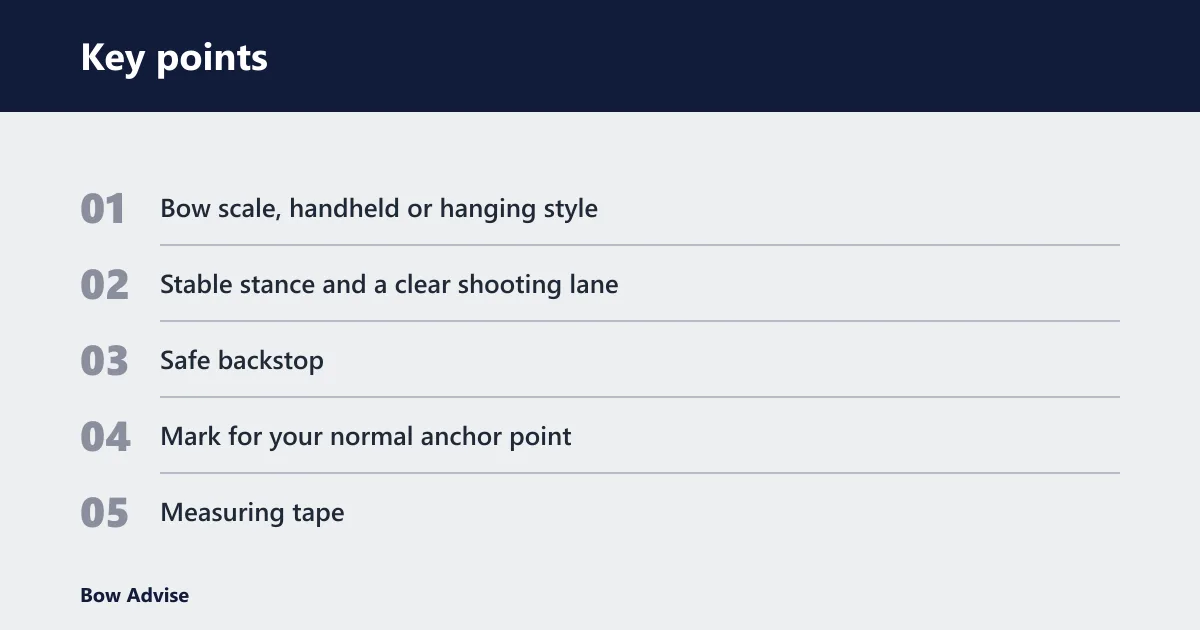
- Bow scale, handheld or hanging style
- Stable stance and a clear shooting lane
- Safe backstop
- Mark for your normal anchor point
- Measuring tape
- Bow square
- Hex key or screwdriver for compound limb-bolt checks
- Helper or bench support for compound setup if needed
- Check the bow for damage, string wear, and a clear shooting lane before any draw test.
- Set your normal anchor point so the draw ends where you actually shoot, not where you can merely reach.
- Attach the bow scale safely to the string or D-loop.
- Draw smoothly to full draw without jerking, and stop at anchor.
- Read the scale at full draw, then let down under control.
- Repeat the draw and record the same measurement again for comparison.
How to measure recurve and longbow weight
For a recurve bow or longbow, draw smoothly to your normal anchor, read the scale at full draw, and then let down under control. The reading is tied to draw length, so a longer draw often shows a higher number. These bows are often referenced at 28 inches, but that reference only helps when the comparison uses the same length.
Do the same draw more than once. If the number changes a little, record the range and look at your form, not just the number. A clean anchor and a steady hold matter more than chasing one perfect reading.
Step-by-step for recurve and longbow
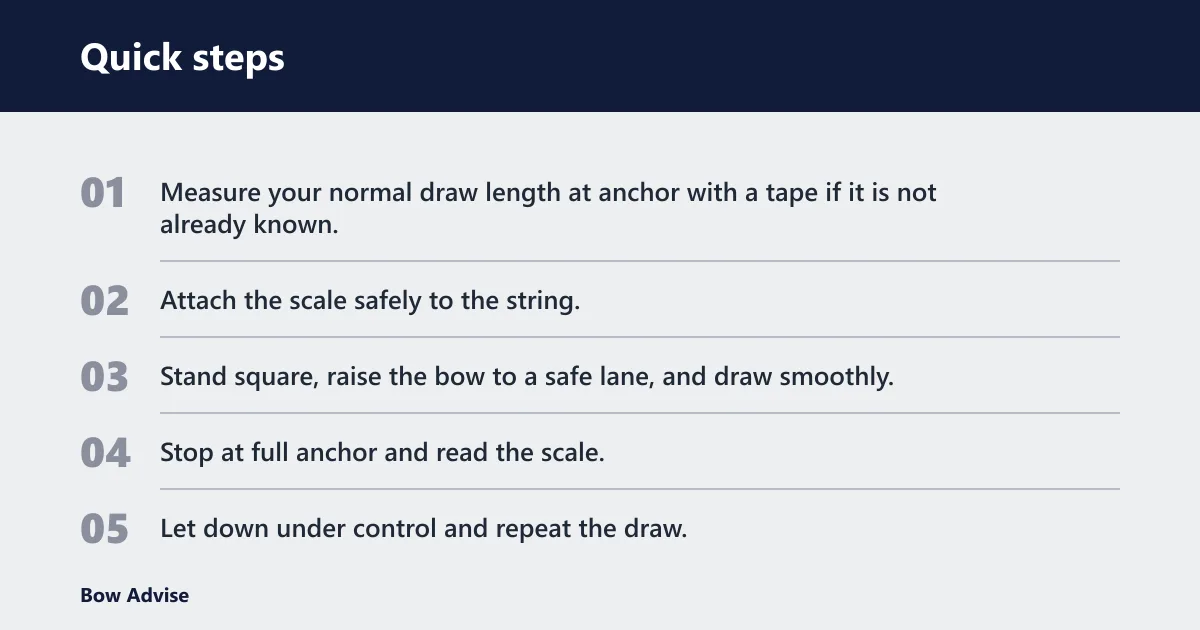
- Measure your normal draw length at anchor with a tape if it is not already known.
- Attach the scale safely to the string.
- Stand square, raise the bow to a safe lane, and draw smoothly.
- Stop at full anchor and read the scale.
- Let down under control and repeat the draw.
- Compare the readings and note any gap caused by form changes.
Say your recurve reads higher on the second draw because you anchored farther back by about 1 inch. That change is from draw length, not a different bow. If the hold felt strained or unstable, stop and shorten the session rather than trying to force a cleaner number.
How to read compound peak and holding weight
On a compound bow, draw through the cycle to full draw, record the peak reading during the draw, then record the holding reading at full draw. Compound bows are different because let-off lowers the holding weight. That means the peak number and the full-draw number should both be written down, because each one answers a different question.
Check limb-bolt settings before you adjust anything. Limb bolts must be turned evenly, and manufacturer turn limits matter. If one limb bolt is ahead of the other, stop and correct that before you trust the reading.
Step-by-step for compounds
- Verify both limb bolts are set evenly and within maker limits.
- Attach the bow scale safely to the string or D-loop.
- Draw smoothly through the cycle and watch for the highest reading.
- At full draw, read the holding weight at anchor.
- Let down under control and repeat the draw.
- Record peak and holding numbers separately.
Suppose a compound shows a strong peak reading on the way in, then a much lower number at the wall. That gap is let-off. If a first-time archer records only the lower number, the bow can seem lighter than it is during the draw cycle, which can hide a setup that is still too much to pull comfortably.
How draw length changes the reading
Use the bow’s reference draw length when comparing specs, and use your actual draw length when checking your own setup. Recurve and longbow readings often shift as draw length changes, so a bow marked at 28 inches should not be compared blindly to a different archer’s longer or shorter draw. The same idea applies to compounds when the peak and holding numbers are logged.
That is why the tape measure belongs in the setup. Draw length determines how far back the string is pulled, and that changes the reading. A number without length is easy to misread.
Common mistakes
- Using peak weight as holding weight on a compound
- Turning limb bolts unevenly
- Testing with shaky form or shoulder strain
- Ignoring a change in anchor or draw length
- Overdrawing the bow
- Writing down one reading and trusting it without a repeat draw
How to draw weights easy starts with honest form. Use a length and setup you can control, not one that needs a shrug, lean, or shoulder twist to reach anchor. If the shot breaks down while you draw, the number on the scale is less useful than the warning from your body.
Draw weight log
Use this checklist and log to decide whether to continue. If the answer turns negative on form or setup, stop and correct the issue before another draw.
| Bow type | Draw length | Peak reading | Holding reading | Number of draws | Form quality | Stop or continue decision |
|---|---|---|---|---|---|---|
| Recurve | 28 in | 36 lb | N/A | 2 | Steady | Continue |
| Longbow | 30 in | 42 lb | N/A | 2 | Borderline | Stop and shorten session |
| Compound | 29 in | 60 lb | 15 lb | 3 | Steady | Continue |
| Compound | 29 in | 60 lb | 15 lb | 1 | Shaky | Stop and hand off to shop |
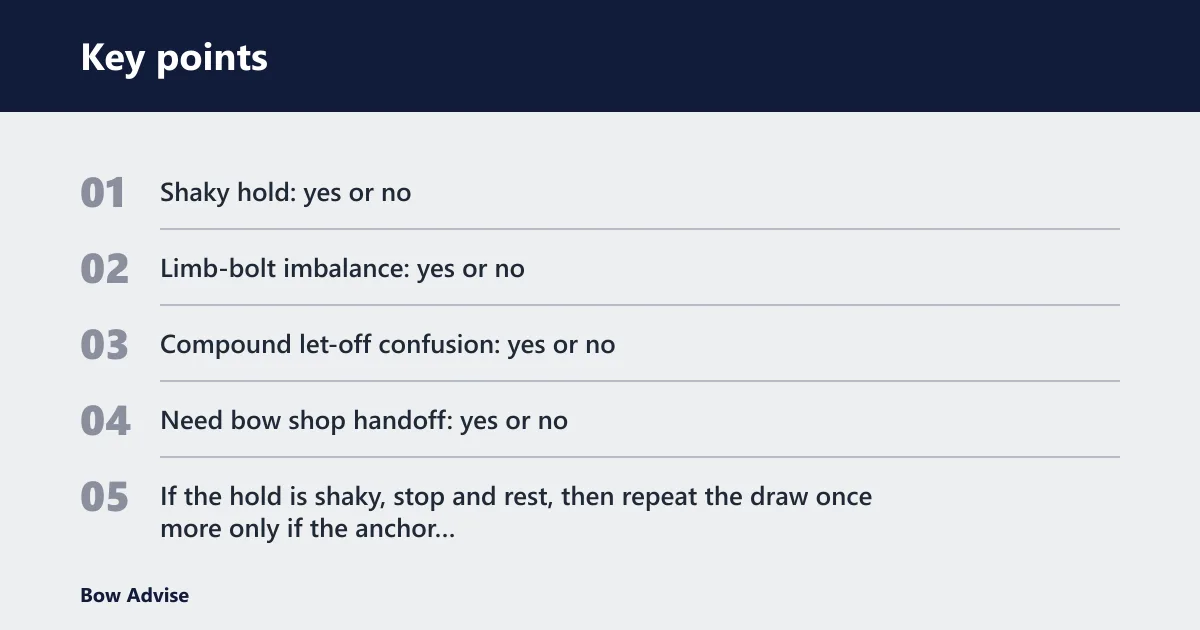
- Shaky hold: yes or no
- Limb-bolt imbalance: yes or no
- Compound let-off confusion: yes or no
- Need bow shop handoff: yes or no
If that didn’t work, try this next
- If the hold is shaky, stop and rest, then repeat the draw once more only if the anchor can be held still.
- If one limb bolt is ahead of the other, return both to an even setting within the maker’s limit before any new reading.
- If the compound reading seems too low at full draw, log both peak and holding numbers again so the let-off is not mistaken for the peak force.
- If the reading still changes between arrowed draws and bare-string tests, hand the bow to a shop for a setup check.
When should I ask a bow shop to measure my draw weight? Ask when the draw feels uneven, the limb bolts do not look even, the scale number keeps changing, or the bow feels beyond your control at anchor. A shop can verify setup, confirm the scale point, and check whether the bow is safe to tune further.
Prevention
Log the same draw length, same anchor, and same bow type each time you compare numbers. That simple record prevents most false comparisons.
Frequently asked questions
What is draw weight?
It is the force required to pull the bowstring back. On recurves and longbows, the listed weight is often tied to 28 inches. On compounds, the useful check is split into peak draw weight and holding weight because let-off changes the number you feel at full draw.
How do you measure bow draw weight safely?
Use a scale, a clear lane, and a controlled draw to anchor. Keep the bow pointed at a safe backstop, and do not overdraw. If the hold shakes, the reading changes sharply, or one limb bolt is out of line, stop and fix the setup before another draw.
How do you measure draw weight at full draw on a compound bow?
Draw through the cycle and read the highest force as peak draw weight, then read the lower number at anchor as holding weight. Keep limb bolts even and within the maker’s limit. Do not treat the holding number as the same thing as peak draw weight.
What draw length should I use when measuring draw weight?
Use the draw length that matches your normal anchor and your bow’s reference when comparing specs. Recurve and longbow values are often tied to 28 inches, but that is not universal for every comparison. For your own setup, the measured length is the one that matters.