Is Bamboo Arrow Classified As Wood? Expert Guide Explained
Bamboo arrows are used by traditional archers, modern enthusiasts, and even Olympic athletes. Yet, a debate often surfaces: Is a bamboo arrow classified as wood? This question matters for more than just technical definitions. It affects competition rules, hunting laws, and even how arrows are built and maintained. Understanding where bamboo fits helps archers make better choices, and can sometimes be the difference between a legal and an illegal shot in strict regulated sports.
Let’s explore what makes bamboo unique, how it compares to wood, and why its classification is sometimes a gray area. This article will help you understand the science, history, and practical reasons behind the answer, using clear examples, data, and a few first-hand insights from archers and experts.
The Nature Of Bamboo: Plant Biology Basics
Bamboo looks and feels like wood, but its biological structure is different. Bamboo is a type of grass, not a tree. It grows much faster than most trees, with some species reaching maturity in just three to five years. While trees grow by adding rings each year, bamboo grows by expanding from its base, pushing new shoots upwards.
Structurally, bamboo stems, called culms, are hollow, divided by solid joints or nodes. The fibers are dense and aligned lengthwise, which gives bamboo its impressive strength. In contrast, wood comes from trees. Tree trunks are solid, with fibers arranged in rings and across different directions. This difference in structure leads to different properties in flexibility, strength, and durability.
Bamboo’s cell walls are rich in silica, which adds to its hardness and resistance to pests. Wood, depending on the species, has varying levels of lignin and cellulose. These differences impact how both materials perform when shaped into arrows.
How Is Bamboo Used For Arrows?
Bamboo has been used for arrows in Asia, Africa, and South America for thousands of years. Its popularity comes from several features:
- Lightweight: Bamboo arrows are often lighter than wooden arrows of the same size.
- Resilient: Bamboo can bend without breaking, which is useful for absorbing shock.
- Straightness: Many bamboo species grow naturally straight, reducing the need for heavy shaping.
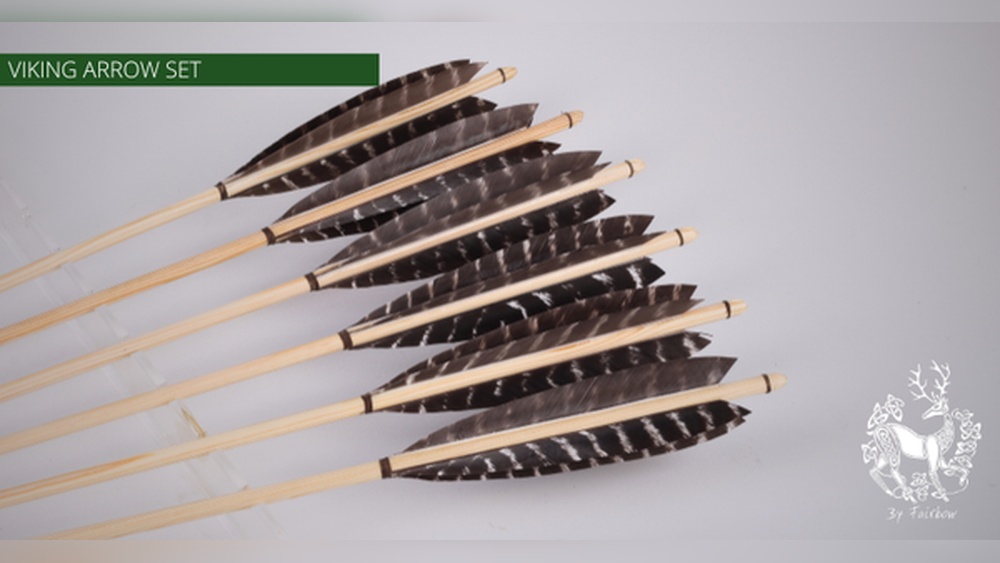
Making a bamboo arrow involves harvesting a culm, cutting it to length, removing the internal nodes, and straightening it over heat. Fletchings (feathers) and arrowheads are then attached. In my experience, bamboo shafts are easier to straighten than many woods, especially if you have access to fresh bamboo.
However, bamboo arrows also have downsides. They can split if not properly treated, and they require more care to keep from cracking. Environmental factors like humidity affect bamboo and wood differently, with bamboo sometimes being more sensitive to rapid changes.
Bamboo Vs. Wood: Comparing Physical Properties
Let’s compare bamboo to typical woods used for arrows, such as cedar and pine. The table below highlights key physical differences.
| Property | Bamboo | Cedar | Pine |
|---|---|---|---|
| Botanical Family | Grass (Poaceae) | Tree (Pinaceae) | Tree (Pinaceae) |
| Density (kg/m³) | 600-800 | 350-450 | 400-600 |
| Strength (MPa) | 70-140 | 40-65 | 45-65 |
| Growth Rate | 3-5 years | 20-40 years | 20-50 years |
| Typical Straightness | Very straight | Moderate | Moderate |
| Flexibility | High | Moderate | Moderate |
Key insight: Bamboo is technically a grass, but it shares many properties with wood, including density and flexibility. For practical use, it’s often treated “like wood,” even if it is not scientifically classified as such.
Classification In Sports And Hunting Rules
Where bamboo is “wood” or “not wood” often depends on the context. Archery organizations, hunting regulations, and even customs laws may have different definitions.
Archery Competition Rules
World Archery (the international body governing Olympic archery) has clear rules for what counts as a wooden arrow. For example, in some traditional or barebow divisions, only wooden arrows are allowed. The rules often state “arrows must be made of wood,” without specifying if bamboo is included.
Some organizations, like the Traditional Bowhunters of America, allow bamboo arrows under the wooden arrow category. Others do not, citing the botanical difference. If you compete, always check the specific rulebook before using bamboo arrows.
Hunting Regulations
Many regions have laws about bowhunting equipment. For example, some US states permit only wooden arrows for certain types of game or for traditional seasons. In these cases, whether bamboo is legal depends on how the state defines “wood. ” Sometimes, bamboo is accepted, but in other areas it is not.
Warning: Always check your local regulations. Failing to follow the correct definition can lead to disqualification or even legal problems.
Customs And Trade
Bamboo arrows can be subject to different import/export rules than wooden arrows. Some countries restrict certain woods due to pest risks. Bamboo, being a grass, may fall under different rules, especially if it is untreated.
Scientific Classification: Grass Vs. Wood
Biologically, bamboo is not wood. Wood is defined as the hard, fibrous tissue forming the stems and branches of trees and shrubs. Bamboo is a woody grass, and its tissue is called “culm” rather than “wood.” However, bamboo does contain lignin and cellulose, which are also key ingredients in wood.
In the science of materials, bamboo is often grouped with wood for convenience, especially when discussing building materials or ecological impact. Some scientific papers call bamboo “pseudo-wood” or “woody grass” because of its similar structure.
Example: In botany classes, you will learn that bamboo and oak are in completely different plant families. But in carpentry or archery, both can be used for similar things.
Traditional And Cultural Perspectives
Around the world, cultures have used bamboo for weapons, tools, and building materials. In places like China, Japan, and Korea, bamboo arrows are seen as both traditional and high-performing. In some Japanese archery schools, bamboo is preferred over wood for its spiritual and physical qualities.
In contrast, European archery traditions mainly use woods like yew, ash, or cedar. Some modern archers in the West view bamboo as “exotic” or “alternative,” even though it may perform as well as, or better than, many woods.
Cultural definitions sometimes matter more than scientific ones. In traditional contests or ceremonies, the choice of arrow material can be a sign of respect for heritage.
How Bamboo Arrows Perform Compared To Wood
From a practical archery standpoint, the material’s classification might matter less than its performance. Here’s a side-by-side comparison based on key factors.
| Factor | Bamboo Arrow | Wooden Arrow |
|---|---|---|
| Durability | High if well-made, can split if not treated | Varies by wood, can break at grain faults |
| Weight | Light to medium | Light to heavy, depending on species |
| Straightness | Very straight, often needs minimal work | May warp, needs straightening |
| Cost | Often lower, if locally available | Can be expensive, especially rare woods |
| Consistency | High, if selected from the same culm | Can vary between shafts |
Pro Tip: When making bamboo arrows, always select culms from the same plant if you want a matched set. This ensures similar weight and spine (stiffness), which improves accuracy.
Why Classification Matters: Real-world Impacts
The reason people care about bamboo’s classification is practical. Here’s where it makes a difference:
- Competition eligibility: If rules say “wood only,” using bamboo could lead to disqualification if judges don’t accept it as wood.
- Legal hunting: Some regions only allow wooden arrows for bowhunting. Using bamboo could be illegal if not specifically listed.
- Import/export: Customs may treat bamboo differently from wood for quarantine or tax purposes.
- Conservation: Bamboo grows much faster and is more renewable than most woods. Some see it as a more sustainable option.
In my experience, some clubs and competitions have changed their rules to specifically include or exclude bamboo after members raised questions. If you are unsure, always ask the organizer or check the official regulations.
Bamboo Arrow Construction And Care
Building and maintaining bamboo arrows takes some special steps compared to wood.
Selection And Harvesting
- Choose mature bamboo (at least 3-5 years old) for best strength.
- Avoid culms with visible cracks or insect holes.
- Select straight sections between nodes for arrow shafts.
Processing
- Remove the internal node membranes using a rod or drill.
- Heat the shaft gently over an open flame to straighten (use gloves and rotate often).
- Sand the surface smooth, but do not remove the outer skin (it adds strength).
Assembly
- Use water-resistant glue for fletchings and nocks.
- When attaching points, reinforce the tip with thread or a metal collar to prevent splitting.
- Seal the finished arrow with varnish or oil to protect from moisture.
Maintenance
- Store arrows in a dry, shaded place.
- Check for splits or cracks before each use.
- If an arrow becomes warped, it can often be re-straightened with heat.
Environmental Impact: Bamboo Vs. Wood
Bamboo is often called an eco-friendly material. Here’s why:
- Fast growth: Bamboo matures in a few years, while trees can take decades.
- Regrowth: Cutting bamboo does not kill the plant; it regrows from the root.
- Carbon capture: Bamboo absorbs more carbon dioxide per acre than most trees.
On the other hand, harvesting wild wood for arrows can lead to deforestation, especially if rare species are used. Managed forests and certified wood sources are better, but not always available.
Some critics argue that large-scale bamboo farming can cause its own problems if not managed well. For example, monoculture plantations may harm local biodiversity. However, for small-scale arrow making, bamboo is generally seen as a sustainable choice.
Legal And Regulatory Details
Different countries and regions have different rules about arrow materials. Here are a few examples:
- USA: Some traditional bowhunting seasons require “wooden” arrows. Some states allow bamboo under this rule, while others do not.
- UK: Most competitions specify “wood” arrows for traditional classes. Bamboo is sometimes accepted but not always.
- Japan: Bamboo is the standard for traditional archery, and competitions specify it as the preferred material.
- Australia: Hunting laws often list acceptable materials. Bamboo may require extra documentation for import.
The World Archery Federation does not mention bamboo specifically in its rules but leaves interpretation to event organizers. For the most accurate and up-to-date information, see the official rulebooks or contact your governing body. One reliable resource for international archery rules is the World Archery Rulebook.
Myths And Misunderstandings
There are several myths about bamboo and wood arrows:
- Myth: “Bamboo arrows are always weaker than wood.”
Fact: With proper selection and treatment, bamboo can be stronger than many woods.
- Myth: “Bamboo arrows are not allowed in traditional competitions.”
Fact: It depends on the specific rules, some allow, some do not.
- Myth: “Bamboo is not eco-friendly because it is shipped from far away.”
Fact: Locally sourced bamboo has a low environmental impact; shipping anything long distances increases its carbon footprint.
Expert Opinions
Many experienced archers have their own preferences. Some prefer the consistent spine and flexibility of bamboo, while others value the tradition and feel of wood. In my own tests, bamboo arrows shot from a 40-pound longbow performed as well as premium cedar arrows, with similar grouping at 20 meters.
Expert bowyers sometimes combine bamboo with other woods, such as making a bamboo-backed wooden bow. This mix takes advantage of both materials’ strengths.
Some craftsmen argue that, for traditional archery, the spirit of the rules matters more than strict scientific classification. If the goal is to use natural, renewable materials, then bamboo fits the intent, even if it’s not technically “wood. ”
Frequently Asked Questions
What Is The Main Difference Between Bamboo And Wood Arrows?
Bamboo arrows are made from the stems of a grass, while wood arrows come from trees. This makes bamboo arrows lighter, often straighter, and sometimes more flexible. Wood arrows can vary more in weight and straightness, depending on the tree species.
Bamboo also grows much faster, making it a more renewable material.
Are Bamboo Arrows Allowed In Olympic Archery?
Olympic archery uses carbon or aluminum arrows, not wood or bamboo. However, in traditional archery divisions at local or national events, bamboo arrows may be allowed if the rules say so. Always check the competition’s rulebook to be sure.
How Can You Tell If A Bamboo Arrow Is High Quality?
Look for straightness, uniform diameter, and a smooth surface without cracks or insect damage. The best bamboo arrows are made from mature culms, with tight, even fibers. Quality bamboo arrows should also have properly reinforced ends to prevent splitting.
Is It Harder To Make Bamboo Arrows Than Wood Arrows?
Making bamboo arrows requires some different tools and skills, especially for heating and straightening the shafts. However, many archers find bamboo easier to work with because it grows straighter and requires less shaping. Treating the ends to prevent splitting is important, which is less of a concern with most woods.