How Arrow Length Changes Spine Selection for Real-world Setups
Arrow length changes dynamic spine immediately: each 1-inch longer shaft usually weakens the arrow about 5 to 7 pounds, and a 1-inch cut shorter can be enough to move one spine class when you were already near the edge. Missing the change can lead to poor grouping, vane contact, weak broadhead flight, or a shaft that is too stiff to tune cleanly. This guide explains how length, point weight, and bow setup can shift spine selection for compound, recurve, and hunting arrows.
Arrow length and spine basics


Cut length matters, not draw length. For spine selection charts, arrow length means the cut length from nock throat to end of shaft. That is the number the chart wants, and it is separate from the bow’s draw length.
Static spine is the shaft’s stiffness rating from a 28-inch span with a 1.94 lb weight in the middle. A lower spine number means a stiffer shaft. A 400 spine is stiffer than a 500 spine.
The basic rule is simple. Longer arrows act weaker. Shorter arrows act stiffer. In real setups, the effect matters once you are near a chart boundary.
Length change spine check
| Before and after length | Draw-weight band | Point-weight range | Bow type | Recommended spine-direction change | Retest? |
|---|---|---|---|---|---|
| 28 inches to 29 inches | Compound 40–50 lb | 100 gr to 125 gr | Compound with release aid | Go stiffer if the chart call was already close to the edge | Yes |
| 27 inches to 28 inches | Compound 50–60 lb | 100 gr to 125 gr | Compound with release aid | Usually same class; move weaker only if the prior shaft was already stiff | Yes |
| 28 inches to 29 inches | Recurve 30–40 lb | 100 gr to 125 gr | Recurve with fingers | Often stiffer spine is needed, because finger release already demands a weaker dynamic setup than a release aid | Yes |
| 29 inches to 28 inches | Traditional bow 35–45 lb | 125 gr to 150 gr | Longbow or off-the-shelf traditional setup | Usually same or weaker spine direction if the trim removed enough shaft to move the build stiff | Yes |
| 27 inches to 28 inches | Compound 60–70 lb | 125 gr to 150 gr | Compound with release aid | Often stiffer class if the chart call was on the edge, especially with heavier points | Yes |
| 28 inches to 29 inches | Compound 30–40 lb | 100 gr to 125 gr | Compound with release aid | Stiffer direction only if the shaft was already near the weak side of the chart | Yes |
This table is direction, not a final spine call. It tells you which way the dynamic spine moves after a length change. Manufacturer charts from Easton, Gold Tip, Victory, and Black Eagle are still the starting point, not the finish line.
Say your compound setup was on the edge of 500 spine at 28 inches with 100 gr up front, and you trim to 29 inches. That extra inch can move the build weak enough that the same shaft no longer bareshafts cleanly.
How much does 1 inch change spine?
One inch can matter because the chart treats each inch beyond 28 inches like about 3 to 5 lb more draw weight. That is a rule of thumb, not a universal constant, but it is enough to push a borderline setup into a different spine class.
The 28-inch baseline is built into most chart logic. If the shaft is longer than that, the arrow behaves weaker. If the shaft is shorter, it behaves stiffer.
That is why a 1-inch trim can do more than “fine-tune” the arrow. On a build already close to the next spine number, it can change the recommended class entirely.
When the 3 to 5 lb rule is too rough
The shortcut starts to break down when shaft model, cam aggressiveness, insert weight, and point weight all pull in different directions. A fast compound with a harsher front end reacts differently than a mild-cam setup at the same labeled weight.
Use the rule to screen the next spine direction, not to replace the chart. Then confirm with real tuning.
What changes for compound, recurve, and traditional bows?
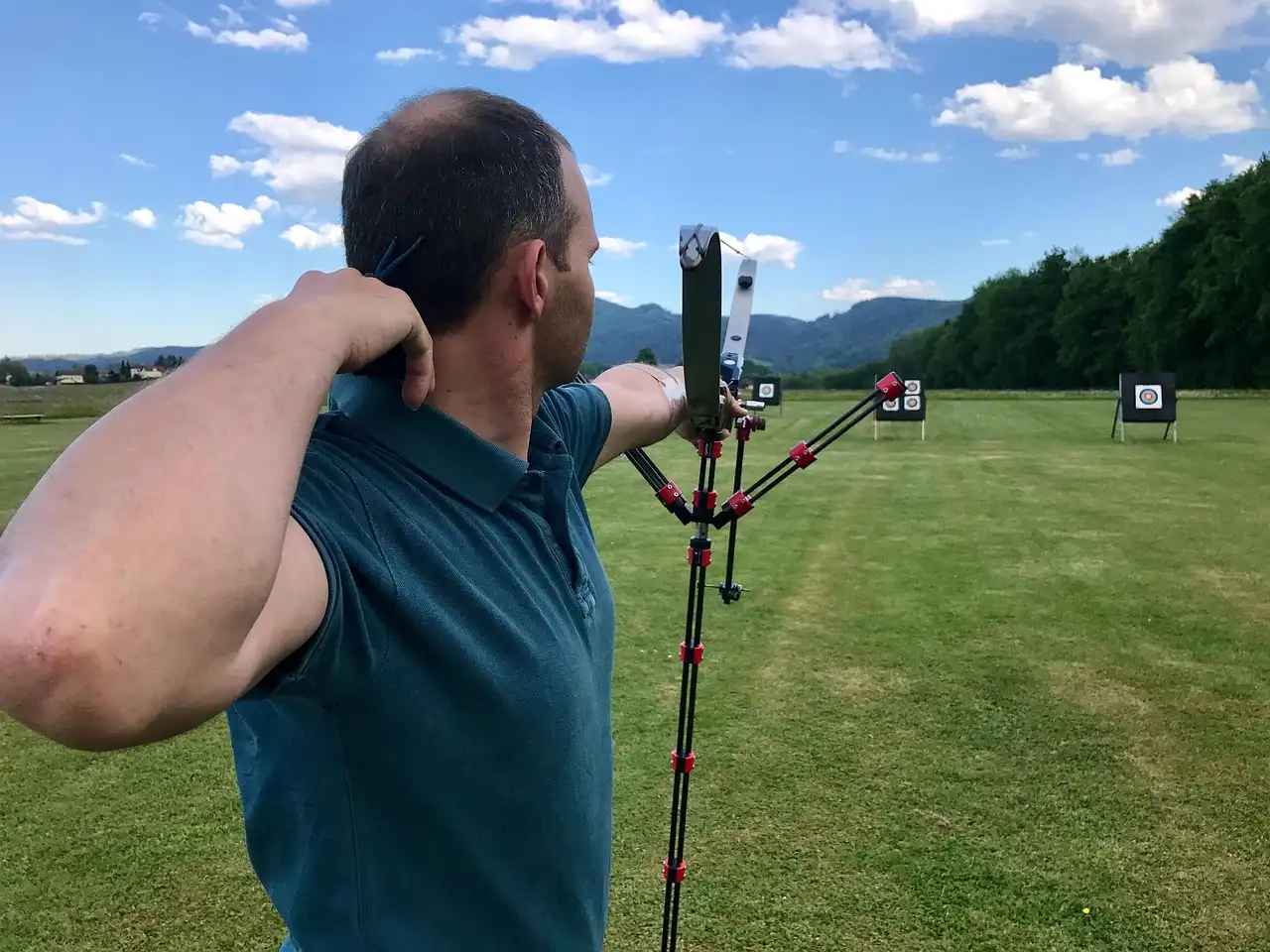
Bow type changes the answer because the release method changes how the shaft reacts. A compound using a release aid usually needs a different spine than a recurve shot with fingers at the same weight, and a traditional bow or longbow off the shelf changes things again.
For compound bows, use peak draw weight. For recurve bows, use the weight at your actual draw length, not the limb marking. Limb labels are marked at 28 inches, so the number on the limb is not the whole story.
Finger shooters generally need a weaker spine than a compound shooter with a release aid at the same weight. Shelf clearance and string pressure make the shaft bend differently at launch.
Compound with release aid
A compound chart usually assumes a cleaner release and more consistent arrow launch. That is why the same draw weight can land in a stiffer spine class than a finger-shot setup.
The compound chart includes 26-inch arrows in 30–40 lb through 70–80 lb bands. That wide spread is useful, but it still depends on point weight and the exact shaft series.
Recurve with fingers
A recurve shooter should read the chart from actual draw weight at draw length. A 28-inch marked limb does not mean the bow delivers that weight to every archer.
The recurve chart includes 28-inch arrows across 20–28 lb through 46–52 lb bands. Because fingers usually need a weaker spine than a release aid, the same arrow can move one class weaker in practice.
Longbow or off-the-shelf traditional setup
The traditional bow chart assumes a 125 gr point. That matters because front-end weight changes dynamic spine immediately.
Off-the-shelf traditional setups often react strongly to shaft length, shelf clearance, and point weight together. If the arrow is long and the point is heavy, the shaft can act much weaker than the spine number suggests.
How point weight changes the answer
Point weight is part of the spine equation, not an afterthought. The common chart assumption is often 100 gr, and every 25 gr above 100 gr acts like about 3 lb more draw weight.
That means heavier points make the arrow act weaker. The chart can still be correct at 100 gr and wrong at 125 gr if nothing else changes.
A 150 gr point is roughly 6 lb more and can move you one spine step stiffer. In other words, once point weight rises, the shaft needs more stiffness to recover the same dynamic behavior.
Insert weight counts too. More metal up front behaves like extra point weight because it adds mass to the same end of the shaft. That shifts front-of-center and can push a setup toward a weaker dynamic spine even if the cut length stays fixed.
Suppose a 29-inch recurve arrow tuned well at 100 gr starts landing weak after a point swap to 125 gr. The only variable changed was front-end mass, yet the shaft now acts like it needs a stiffer class.
How do you know the spine is wrong?
Too stiff and too weak do not always look the same on target. A too-stiff arrow often resists bending enough to recover cleanly, while a too-weak arrow bends too much and shows erratic flight, weak broadhead grouping, or contact issues.
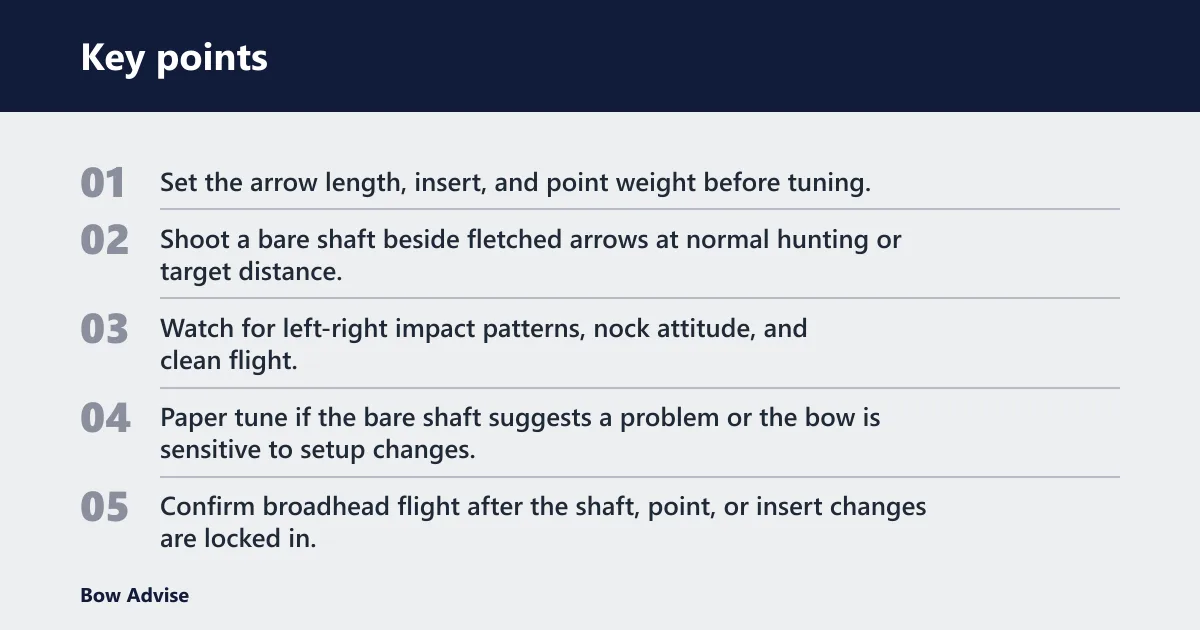
Bare-shaft tuning is the first check after chart selection. It tells you whether the arrow’s real behavior matches the chart-based guess.
- Set the arrow length, insert, and point weight before tuning.
- Shoot a bare shaft beside fletched arrows at normal hunting or target distance.
- Watch for left-right impact patterns, nock attitude, and clean flight.
- Paper tune if the bare shaft suggests a problem or the bow is sensitive to setup changes.
- Confirm broadhead flight after the shaft, point, or insert changes are locked in.
Paper tuning and broadhead verification matter because a shaft can paper tune acceptably and still drift when a fixed-blade head is added. That failure shows up often after a length change that was never retested.
A common first-timer mistake is trimming an arrow, keeping the same point, and skipping a retest because the chart “already said” the spine was close enough. If the trim moved the arrow from borderline stiff to clearly stiff, broadhead flight can tell the truth faster than a grouping session does.
Frequently asked questions
How does arrow length change spine selection?
Longer arrows act weaker, and shorter arrows act stiffer. In chart terms, each inch beyond 28 inches acts like about 3 to 5 lb more draw weight, so a small length change can move a borderline build into another spine class. That is why length must be set before final spine selection.
How much stiffer spine do I need for longer arrows?
There is no fixed shaft number that fits every bow, but a 1-inch longer arrow often pushes the recommendation one step stiffer when the setup is already near a chart boundary. The exact move depends on bow type, draw weight, point weight, and the shaft series the maker uses.
Does cutting arrows shorter make them stiffer or weaker?
Cutting an arrow shorter makes the setup act stiffer. That means a shaft chosen at 29 inches may no longer tune the same way at 28 inches, especially with heavier points or a release aid. When selecting from scratch, the shorter length usually points toward a weaker spine class, not a stiffer one.
What spine should I use if my arrows are 29 inches long?
Start with the maker’s chart for your exact bow type, draw weight, and point weight, then treat the 29-inch length as the part that weakens the shaft. A 29-inch cut length often needs one spine class stiffer than the same build at 28 inches if the setup was already close to the next line.
How does point weight interact with arrow length and spine?
Heavier points make the arrow act weaker, and that effect stacks with extra length. The common chart uses 100 gr as a baseline, and every 25 gr above 100 gr acts like about 3 lb more draw weight. A 150 gr point can move the setup one spine step stiffer.
Should a compound shooter and recurve shooter use the same spine at the same draw weight?
Usually not. A compound with a release aid often takes a stiffer spine than a recurve shot with fingers at the same weight because the launch is different. Recurve charts also use actual draw weight at draw length, while compound charts use peak draw weight, so the comparison is not direct.
How do I know if my arrows are too stiff or too weak after changing length?
Check bare-shaft impact, paper tune, and broadhead flight. A length change can push the shaft into a new spine class without changing the bow weight, so the arrow may still group poorly even when the old setup looked fine. Broadhead drift after a trim is a strong warning sign.
Do I need to recalculate spine after changing insert weight or point weight?
Yes. Insert weight and point weight change dynamic spine just like length does. If the front end gets heavier, the arrow acts weaker and may need a stiffer class to recover the same tune. Any front-end change should be followed by bare-shaft and broadhead verification before hunting or serious target use.