Best Arrow Spine Chart for Beginners: Safe Starting Point
For many beginners, a common rule of thumb is to start with a spine chart band about 5 to 10 pounds stiffer than the bow’s draw-weight class, then confirm with arrow length and point weight before buying carbon arrows. A weak shaft can fly poorly, group poorly, and fail under stress. This guide gives a simple, safety-first way to choose the right spine band before you use a calculator.
Arrow spine chart table


Use the table below as a safe first pass, not a final fit. Lower spine numbers mean stiffer shafts, and a 400 spine arrow is stiffer than a 500 spine arrow. Static spine is measured with a shaft supported 28 inches apart and a 1.94 lb weight hanging from the middle.
| Bow type | Actual draw weight | Finished arrow length | Point weight | Safest starting spine band | Choose stiffer if… |
|---|---|---|---|---|---|
| Compound | 25 to 35 lb | 27 to 29 inches | 100 gr | 700 to 900 | Arrow is 29 inches or longer, or you plan a 125 gr point. |
| Compound | 35 to 45 lb | 27 to 29 inches | 100 gr | 600 to 700 | Arrow is long for draw length, or inserts are heavy. |
| Compound | 45 to 55 lb | 27 to 29 inches | 100 to 125 gr | 500 to 600 | Arrow is near 29 inches, or point weight moves to 125 gr. |
| Compound | 55 to 65 lb | 27 to 29 inches | 100 gr | 400 to 500 | Arrow is longer than planned, or you want a heavier field point. |
| Recurve | 20 to 25 lb at actual draw length | 28 to 30 inches | 100 gr | 600 | Arrow is longer than 30 inches, or you use 125 gr points. |
| Recurve | 26 to 35 lb at actual draw length | 28 to 30 inches | 100 to 125 gr | 500 to 600 | Long shafts, heavy inserts, or 125 gr points are in the setup. |
| Recurve | 36 to 45 lb at actual draw length | 28 to 30 inches | 100 to 125 gr | 400 to 500 | Arrow is long or the bow is shot with a soft finger release. |
| Traditional longbow | 30 to 40 lb at actual draw length | 28 to 30 inches | 125 gr | 600 to 700 | Arrow is long, the shelf is cut shallow, or the point is heavier than 125 gr. |
| Traditional longbow | 41 to 50 lb at actual draw length | 28 to 30 inches | 125 gr | 500 to 600 | Arrow is over 29 inches or you plan broadheads later. |
Explained Archery says a 50 lb compound with a 28-inch arrow lands on 400 spine. It also says a 40 lb recurve with a 28-inch arrow lands on 600 to 700 spine, and a 45 lb longbow with a 28-inch arrow and 125 gr point lands on 500 spine. Those examples match the starter bands above.
Choose stiffer if your arrow is longer than your plan, your point weight is heavier than the baseline, or your bow is near the top of the band. Choose weaker only when the setup is short, light in the front, and still inside the manufacturer’s chart.
What is arrow spine?
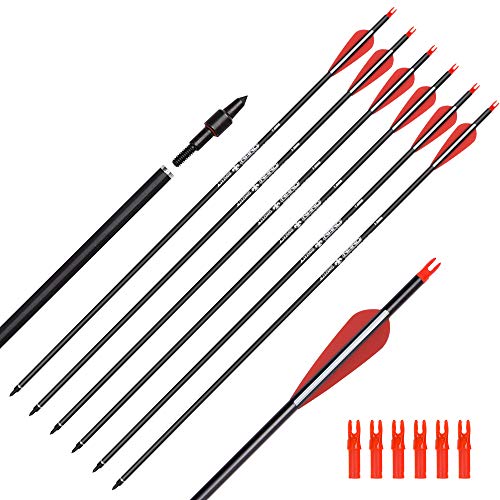
Arrow spine is shaft stiffness. Lower numbers mean stiffer shafts, so a 400 spine shaft resists bending more than a 500 spine shaft. Most carbon charts run from about 250 to 1000+ depending on the maker.
Static spine in plain terms
Static spine is the shaft’s measured stiffness before the arrow is shot. It gives the starting number on the chart. Dynamic spine is different. That is the whole-system behavior after release, and it is what actually tunes broadhead flight.
Why lower numbers mean stiffer
The numbering system runs backward from what many beginners expect. A smaller number is a stiffer shaft. That matters because a shaft that is too weak can flex too much, kick badly off the string, and make tuning harder.
How spine is measured
The standard test supports the shaft 28 inches apart and hangs a 1.94 lb weight from the middle. That creates a consistent deflection reading. Use that reading as a chart tool, not as a promise that the arrow will behave the same in every bow.
How do draw weight and length change spine?
Draw weight and arrow length are the two biggest drivers after point weight. Compound bows are sized from the actual bow setup at full draw or holding weight used by the manufacturer’s chart, while recurve bows are sized from the weight at the archer’s actual draw length. Longer arrows bend more under the same load, so they act weaker.
Compound draw weight rules
For compounds, use the real draw weight of the bow setup you will shoot, not a label alone. The same source says a 50 lb compound with a 28-inch arrow lands on 400 spine. Archery Calculators also lists a 70-80 lb compound with a 28-inch arrow on 300 spine.
Say your compound is set to 60 lb and you cut the arrow to 29 inches. That extra length makes the shaft behave weaker. In a borderline case like that, the safer first choice is the stiffer spine band, not the weaker one.
Recurve draw length rules
Recurve bows are set by the weight at the archer’s actual draw length. That means a labeled bow weight is not enough by itself. The same source says a 40 lb recurve with a 28-inch arrow lands on 600 to 700 spine, and Archery Calculators says a 50-55 lb recurve with a 28-inch arrow uses 400 spine.
A common first-timer mistake is buying for the labeled limb weight and ignoring actual draw length. If the draw is longer than the chart assumes, the real working weight goes up and the shaft behaves weaker.
Why longer arrows act weaker
Arrow length is measured from nock throat to end of shaft, not draw length. Longer shafts bend more under the same load, so they act weaker. If the chart says 28 inches and you plan to leave the shaft at 29 or 30 inches, start with the stiffer band.
How does point weight affect arrow spine?
Point weight changes dynamic spine by loading the front of the arrow. Heavier points make the shaft act weaker. ArcherySetup says every extra 25 grains of point weight moves roughly one group. A change from 100 gr to 125 gr is enough to shift the setup in a real chart decision.
100 gr and 125 gr chart baselines
Many beginner charts start around 100 gr for compounds and 125 gr for traditional bows. That baseline matters because the point weight is part of the spine choice, not an afterthought. A 125 gr point on a borderline shaft can push the setup from acceptable to weak.
Why heavier points act weaker
Dynamic spine is the arrow’s real behavior after the string launches it. A heavier point increases the bend load at the front of the shaft. Inserts, broadheads, and heavier point weights all work the same direction: they make the arrow behave weaker.
Suppose a recurve setup looks fine on paper with 100 gr points, but the buyer wants 125 gr field points plus a heavier insert. That extra front weight can move the setup into a softer spine band before the first arrow is cut.
When to move to a stiffer shaft
Move stiffer when the setup is already close to the weak side of the band, when the arrow is long, or when the front end is heavier than the chart baseline. A safer mistake for a beginner is usually slightly stiff, because a weak shaft is harder to recover from in tuning.
What arrow spine should a beginner start with?
A beginner should start on the stiff side of the chart band, then fine-tune downward only if the shaft still clears and groups well. That is especially true for borderline setups. Compound release setups and finger-drawn recurve or traditional setups should not be treated the same, because their launch behavior differs.
Safe first choice by bow type
For compounds, begin with the chart band tied to actual draw weight, then bias stiffer if the shaft is long or the point is heavy. For recurves and traditional bows, use the draw weight at actual draw length and start with the stiffer side if the arrow is long or the shelf setup is forgiving.
It also lists 700 to 900 as very soft for 30 to 40 lb bows. That is the pattern beginners should expect: lower numbers for harder-hitting setups, higher numbers for lighter bows.
Borderline setup decisions
Choose the stiffer spine if any of these are true: the arrow is longer than 28 inches on a chart built around 28, the point weight is 125 gr instead of 100 gr, or the bow weight sits at the top of the suggested range. Choose the weaker spine only when the shaft is short, the point is light, and the chart points there clearly.
A common beginner failure case is a first arrow cut too long because the archer wants extra safety margin. That can be fine, but it makes the shaft act weaker. If the chart was already between two spine groups, the longer shaft should push the choice toward the stiffer group.
One-line size up or down rule
If the setup is between two spine groups, size up to the stiffer shaft when in doubt. Size down only when the bow is at the low end of the band, the arrow is short, and the point weight stays at the lighter baseline.
Confirm your first choice
Use the chart to buy the first band, then confirm the build after cutting. Bare-shaft tuning is the clearest follow-up because it checks real arrow flight without a fletching mask. Paper tuning is useful too, mainly to confirm launch and clearance after the shaft is built.
Bare-shaft check after cutting
After cutting and assembling the arrow, shoot a bare shaft with the fletched shafts at a safe distance. If the bare shaft shows a clear weak reaction, the shaft is usually too soft or the front end is too heavy. If it behaves stiff, the opposite may be true.
Paper tuning as a follow-up
Paper tuning helps verify launch and clearance, but it does not replace the spine chart. Use it after the chart choice and after the arrow is built. If the paper tear and the bare shaft disagree, check the bow setup, point weight, and nock fit before changing spine again.
When to revisit the chart
Recheck the spine chart any time you change draw weight, move to a longer shaft, switch from a 100 gr point to a 125 gr point, or add heavier inserts. Those are the usual reasons a setup shifts from acceptable to weak without warning.
Arrow spine chart checklist
Use this list before cutting arrows. It keeps the order simple and avoids the most common beginner mistakes.
- Measure finished arrow length from nock throat to end of shaft.
- Confirm the real draw weight for your bow type at your draw length or setup point.
- Choose the point weight now, especially if you plan 100 gr or 125 gr.
- Check the exact shaft maker chart for your model before buying.
- Leave extra shaft length until after the first build and tune check.
- Plan a bare-shaft check, then paper tune if needed.
Do not cut first and ask questions later. A shaft cut too short removes margin, and a shaft cut too long can act weaker than the chart band you thought you bought.
Frequently asked questions
How do I choose arrow spine?
Start with bow type, actual draw weight, finished arrow length, and point weight. Pick the safer stiffer side if your setup sits between two bands. Then confirm with the exact shaft manufacturer’s chart before buying, and use bare-shaft tuning after the arrows are cut.
What spine arrow should I use?
Use the spine band that matches your bow and then round toward stiffer if the build is borderline. A 400 spine arrow is stiffer than a 500 spine arrow, so the lower number is the safer move when length or point weight pushes the shaft weaker.
What spine arrow do I need?
You need the spine that fits the full setup, not just the bow label. That means actual draw weight, real arrow length, and point weight all count. For beginners, the safest first choice is usually the stiffer side of the chart band, then tune from there.
What spine arrow should I shoot?
Shoot the spine that gives a clean bare-shaft reaction and good paper tear after the arrow is built. For a first purchase, use the chart band from the table above, then stay conservative if the arrow is long or the point is heavier than the baseline.
How do draw weight and arrow length affect spine?
Higher draw weight and longer arrows both push the shaft toward weaker behavior. Compound bows use the actual bow setup weight, while recurves use the weight at the archer’s draw length. If the arrow is longer than the chart baseline, choose a stiffer spine first.