Arrow Spine for Youth Archery: Safe and Forgiving Choices
For most youth bows under 20 lb, start with 700–900 spine shafts; for 20–25 lb, 500–700 spine is the safer starting range, then confirm with bare-shaft or paper tune before cutting. Shafts that are too stiff or too short can cause poor tune, broadhead drift, and unstable arrow flight. This guide gives a youth-specific spine picker and a simple pre-cut check.
What arrow spine means for youth archers
Arrow spine measures shaft flex under load. For youth setups, the key point is simple: a higher spine number means more flex. Static spine is the number printed for the shaft itself, while dynamic spine is how that shaft acts on a real bow after draw weight, arrow length, point weight, release method, and cam system are all added in.
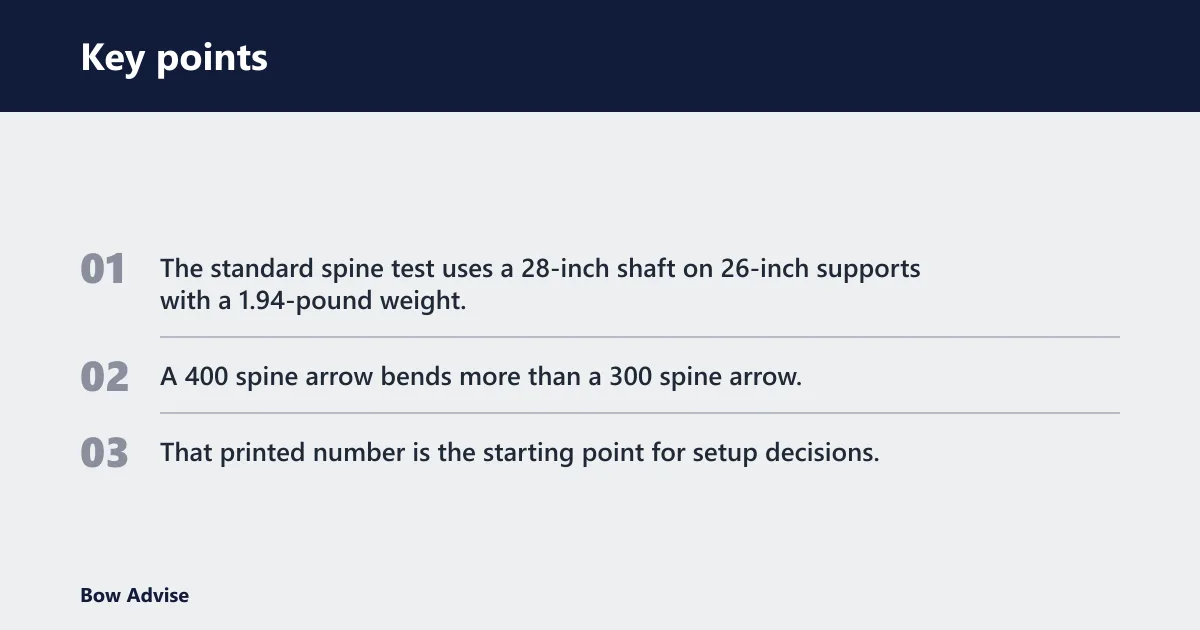
The standard spine test uses a 28-inch shaft on 26-inch supports with a 1.94-pound weight. A 400 spine arrow bends more than a 300 spine arrow. That printed number is the starting point for setup decisions, not the final answer for a child’s bow.
Which spine is safest for a youth bow?
For a low-poundage youth bow, the safest starting choice is usually the most forgiving shaft that still charts into a correct range for the actual bow type.
Low-poundage recurve starting point
Youth recurves commonly use fingers, and finger release generally needs weaker spine arrows than a mechanical release. For a recurve around 12–18 lb, start with about 700–900 spine and a conservative point weight. That gives more room for a longer shaft, a small form change, or a later trim without locking the bow into a too-stiff setup.
Light compound starting point
A light compound can use a stiffer starting band than a recurve at the same draw weight because the release is usually mechanical. For many youth compounds around 18–25 lb, about 500–700 spine is a sensible first check. Let the chart guide the choice, then verify with the actual bow because cam setup changes dynamic spine.
Traditional youth bow starting point
A traditional youth bow usually calls for a forgiving arrow, because finger release and simpler rests leave less room for a narrow tune window. Start long and use a spine that charts on the weak side of the safe band rather than chasing speed. That makes the setup more tolerant of growth, grip change, and short draw variation.
How draw weight, length, and point weight change tune
Dynamic spine changes with the bow, not just the shaft label. Longer arrows flex more readily than shorter ones. Heavier broadheads or field points add forward weight and increase arrow flex. That means a youth arrow that looks fine on paper may behave very differently once the shaft is full length, a heavier point is installed, or the draw weight is adjusted.
Why longer shafts flex more
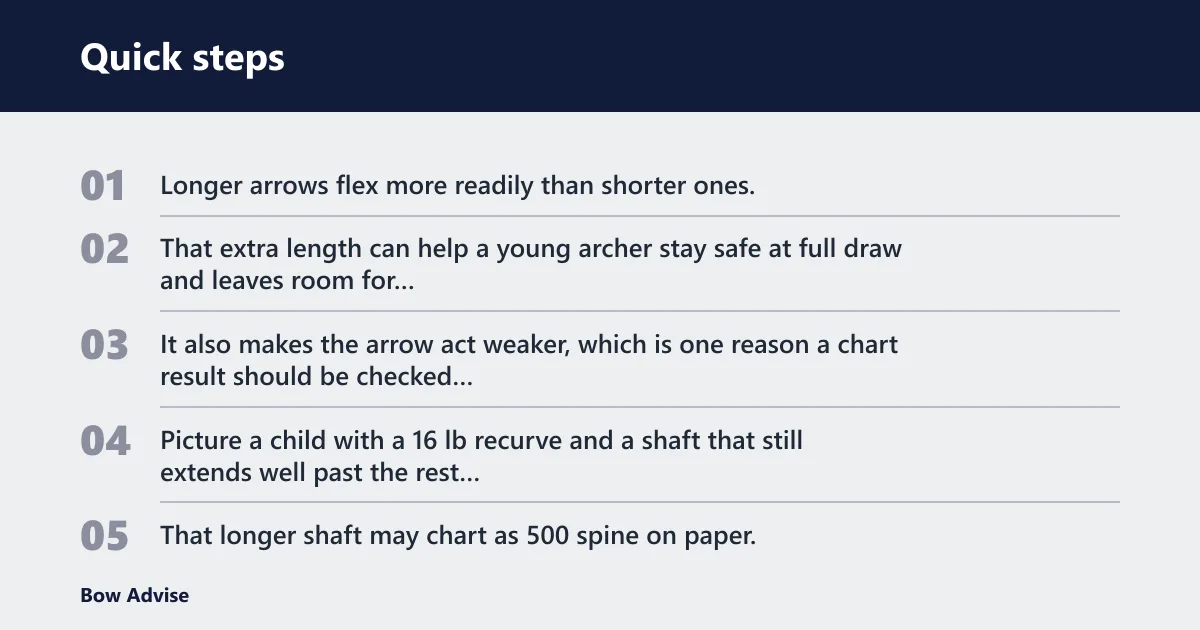
Longer arrows flex more readily than shorter ones, so youth arrows often start longer and get trimmed later. That extra length can help a young archer stay safe at full draw and leaves room for growth. It also makes the arrow act weaker, which is one reason a chart result should be checked on the actual bow before any cut is made.
Picture a child with a 16 lb recurve and a shaft that still extends well past the rest at full draw. That longer shaft may chart as 500 spine on paper, but a heavy point can make it act weaker. If the first bare-shaft result shows a tail-right tear on a right-handed setup, the answer may be point weight or length, not a new bow.
Why heavier points weaken dynamic spine
Heavier points pull the front of the arrow harder during launch, which increases flex. Field points and broadheads can change tune in different ways, so field-point tuning comes before broadhead tuning on a youth setup. A beginner arrow should be tuned for clean flight with field points first; broadheads come after the shaft is confirmed.
Why starting long and trimming later is common for youth arrows
Starting long gives more room for safe growth and avoids cutting a shaft too short before the tune is known. It also lets the coach or parent adjust the dynamic spine in small steps. Shortening an arrow stiffens it, so trimming should wait until chart checks and bare-shaft or paper tests agree.
Does release type change the spine choice?
Yes. Release style changes dynamic spine, which changes the safe starting band. Finger release shooters generally need weaker spine arrows than mechanical release users. That is why a youth recurve and a light compound of similar draw weight do not use the same starting arrow choice.
Finger release on youth recurves
Finger release adds more flex demand on the shaft than a mechanical release. For that reason, a youth recurve usually starts with a weaker spine than a compound at the same draw weight. The safer path is to begin with a forgiving chart result, then verify with bare-shaft flight before any trim.
Mechanical release on light compounds
A mechanical release often allows a stiffer starting point because the string leaves the arrow more consistently. Even so, cam system characteristics still matter, and dynamic spine depends on the full setup. A light compound may still need a weaker shaft if the arrow is long or the point is heavy.
Arrow spine decision table
This table gives a simple youth-first starting rule. It is not the final setup. Use the bow type, keep draw weight low and controllable, and confirm with a chart first, then with paper or bare-shaft checks on the actual bow before cutting.
| Setup type | Safe starting spine band | Common tuning warning signs |
|---|---|---|
| Youth recurve, about 12–18 lb, finger release | 700–900 spine | Paper tear with a weak tail-right result on a right-handed bow; bare shaft hits left of fletched; broadhead or field point groups drift apart |
| Light compound, about 18–25 lb, mechanical release | 500–700 spine | Paper tear with a stiff tail-left result on a right-handed bow; bare shaft hits right of fletched; points of impact move as shaft length changes |
| Traditional youth bow, about 10–18 lb, finger release | 700–900 spine | Short shafts group poorly; fletched arrows recover faster than bare shafts; changing point weight shifts impact a lot |
Example low-poundage combinations: a 14 lb youth recurve with a full-length shaft and a modest field point often belongs in the 700–900 band; a 22 lb light compound with a mechanical release often starts in the 500–700 band; a 12 lb traditional youth bow usually needs the most forgiving shaft in the charted band, not the stiffest one.
Conservative point-weight range: start with a moderate field point rather than the heaviest option listed for the shaft. If the arrow looks weak, do not immediately cut it shorter. First check point weight, full draw length, and the bow’s actual tune window.
Final check list for confirmation:
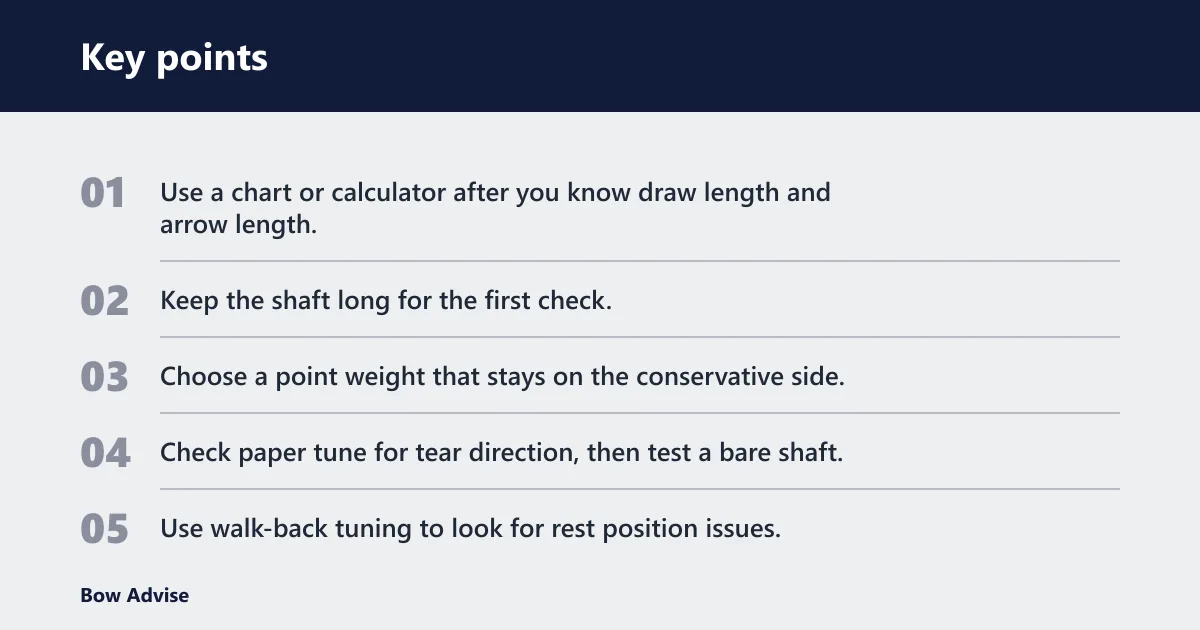
- Use a chart or calculator after you know draw length and arrow length.
- Keep the shaft long for the first check.
- Choose a point weight that stays on the conservative side.
- Check paper tune for tear direction, then test a bare shaft.
- Use walk-back tuning to look for rest position issues.
- Trim only after the arrow shows clean flight on the actual bow.
How do you confirm spine before cutting arrows?
Start with a chart or calculator, then confirm on the actual bow. The hub says to use the arrow spine calculator after you have draw length and arrow length. That is the correct order for youth gear because the bow, the shaft, and the release all change dynamic spine. The chart is the first filter, not the finish line.
Start with a chart or calculator
A chart or calculator helps narrow the field fast, especially for a parent or coach sorting through beginner options. It works best when the bow is low poundage and the arrow is still uncut. If the setup lands between two spines, do not use a blanket rule. Recheck bow type, point weight, and release style before choosing.
Confirm on the actual bow with paper tuning
Paper tuning can reveal spine and tuning issues through tear patterns. Clean bullet holes indicate proper arrow flight. That makes paper tune a useful confirmation step after the chart result, especially before a youth shaft is cut shorter. If the tear is off-center, the issue may be spine, nock height, rest position, or point weight.
Use bare-shaft and walk-back checks to verify the result
Bare-shaft testing confirms the chart result on the archer’s actual bow. Walk-back tuning identifies rest positioning issues that affect arrow flight. These checks do different jobs, and both matter before trimming. A chart can be right on paper and still need a small rest or point-weight change on the real bow.
Suppose a child’s 18 lb recurve charts to 700 spine with a full-length shaft, but the bare shaft lands left of the fletched group. That does not automatically mean the spine is wrong. A heavier point, a small rest shift, or an overly short anchor can change the result. Confirm one variable at a time.
How to tell if a youth arrow is too weak or too stiff
A weak arrow flexes too much and usually shows the opposite behavior of a stiff arrow. Paper tuning gives the first clue, bare-shaft flight confirms it, and point weight or shaft length can often correct a near miss. For youth setups, the goal is forgiving flight, not the fastest shaft on the rack.
Common paper-tuning tear patterns
Paper tuning can reveal whether the arrow is acting weak or stiff through the tear shape. A weak setup often shows a tear that points the opposite way from a stiff setup on the same bow. Clean bullet holes are the target. If the tear is large, stop and correct the setup before trimming or broadhead use.
Signs seen in bare-shaft flight
In bare-shaft checks, the bare arrow should land close to the fletched arrows once the setup is close. If it lands clearly off line, the bow still needs work. A bare shaft that reacts very differently from the fletched group often points to spine, point weight, or rest alignment, not simply poor aim.
When to adjust point weight, length, or spine
Adjust point weight first when the chart result is close and the shaft is still long. Shorten only after the arrow proves too weak for the current setup or when the archer has outgrown the starting length. Change spine only when the bow, draw length, and point weight still cannot bring the arrow into a clean tune window.
Frequently asked questions
What arrow spine should a youth archer use for a low-poundage bow?
For 20–25 lb, start closer to 500–700 spine. The exact pick still depends on bow type, arrow length, point weight, and release style, so confirm the setup before trimming.
What is the difference between static spine and dynamic spine?
Static spine is the shaft’s measured stiffness under the standard test. Dynamic spine is how that shaft behaves on the real bow once draw weight, arrow length, point weight, release method, and cam system are added. A shaft can look right by label and still tune wrong in practice.
Does arrow length matter for a child’s recurve or compound setup?
Yes. Longer arrows flex more readily than shorter ones, so length changes dynamic spine. For youth archers, starting long gives room for growth and safer fit at full draw. The tradeoff is that the longer shaft often acts weaker until the final length is confirmed by tuning.
What point weight is safest for a beginner youth arrow setup?
A conservative field-point weight is safest at the start. Heavier points weaken dynamic spine, so they can push a close setup out of tune. Begin with a moderate point weight, then confirm flight before moving heavier. Broadheads should wait until the field-point setup is clean.
Should a youth archer start with a calculator or a chart
Start with a chart or calculator after the draw length and arrow length are known. The calculator narrows the spine range, but it does not finish the job. Use it as a starting point, then confirm on the actual bow with paper tuning, bare-shaft checks, or walk-back tuning.
Why do beginner arrows still need tuning after using a spine chart
A spine chart cannot fully account for finger release, mechanical release, cam behavior, point weight, or arrow length. That is why beginner arrows still need tuning after the chart step. Paper tune, bare-shaft test, and walk-back tune give the real bow the final say before any shaft is cut.