Arrow Spine for Longbow Hunters: Avoiding Weak Flight
For longbow hunters, start with the slightly stiffer shaft if the chart leaves you between sizes, then tune point weight and brace height from there. A weak arrow can plane, open up groups, and cut penetration on game. This guide starts with the symptom, then shows the spine window and tune checks that keep hunting arrows calmer.
What longbow hunters need to know first

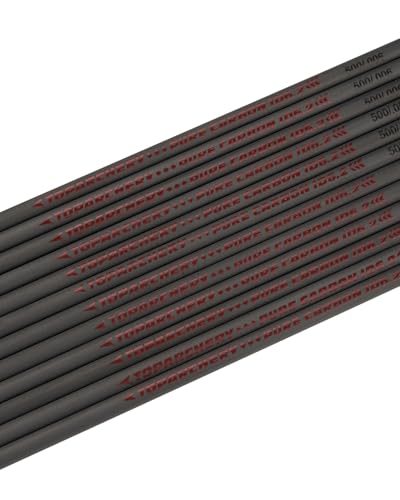

Arrow spine is the shaft’s stiffness. Lower numbers mean stiffer shafts, and the spine label comes from a static test, not from your bow in real use. For hunting, dynamic reaction matters more because draw weight, arrow length, point weight, feathers, and brace height all change how the arrow leaves the string.
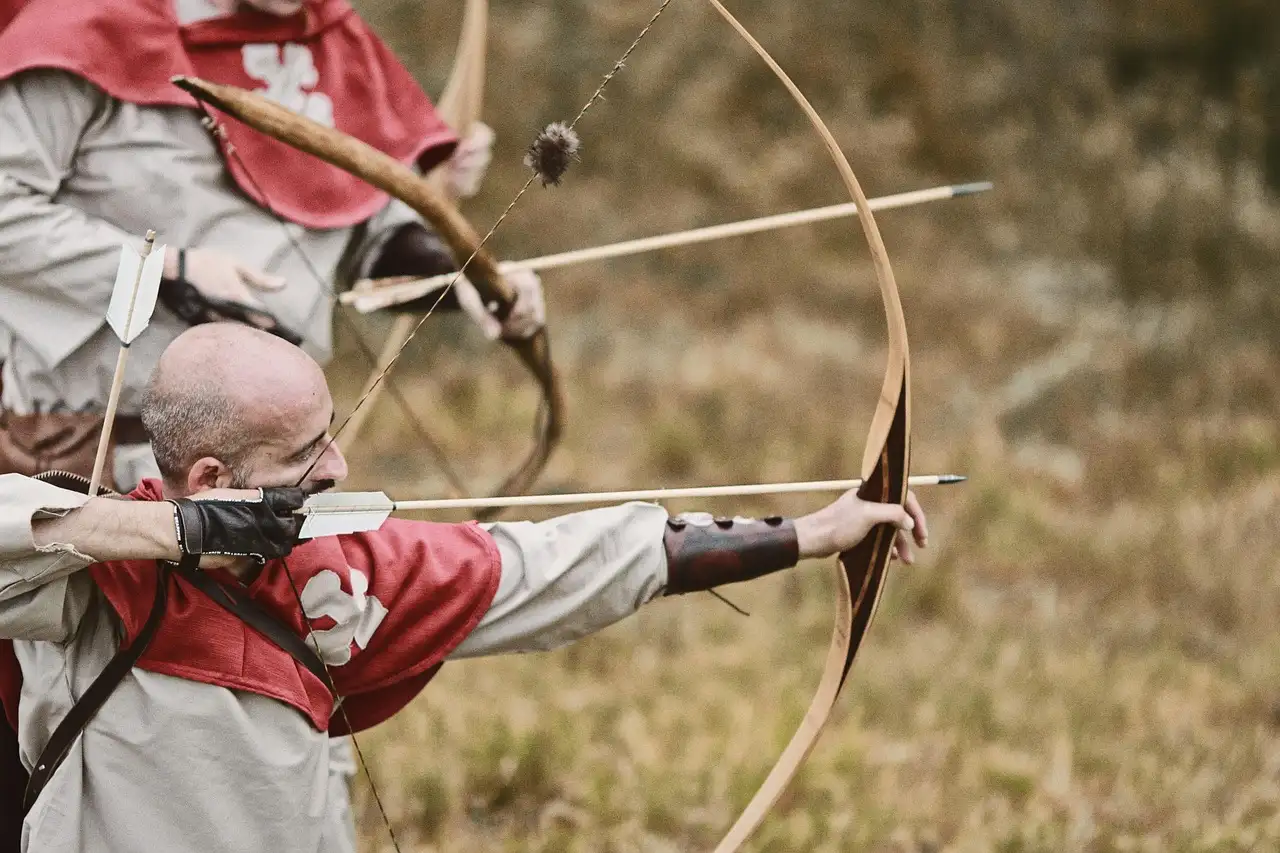
Longbows are less forgiving than center-shot bows. The arrow has to flex around the handle and shelf instead of running close to the bow’s centerline. That extra bend is why longbow setups often need a more forgiving shaft selection than many recurve or compound setups.
Weak flight often shows up as fishtail, broadhead planing, or a right-side impact for a right-handed shooter. A stiff arrow can drift left for a right-handed shooter. Those are useful clues, but they are not the whole diagnosis. A bad release, low brace height, or poor shelf clearance can create the same picture.
What you’ll need
- Your bow’s actual draw weight at your draw length
- An arrow length measurement from nock groove to pile or insert
- A manufacturer spine chart for the shaft material and brand
- Bare shafts for comparison
- Feathers on the arrows you plan to hunt with
- Field points and your hunting broadheads
- A paper tune setup
- Brace height access, plus a way to change point weight
What arrow spine do I need for a longbow hunt?
Start with the chart, then lean slightly forgiving if fixed blades are part of the plan. Match the chart to actual draw weight at your draw length, not the bow’s marked weight. If you are between sizes, a slightly stiffer shaft is usually the safer hunting choice because point weight, length, and brace height can be used to weaken dynamic reaction later.
A common hunting setup uses feathers, because feathers are more forgiving than vanes in many traditional setups and are usually paired with wooden or traditional arrows. That helps, but feathers do not erase a poor spine choice. They only make the setup less sensitive to small launch errors.
If a longbow is drawing around that weight at your anchor and the chart puts the setup between two shafts, choose the stiffer shaft. Buy the stiffer option first, leave extra shaft length, and finish the tune with point weight before cutting too short.
How do arrow length and point weight change spine?
Longer shafts act weaker. Shorter shafts act stiffer. Point weight works the same way in flight: heavier points weaken dynamic spine, and lighter points stiffen it. That is why the same shaft can tune well with one hunting head and miss with another.
Common hunting point weights are 100 to 125 grains. A 50-grain point increase moves the tune toward a weaker dynamic reaction, so it can be a useful way to soften a shaft without cutting it shorter. That is a useful rule when the shaft is close, because point changes are often easier than buying a second dozen shafts.
Keep a safety margin beyond draw length. For longbow hunting, cut only after the shaft proves close on paper and by bare-shaft or broadhead check. A long shaft can be trimmed later. A short shaft cannot be made safe again.
How do I tune longbow arrows so they don’t fishtail?
Start with paper tuning, but treat a clean bullet hole as one check rather than the final word. On traditional longbows, shelf-cut, strike plate, release quality, and arrow paradox can make paper results less definitive, so bare shafts and broadheads matter too. Tear direction can help, but it can also change with tuning method, nock orientation, and bow setup, so confirm the result before making bigger changes.
Then confirm the setup at the bow first, including centering/strike plate and nocking point, before moving on to brace height, point weight, and shaft length. Brace height changes how the bow launches the arrow. Point weight changes dynamic spine. Shaft length changes spine directly. Small changes matter, so move one variable at a time and recheck after each step.
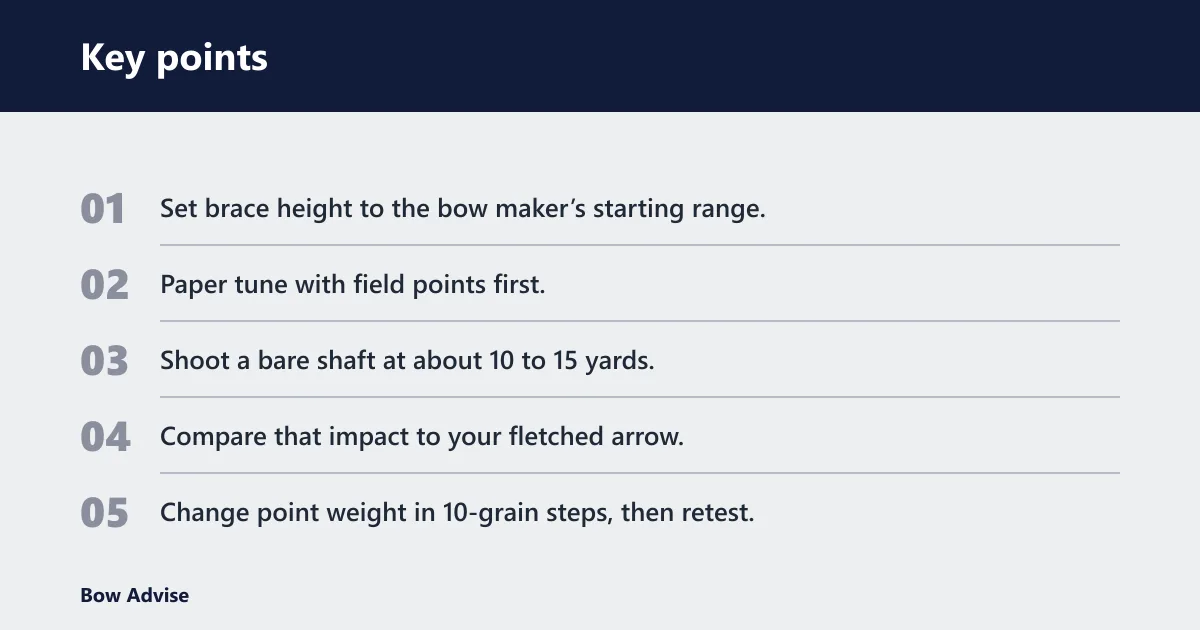
- Set brace height to the bow maker’s starting range.
- Paper tune with field points first.
- Shoot a bare shaft at about 10 to 15 yards.
- Compare that impact to your fletched arrow.
- Change point weight in 10-grain steps, then retest.
- If needed, trim about 1/4 inch to 1/2 inch at a time, then retest.
A common first-timer mistake is chasing the broadhead before the bare shaft is close. A right-handed archer sees weak arrows drift right. The fix is not always a stiffer shaft; sometimes the arrow is simply too long or the point is too heavy.
Should I go weaker or stiffer if I’m between spine sizes?
For hunting, choose the slightly stiffer shaft when you are between spine sizes. That gives more room to tune with point weight, brace height, and length. It is easier to weaken a stiff reaction than to rescue a shaft that is already too weak for the bow.
This matters most on longbows because the non-center-shot design asks the arrow to bend around the handle. A shaft that is only a little too weak can become much more sensitive once a fixed blade is installed. If the goal is hunting accuracy, a small move toward stiffer is usually the safer side.
Longbow spine troubleshooting matrix
| Observed flight issue | Most likely cause | Next adjustment to try | Buy this spine / avoid this spine |
|---|---|---|---|
| Weak flight | Dynamic spine too weak, point too heavy, or shaft too long | Drop point weight by 10 grains or trim 1/4 inch, then retest | Buy stiffer; avoid the next weaker label |
| Stiff flight | Dynamic spine too stiff or point too light | Add 10 grains at the point, or leave more shaft length | Buy weaker; avoid the next stiffer label |
| Low brace height | Arrow is reacting before the bow settles | Raise brace height in 1/8 inch steps, then retest | Keep the current spine if paper tightens |
| Too-heavy point | Dynamic spine weakened by point weight | Step down 10 to 20 grains, then confirm paper and bare shaft | Buy stiffer if the point must stay heavy |
| Too-long shaft | Arrow is acting weaker than the chart number suggests | Trim 1/4 inch to 1/2 inch at a time | Buy stiffer if full length must stay |
| Fixed-blade planing | Weak dynamic reaction, poor broadhead match, or brace height off | Confirm with bare shaft, then move to a stiffer shaft or lighter point | Buy slightly stiffer; avoid marginal weak shafts |
How much weaker should longbow arrows be than bow poundage?
Use the shaft chart first, not bow poundage one-for-one. As a practical rule, if your setup lands between sizes, start with the slightly stiffer shaft and tune from there. For carbon shafts, lower spine numbers mean stiffer shafts; for wooden arrows, use the wood chart for that material because the rating systems are not the same.
Most hunting arrows use the Easton/AMO system. In that system, a .300 spine means the shaft deflects .300 inches in the stated test, and lower numbers mean stiffer shafts. ASTM testing uses supports 28 inches apart with 880 grams hung in the middle, while wooden arrows more often use the ATA method with supports 26 inches apart. Labels can vary by material and brand, so the chart matters more than the number alone.
For deer hunting, a finished arrow weight of 400 to 450 grains is a common target. For elk hunting, 450 to 550 grains is common. Those totals do not replace the spine chart, but they do remind the archer that point weight and shaft length must work together with the bow.
Common mistakes
Buying to bow weight only is the first error. The marked bow weight is not the same as actual draw weight at full draw. Use the draw-length number instead.
Cutting arrows too short too soon is another problem. Leave extra length until the shaft is close on paper and by bare-shaft or broadhead check.
Ignoring brace height can hide the real answer. A low brace height often makes the bow less forgiving and can mimic a spine issue.
Trusting paper tune without broadhead confirmation is risky for hunters. A bullet hole with a field point can still hide broadhead drift, especially on a longbow with fixed blades.
Frequently asked questions
Is my arrow too weak for a longbow?
If a right-handed shooter sees the arrow consistently hit right, plane broadheads, or show a right tear in paper, the dynamic reaction may be weak. Check point weight and arrow length first. If the shaft is still weak after those changes, move to the next stiffer spine.
How does broadhead weight affect longbow arrow spine?
Heavier broadheads weaken dynamic spine. A 100-grain point will usually behave stiffer than a 125-grain point on the same shaft. If the broadhead makes the arrow plane, try a lighter head first, then confirm with paper and a bare shaft before changing the shaft itself.
Does a longer arrow need a stiffer spine for longbow hunting?
Yes. Longer shafts act weaker, so a longer arrow usually needs a stiffer spine to stay in tune. Keep extra length for safety until the setup is close. Then trim in 1/4 inch to 1/2 inch steps and recheck paper and broadhead flight.
What spine is best for traditional longbow arrows with feathers?
Feathers are common on traditional arrows and are more forgiving than vanes in many setups, but they do not replace a proper spine match. Use the chart for your actual draw weight, then confirm with bare shafts. If you are between sizes, choose the slightly stiffer shaft and tune from there.