Arrow Spine for Women Archers: What Usually Works Best
Start with the spine chart for your bow type, then move one step stiffer if your draw length is over about 27 inches, the point is about 100–125 grains, or you shoot a fast compound. Go softer only for short draws, heavier points, or lower-poundage recurves. Bad spine causes poor tune, fishtailing, broadhead inconsistency, and wasted arrows. This guide gives a practical spine-picking rule for women archers using draw length, point weight, and bow type, plus a simple tuning check.
This guide is part of our Arrow Spine guide for archers series.
Arrow spine basics
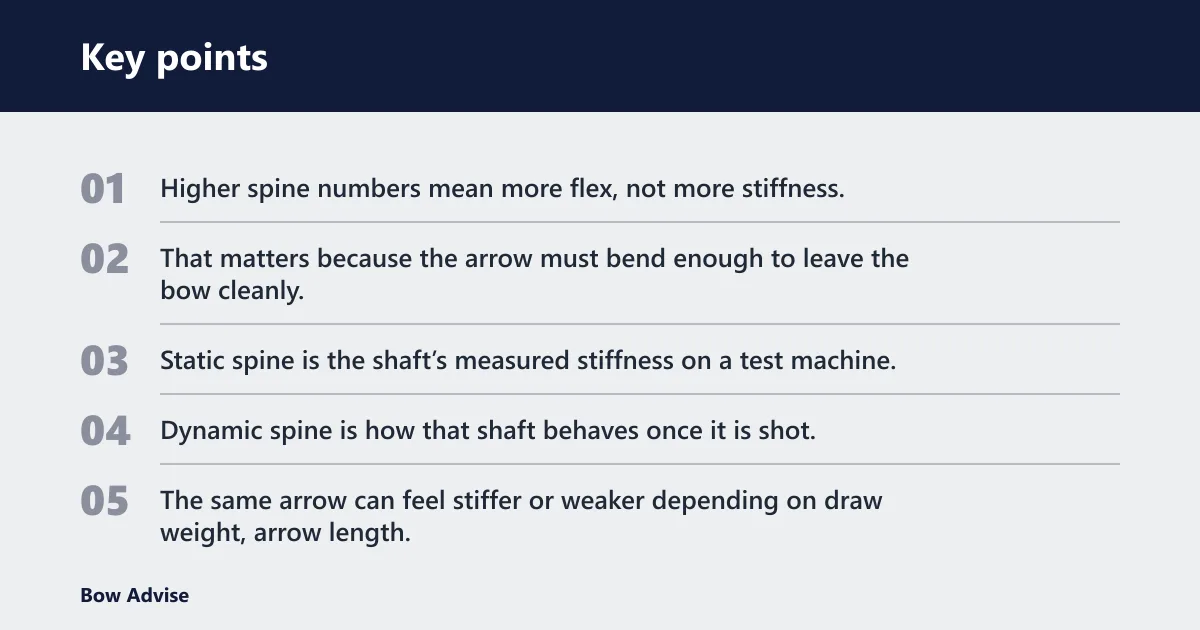

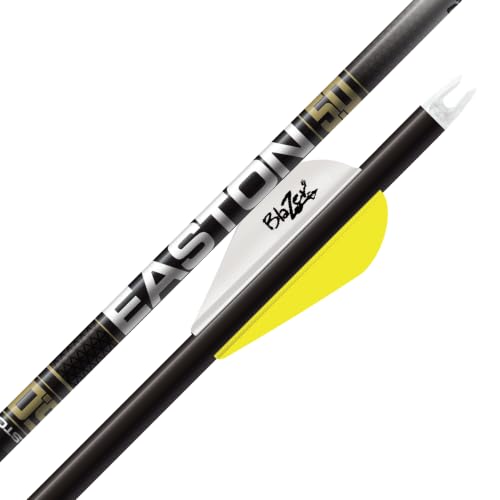
Arrow spine is the shaft’s stiffness. Higher spine numbers mean more flex, not more stiffness. That matters because the arrow must bend enough to leave the bow cleanly, yet not so much that it leaves the string inconsistently or flies with a visible tail wag.
Static spine versus dynamic spine
Static spine is the shaft’s measured stiffness on a test machine. Dynamic spine is how that shaft behaves once it is shot. The same arrow can feel stiffer or weaker depending on draw weight, arrow length, point weight, release style, and the cam system on a compound bow.
How spine is measured
Spine labels come from a deflection test. The standard test uses a 28-inch shaft with a 26-inch support span, then applies a weight and measures bend in thousandths of an inch. ASTM F2031-05 uses an 880-gram, or 1.94-pound, weight for static spine testing; ATA testing also uses a 2-pound weight and a 26-inch suspended section. (Wikipedia)
The number printed on the shaft is the deflection value. More deflection means more flex. That is why a 500 spine shaft is weaker, in the stiffness sense, than a 400 spine shaft.
Why spine changes with your setup
Draw weight is the main driver of spine choice. Higher draw weight generally needs stiffer shafts. But the setup is never just draw weight. Arrow length, point weight, bow type, and release behavior all change how the shaft acts after the string moves it.
Draw weight and spine
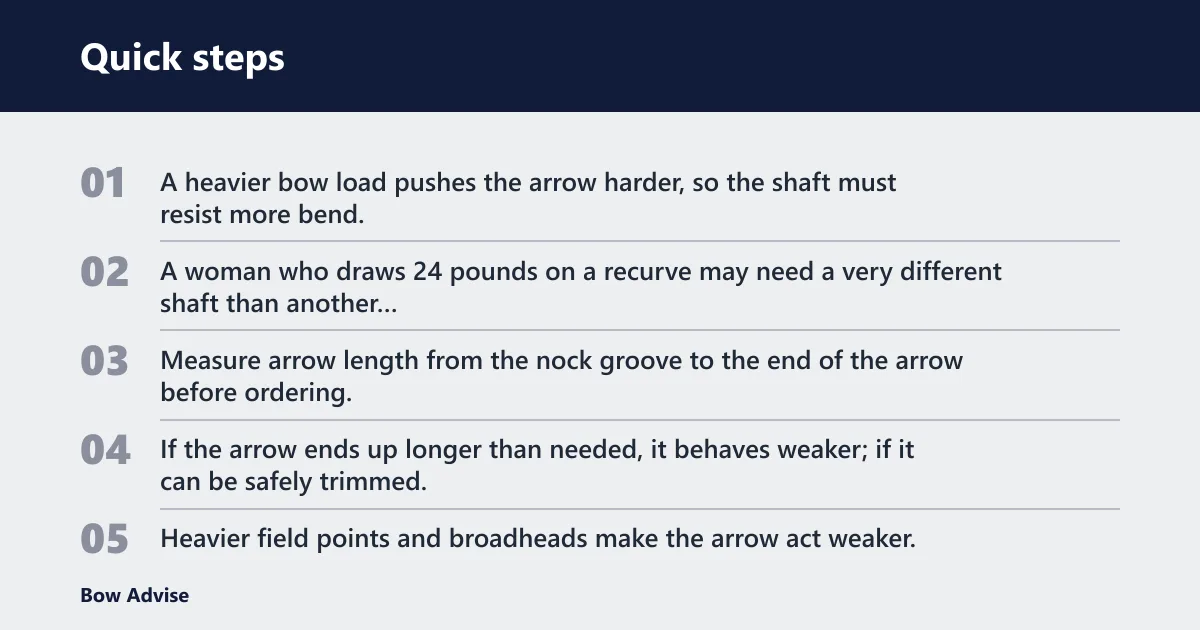
A heavier bow load pushes the arrow harder, so the shaft must resist more bend. A woman who draws 24 pounds on a recurve may need a very different shaft than another archer who draws 24 pounds on a fast compound, because the bow sends the arrow differently.
Arrow length and spine
Longer arrows flex more. Measure arrow length from the nock groove to the end of the arrow before ordering. Do not guess from shaft length in a catalog. If the arrow ends up longer than needed, it behaves weaker; if it can be safely trimmed, it behaves stiffer.
Point weight and spine
Heavier field points and broadheads make the arrow act weaker. That extra weight sits at the front of the shaft and increases flex during launch. A 125-grain point usually acts weaker than a 100-grain point on the same shaft, all else being equal.
What usually works best?
For women archers, the best starting spine is the one that matches actual draw length, bow type, and point weight, not a generic “women’s” label. In practice, short-draw recurves often start weaker, medium-draw recurves sit in the middle, and fast compounds usually need stiffer shafts than the same draw weight on a slower bow.
Short-draw recurve starting point
A short-draw recurve setup usually needs a weaker starting shaft than a chart built for average draw lengths suggests. If draw length is short, the arrow sees less energy and often behaves weaker overall. Start with the chart for the bow weight, then move softer only if the setup is light and the arrow is short enough to stay safe.
Medium-draw recurve starting point
A medium-draw recurve is the easiest place to use a normal chart, then fine-tune from there. A common starting rule is to choose the chart spine, then move stiffer if the arrow is long, the point is 100 to 125 grains, or the bow is near the top of its rated weight at full draw.
Light compound starting point
A light compound often wants a stiffer shaft than a same-poundage recurve, because the cams accelerate the arrow more abruptly and center-shot geometry changes the launch. A bow with a clean release and higher let-off can still need careful spine selection, especially if the arrow is long or tipped with a broadhead.
Women archers spine decision table
This table gives a women-specific starting framework built around common setup bands. Use it as a first pass, then confirm with tune. If you are between two options, start with the band that matches your bow type first, then adjust for arrow length and point weight.
| Setup band | Starting spine range | Arrow-length adjustment | Point-weight adjustment | If one step off, the most likely symptom |
|---|---|---|---|---|
| Short-draw recurve | 500–700 | Longer shafts act weaker; trim only as far as safety allows | Heavier points push the choice weaker | Too stiff: tail left on a right-handed setup; too weak: tail right and sloppy groups |
| Medium-draw recurve | 400–600 | Leave extra length only if needed for safety or draw growth | 100-grain points keep the shaft closer to chart; 125-grain points move it weaker | Too stiff: hard right tear or right-impact groups; too weak: broadhead planing and right tear |
| Light compound | 340–500 | Long hunting-style arrows often need a stiffer shaft than target-length arrows | Broadheads and heavier inserts make the shaft act weaker | Too stiff: broadheads impact right or group hard right; too weak: weak tear and erratic broadhead flight |
| Target setup | 400–700 | Longer indoor arrows often need a step stiffer than the chart alone suggests | Light target points keep flex down; heavier front ends move weaker | Too stiff: left tear and poor left-right forgiveness; too weak: fishtailing and vertical inconsistency |
| Hunting setup | 300–500 | Keep arrows as short as safely possible for the draw | Broadheads usually require a stiffer start than field points alone | Too stiff: broadhead impact left; too weak: broadheads plane and group poorly |
Say your draw length is 26 inches, your recurve is 24 pounds, and you want 125-grain points. A chart might point to one spine, but the longer point weight can push the arrow weaker. If the next stiffer shaft is safe at your length, that is often the cleaner bet.
Do women need different arrow spine than men?
Women do not need a special spine because of gender alone. The real inputs are draw length, draw weight, arrow length, point weight, and bow type. Smaller body size matters only because it often changes those setup numbers, especially draw length and the amount of arrow that must stay on the bow.
Why draw length matters more
Two archers can both draw 24 pounds and still need different shafts if one draws 25 inches and the other draws 28 inches. The longer draw usually sends the string farther through the shot cycle and can make the arrow act differently, which is why matching charts to actual draw length matters more than matching them to gender.
Why bow type changes the answer
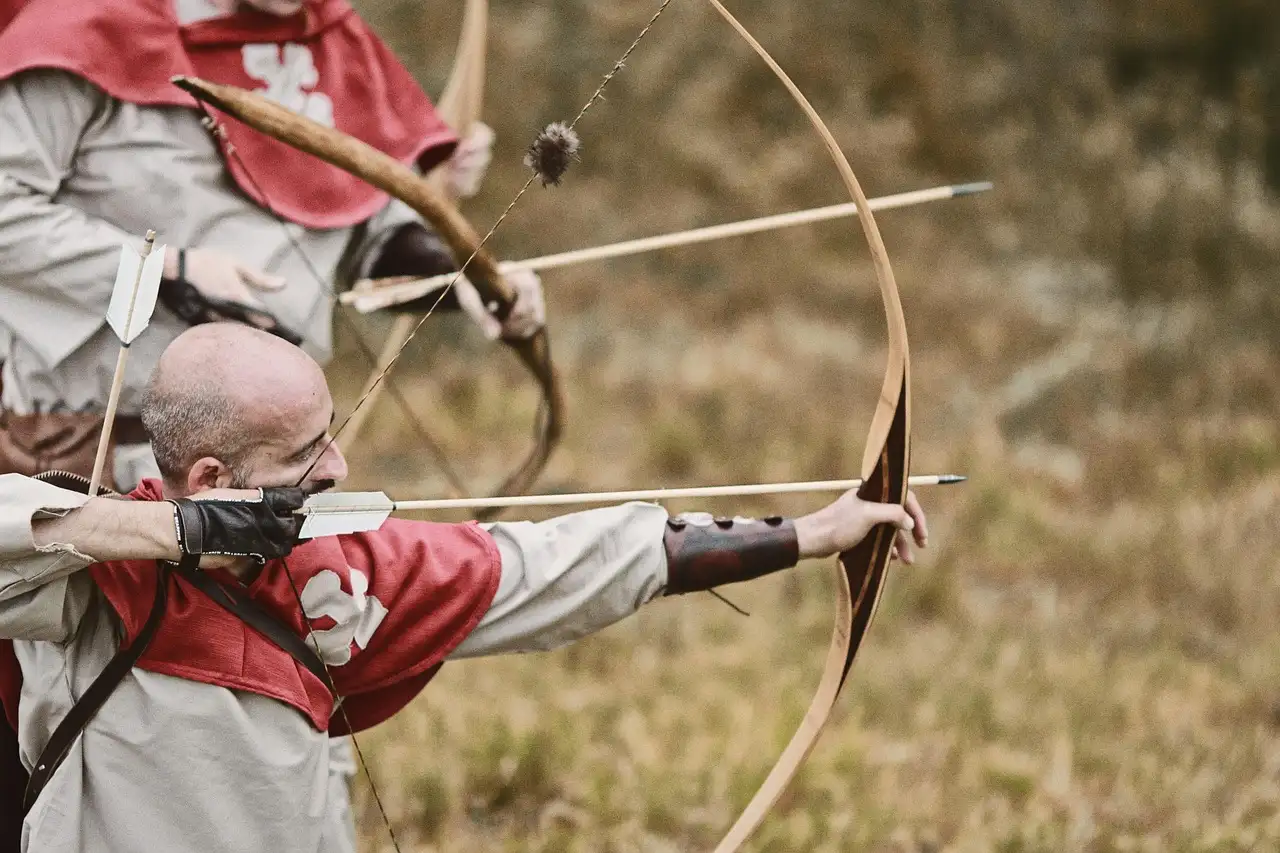
Recurve, traditional, and compound bows do not launch the arrow the same way. Center-shot compounds usually tolerate a different spine range than non-centre-shot recurves or longbows. Archer’s paradox still matters on modern bows because the shaft still flexes around the bow during launch.
How do you spot weak or stiff arrows?
Weak arrows usually show too much bend and poor left-right control. Stiff arrows usually resist bend too much and leave the bow with the opposite pattern. Paper tune and broadhead tune help confirm the direction of the problem, but arrow length and point weight still need to be checked before changing shafts.
Weak shaft symptoms
A weak shaft often gives a right tear on a right-handed bow, broadheads that plane to the right, and groups that open up when the point gets heavier. If the arrow is too weak, trimming length or moving to a stiffer shaft usually helps more than chasing rest position alone.
Stiff shaft symptoms
A stiff shaft often shows a left tear on a right-handed bow, broadheads that impact left, and a shot that looks clean on paper but still lands with poor horizontal forgiveness. If the shaft is too stiff, a longer arrow or heavier point can move it in the softer direction, within safe limits.
What paper tune and broadhead tune can tell you
Paper tune gives a fast look at arrow exit. Broadhead tune shows whether the shaft and bow setup stay stable downrange. Paper can point to weak or stiff behavior, but broadhead tune is often the better check for hunting arrows, because fixed blades react to dynamic spine problems more clearly.
How to choose between two spine sizes
If you are between sizes, bias the choice with the safest setup details first. Longer arrows and heavier points make the shaft weaker; shorter arrows and lighter points make it stiffer. When the bow is a compound with a fast cam system, many archers need the stiffer of the two options.
- Measure actual draw length and arrow length before ordering.
- Check whether the bow is recurved, traditional, or center-shot compound.
- Pick the chart spine that fits the draw weight first.
- Move softer only if the setup is short, slow, and using lighter point weight.
- Move stiffer if the arrow is long, the point is 100 to 125 grains, or the bow is fast.
- Confirm with paper tune, then broadhead tune if the arrow is for hunting.
Suppose a beginner chooses a 28-pound recurve but keeps the arrow long because trimming feels risky. That longer shaft can behave weaker than expected, so a chart spine that looked correct at first may end up acting soft. In that case, a small move stiffer is often the cleaner fix than adding more point weight.
Can a shop tune spine for me if I am between sizes? Yes. A good shop can match components, cut arrows, swap point weight, and finish the tune so the shaft lands in the right dynamic range. Custom arrow building helps because the shop can balance shaft, insert, point, and length as one system.
Frequently asked questions
What arrow spine usually works best for women archers?
The best starting spine depends on draw length, bow type, arrow length, and point weight. A women-specific chart should start with the actual setup, not gender alone. For many short-draw recurves, a weaker shaft works; for fast compounds, the next stiffer option is often the safer starting point.
Is a lighter draw weight the same thing as a weaker spine?
No. Draw weight is how hard the bow is pulled. Spine is how much the arrow bends. Lower draw weight often allows a weaker shaft, but point weight, arrow length, release style, and cam system can change the final answer enough that the two should never be treated as the same thing.
Do women archers need different arrow spine than men?
Not because of gender itself. The actual setup matters. Women often use shorter draw lengths or different bow weights, which changes the spine requirement. The correct shaft is the one that matches the bow load, arrow length, and point weight, regardless of who is shooting it.
How do I know if my arrows are too stiff or too weak?
Look for left-right impact patterns, paper tears, and broadhead flight. Too weak often shows right impact or right tear on a right-handed setup. Too stiff often shows left impact or left tear. Broadhead tune helps confirm what paper tune suggests, especially on hunting arrows.
What spine should I use for a 20 lb, 24 lb, or 28 lb bow?
Start with the chart for your bow type, then move by setup details. A 20-pound recurve often lands in a weaker spine range than a 28-pound recurve. But arrow length and point weight can shift the choice quickly, so the final answer depends on the full setup, not poundage alone.
Should I choose a different spine for recurve vs compound?
Often yes. Recurve, traditional, and compound bows launch arrows differently, and center-shot compounds usually need a different starting spine than non-centre-shot recurves. The same shaft number can behave differently across bow types because dynamic spine changes with release style and cam system.