Arrow Spine Tester Cost: What You Should Pay Today
Buy a spine tester when your arrow building or tuning needs repeatable numbers, not guesses. For most hobbyists, a mid-tier manual unit does the job; shop-grade digital systems make sense when speed, logging, or high-volume sorting matters. Cheap guesses waste shafts and tuning time. This guide breaks down what each price tier actually includes and which one fits your arrow-building workflow.
This guide is part of our Arrow Spine guide for archers series.
Verdict: what you should pay for a spine tester
The cheapest sensible buy is usually a mid-tier manual tester, not the absolute bottom end. Entry tools can work for simple sorting, but a tester with better support, clearer calibration, and broader shaft compatibility usually saves more money over time than it costs. Pro pricing is justified only when repeatability and throughput matter every week.
Best value tier for most archers
Most recurve and compound archers who build a few dozen shafts at a time should target the middle of the market. That tier tends to give firmer clamping, steadier readings, and enough range for common hunting and target shafts without paying for shop-level speed features.
When to skip the cheapest option
Skip the cheapest option if you work with carbon shafts, want cleaner repeatability, or plan to compare several shafts to one bare-shaft tune. A low-cost gauge that flexes poorly or drifts in calibration can produce inconsistent sorting, which makes tuning harder instead of easier.
When the pro price is justified
Pay pro pricing when the tester is part of a small business workflow. If the tool is used for frequent inventory sorting, mixed-material builds, or customer work, the extra spend buys time savings, better repeatability, and fewer bad shaft matches.
📊 Ace Archery Tackle Arrow Spine Tester 107 costs 18,634 Kč. Source: Ace Archery Tackle Arrow Spine Tester 107.
How much does an arrow spine tester cost?
Arrow spine testers usually fall somewhere around $40 to $500, with lower-cost manual gauges at the bottom end, mid-range models adding repeatability and better clamps, and higher-end systems offering tighter tolerances and more features. Cheap guesses waste shafts and tuning time. This guide breaks down what each price tier actually includes and which one fits your arrow-building workflow.
Entry-level price band
Entry units are built for basic spine reading and rough sorting. They are the cheapest usable option when the goal is to separate obvious shaft groups, especially for casual hobby work. They usually trade away smoother clamps, sturdier frames, and advanced calibration controls.
Mid-tier price band
Mid-tier testers usually pay for better repeatability. That often means cleaner indexing, firmer shaft support, and less play in the measuring setup. This is the point where many hobby builders stop, because the tool is accurate enough for regular tuning without pushing into shop pricing.
Pro-grade price band
Pro-grade systems push into higher cost because they are built for consistency, faster workflow, and broader use cases. That includes digital displays, tighter mechanical control, and calibration that is easier to verify during repeated use. The jump in cost is about time, confidence, and volume.
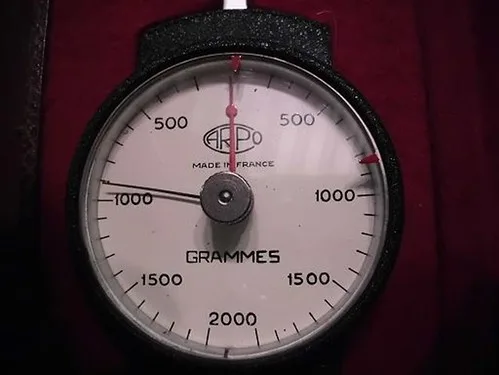
What changes as the price goes up?

Higher price usually buys better repeatability first, then better material coverage, then faster workflow. Manual testers can be fine, but digital units often cost more because they add electronics, display components, and a more controlled reading process. The real question is whether those extras fit your shaft volume and tolerance for setup errors.
Manual vs digital layout
Manual testers rely on a fixed frame and a direct reading process. Digital testers usually add an electronic readout and a more guided measurement workflow. Digital is not automatically better for every archer, but it is easier to justify when a shop needs fast, repeatable sorting across many shafts.
Shaft compatibility by material
Wood, carbon, and aluminium shafts behave differently under load, so one tester may not suit all three equally well. Carbon is common in modern archery and often needs a stable clamp and consistent load path. Wood shafts can tolerate more traditional layouts, while aluminum sits between the two.
Ace Archery Tackle Arrow Spine Tester 107 is a clear example of broader compatibility: it works with wood, carbon, or aluminium shafts, and that matters if one setup handles multiple bow types or customer requests.
Calibration quality and repeatability
Calibration is where the price gap starts to matter. Accurate calibration reduces drift between readings, while permanent calibration means the system is designed to hold its reference setting rather than needing frequent re-zeroing. That matters when comparing shafts that look similar but tune very differently.
A tester with poor repeatability can sort the same shaft into two different groups on two passes. That leads to mixed sets, weak confidence in the reading, and wasted shafts.
Which spine tester features matter most?
The best features are the ones that match your shaft range, material mix, and tolerance for setup work. A long feature list is not useful if the tester does not cover the stiffness you actually buy, or if the calibration is hard to trust after repeated use.
Measurement range
Spine range should cover the stiffness band you shoot. A tester that reaches roughly 25 to 200 lbs can cover a wide range of common arrow choices, from softer shafts to much stiffer ones. If the range is too narrow, some shafts cannot be measured in a meaningful way.
Calibration method
Look for clear calibration language, not vague accuracy claims. Permanent calibration is valuable when the tool will be used often, because it reduces the chance that the measuring baseline shifts over time. For a shop, that is more useful than cosmetic extras.
Build quality and adjustability
Solid shaft support, stable contact points, and easy adjustment matter because they affect whether readings stay consistent. If the setup flexes or the shaft is not held the same way each time, the result may reflect the tester’s looseness rather than the shaft’s spine.
Carbon-specific positioning
Some digital models are positioned mainly for carbon shafts. That is useful if your workflow is focused on modern carbon arrow builds, but it can be a limit if you also work with wood or aluminum. Carbon-specific tools are often about speed and consistency, not universal compatibility.
Price-tier decision table: entry vs mid vs pro
| Tier | Typical cost | Measurement range | Shaft compatibility | Calibration method | Best fit | Buy or no-buy |
|---|---|---|---|---|---|---|
| Entry | About $40 to $100 | Often narrower and more basic | Usually best for one material family at a time | Simple manual setup | Hobbyist sorting a small number of shafts | Buy only if you need basic spine sorting; no-buy if you need broad compatibility |
| Mid | About $100 to $250 | Commonly wider and more useful | Often workable for carbon and some mixed builds | Better repeatability and firmer calibration control | Small arrow builders and serious hobbyists | Buy as the cheapest sensible option for most users |
| Pro | $250+ | Broader coverage, often up to shop needs | Best for mixed workflows and high volume | Digital or tightly controlled calibration | Small shops and frequent builders | Buy if the tester will earn its cost in time saved; no-buy for casual use |
How do the Ace Archery Tackle 107 and COOPS Digital Carbon PRO compare?
The Ace Archery Tackle Arrow Spine Tester 107 is a broad-compatibility, fixed-calibration option, while the COOPS Digital Spine Tester Carbon PRO is a digital model focused on carbon shafts and priced in the several-hundred-euro range. The Ace unit covers wood, carbon, and aluminium; the COOPS model is aimed at carbon shafts and is listed with limited stock.
Ace Archery Tackle 107 at 18,634 Kč
This tester measures spine from 25 to 200lbs, works with wood, carbon, or aluminium shafts, and claims accurate and permanent calibration. It also aims to improve arrow quality control and better match arrows to a bow setup. That makes it the stronger pick when one tool must cover several shaft types.
COOPS Digital Spine Tester Carbon PRO at 518,81€
This is a digital model with carbon-specific positioning and limited availability. The price places it in a pro-leaning bracket, but the narrower material focus means the value depends on whether the workflow is mostly carbon arrow building rather than mixed-material sorting.
Which one fits a small setup
For a small setup, the Ace makes more sense if the work includes wood, carbon, and aluminium. The COOPS unit makes more sense if the shop is carbon-only and wants a digital workflow. Mixed-material builders usually need versatility more than a carbon-only digital display.
Who is each spine tester tier for?
Tier choice should follow workload, not ego. Recurve archers often need dependable spine sorting more than advanced electronics. Compound bow tuners may care more about repeatability and fine sorting. Arrow builders and small shops usually benefit from better calibration and broader material support.
Recurve archers
Recurve shooters who build a few sets a season can usually start in the mid tier. The goal is to sort shafts cleanly enough for a tuned setup without paying for shop throughput they will not use.
Compound bow tuners
Compound archers often want stronger repeatability, especially when comparing multiple shaft groups. If the setup is used for hunting arrows or a consistent target build, a better-calibrated mid-tier or pro-grade unit is easier to justify.
Arrow builders and small shops
Small shops should look for pro features only when they are tied to volume or customer work. The extra cost pays back through fewer bad matches, less rechecking, and more consistent inventory sorting.
Who should wait
Someone building a single dozen arrows once a year should probably wait. A basic jig and careful selection may be enough until the volume rises. Paying for pro calibration without a real workflow need is hard to justify.
What goes wrong with an under-specified tester?
An under-specified tester can miss the stiffness range you actually need, give unstable repeat readings, or fail to support the shaft material cleanly. The result is simple: shafts get sorted wrong, tuning takes longer, and the finished arrows may group poorly.
Say your setup uses stiff carbon shafts near the edge of the tester’s range. A weak frame or loose clamp can make them read inconsistently, so a shaft that should be a keeper ends up in the wrong pile.
A common first-timer mistake is choosing the cheapest arrow spine tester, then realizing it struggles to read heavier carbon shafts accurately or drifts after a few sessions. That creates false confidence, and false confidence costs shafts.
How do I compare two spine testers by price and calibration features?
Compare them in this order: first range, then material compatibility, then calibration method, then price. A cheaper tester that cannot cover your shafts is not a bargain. A more expensive tester with permanent calibration and better repeatability may be the lower-cost choice over time.
- Check the spine range first and make sure it covers your stiffest and softest shafts.
- Confirm which shaft materials it supports: wood, carbon, aluminium, or only one of them.
- Look for clear calibration language, especially permanent calibration or repeatability claims.
- Match the design to your workflow: hobby use, small builder, or shop use.
- Buy the cheapest model that covers all of that without forcing you to rework your process.
Frequently asked questions
How much does an arrow spine tester cost?
Most arrow spine testers sit somewhere between basic manual tools and shop-grade systems. The practical buying bands are about $40 to $100 for entry tools, $100 to $250 for stronger repeatability, and $250+ for higher-end units. The right band depends on how often you sort shafts and how many materials you handle.
Why are digital spine testers so expensive?
Digital spine testers cost more because they add electronics, display components, and often a more controlled measuring process. That price also reflects better repeatability and easier workflow in higher-volume use. The extra cost only makes sense if the digital readout actually saves time or reduces sorting errors.
What is the cheapest usable spine tester for carbon arrows?
The cheapest usable carbon option is usually the least expensive tester that still holds the shaft firmly and gives repeatable readings. For carbon specifically, a low-cost tool that drifts or flexes badly is a bad deal. If carbon is the main material, spend enough to avoid shaky calibration.
Can one spine tester measure carbon, aluminum, and wood shafts?
Yes, some testers can handle all three, but not all do it equally well. The Ace Archery Tackle Arrow Spine Tester 107 is one example with wood, carbon, and aluminium compatibility. Before buying, check whether the shaft support and calibration method are meant for mixed materials or only one type.
What spine range should a tester cover for archery shafts?
A useful tester should cover the stiffness range you actually buy. A 25 to 200lbs span is broad enough for many common arrow setups and gives room for softer and stiffer shafts. If your shaft mix is narrow, you may not need that much coverage, but mixed builds benefit from it.
Is a digital spine tester worth it for a small arrow-building setup?
It can be, but only if the setup sees enough volume to justify the higher price. Digital helps when repeatability and speed matter more than the lowest purchase cost. For a small builder who makes a few sets a season, a well-calibrated manual unit is often the smarter buy.