How Much Does an Arrow Spine Test Cost? Prices Explained
A pro-shop arrow spine test usually costs less than a full tuning session; a more complete tune with bare-shaft or paper tuning can cost noticeably more, while a basic home check costs little if you already own a scale and measuring tools. Skip it, and you can chase poor grouping, broken shafts, and broadheads that plane off target. This guide splits shop pricing, what the test covers, and when a cheap DIY check is enough.
How much does an arrow spine test cost?
A quick spine check is often the cheapest path, and many pro shops charge a modest fee for a simple look at spine fit, arrow length, and point weight. A paid tuning session usually costs more because it includes labor, setup changes, and repeated shots. Buying a tester has the highest upfront cost, but it can pay off after several setups.
Typical price ranges
- Quick shop check: about $20 to $60 when the shop is only confirming shaft fit and basic setup variables.
- Full tuning session: about $50 to $150 when the shop is doing bare-shaft tuning, paper tuning, or repeated adjustments.
- Tester purchase: low-cost manual tools can be far cheaper than repeated service calls, but the real cost depends on accuracy and build quality.
What changes the price
The price moves with shop time, arrow count, and how much adjustment is included. A fast check on three hunting arrows is a different job than sorting a dozen shafts, cutting them, weighing points, and retesting after a draw-length change. Bundled service packages usually cost more upfront and less per task.
What does an arrow spine test measure?
An arrow spine test measures how stiff a shaft is and whether that stiffness matches the bow setup. It does not rate overall arrow quality. The number on the shaft is only the starting point, because arrow length, point weight, bow poundage, and release type can change how the arrow acts in flight.
Static spine and the shaft deflection number
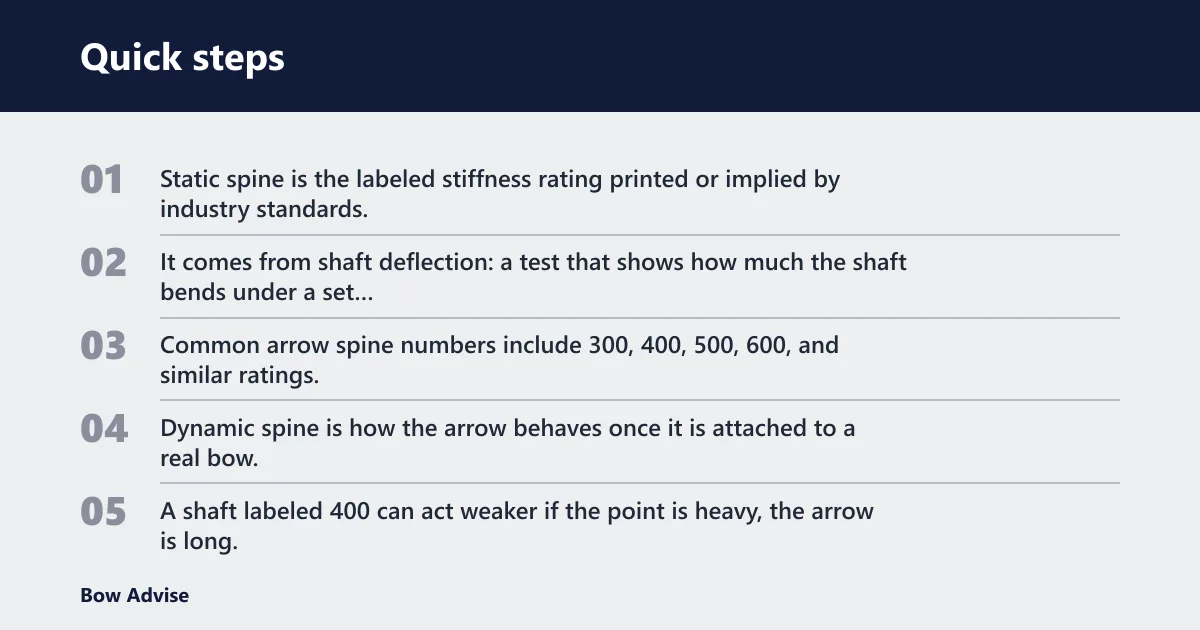
Static spine is the labeled stiffness rating printed or implied by industry standards. It comes from shaft deflection: a test that shows how much the shaft bends under a set load. Common arrow spine numbers include 300, 400, 500, 600, and similar ratings, with lower numbers indicating stiffer shafts.
Dynamic spine and the setup factors that change it
Dynamic spine is how the arrow behaves once it is attached to a real bow. A shaft labeled 400 can act weaker if the point is heavy, the arrow is long, or the draw weight is high. It can act stiffer if the arrow is short, the point is light, or the bow is under less load.
Why the same shaft can act stiffer or weaker after setup changes
That shift is why a labeled spine is not the final answer. A recurve with fingers, a compound with a release aid, and a hunting setup with a broadhead can all ask different things from the same shaft. The label stays the same; the dynamic result does not.
Is an arrow spine test free at a pro shop?
Sometimes, but not always. Some shops will do a quick look at no charge when you are buying arrows or having them cut, while others charge labor for any time spent confirming spine, weighing components, or tuning the bow. The free check is usually basic; the paid version usually includes actual adjustment work.
When shops do free checks versus when they charge labor
A free check often covers a fast confirmation that your chosen shaft is in the right range. If the shop must cut arrows, swap point weights, or retune after the first shot test, labor usually applies. Walk-in pricing can be lower for a simple check; appointment pricing often covers more time and more variables.
What you should expect the shop to measure or adjust
A pro shop may check arrow length, total arrow weight, point weight, and bow poundage. Some also check nock fit, rest position, center-shot, and whether the arrows need cutting before a final call. That matters because the test is only useful if it reflects the actual setup.
Price spread can be wide
Service pricing can vary far beyond archery. Some sites charge anything from a few U.S. dollars to as much as $300 for certain services, an IDP is available for a small fee, and a specialist site offers a “translation” of your current driver’s license. Ask what is included before you pay.
How much is an arrow spine tester?
An arrow spine tester can be cheap or expensive depending on whether it is a manual lever-style tool or a measurement device with tighter tolerances. Home units may cost much less than repeated tuning sessions, but the value depends on how often arrows change and whether the tester works with wood, carbon, and aluminum shafts.
Manual lever-style testers and low-cost home setups
Manual lever-style testers are the most common budget option. They support a shaft at a fixed span and apply a load so you can compare deflection. Simple home setups can work for wood, carbon, and aluminum, but they are best for relative checks, not laboratory-grade numbers.
Measurement tools and higher-price bench tools
More expensive bench tools and digital measurement devices cost more because they are built for repeatability and better resolution. These tools make more sense if you sort many shafts, build arrows for several bows, or change setup variables often. For a one-bow setup, they can be overkill.
Which materials each tester type works with
- Wood: useful for traditional shafts, where spine variation can be larger from shaft to shaft.
- Carbon: common for hunting and target arrows; many testers can handle it, but accurate support matters.
- Aluminum: easy to measure on many bench tools; useful for older target and indoor setups.
What affects the price of arrow spine testing?
Bow poundage, arrow length, point weight, release type, and material all affect how much work the test takes and whether the shop needs to retest after changes. Recurve and compound bows also change the process. A simple check is cheaper than a full tuning job because fewer variables are adjusted.
Bow poundage and whether the bow is a recurve or compound
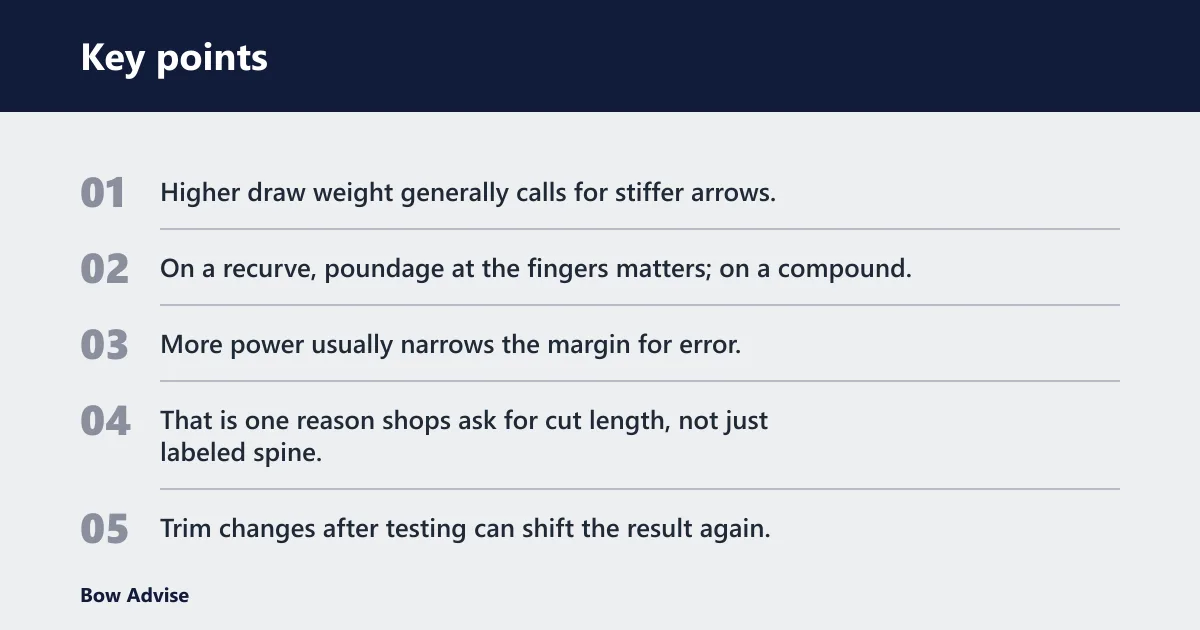
Higher draw weight generally calls for stiffer arrows. On a recurve, poundage at the fingers matters; on a compound, peak weight and letoff affect how the arrow reacts during launch. More power usually narrows the margin for error, so shops may spend more time confirming the match.
Arrow length and why longer shafts read weaker dynamically
A longer shaft weakens dynamic spine. That is one reason shops ask for cut length, not just labeled spine. Trim changes after testing can shift the result again, so the price can rise if the first check leads to a cut-and-retest cycle.
Point weight, in grains, and how heavier points change the result
Heavier points weaken dynamic spine. A 100-grain tip and a 125-grain tip do not act the same. Fine-tuning with point weight is useful, but each change adds time if the shop is verifying the result after every swap.
Release type and why fingers and mechanical releases can change tuning needs
Finger release and mechanical release do not launch the shaft the same way. Fingers add flex around the bowstring, and many recurve setups need different spine than a compound with a release aid. That difference is why the same shaft can work in one setup and fail in another.
Suppose you pay for an arrow spine test after buying a set of aluminum arrows for a light recurve, only to learn the nock and point combination pushed the spine far outside the recommended range. A shop check may cost $30, but replacing a full dozen and broadheads can cost much more.
Suppose a beginner recurve shooter is choosing between 500 and 600 spine shafts for a 28-inch arrow with 100-grain points. A $25 walk-in check can be cheaper than buying both sets, especially if the shop cuts the shafts and confirms nock fit at the same time.
When is paying for a test cheaper than buying the wrong arrows?
Paying for a test is cheaper when it prevents a bad arrow order, repeated restocking, or time wasted chasing tune issues. A single service fee is often the better buy for beginners. A tester starts to make financial sense when the same archer changes setups often or builds arrows for more than one bow.
Beginner setup: one check before buying a full dozen
If the plan is one bow and one arrow setup, a low-cost shop check is usually the best value. It reduces the risk of buying the wrong spine, and it may include cutting and weight checks. That is often cheaper than buying a tester and learning it from scratch.
Hunter setup: why a small tuning fee can beat a bad bulk order
Hunters often need a small number of arrows, but the cost of a wrong choice is high because broadheads are less forgiving. A tuning fee can be the cheaper option if it saves one bad batch, especially when the setup is already close and only fine tuning is needed.
Repeat tuning: when a tester starts to make financial sense
If the bow poundage changes, the arrow length changes, or several arrow builds are planned, a tester can pay back over time. The break-even point comes faster for coaches, club families, and archers who tune for more than one bow. One service call is cheaper than ownership; repeated service calls are not.
Cost breakdown: shop check, tuning session, or DIY tester
The right choice depends on how often the setup changes and how much help is needed. A free or low-cost shop check is best for one-time confirmation. A paid tuning session fits arrows that need adjustment. A DIY tester makes sense when repeated testing costs more than buying the tool.
| Scenario | Typical cost | What is included | Best use case | Break-even logic |
|---|---|---|---|---|
| Free or low-cost pro-shop check | $0 to $60 | Basic spine match, quick arrow length check, possible weight check | One bow, one arrow setup, beginner purchase | Cheapest if you only need one decision before buying |
| Paid tuning session | $50 to $150 | Spine review, cutting, point-weight changes, bare-shaft or paper tuning, advice | Setup changes, hunting arrows, hard-to-tune bows | Cheaper than replacing a bad dozen or chasing bad flight for weeks |
| DIY tester purchase | Varies by tool quality | Manual or digital shaft measurement for repeated checks | Multiple bows, frequent setup changes, arrow builders | Best after several paid sessions or if arrow changes are ongoing |
- Use a shop check first if you are buying your first dozen arrows.
- Pay for tuning if the first setup still groups poorly after a basic match.
- Buy a tester only when repeated checks are likely over several seasons or bows.
Frequently asked questions
What does an arrow spine test include?
A good test checks shaft stiffness against bow setup, then looks at arrow length, point weight, and bow poundage. Many shops also verify cut length and arrow weight. Better tuning sessions may add bare-shaft or paper tuning so the recommendation matches real flight, not only a chart.
Can I do an arrow spine test at home?
Yes, if you are careful with measuring tools and accept the limits. Home testing can confirm the basics, especially for repeat setups. It is less useful when the bow, draw weight, or arrow design changes often, because small errors in setup can skew the result.
Is a spine tester worth buying for beginners?
Usually not if the beginner owns one bow and plans only one arrow build. A low-cost shop check is often cheaper and simpler. A tester becomes more useful when there are multiple bows, frequent limb changes, or repeated arrow builds for different seasons and draw weights.