How to Pick Arrow Spine for Broadheads Without Guessing
Pick arrow spine for broadheads by matching the shaft to your actual arrow length, point weight, and draw weight, then confirm with paper and broadhead flight; don’t choose from draw weight alone. Wrong spine can make broadheads plane, group badly, and waste arrows while hiding the real problem. This guide orders the variables and gives a broadhead-specific tuning checklist.
Arrow spine decision table
Start with the bow setup that will actually be shot. Arrow spine is a static deflection rating measured over a 28 inch span with a 1.94 pound weight, and a 500 spine shaft sags half an inch in that test. Lower numbers mean stiffer shafts, but dynamic spine is what matters in the real setup.
| Setup input | Starting spine range | If the broadhead does X, check Y first |
|---|---|---|
| 50 to 55 lb compound, 28 in arrow, 100 grain head | 500 to 400 | Left impact or tail-right tears: shorten point/insert first, then move stiffer if needed |
| 60 lb compound, 28 in arrow, 100 to 125 grain head | 400 | Broadhead plane to the left: check rest tune and spine before blaming the head |
| 60 lb compound, 29 in arrow, heavier insert and 125 grain head | 350 to 400 | Broadheads hit low and wander: inspect nock height and weak dynamic spine first |
| 45 to 50 lb recurve, 29 in arrow, 100 grain head | 500 to 600 | Broadheads kick right for a right-handed shooter: try weaker shaft before adding more point weight |
| Traditional bow, shelf shot, heavy fixed blade, long shaft | Usually weaker than compound chart output | Field points group but broadheads plane: verify nock fit and shaft reaction, then step down spine if needed |
This table is a starting point, not a final answer. Manufacturer charts differ, and the same label can behave differently once you change arrow length, insert weight, or bow type. A 60 pound bow paired with a 28 inch arrow starts around 400 spine in the example chart, and that chart assumes a 100 to 125 grain point for compounds.
What arrow spine means
Arrow spine is the shaft’s stiffness rating. Lower numbers mean stiffer shafts. That much is simple. The harder part is that the shaft in a chart is not the same as the shaft in a bow, because dynamic spine changes after you add arrow length, point weight, insert weight, and the way the bow sends the shot.
Static spine vs dynamic spine
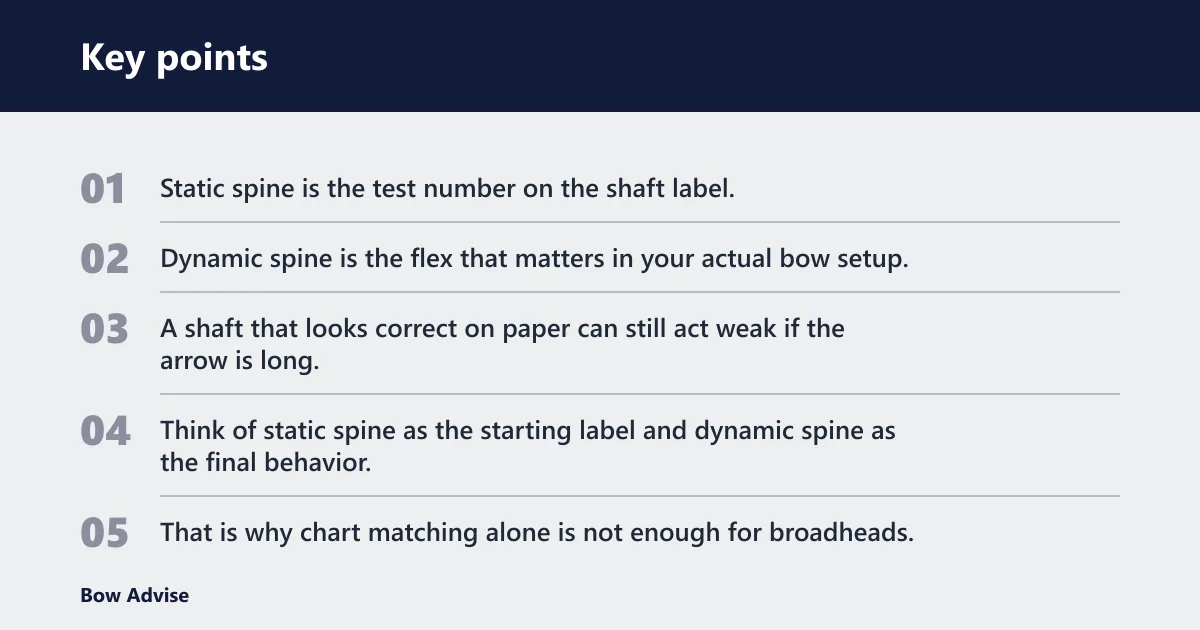
Static spine is the test number on the shaft label. Dynamic spine is the flex that matters in your actual bow setup. A shaft that looks correct on paper can still act weak if the arrow is long, the front end is heavy, or the bow is a hard-camming compound that loads the shaft aggressively.
Think of static spine as the starting label and dynamic spine as the final behavior. That is why chart matching alone is not enough for broadheads. Fixed-blade heads show the mismatch sooner than field points do.
Why charts are only a start
Draw weight shifts spine requirements by roughly one group per 10 pounds, but draw weight alone is not enough to choose spine. Each additional inch of arrow length weakens dynamic spine by roughly one group, and point and insert weight can shift spine about one group per 25 to 30 grains. Those changes stack fast.
Suppose a hunter moves from a 100 grain field point to a brass insert plus a 125 grain broadhead. That front end can weaken a shaft by two full groups. If the arrow length is still unsettled, ordering a full dozen is a bad bet.
How do I choose arrow spine for broadheads?
Choose broadhead spine in this order: actual draw weight at full draw, then the arrow length you will really shoot, then the point and insert weight you plan to hunt with, then the bow type. That order matters because each input changes dynamic spine differently, and fixing the wrong one first can lead to a bad purchase.
Use actual draw weight at full draw
Use the actual weight at draw length, not the label on the bow. A 70 pound label does not matter if the bow measures less at the archer’s draw length. Compound and recurve setups also use different assumptions, so the chart line for one will not always fit the other.
For compounds, many charts assume 100 to 125 grain points. Recurve and traditional bows shot off the shelf usually need weaker shafts still, because finger release changes arrow reaction. That is why a compound chart can look “correct” and still fail on a traditional setup.
Start with the shaft length you will shoot
Set arrow length before ordering shafts. Longer arrows behave weaker than shorter ones, and each added inch can move one spine group depending on the chart. If the shaft will be trimmed later, base the decision on the final cut length, not the raw shaft length in the box.
That simple step prevents one of the most common mistakes: buying spine for a long temporary setup, then cutting the arrow shorter and ending up too stiff. Once cut, that mistake is hard to undo.
Match the point weight you plan to hunt
Point weight and insert weight both weaken dynamic spine. A 100 grain broadhead is the standard reference weight, but heavier heads and heavier inserts shift the setup weak. Brass inserts add up quickly, especially on a long shaft. Spine and front of center move together here.
Front of center changes when added weight goes forward, so a heavier point can improve FOC while also pushing the shaft toward a weaker dynamic reaction. That tradeoff matters in broadhead tuning. A shaft that flies clean with field points may still need more spine once the hunting head is on.
What spine arrow do I need for my bow?
Start with a manufacturer chart, but feed it the real numbers: actual draw weight, final arrow length, and the point or broadhead weight you plan to use. Do not lock in a dozen shafts until that trio is settled. Then verify the choice with bare shaft tuning before buying more arrows.
Compound bow setup
A compound bow often accepts stiffer shafts than a traditional bow at the same draw weight, but hard cams can effectively weaken spine once the shot is released. That is why some compound setups need a stiffer label than the raw draw weight suggests. Broadheads also reveal rest or nock problems faster than field points.
Recurve and traditional bow setup
Recurve and traditional bows usually need weaker shafts than compounds at the same weight because the arrow must clear the shelf and absorb finger-release effects. Actual weight at draw length is the correct input here too. If the bow is shot off the shelf, assume the chart needs more forgiveness, not less.
Heavy-front hunting setup
Heavier front ends push dynamic spine weaker. That includes brass inserts, long insert systems, and heavier broadheads. If a broadhead planing issue shows up after a point-weight change, check the front end first. In many cases, the shaft is not “bad”; it is just under-spined for the new front load.
Broadhead types and spine
Broadhead type changes how much tuning error you can see. Fixed-blade broadheads are the most reliable choice for bone-contact shots, but they expose spine and launch issues more than field points. Mechanical and hybrid heads can hide some problems, then show different behavior once they open or load the shaft differently.
Fixed-blade heads
Fixed-blade broadheads create more steering demand. They magnify weak spine, poor nock alignment, and rest timing issues. If field points group but fixed blades plane, the setup still needs work. Do not assume the head is the only issue.
Mechanical heads
Mechanical broadheads often fly closer to field points because the blades stay closed in flight. That can make them look forgiving, but the arrow still needs sound spine and tune. A mechanical head can hide a weak setup that would fail once a fixed blade is tried later.
Hybrid heads
Hybrid heads sit between the two. They may be less sensitive than a large fixed blade, but they still add front-end weight and can expose weak shaft choice. If a hybrid groups well and a fixed blade does not, that usually points back to spine, rest tune, or broadhead alignment rather than to the shaft brand alone.
How do I tune a broadhead to my arrow?
Tune broadheads in this order: bare shaft tuning first, paper tuning next, then walk-back tuning, then broadhead tuning. That sequence isolates the problem before broadheads are added. If you skip straight to broadhead impact, you can end up chasing the wrong fix.
Bare shaft tuning first
Use a bare shaft to verify the chart choice before buying a full dozen. A bare shaft shows weak or stiff flight faster than a fletched shaft. If the bare shaft kicks hard, the setup needs correction before broadhead tuning makes any sense.
- Set the bow to the planned draw weight and arrow length.
- Install the same point or broadhead weight you plan to hunt with.
- Shoot a fletched arrow and a bare shaft at close range.
- Compare impact and tail direction, then adjust one variable at a time.
If the broadhead hits left for a right-handed shooter and the bare shaft also shows weak behavior, check spine and front weight first. If the bare shaft is clean and only the broadhead drifts, look at blade alignment, rest tune, or broadhead condition.
Paper tuning next
Paper tuning checks initial arrow flight. It is useful for seeing whether the shaft leaves the bow cleanly. A tear that points to weak or stiff reaction should be corrected before broadhead work begins, because paper can expose a problem earlier than a target face can.
Say a compound shooter sees a tear that looks weak, then swaps to a heavier broadhead without changing anything else. The tear often gets worse, because the front end now weakens dynamic spine further. Fix the paper tear first, then revisit the hunting head.
Walk-back tuning before broadheads
Walk-back tuning at about 20 to 40 yards can check consistency after a paper tune. It helps confirm that the arrow is tracking straight through distance, not just at close range. If the shaft walks off line, do not move to broadhead tuning yet.
A common first-timer mistake is to trust one good group at 20 yards and call the bow done. Then the broadheads hit left at 40. Walk-back tuning catches that gap before a hunting head is blamed for a setup error.
Our picks by need
These are setup tools and shafts that fit specific needs. Based on the manufacturer’s specs, published product details and buyer feedback, each one fills a different part of the process. None of them replace tuning, and none should be used as proof that a chart is right without a shaft check.
Beginner compound hunter: Easton 6.5 hunter Classic carbon arrow shafts

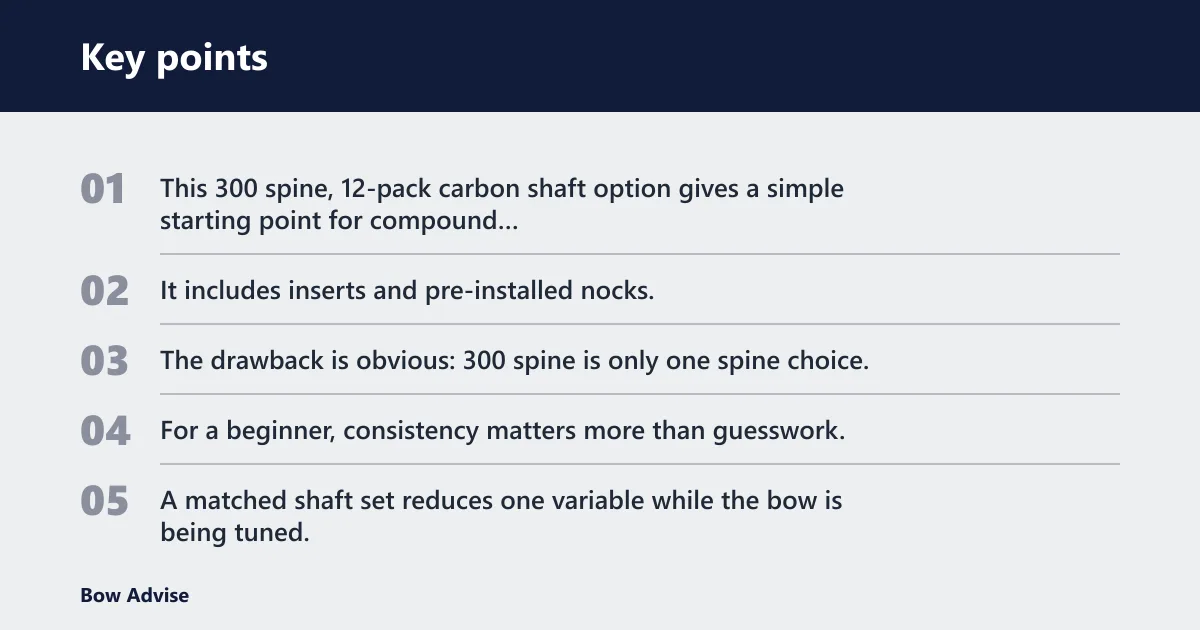
This 300 spine, 12-pack carbon shaft option gives a simple starting point for compound hunters who already know their cut length and front weight. It includes inserts and pre-installed nocks, which helps keep the build consistent shaft to shaft. The drawback is obvious: 300 spine is only one spine choice, so it will not fit every draw weight and arrow length combination.
For a beginner, consistency matters more than guesswork. A matched shaft set reduces one variable while the bow is being tuned. Still, the final check should be bare shaft flight, not package labeling alone.
Heavy fixed-blade setup: HANDBAIGE Arrow Spine Tester

This electronic deflection tester is aimed at checking shaft softness and hardness, and it also checks straightness while the shaft rotates. That can help when the bow setup is already close and the goal is to compare shafts before a purchase. The tradeoff is cost and complexity; it is more tool than a casual one-time buy.
For a fixed-blade build, a tester can support shaft sorting before assembly. It does not tune the bow by itself. It only helps confirm that the shaft is what the label claims.
Recurve or traditional bow: KHAMPA DIY Archery Paper Tuning Kit

This paper tuning kit gives a reusable stand, 12 paper sheets, and a step-by-step guide, which makes it useful when tuning a recurve or traditional setup before broadhead testing. The main limit is that paper alone cannot confirm broadhead flight at distance, so it should be paired with bare shaft and walk-back checks.
For a shelf-shot bow, paper can reveal a bad launch before broadheads are installed. That saves time and avoids blaming the head for a poor release or nock fit.
High-FOC hunting build: Easton 6.5 hunter classic carbon arrow shafts
For a high-FOC hunting build, the same shaft line can work if the spine choice is correct for the added front weight. The advantage is consistent carbon construction across the set. The drawback is that heavier inserts and broadheads can move the setup two spine groups weaker, so the 300 spine label is not automatically the right answer.
High FOC changes both balance and spine. If the front end grows heavier, re-check the chart, then confirm with bare shafts before buying in bulk.
Mistakes to avoid
Most broadhead spine mistakes come from ordering too soon or checking the wrong clue first. Field points can group while broadheads still plane, so clean field-point groups are not proof of a tuned hunting shaft. The fixes below should be checked in order.
- Choosing spine from draw weight alone instead of actual draw weight, shaft length, and front weight.
- Ordering shafts before the final arrow length is set.
- Ignoring insert weight, especially when brass is added.
- Trusting field-point groups when fixed blades still plane.
- Skipping bare shaft tuning and going straight to broadheads.
- Using a compound chart unchanged for a recurve or traditional bow.
Picture a 60 pound compound with a 29 inch arrow and a heavy insert. If the shooter buys a full dozen based on draw weight alone, the arrows may arrive weak for the final build. A better move is to settle the cut length, then verify with a bare shaft before buying the full set.
Frequently asked questions
What is a broadhead arrow?
A broadhead arrow is an arrow set up with a hunting point rather than a field point, usually for big-game use. The head may be fixed-blade, mechanical, or hybrid. Broadheads demand a sound spine choice because they expose tuning issues that field points can hide.
How much does broadhead weight affect spine?
Quite a lot. Point and insert weight can shift spine about one group per 25 to 30 grains, and a brass insert plus a 125 grain broadhead can weaken a shaft by two full groups. That is why a 100 grain reference head is only a starting point.
Why do my broadheads plane when field points group?
Field points can group well even when the setup still has weak dynamic spine, bad rest tune, or broadhead alignment issues. Fixed blades are less forgiving and show those flaws first. If broadheads plane, check arrow spine, front weight, and launch tune before changing the head again.