Arrow Spine Mistakes Beginners Make When Buying Arrows
The biggest arrow spine mistakes beginners make when buying arrows come from choosing by bow weight alone; match spine to actual draw weight, arrow length, and point weight instead. Wrong spine hurts accuracy, wastes tuning time, and can create unsafe arrow flight. This guide pairs each buying trap with the setup input it misses.
What arrow spine means
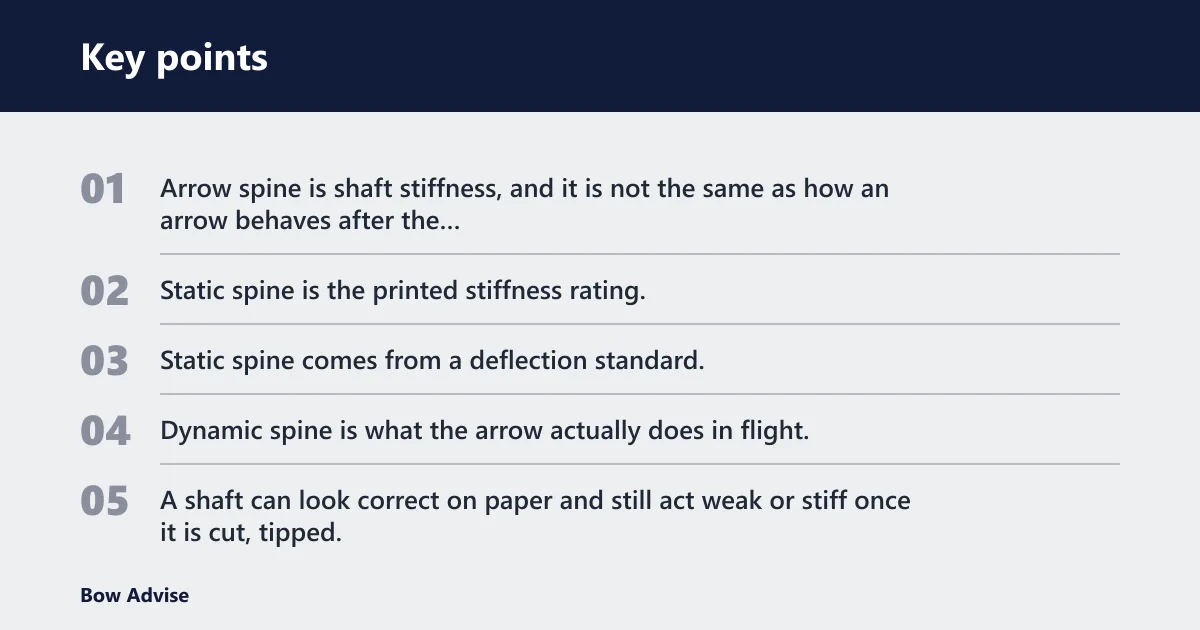


Arrow spine is shaft stiffness, and it is not the same as how an arrow behaves after the shot. Static spine is the printed stiffness rating, while dynamic spine is the real shot behavior once bow setup, length, point weight, and release style are added in.
Static spine and dynamic spine
Static spine comes from a deflection standard, which measures how much a shaft bends under load. Dynamic spine is what the arrow actually does in flight. A shaft can look correct on paper and still act weak or stiff once it is cut, tipped, and shot from a specific bow.
Why a lower spine number means a stiffer shaft
In common spine systems, a lower number means a stiffer shaft. That is the first thing beginners need to remember when reading labels. A 400 spine shaft is stiffer than a 500 spine shaft in the usual numbering system, but only within the same brand family and chart logic.
How deflection standards are used
Spine is measured by how much the shaft bends under load, and manufacturers use that number to sort arrows into groups. The number alone does not buy the right arrow. The chart still needs your actual draw weight, cut length, point weight, bow type, and in some cases your release style.
Why beginners pick the wrong spine
Most bad purchases start before tuning ever begins. Beginners often buy from the bow’s label weight, copy a friend’s shaft label, or choose what is in stock. Those shortcuts miss the setup inputs that actually drive spine choice, so the first arrows arrive already mismatched.
Buying by draw weight only
Draw weight matters, but draw weight alone does not determine arrow spine. The chart wants actual peak draw weight, not a vague estimate from the bow label or a shop sign. Higher poundage generally needs a stiffer shaft, but the final choice still depends on arrow length and point weight.
Using a friend’s arrow label
A friend’s 400 spine arrow may not behave like yours, even if both bows are similar on paper. The missing inputs are usually cut length, point weight, and bow setup. Two archers can both buy “400 spine” and end up with different dynamic spine because the arrow family and setup are different.
Choosing by price or stock status
Cheap shafts are not automatically wrong, and expensive shafts are not automatically right. Price and stock availability do not tell you the shaft stiffness your bow needs. Beginners should verify setup data first, then pick the shaft family that matches the manufacturer’s chart.
How do draw weight and arrow length change spine?
Actual peak draw weight and cut arrow length are two of the biggest buying inputs. Peak draw weight should be matched to the manufacturer chart, and longer arrows act weaker dynamically. If a beginner ignores either number, the arrow can leave the bow with the wrong stiffness for the setup.
Actual peak draw weight vs labeled bow weight
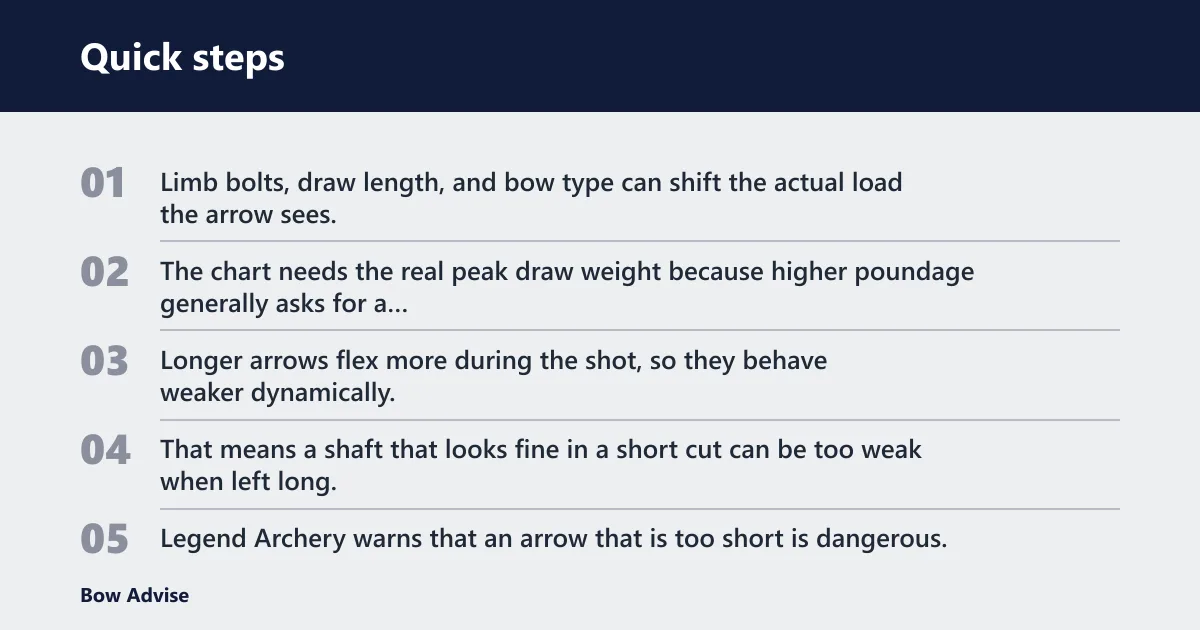
The bow’s label is only a starting point. Limb bolts, draw length, and bow type can shift the actual load the arrow sees. The chart needs the real peak draw weight because higher poundage generally asks for a stiffer shaft, while lower poundage can move the setup toward weaker spines.
Why longer arrows act weaker
Longer arrows flex more during the shot, so they behave weaker dynamically. That means a shaft that looks fine in a short cut can be too weak when left long. Legend Archery warns that an arrow that is too short is dangerous, so beginners should measure first, then order the correct finished length.
Why cut length must be known before buying
Cut length is not a tuning detail to fix later; it is a buying input. The arrow length you plan to shoot changes what spine the chart calls for. Suppose a beginner plans a 28-inch finished arrow but buys for 25 inches by mistake. The result can be a weak dynamic match before the first shot.
How does point weight change spine?
Point weight changes dynamic spine because more weight at the front makes the arrow behave weaker. Field points and broadheads both matter here. A shaft that works with a lighter point can act weaker when the point gets heavier, so point choice belongs in the purchase decision, not after it.
Field point weight and broadhead weight
Field points are used for target and range practice, while broadheads are used in bowhunting. Both sit on the front of the shaft, and heavier versions push the arrow’s balance point forward. Legend Archery notes that a 125-grain point makes a shaft behave weaker than a 75-grain point.
Why heavier points weaken dynamic spine
Heavy point weight pushes the arrow’s balance point forward and increases flex during launch. That makes the arrow act weaker dynamically. A beginner who buys for 100-grain field points and later switches to 125-grain broadheads may need a different spine, or at least a different setup confirmation.
Why the same shaft can need a different point
A shaft that looks correct with one point weight can leave the bow differently with another. That is why point weight belongs on the spine chart. It is also why broadhead hunting setups should not be treated as a simple swap from target practice without checking the spine match again.
Beginner spine mistake checklist
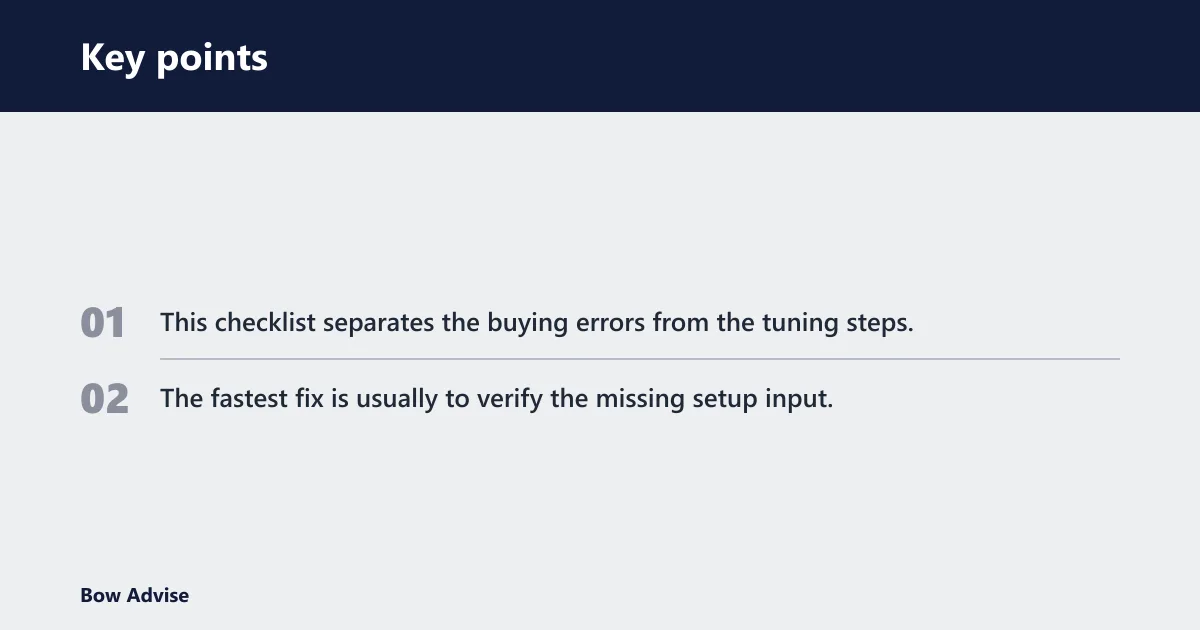
This checklist separates the buying errors from the tuning steps. Use it before you place the order. The fastest fix is usually to verify the missing setup input, then return to the manufacturer chart or selector with the full set of numbers.
| Mistake | What the archer usually notices | Setup input to verify | Fastest correction |
|---|---|---|---|
| Buying by draw weight only | Groups open up and arrow flight looks inconsistent | Actual peak draw weight, not just bow label weight | Recheck the chart with measured draw weight |
| Cutting arrows too short | Dangerous fit or a shaft that acts stiffer than expected | Planned finished arrow length before cutting | Order the proper length before trimming |
| Ignoring point weight | Target impact shifts when point weight changes | Field point or broadhead weight | Match point weight to the chart |
| Mixing arrow families | Two arrows with the same printed spine behave differently | Exact brand and product family | Keep shafts within one manufacturer chart |
| Assuming all 400-spine shafts are equal | A shaft from one brand does not fly like another brand’s 400 | Brand-specific spine chart | Use the current chart for that exact shaft line |
| Buying by price or stock status | The arrow is convenient, but tuning becomes harder later | All setup data, not shelf availability | Choose by chart first, price second |
| Copying a friend’s arrow label | Same spine number, different impact and flight | Your own draw length, draw weight, and point weight | Build from your setup, not someone else’s |
| Using target points as a broadhead proxy | Broadheads hit differently from field points | Intended point type and weight | Confirm the setup for hunting weight before buying |
How do I know if my arrow spine is too weak or too stiff?
A weak shaft usually shows up as erratic left/right impact and broadhead sensitivity, while a stiff shaft can also group poorly and refuse to settle into clean flight. The key is not guessing from one bad group. Look for a repeatable impact pattern, then match it to the setup input that was missed.
What a weak spine can look like
A weak arrow often acts overly flexible in flight. On target, that can show as left/right impact shifts, fishtailing, or broadheads that refuse to group with field points. The bow may feel okay, but the arrow is recovering too slowly for the setup.
What a stiff spine can look like
A stiff arrow can also miss the center and show poor arrow recovery. It may kick away from the line of flight and group inconsistently. If the shaft is too stiff, the fix is often the opposite of what beginners expect: more spine weakness, more point weight, or a longer setup within safe limits.
What to do before changing hardware
Before swapping rests or nocks, check the buying inputs again. Make sure the arrow length, actual peak draw weight, and point weight match the chart. Bare shaft tuning can confirm the result later, but it should not replace correct purchase data.
Should beginners use a spine chart or a calculator first?
Use the manufacturer’s current spine chart first, then use a calculator only if it matches that brand’s chart logic. The chart is tied to the exact shaft family, and it is the safer starting point. A calculator is only useful when it uses the same inputs the chart asks for.
How to read a manufacturer spine chart
Start with the exact shaft family, then enter actual peak draw weight, planned cut length, point weight, bow type, and any other listed setup data. The Shooting Gears says spine depends on draw weight, draw length, arrow length, point weight, bow type, bow setup, and release style. The chart from the arrow maker matters most.
Why brand charts are not transferable
One brand’s 400 spine is not a universal answer for another brand or another product line. That trap causes many first-time buying mistakes. The shaft family, materials, wall thickness, and chart assumptions can differ, so the number alone is not enough without the matching chart.
Where bare shaft tuning confirms the choice
Bare shaft tuning is a confirmation step after purchase, not a substitute for correct buying inputs. It helps verify whether the chosen spine is working with the bow and components. If the bare shaft shows weak or stiff behavior, the chart inputs should be reviewed before changing random parts.
Do different arrow materials need different spine choices?
Yes. Material affects consistency, diameter, and how the shaft is built, so material choice belongs in the decision. Carbon, aluminum, carbon-aluminum hybrids, and wood arrows can all work, but they do not behave the same. The safest approach is still the same: use the chart for the exact shaft family.
Carbon shafts
Carbon is described as lightweight, consistent, and durable. That is why it is a common beginner choice. Even so, carbon shafts still need the correct spine rating for the exact setup, and a carbon arrow from one line should not be treated as the same as every other carbon shaft.
Aluminum shafts
Aluminum arrows are described as more uniform in diameter. That can help with consistency in a beginner setup, but the right spine still depends on the chart and the finished arrow length. A uniform shaft is not the same thing as a correct spine match.
Carbon-aluminum hybrids and wood arrows
Carbon-aluminum hybrids can sit between common beginner shaft categories, so the chart matters even more. Wood arrows are used in traditional setups and bring their own weight and consistency variables. The same rule holds for all of them: match the shaft family, then check the exact setup inputs.
What are the most common arrow spine mistakes beginners make?
The most common mistakes are buying by draw weight alone, copying someone else’s arrow label, ignoring cut length, ignoring point weight, and mixing shaft families across brands. The root problem is simple: the buyer misses one setup input, then blames tuning when the arrow was mis-specified from the start.
Why setup data beats guesswork
Extreme Outfitters says correct spine, arrow length, and sensible finished weight come first, and that spine is the most important number for a beginner. That advice lines up with the buying trap list here. If the setup data is wrong, tuning only exposes the mistake later.
A common first-timer mistake
If your compound is set at about 50 pounds peak draw weight and you plan to cut arrows to 27 inches, buying based on 50 pounds alone can still lead to a poor match. If you also switch from 100-grain field points to 125-grain broadheads later, the arrow can act weaker than expected before any tuning begins.
Frequently asked questions
Does draw weight alone determine arrow spine?
No. Draw weight is a major input, but it does not stand alone. Actual peak draw weight has to be matched with arrow length, point weight, bow type, and the correct manufacturer chart. Beginners who buy from draw weight alone often end up with the wrong dynamic spine.
How do arrow length and point weight change spine selection?
Longer arrows behave weaker dynamically, because they flex more in the shot cycle. Heavier points also make the shaft act weaker by moving mass forward. That is why a shaft that works with a short cut and light point may need a different spine when both numbers increase.
What spine should I buy if I’m starting with a compound bow?
Start with the bow’s actual peak draw weight, planned arrow length, and intended point weight, then use the current chart from the arrow manufacturer. Compound bows are sensitive to setup changes, so the correct spine comes from the full data set, not from the bow’s label alone.
Why do two arrows with the same spine shoot differently?
Because the printed spine number is only one piece of the setup. Different brands, product families, cut lengths, point weights, and bow setups can all change dynamic spine. A 400 spine shaft from one line is not automatically the same as another line with the same printed number.