CenterPoint Amped 425 Crossbow Review: Is It Worth It?
The CenterPoint Amped 425 is a budget-friendly 425 fps crossbow, but buyers should judge it by real hunting speed, trigger and optic reliability, and accessory costs. Skip it if you need a quieter bow, less front-end weight, or tighter fit and finish. Miss those checks and the “cheap” setup can end up costing more in upgrades, warranty hassles, and lost confidence in the field. This guide breaks down field speed, hidden ownership costs, and which hunters should look elsewhere.
This guide is part of our Crossbow differences and types series.
Verdict

For a hunter who wants an entry-price crossbow for short to moderate whitetail setups, the Amped 425 can make sense. For anyone who values a compact front end, a smoother cocking system, or a more polished trigger, it is easier to justify looking at higher-tier Barnett or TenPoint models instead.
Specs at a glance
| Spec | CenterPoint Amped 425 | Buyer note |
|---|---|---|
| Advertised speed | 425 fps | Useful on paper; real hunting speed depends on bolt weight and setup |
| Draw weight | Usually listed around 185 lb | Expect meaningful cocking effort without a crank |
| Power stroke | About 14 in. | Long enough to support speed, but not a substitute for good tuning |
| Width | About 12 in. cocked, wider uncocked | Fine in many blinds; less nimble than ultra-compact hunting bows |
| Weight | About 7 lb class, bare | Ready-to-hunt weight rises fast once you add optic, quiver, bolts, and sling |
| Package contents | Scope, quiver, bolts, cocking aid, sling | Check that the exact package matches the seller listing |
| Warranty | Brand warranty applies | Confirm parts and service terms before buying |
The package is usually built to get a first-time buyer hunting sooner, not to deliver premium parts. That matters, because a crossbow is more than the sticker price. Arrows, broadheads, wax, string care, and a cocking aid can add up quickly.
Who it is for
The Amped 425 fits the buyer who wants a deer-capable crossbow, plans to hunt from a stand or blind, and is fine trading premium finish for lower entry cost. It also fits hunters who value power on paper and can live with a heavier cocking load than midrange rivals.
It is a weaker fit for very small-framed shooters, for hunters who carry gear long distances, and for buyers who want a quiet, narrow, premium-feeling setup with easier daily handling. If the plan is frequent shooting and minimal tuning hassle, a better-balanced model may cost less in the long run.
Who should skip it
Skip it if you need an ultra-light crossbow for all-day stalking, if your shoulders or hands struggle with high draw force, or if you expect the trigger, scope, and cocking system to feel refined out of the box. The price point often looks attractive until the upgrade list appears.
What works

The Amped 425’s main strength is simple: it offers hunting speed without moving into premium pricing. That makes it appealing for whitetail, hog, and general deer use inside normal field distances, where an ethical shot depends more on bolt choice, sighting, and broadhead tuning than on raw headline speed.
The speed claim matters most for trajectory, not magic killing power. A faster crossbow gives less holdover at 30 to 40 yards and can help when angles are imperfect, but it does not fix poor range judgment, bad arrow spine, or a loose scope mount.
Pros and cons
- Pros: strong advertised speed for the price; hunting-ready package; useful for blind and stand deer setups; broad accessory ecosystem.
- Pros: common parts and accessories are easier to source than niche bows; good entry point for buyers stepping up from budget vertical gear.
- Cons: cocking effort is not light; accessory quality is usually average; extra cost starts stacking quickly; fit and finish are not in the premium class.
- Cons: a budget scope or loose mounting hardware can create zero drift if not checked often.
Safety and handling notes
Typical safety features on this class of crossbow include an anti-dry-fire system, a safety selector, and finger guards near the rail. Those are good basics, but they do not replace careful loading and a full limb, string, and rail inspection before every session.
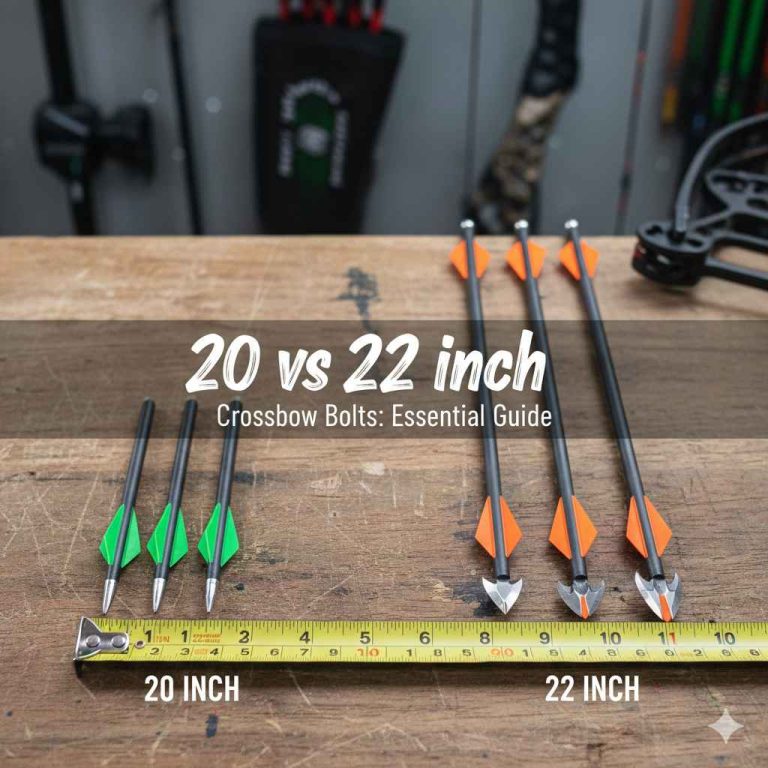
Say a new buyer uses short bolts because they were already in the case. The result can be poor energy transfer, erratic grouping, and in some setups a dangerous mismatch. Crossbow bolts must match the manufacturer’s length and minimum weight guidance.
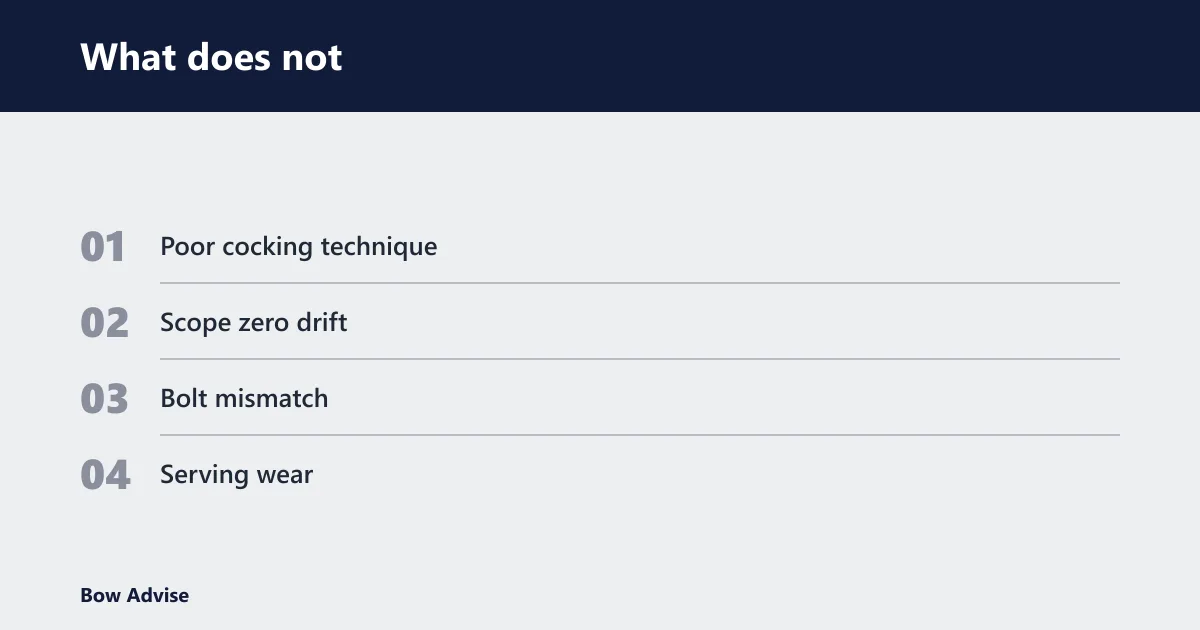
What does not
The biggest drawback is ownership friction. A buyer may see a low sticker price, then spend more on a better scope, proper bolts, wax, extra broadheads, a safer cocking aid, and eventually a replacement string. That is normal for budget crossbows, but it should be counted from day one.
Another weak point is handling. The crossbow is not the worst choice for a stand hunter, but it is not a tiny rig either. In a narrow blind, every extra inch of cam or limb clearance matters when the shot window opens from an awkward angle.
Failure cases buyers should expect
- Poor cocking technique: one side of the string can load unevenly, which hurts accuracy and may wear the serving faster.
- Scope zero drift: budget rings or repeated recoil can move point of impact after transport.
- Bolt mismatch: too-light or incorrect bolts can produce noisy shots and inconsistent groups.
- Serving wear: first signs often appear after the initial 20 to 50 shots, so inspection matters early.
A common first-timer mistake is assuming faster always means easier to shoot well. In practice, a 425 fps bow still needs consistent trigger control, a square hold, and bolts matched to the manufacturer’s minimum specs if the goal is clean hunting accuracy.
Buyer-risk checklist for the Amped 425
This table scores the Amped 425 on real-use risk, not brochure appeal. Lower risk gets a better score. The keep-or-skip note is tied to hunter type, because the right answer changes with draw strength, hunting style, and tolerance for setup work.
| Factor | Risk score | What it means in the field | Keep or skip? |
|---|---|---|---|
| Cocking effort | 6/10 | Doable, but not friendly for small-framed shooters without help | Keep if you accept a rope or crank aid; skip if strength is a concern |
| Blind/tree-stand handling | 6/10 | Usable in most setups, but not ultra-compact | Keep for standard stands; skip for tight blinds or very narrow shooting windows |
| Accessory value | 7/10 | Package helps, but optics and bolts still matter | Keep if the price stays low; skip if package quality is your top priority |
| Maintenance burden | 6/10 | Needs early checks on string, rail, mounts, and zero | Keep if you will inspect it regularly; skip if you want low-touch ownership |
| Likely upgrade costs | 7/10 | Strings, arrows, broadheads, and a better cocking aid add cost quickly | Keep if total budget still works; skip if you need an all-in value setup |
Buyer-type recommendation: keep it for budget-minded whitetail hunters who shoot from stands and can accept modest extra setup work. Skip it for youth shooters, smaller adults, mobile hunters, and anyone who wants the quietest, lightest, most compact crossbow in this price zone.
How does it compare with Barnett and TenPoint crossbows?
Against similarly priced Barnett models, the Amped 425 tends to compete on speed-per-dollar more than on feel. Barnett often offers competitive speed and a familiar hunting layout, but the exact comparison usually comes down to width, trigger quality, and how much cocking effort the buyer can manage comfortably.
Against TenPoint, the gap usually widens on refinement. TenPoint’s higher-end bows often bring better triggers, stronger de-cocking or cocking systems, and tighter fit and finish. The TenPoint Stealth 450, for example, is listed at 6.5 inches wide, includes ACUslide, and costs far more, which shows where premium money goes.
Direct comparison points
- Weight: the Amped 425 sits in the lighter end of common hunting crossbows, but premium rivals can still balance better even at similar weight.
- Width: narrower TenPoint designs are easier in blinds and from cramped positions.
- Trigger feel: TenPoint usually wins on cleaner break and more controlled shot release.
- Cocking effort: a dedicated crank or advanced system on premium models reduces strain and shot-to-shot inconsistency.
Say a hunter sits in a 36-inch-wide pop-up blind with shooting holes cut low. A crossbow that is a few inches wider, or one that is awkward to cock quietly, can become a real problem even if the speed number looks better on paper.
Should you buy it

Buy the Amped 425 only if the full budget still works after arrows, broadheads, wax, a cocking aid, and the possibility of a string replacement later. The sticker price is only the entry fee. The real question is whether the total package still competes with a better-feeling bow from Barnett or a more refined TenPoint.
For many hunters, the answer is yes if the goal is a short- to mid-range deer bow with decent speed and an affordable start. For buyers who hate tuning chores, want a quieter shot cycle, or need an easier cocking setup, the safer move is to skip it and move up market.
What bolts should I use with the CenterPoint Amped 425?
Use bolts that match the manufacturer’s length and minimum weight guidance, along with correctly rated nocks and broadheads. A safe rule is to stay with the bolt type packaged for the bow or a direct equivalent from a reputable crossbow arrow maker. Incorrect arrow weight can hurt accuracy and increase wear.
Does the CenterPoint Amped 425 come with a crank or rope cocker?

Most listings include a cocking aid, but buyers should verify whether that means a rope cocker or a specific crank system. If the package does not include a crank, it is usually a separate purchase. That extra cost matters, because cocking effort is one of the bow’s main ownership risks.
How heavy is the CenterPoint Amped 425 crossbow?
The Amped 425 is generally sold in the roughly 7-pound bare-weight class, with ready-to-hunt weight climbing after you add a scope, quiver, bolts, sling, and any cocking device. That makes it manageable for stand hunting, but less pleasant for long carries than lighter premium rigs.
Is the CenterPoint Amped 425 accurate for hunting?
It can be accurate enough for deer hunting if it is set up correctly, bolts are matched properly, and the scope stays zeroed. Most crossbow accuracy issues come from setup errors, inconsistent cocking, or bolt mismatch rather than speed alone. Good groups at 20 to 40 yards are the real test.
Is the CenterPoint Amped 425 good for beginners?
It can work for beginners who want an affordable path into crossbow hunting, but it is not the easiest first bow to cock or tune. Beginners with limited upper-body strength or little patience for setup should consider a model with a smoother cocking system and better out-of-box optics.
How fast does the CenterPoint Amped 425 shoot?
The advertised top speed is 425 fps. In hunting use, that number matters less than how the bow groups with your chosen bolts and broadheads. Higher speed can flatten trajectory and reduce holdover, but only if the rest of the setup is consistent and the scope is zeroed properly.
Frequently asked questions
Is the CenterPoint Amped 425 crossbow any good?
It is a reasonable value pick for hunters who want speed on a budget and can accept average accessories and a bit more setup work. It is less attractive for buyers who want premium trigger feel, easier cocking, or a quieter, more compact platform.
What comes in the CenterPoint Amped 425 package?
Typical packages include a scope, quiver, bolts, a cocking aid, and a sling, though sellers sometimes vary the exact bundle. Buyers should verify the listing carefully, because package differences can change the real value by a lot once the missing items are priced separately.
How does the CenterPoint Amped 425 compare to Barnett and TenPoint crossbows?
Compared with many Barnett models, it is often competitive on speed and entry cost but not always on trigger feel or accessory quality. Compared with TenPoint, it usually gives up refinement, cocking ease, and compactness, even when the headline speed sounds similar.