Choosing Arrow Diameter: Slim vs Standard Shafts
Slim shafts do better when wind drift, deeper penetration, or cleaner flight from a well-matched spine matter most; for many target and hunting setups, gains often show up with smaller-diameter shafts. Ignore shaft diameter and you can face harder tuning, more wind drift, and weaker broadhead or target performance. This guide compares spine, clearance, wind, and penetration for recurve, longbow, or compound setups.
When do slim shafts beat standard ones?

Slim shafts beat standard ones when the bow is already tuned well and the setup benefits from less frontal area, cleaner clearance, or better penetration. They are strongest in windy outdoor work, broadhead hunting, and some compound setups. Standard shafts still make more sense when durability, easy tuning, or indoor scoring priority matters more.
Where smaller diameter helps most
Smaller diameter helps when arrow clearance is tight, wind is a factor, or the point needs to slip through a target face or game more efficiently. A narrower shaft can cut drag and may reduce contact with rests, shelves, or fletching clearance points. That benefit only holds if spine and point weight still match the bow.
For hunting, the gain usually comes from penetration and broadhead stability, not raw speed alone. For target work, the gain often shows up as cleaner flight and less wind push. For compounds, smaller diameter shafts often see demand because the bow can drive them while still meeting acceptable mass weight.
Where standard diameter still makes more sense
Standard diameter shafts remain useful for indoor target shooting, forgiving setup windows, and archers who want a broader tuning margin. They can also offer more durability against shaft damage or missed shots into hard backstops. If a bow is marginal on spine, a standard shaft may be easier to tune than a very slim one.
For wood arrows, standard or larger diameters can be part of the design, because density and diameter both shape spine. That matters in recurve and longbow setups where natural shaft variation is already part of the equation.
The tradeoff between clearance and durability
The slimmer the shaft, the more you trade diameter for a narrower tuning window and less physical toughness in some setups. That does not mean slim shafts are fragile in every case. It means their advantage depends on matching the bow, point weight, and spine group closely enough that the shaft is not overworked.
Arrow diameter and spine selection
Arrow charts help, but they may not be exact for every bow. Rose City Archery says chart guidance may not be precise, and they recommend going higher than lower on mid-line bow weight. In practical terms, shaft diameter and spine should be chosen together, not as separate decisions.
How shaft diameter and density affect spine
The same source notes that wood arrow shaft spine is tied to shaft diameter and density. That matters because a thicker or denser wood shaft can behave differently even when the outside look is similar. Port Orford Cedar arrows make that point clearly: top-grade versions have small diameters and high spine weights, showing that size alone does not tell the whole story.
On wood shafts, diameter affects how much material is available to resist bending, while density changes how that material behaves. For recurve and longbow setups, that means a shaft that looks similar on paper may still leave a different spine result after selection and sorting.
Why a weak spine can cause failure
A too-weak spine can do more than fly poorly. The same source notes that too-low spine can break the shaft when shooting. Weak spine also tends to show up as poor clearance, unstable launch, or a shaft that bends too much around the bow at release.
A common first-timer mistake is choosing a slim shaft for appearance or wind reasons, then pairing it with a point that may be too heavy. The result is usually a shaft that behaves weaker than expected and leaves the tune unstable.
How point weight shifts the spine choice
Standard points and broadhead weight are listed as 125 grain, and heavier point weights require a higher spine weight. That means the same shaft can move from acceptable to underspined as point weight rises. Broadheads matter here because they add mass at the front and can expose tune problems that field points hide.
If a setup needs a heavier point for balance or hunting, the spine chart usually needs a stiffer direction. A shaft that works with a 125 grain point may not hold tune once the front end gets heavier.
Do smaller diameter arrows fly better in wind?
Yes, smaller diameter arrows often fly better in wind because they present less frontal area to the air. That can reduce drift, especially over longer outdoor distances. The gain is not magic. A slim shaft still needs the right spine, or wind performance can be lost to poor launch behavior.
Wind drift and frontal area
Wind drift is where slim shafts often earn their keep. Less diameter usually means less surface for the wind to push, so a well-tuned shaft can hold line better than a larger one. That is most useful outdoors, where a crosswind can move a point off line before impact.
But wind resistance is only part of the equation. If the shaft is too weak, it can leave the bow with extra wobble, and that hurts downrange consistency more than diameter helps.
Why indoor distance changes the answer
Indoors, wind is usually removed from the problem, so diameter matters less for drift. That shifts the decision toward score ring size, durability, and ease of tuning. Standard shafts can be a better fit when the range is calm and the goal is repeatable, forgiving flight rather than wind cutting.
For target arrows, Rose City Archery advises dropping one spine group. That means a target setup may call for a different spine group than a hunting setup, even before diameter changes enter the picture.
When speed matters less than stability
Speed by itself is not the right measure here. A faster arrow that loses stability in the wind or leaves the bow poorly tuned can score worse than a slightly slower, stiffer, better matched shaft. For many archers, the better question is whether the arrow stays stable through the whole shot cycle.
Say your outdoor setup groups well at 20 yards but opens up badly at 50 yards in a crosswind. A slimmer shaft may help, but only if it still matches the bow’s spine needs and point weight.
Slim shafts and penetration
Slim shafts can improve penetration when the rest of the setup is matched and the arrow keeps enough mass weight to carry energy through the target or game animal. The same source notes that mass weight is important for penetration power. A smaller diameter can help by reducing contact and drag, but it cannot replace proper arrow mass.
Why less shaft contact can help game arrows
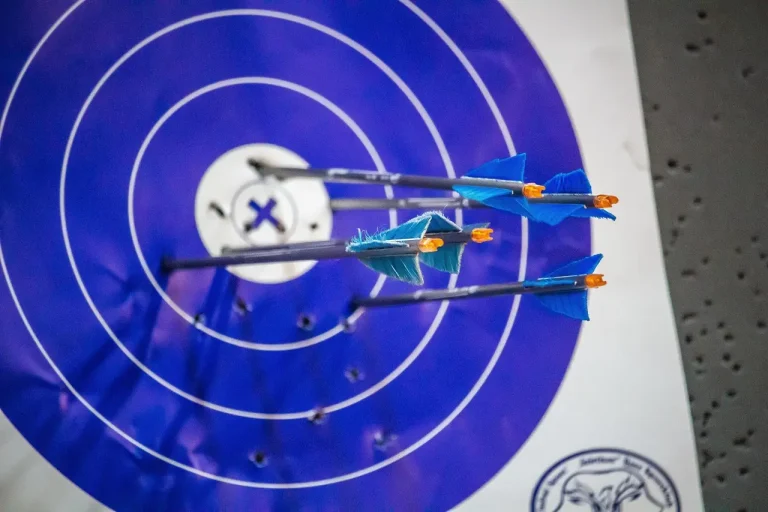
Less shaft diameter means less material rubbing through hide, hair, target face, foam, or layered media. That can help broadheads or field points keep moving forward. It is one reason smaller-diameter shafts are common in hunting setups and in some high-performance target shafts.
The gain is strongest when the shaft is also stiff enough for the bow and front-end weight. A slim shaft that is under-spined can lose the very penetration advantage it was chosen for.
How mass weight affects penetration
Penetration depends on more than diameter. Mass weight matters, and Rose City Archery notes that directly. A lighter shaft that is too slim may fly fast but fail to carry enough momentum for the intended use. A heavier shaft can penetrate well, but only if the spine still matches the draw weight and point setup.
That is why compound setups often favor smaller diameter shafts in some hunting and outdoor target setups, while still requiring acceptable mass weight. The bow can drive them, and the arrow can keep enough weight for the job.
Broadheads, arrow weight, and spine matching
Broadheads add another layer to the choice. They demand cleaner tune, and heavier heads require more spine. If the shaft is too soft for a broadhead setup, the arrow can plane, fishtail, or lose penetration efficiency on impact. The broadhead may also expose clearance problems that a lighter field point would hide.
Arrow diameter decision table
The right diameter depends on the job, not on a single rule. This table gives a practical starting point for five common use cases, then ties the choice back to spine, point weight, and the main failure risk if the shaft is too slim or too large.
| Use case | Recommended diameter range | Spine trend | Point-weight trend | Main failure risk if too slim or too large |
|---|---|---|---|---|
| Indoor target | Standard to larger diameter | Often one spine group softer than a hunting setup of the same bow, then tune | Usually standard field-point weights; keep the front end consistent | Too slim: less score-ring advantage and no wind benefit indoors. Too large: more drag and more chance of tuning sensitivity |
| 3D | Slim to standard, depending on course and bow type | Match chart first, then adjust for clearance | Field points are common; keep point weight aligned with the spine chart | Too slim: easier damage on hard hits. Too large: more wind drift and less penetration on tougher targets |
| Field target | Slim to standard | Lean toward the stiffer side if the bow is close to the limit | Common field-point weights; consistency matters more than extremes | Too slim: shaft durability can suffer. Too large: more wind drift at distance |
| Hunting | Slim to medium-slim | Usually stiffer than a target setup with the same bow | 125 grain is common; heavier heads require a higher spine weight | Too slim: spine mismatch can hurt broadhead tune. Too large: more drag, less penetration efficiency |
| Windy conditions | Slim | Prefer a true match rather than a marginal spine | Keep point weight controlled so the shaft does not go weak | Too slim with weak spine: unstable launch. Too large: extra wind drift and poorer downrange hold |
Recurve and longbow notes
For recurve and longbow setups, Port Orford Cedar arrows matter because diameter and density shape spine, mass weight, and final tuning. Slim cedar shafts can work well, but only when the natural shaft spine matches the bow and point weight. These bows usually reward careful spine sorting more than diameter chasing alone.
Compound notes
Compound bow setups often drive demand for smaller-diameter shafts, but those shafts still need acceptable mass weight and a good chart match. That is why compound users often start with the manufacturer chart and then confirm with field testing or bare-shaft style tuning. The bow’s efficiency does not remove the need for correct spine.
How do draw length and point weight change the choice?
Longer draw length and heavier points both push the arrow toward a stiffer spine. For draw lengths over 30 inches, Rose City Archery advises one spine group per extra inch. Heavier point weights also require a higher spine weight, so a slim shaft that works at one setup can go weak quickly as draw length or front-end weight rises.
Draw lengths over 30 inches
A long draw increases the load on the shaft. As a starting point, one spine group per extra inch over 30 inches is the kind of adjustment Rose City Archery advises. That is not a final tune, but it is a useful first step when selecting shaft diameter and spine together.
Say a bow fits a 30-inch draw well with one shaft choice, then the same archer at 31 inches sees weak-tail flight or broadhead wander. The fix may be a stiffer spine group before any diameter change, because draw length alone can move the setup out of tune.
Heavier points and broadheads
Heavier points pull the dynamic spine weaker. That means a shaft that was correct with a lighter point may become too soft once the front end gets heavier. Standard 125 grain points are a common reference, but once weight rises above that, the shaft often needs more spine support.
This is why target arrows and hunting arrows may not use the same spine group. The point weight, broadhead choice, and intended goal are different, so the arrow selection should be different too.
When to step up a spine group
Step up a spine group when the chart is already near the edge, the draw length is long, the point is heavier, or the broadhead exposes weak behavior. The same source says that on mid-line bow weight, going higher rather than lower is the safer call. That advice fits slim shafts especially well because they leave less room for error.
Frequently asked questions
When are slim arrow shafts better than standard shafts?
Slim shafts are better when wind drift, penetration, or cleaner clearance matter more than easy durability. They tend to shine outdoors, in hunting, and in some compound setups. They work best when the spine is matched closely, because a poorly matched slim shaft can fly worse than a standard one.
How does shaft diameter affect spine and penetration?
Diameter and density both affect spine, especially in wood shafts. Smaller diameter can help penetration by reducing drag and contact, but it does not replace correct spine or adequate mass weight. A shaft that is too weak may fly poorly and can even break when shot.
Should I choose a smaller diameter arrow for hunting?
Often, yes, if the arrow still has enough mass weight and the spine is correct. Hunting gains usually come from better penetration and cleaner broadhead flight, not just smaller size. If the shaft goes too weak, the setup can lose accuracy and broadhead stability fast.
What happens if my arrow shaft is too weak for my bow?
A too-weak shaft can leave the bow poorly, show unstable flight, and in severe cases break when shooting. It may also react badly to heavier points or broadheads. The fix is usually a stiffer spine group, less point weight, or a different shaft diameter that better fits the bow.
How do heavier point weights change the shaft I should buy?
Heavier point weights require a higher spine weight. That means you often need a stiffer shaft as the front end gets heavier. A shaft that works with a 125 grain point may become too soft when the point weight increases, especially on longer draw lengths.