Did Arjun String The Bow
In the epic tapestry of Indian mythology, few images are as iconic as that of Arjun stringing the bow during Draupadi’s swayamvar. This singular act has come to symbolize not just skill and strength, but also destiny, divine favor, and the triumph of virtue. The question “Did Arjun string the bow?” has echoed across centuries, not merely as a matter of historical or mythological curiosity, but as a touchstone for discussions on merit, fate, and the unique interplay of human endeavor and cosmic will. While the Mahabharata provides a rich, multilayered account of this legendary event, interpretations vary widely, each offering new insights into the character of Arjun and the enduring values enshrined in the ancient text.
This article explores the truth behind Arjun’s feat, dissecting the narrative from the Mahabharata, examining cultural and philosophical interpretations, and comparing versions from diverse traditions. We’ll analyze the historical and symbolic significance of the bow-stringing episode, review different scholarly perspectives, and investigate the impact of this moment on literature, art, and Indian consciousness. Whether you approach the story as a devoted reader of the Mahabharata, a student of Indian culture, or simply as someone fascinated by the power of myth, this deep dive will clarify the facts and meanings behind one of the world’s most celebrated legends.
Key Takeaways
- Arjun’s stringing of the bow at Draupadi’s swayamvar is a pivotal event in the Mahabharata, blending skill, destiny, and divine intervention.
- Multiple versions and retellings exist, each with nuanced differences in how the event is depicted.
- The episode has deep symbolic significance, reflecting ideals of meritocracy, dharma, and the rewards of perseverance.
- Scholarly interpretations provide varied insights into the literal and metaphorical meanings of the bow-stringing feat.
- The story continues to influence modern literature, art, and popular culture, underscoring its timeless relevance.

Credit: www.reddit.com
The Mahabharata’s Account: The Swayamvar And The Bow
The Mahabharata, composed by Vyasa, is one of the world’s longest epic poems and a foundational text of Indian culture. The swayamvar of Draupadi stands out as a dramatic turning point, and the event of Arjun stringing the bow is central to this narrative.
The Challenge Of Draupadi’s Swayamvar
Draupadi’s swayamvar was no ordinary marriage ceremony. King Drupada, seeking a worthy son-in-law, devised an almost impossible challenge. Contestants had to string a massive bow and shoot an arrow through a revolving target, aiming at the eye of a moving fish by looking only at its reflection in a bowl of oil below.
The task required not only immense physical strength but also extraordinary focus and skill.
Many renowned kings and princes failed the challenge, unable even to string the heavy bow. The scene is vividly described in the Mahabharata’s Adi Parva, where the mightiest warriors, including the Kauravas and Karna, are depicted as struggling with the bow’s weight and tension.
Arjun’s Triumph
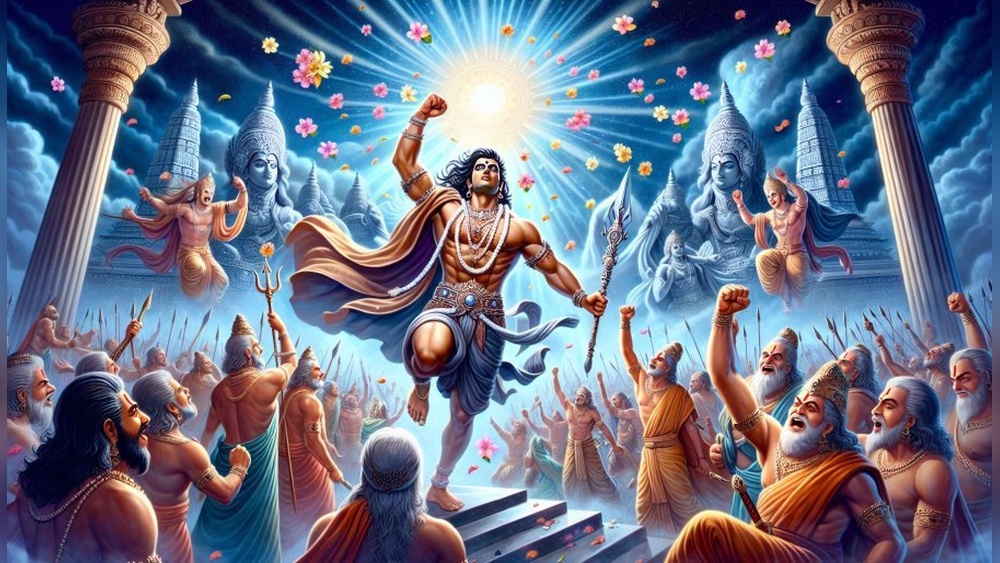
Disguised as a Brahmin, Arjun stepped forward after all others had failed. Despite his humble attire, his confidence and poise set him apart. According to the critical edition of the Mahabharata:
- Arjun effortlessly lifted and strung the bow.
- He took careful aim, focusing intently on the reflection of the fish.
- With a single, unerring shot, he pierced the eye of the target, completing the challenge flawlessly.
This feat not only won him Draupadi’s hand but also revealed his true identity and set in motion a cascade of events that would shape the rest of the epic.
The Reaction Of The Assembly
The reaction to Arjun’s success was mixed. The assembled kings were astounded and some were angered, feeling that a Brahmin had usurped a Kshatriya’s privilege. However, Draupadi herself affirmed her acceptance of Arjun, recognizing his valor and skill. The Pandavas, having been living incognito, were thus revealed to the world once again.
Pro Tip:
To fully appreciate the nuances of this episode, it is recommended to read the Mahabharata’s Adi Parva alongside a modern translation for clarity and context. The Wikipedia page on the Mahabharata offers a useful overview and links to critical editions.
Symbolism And Cultural Significance
The episode of Arjun stringing the bow is laden with symbolic meaning that transcends the literal events of the story. It is a narrative rich in metaphor, reflecting core values and philosophical ideas in Indian culture.
Symbol Of Merit And Dharma
Arjun’s success is often interpreted as a validation of meritocracy, the notion that true worth is determined by ability, not birth or status. Although disguised as a Brahmin, Arjun’s inherent skill and focus enable him to succeed where others fail. This aligns with the Mahabharata’s broader theme that dharma, or righteous action, is paramount.
Divine Favor And Destiny
The episode also underscores the concept of divine intervention. Arjun’s victory is seen by many as being guided by Krishna, his divine friend and charioteer. This highlights the interplay between human effort and cosmic will, a recurring motif in Indian philosophy.
Gender, Agency, And Choice
Draupadi’s role is crucial. While the challenge was set by her father, Draupadi exercises agency by choosing Arjun, affirming her right to select a partner who proves himself worthy. This dynamic has sparked rich discussions on female agency in ancient Indian texts.
Example:
Teaching this episode to students often leads to debates about the balance between fate and free will, with many drawing parallels to contemporary issues of merit-based selection and gender equality.
Comparative Perspectives: Versions And Variations
Across centuries, the story of Arjun and the bow has been retold in multiple languages and cultures, each offering unique perspectives. A close comparison reveals both striking similarities and intriguing differences.
Sanskrit Epic Vs. Regional Retellings
While the Sanskrit Mahabharata provides the canonical version, regional adaptations in Tamil, Telugu, Bengali, and other languages introduce subtle variations. For instance, some southern versions emphasize Draupadi’s active role in the swayamvar, while others focus more on Arjun’s hidden identity.
Jain And Buddhist Interpretations
Jain and Buddhist adaptations of the Mahabharata often recast characters and events to align with their respective worldviews. In some Jain versions, Arjun’s feat is downplayed or attributed to other factors, reflecting a different understanding of heroism and virtue.
Modern Retellings And Media
Contemporary novels, television serials, and films have reimagined the swayamvar scene, sometimes amplifying the drama or adding new elements. The 1988-1990 BR Chopra TV series, for example, remains iconic for its depiction of the bow-stringing episode, influencing generations of viewers.
Data Comparison Table: Key Differences Across Major Versions
| Version | Arjun’s Disguise | Role of Krishna | Draupadi’s Agency | Outcome |
|---|---|---|---|---|
| Sanskrit Mahabharata | Brahmin | Indirect; guide | Affirms choice | Pandavas revealed |
| Tamil Adaptation | Brahmin | Prominent | More emphasis | Pandavas favored by gods |
| Jain Version | Kshatriya | Minimal | Traditional | Draupadi’s choice less active |
| Modern TV (BR Chopra) | Brahmin | Explicit support | Strong expression | Dramatic reveal |
Pro Tip:
When reading or viewing adaptations, pay attention to how each version frames Arjun’s actions, Draupadi’s choice, and the role of destiny. These shifts often reflect broader cultural and philosophical priorities.
The Mechanics Of The Bow: Feasibility And Historical Context
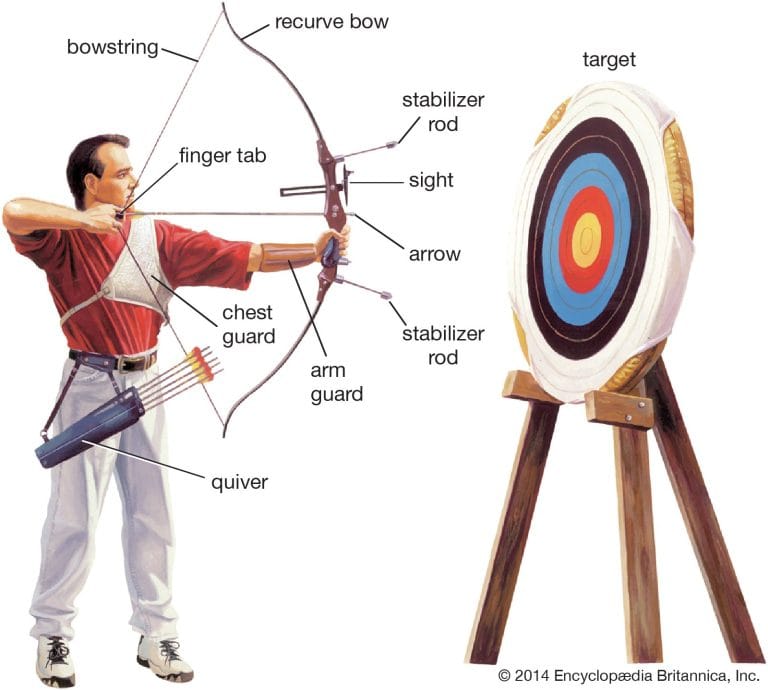
The bow used in Draupadi’s swayamvar was not an ordinary weapon. Its description in the Mahabharata and subsequent interpretations raise intriguing questions about its size, weight, and the physical possibility of the feat.
Description Of The Bow
The bow is described as massive, heavy, and extremely difficult to string. It is said to have been constructed by Drupada’s artisans specifically to prevent all but the most exceptional archer from succeeding. The revolving target added further complexity, demanding coordination, strength, and concentration.
Physical Feasibility
- Strength Required: Only the strongest warriors, such as Karna and Duryodhana, dared attempt to string the bow, yet failed.
- Skill Factor: Success depended not just on brute force but also on technique, timing, and mental focus.
- Comparison with Historical Bows: Historical records suggest that ancient Indian bows could weigh between 50 to 100 pounds of draw weight, with some ceremonial bows being even heavier.
Data Table: Comparison Of Ancient Bows
| Bow Type | Draw Weight (lbs) | Material | Historical Users |
|---|---|---|---|
| Indian Longbow | 60-100 | Bamboo, Horn | Kshatriyas |
| English Longbow | 80-120 | Yew | English Archers |
| Mongol Composite | 70-100 | Wood, Horn, Sinew | Mongol Warriors |
| Draupadi’s Swayamvar Bow (Epic) | Unknown (Legendary) | Mythical | Pandavas, Karna |
Example:
Historical archery competitions, such as those held in medieval England, often used bows with draw weights over 100 lbs. Only highly trained individuals could string and shoot these weapons, supporting the plausibility of such a feat, at least in part, by a legendary hero like Arjun.
Symbolic Vs. Literal Interpretation
Some scholars argue that the bow’s description is largely symbolic, meant to illustrate Arjun’s exceptional qualities rather than to record a literal historical event. The act of stringing the bow becomes a metaphor for overcoming formidable obstacles through a combination of skill, focus, and righteous intent.
Scholarly Analysis: Debates And Interpretations
The question “Did Arjun string the bow? ” has been analyzed by generations of scholars, each bringing distinct perspectives from literary criticism, history, philosophy, and gender studies.
Historical And Literary Perspectives
- Critical Edition Studies: The Bhandarkar Oriental Research Institute’s critical edition of the Mahabharata affirms the centrality of the bow-stringing episode, but notes variations in minor details across manuscripts.
- Literary Criticism: Modern literary theorists focus on the narrative structure, interpreting the episode as a classic example of the “hero’s journey” motif.
Philosophical And Theological Insights
- Dharma and Karma: Philosophers like Sri Aurobindo have argued that Arjun’s success is a testament to his alignment with dharma, suggesting that virtue and right action are ultimately rewarded, even against overwhelming odds.
- Divine Will: Some theologians emphasize Krishna’s subtle role in guiding Arjun, illustrating the Hindu belief in the interplay of human effort and divine grace.
Gender Studies And Feminist Readings
Recent feminist scholarship has paid special attention to Draupadi’s role, interpreting her agency and choice as both progressive and constrained by patriarchal norms. The episode is seen as a site where female autonomy is both asserted and negotiated.
Data Table: Key Scholarly Interpretations
| Scholar | Discipline | Interpretation |
|---|---|---|
| Sri Aurobindo | Philosophy | Success as reward for dharma |
| Wendy Doniger | Religious Studies | Symbolism of merit over birth |
| Alf Hiltebeitel | History/Literature | Cultural memory and ritual drama |
| Romila Thapar | History | Political significance of the swayamvar |
| Feminist Critics | Gender Studies | Draupadi’s agency and voice |
Pro Tip:
For deeper analysis, consult works by renowned Mahabharata scholars such as Wendy Doniger and Alf Hiltebeitel, who offer extensive commentary on the epic’s historical and cultural layers.
Real-world Impact: Influence On Art, Literature, And Society
The story of Arjun and the bow has had a profound and lasting impact on Indian art, literature, and collective imagination. Its themes continue to resonate across media and generations.
Classical And Contemporary Art
- Paintings and Sculptures: The swayamvar scene is a favorite subject in Indian miniature paintings, temple carvings, and modern artworks, often emphasizing the moment of the arrow’s release.
- Theater and Dance: Classical Indian dance forms such as Kathakali and Bharatanatyam have adapted the episode into dramatic performances, highlighting the tension and emotion of the moment.
Literature And Popular Culture
- Novels and Poetry: Modern Indian writers frequently revisit the swayamvar, offering new interpretations and insights. Chitra Banerjee Divakaruni’s novel “The Palace of Illusions” retells the Mahabharata from Draupadi’s perspective, casting new light on the episode.
- Television and Film: The bow-stringing scene has been dramatized in dozens of Indian TV serials and movies, often serving as a key plot device.
Social And Educational Influence
- Moral Education: The story is used in schools and religious teachings to illustrate values such as focus, perseverance, and righteous conduct.
- Public Discourse: References to Arjun’s feat are common in speeches, articles, and even political rhetoric, symbolizing the triumph of merit and determination.
Example:
In classroom settings, students consistently identify with Arjun’s focus and resilience, drawing parallels to their own academic and personal challenges.
Pro Tip:
To experience the story’s visual impact, visit the National Museum in Delhi or the Chhatrapati Shivaji Maharaj Vastu Sangrahalaya in Mumbai, where depictions of the swayamvar can be found.
Legacy And Modern Relevance
The legend of Arjun stringing the bow is more than just an ancient tale; it is a living narrative that continues to shape Indian identity and values. Its legacy is evident in various facets of modern life.
Symbol Of Achievement
In contemporary India, references to “stringing the bow” are often used to denote achieving the nearly impossible through determination and skill. The phrase has entered the lexicon of sports, business, and education.
Gender And Social Commentary
The episode’s themes of choice, merit, and agency are frequently invoked in discussions about gender equality, social mobility, and the importance of opportunity.
Comparative Influence
The swayamvar challenge is often compared with similar trials in world literature, such as Odysseus stringing his bow in Homer’s “Odyssey. ” This cross-cultural resonance underscores the universality of the motif.
Example:
A recent Britannica article compared Arjun’s feat to legendary exploits in Western epics, highlighting the enduring appeal of the “heroic challenge” across civilizations.
Pro Tip:
When reflecting on the story’s relevance, consider how the motif of the impossible challenge continues to inspire individuals facing adversity, reinforcing the value of perseverance and focus.
Frequently Asked Questions
Did Arjun Really String The Bow, Or Is It A Symbolic Story?
While the Mahabharata describes Arjun physically stringing the bow and completing the challenge, many scholars interpret the episode as symbolic. It represents the triumph of skill, focus, and dharma, rather than serving as a literal historical record. The bow-stringing act is best understood as both a narrative event and a metaphor for overcoming great obstacles.
Why Did Other Warriors Like Karna And Duryodhana Fail?
According to the Mahabharata, Karna and Duryodhana attempted the challenge but failed to string the bow due to its immense weight and tension. Some interpretations suggest that divine will prevented their success, while others emphasize the importance of skill and inner focus, not just physical strength, in achieving the task.
What Was Draupadi’s Role In Arjun’s Victory?
Draupadi’s agency is crucial in the narrative. While the challenge was set by her father, she ultimately affirms Arjun as her choice after his victory. Some adaptations and scholarly analyses highlight her subtle influence and active role in recognizing Arjun’s merit and making her preference clear.
How Has The Bow-stringing Episode Influenced Modern Indian Culture?
The episode has permeated Indian art, literature, and popular culture. It is used as a symbol of achieving the extraordinary, and references to Arjun’s feat appear in motivational contexts, educational materials, and even political speeches. The scene is frequently depicted in visual art and dramatic performances.
Are There Similar Stories In Other Cultures?
Yes, the motif of a hero proving himself through a nearly impossible challenge appears in many world traditions. A notable example is Odysseus stringing his bow in Homer’s “Odyssey” to win back his wife Penelope. Such stories underscore universal themes of skill, destiny, and rightful choice.
Arjun’s legendary feat at Draupadi’s swayamvar remains a powerful emblem of merit, destiny, and the human spirit’s ability to rise to extraordinary challenges. Whether viewed through the lens of history, symbolism, or lived experience, the story continues to inspire, provoke debate, and illuminate the rich tapestry of the Mahabharata and the cultures it has shaped.