Do Traditional Martial Artists Bow? Unveiling Ancient Customs
Traditional martial arts are famous for their rituals and respect. One gesture you see in almost every dojo or training hall is the bow. But why do martial artists bow? Is it just for show, or is there a deeper meaning?
If you’re new to martial arts, this custom might seem strange. Some even ask, “Do all traditional martial artists bow? ” The answer is more interesting than you might expect.
This article will explore why bowing is important in martial arts, how it’s done in different styles, and what it means for students and teachers. We’ll look at real examples, cultural backgrounds, and even times when martial artists might not bow at all.
Whether you are thinking of joining a class or just want to understand martial arts better, you’ll find clear answers here.
The Meaning Behind The Bow In Martial Arts
Bowing is not unique to martial arts. In many Asian countries, bowing is part of daily life. But in martial arts, the bow has special meaning. It is a symbol of respect, humility, and focus. It creates a connection between students, teachers, and even opponents.
In Japanese martial arts, the bow is called rei. In Korean styles like Taekwondo, it’s called kyong nae. In Chinese arts, you might see a different hand gesture, but the goal is similar: to show respect.
Bowing is more than just a greeting. It is a way to:
- Show respect to teachers and classmates
- Signal the start and end of practice
- Clear your mind and focus on training
- Build humility and discipline
In my experience, the act of bowing helps you leave your daily problems at the door. Once you bow, your mind shifts to learning and self-improvement.
How Different Martial Arts Approach Bowing
Not every martial art bows the same way. Some have strict rituals, while others are more relaxed. Let’s compare some popular traditional martial arts and how they use bowing.
| Martial Art | Bowing Style | When Bowing Occurs | Special Notes |
|---|---|---|---|
| Karate | Standing, hands at sides or thighs | Entering/exiting dojo, start/end of class, sparring | Deeply rooted in Japanese etiquette |
| Judo | Standing and kneeling bows (zarei) | Before/after practice, randori, and matches | Kneeling bow shows extra respect |
| Taekwondo | Standing, hands at sides | Start/end of class, to flag, to instructor, sparring | Often performed facing the national flag |
| Kendo | Standing and kneeling bows | Entering/exiting dojo, before/after matches | Highly ritualized, precise movements |
| Kung Fu | Salute with fist and palm, sometimes bow | Start/end of class, forms, to teacher | May include unique salutes instead of bow |
Japanese Arts: Karate, Judo, Kendo, Aikido
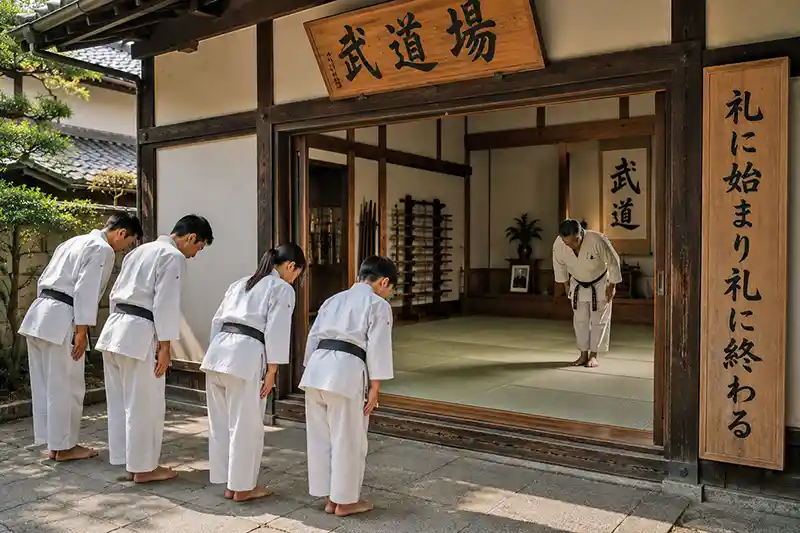
In most Japanese martial arts, bowing is a key part of training. For example, in Karate, students bow when they enter or leave the dojo, before starting practice, and to their opponent before sparring. The bow is usually done standing, feet together, arms straight at the sides, and bending from the waist.
Judo adds a kneeling bow called zarei. This is used at the start and end of class, and before practicing with a partner. Kneeling bows are deeper and signal extra respect.
Kendo combines both standing and kneeling bows. The exact angle of the bow and even how long you hold it matters. In Aikido, students bow to the mat (to show respect for the place of training), to the teacher, and to their partners.
Korean Arts: Taekwondo, Hapkido
Korean martial arts like Taekwondo also use bowing, but with small differences. Students bow to the instructor (called Sabeomnim) and sometimes to the national flag at the start and end of class. The bow is a quick forward bend at the waist, with eyes down and hands at the sides.
Hapkido and other Korean arts follow a similar pattern. The focus is on respect and discipline, but the rituals are often less formal than Japanese arts.
Chinese Martial Arts: Kung Fu, Tai Chi
In many traditional Kung Fu schools, you see a salute rather than a bow. This is called the Bao Quan Li, one fist in the opposite palm, held in front of the chest, followed by a short bow. It is used to greet the teacher (Sifu), classmates, and sometimes the training hall itself.
Tai Chi classes may also start with a bow or a salute, though this can vary by lineage. Some modern Chinese arts skip bowing, especially in fitness-oriented classes.
Southeast Asian And Other Styles
Some Muay Thai schools in Thailand use a traditional salute called the Wai, which is not quite a bow but serves the same purpose. In Silat (from Indonesia and Malaysia), students may kneel and touch the ground to show respect.
Not every martial art uses bowing. Some Western boxing or wrestling gyms have no bowing tradition at all.

Credit: www.dreamstime.com
Why Do Traditional Martial Artists Bow?
The bow is more than a habit. It has deep meaning for martial artists. Here are the main reasons:
- Respect: Bowing shows respect for instructors, students, the art, and the place of practice.
- Discipline: It builds mental focus and humility.
- Tradition: Bowing connects students with the history and culture of their art.
- Safety: Bowing before sparring signals that both students are ready and agree to follow safety rules.
- Separation: It helps students mentally move from daily life to training mode.
Example: In Judo, before a sparring match (randori), both players bow to each other. This is a silent agreement to practice safely and with respect. If one person does not bow, the match does not begin.
How To Bow Properly In Martial Arts
The exact way to bow depends on the style, but some common points apply:
- Stand up straight with feet together.
- Keep hands at your sides or on your thighs.
- Bend forward from the waist (not the neck).
- Hold the bow for 1-2 seconds.
- Keep your eyes down as a sign of trust.
In Japanese arts, the angle of the bow matters. A shallow bow is for equals, a deeper bow for teachers or elders. In Korean arts, the bow is usually quick and less formal.
Warning: Never bow with your hands in your pockets or while chewing gum. This is seen as disrespectful.
Here’s a quick comparison of bowing angles in Japanese martial arts:
| Bowing Angle | Meaning | When Used |
|---|---|---|
| 15° (Eshaku) | Casual greeting, equals | Passing someone in the dojo |
| 30° (Keirei) | Standard respect | To instructors, at start/end of class |
| 45° (Saikeirei) | Deep respect or apology | To high-ranking teachers, after mistakes |
When Is Bowing Required, And When Isn’t It?
Most traditional martial arts require bowing at certain times:
- Entering or leaving the dojo or training area
- At the start and end of class
- Before and after sparring
- When greeting or thanking a teacher
However, there are situations when bowing might not happen:
- In some modern or Western martial arts schools, bowing is optional or skipped.
- During tournaments, rules may limit or change the bowing custom.
- If a student’s religion or culture forbids bowing, many schools allow a substitute gesture, like a nod or handshake.
Some martial arts schools adapt the bow for students with disabilities. For example, a student in a wheelchair may bow by lowering their head or using a hand gesture.
Pro Tip: If you are new to a dojo or school, watch what others do. Follow their lead and ask the instructor if you’re unsure. This avoids awkward moments and shows you care about the school’s traditions.
The Psychology And Impact Of Bowing
Why does such a simple movement have a big effect on martial artists? Studies on ritual and sports psychology show that repeating respectful gestures like bowing helps:
- Build a sense of community and belonging
- Lower stress and anxiety before competitions
- Improve focus and readiness
Bowing is like a “reset button. ” It marks a clear start and end to training. This helps students concentrate and take their practice seriously.
One insight beginners often miss: bowing is not just for others, it’s for yourself. When you bow, you remind yourself to be humble and open to learning.

Credit: www.vecteezy.com
Cultural Roots Of Bowing In Martial Arts
Bowing in martial arts comes from the cultures where these arts began. In Japan, bowing is part of daily life. People bow to greet, apologize, thank, or show respect. Martial arts borrowed this custom and made it part of their own rituals.
In Korea, bowing is also common in schools, businesses, and the military. Martial arts adapted these gestures to fit their own needs.
China has many forms of respectful greeting, from bowing to hand salutes. Kung Fu schools often use the fist-and-palm salute, which has roots in ancient Chinese manners.
Even though the reason for bowing started with culture, it became a key part of martial arts identity. Removing the bow would be like removing the handshake from Western sports.
Bowing Rituals: Step-by-step Examples
To understand how bowing works in real life, here are some step-by-step rituals from common styles:
Karate Dojo Etiquette
- Stand at the entrance, face the dojo, and bow before entering.
- Line up with classmates by rank. Bow to the front (shomen), to the instructor (sensei), and to each other.
- Before sparring, bow to your partner.
- At the end of class, repeat the bows in reverse order.
Judo Class Ritual
- Enter the dojo and bow to the mat.
- Sit in seiza (kneeling position), wait for the instructor.
- Bow together as a group before starting practice.
- Before randori (sparring), stand and bow to your partner.
- After training, kneel and bow to the instructor and each other.
Taekwondo School Protocol
- Stand at attention, bow to the national flag.
- Bow to the instructor and senior students.
- Before practice or sparring, bow to your partner.
- Bow again at the end to show thanks.
Kung Fu Salute
- Stand with feet together, make a fist with one hand and cover it with the other palm.
- Hold the salute at chest height, then bow slightly at the waist.
- Use this gesture to greet the teacher, classmates, or the practice space.
Bowing In Modern Martial Arts: Is It Still Relevant?
Some people wonder if bowing is outdated in today’s martial arts. After all, many modern gyms focus on fitness, self-defense, or sport rather than tradition.
However, most traditional schools keep bowing as a core value. It helps build a positive environment and reminds students of the deeper purpose of martial arts: character development.
Even in mixed martial arts (MMA), you may see fighters bow before a match or after training. The exact ritual may change, but the meaning stays the same: respect for the art and for others.
Some schools have relaxed their bowing rules to welcome students from different backgrounds. For example, in the United States, instructors sometimes explain the bow’s purpose and allow students to substitute a nod or handshake if needed.
Common Misunderstandings About Bowing
Bowing can cause confusion, especially for beginners or people from cultures where bowing is not common. Here are some things people often get wrong:
- Bowing is not worship: It’s a sign of respect, not a religious act.
- Bowing does not mean submission: It is about humility and equality, not lowering yourself to someone else.
- Bowing is not just for Japanese arts: Many cultures have their own version of a respectful greeting.
- Forgetting to bow is not unforgivable: Most instructors understand if you are new. Just pay attention and learn.
Example: When I first started Karate, I was nervous about bowing because I didn’t want to “do it wrong.” My instructor told me that intention matters most. If you are respectful, small mistakes are fine.
Credit: www.karatemart.com
How Bowing Shapes The Student-teacher Relationship
The bow is a silent conversation between student and teacher. When a student bows to the instructor, it means:
- “I trust you to teach me.”
- “I am ready to learn.”
- “I appreciate your knowledge.”
When the instructor bows back, it means:
- “I respect you as a student.”
- “I will do my best to guide you.”
- “We are partners in learning.”
This two-way respect builds a healthy learning environment. It also reminds everyone that martial arts is not about ego or showing off, it is about growing together.
Alternatives To Bowing
Some students cannot or do not want to bow, for reasons such as religion, culture, or physical limitations. Most schools are understanding and offer options, such as:
- A polite nod or handshake
- A hand salute
- A verbal greeting like “thank you”
The key is that the gesture still shows respect.
Data: Do Most Martial Artists Bow?
While there is little global data on bowing habits, informal surveys suggest that over 80% of traditional martial arts schools require some form of bowing. In contrast, most modern combat sports (like boxing, MMA, or wrestling) do not have a formal bowing tradition.
Here’s a quick look at how common bowing is in different types of martial arts:
| Martial Art Type | Formal Bowing Required? |
|---|