How to Pick Arrows for a Youth or Low-Poundage Bow
For most youth and low-poundage recurve setups, the safer first choice is a shaft that stays long enough at full draw and matches the bow’s actual draw weight, not the number on the limb. The PHILOCS 24-inch spine-700 carbon arrows fit that role better than a generic short shaft, while the GPP 30-inch fiberglass arrows are the simpler fallback when extra length matters more than spine precision. Bad matches can cause poor flight, cracked shafts, or an arrow that slips off the rest or leaves the string unpredictably. This guide gives a shop-ready way to choose arrows for youth recurve, beginner recurve, and low-poundage compound bows, plus the safety checks that catch a wrong setup before shooting.
Start with draw weight
The right arrow starts with the bow’s actual draw weight at the archer’s draw length, not the number printed on the limb. Youth and low-poundage bows often land in the 15 to 30 pound range, and that is where spine and length matter most because small changes in setup can move the arrow from clean flight to obvious mismatch.
Draw weight is the force the bow delivers at full draw. A bow labeled “20 pounds” may not pull 20 pounds at a shorter or longer draw length, so the label alone is not enough. If the bow maker gives a draw-weight rating at a specific draw length, that rating is the one to compare against the arrow chart.
For a practical selection path, begin with the bow’s current setup, then match the shaft to that setup. Check draw length, full-draw clearance, point weight, and the rest or shelf style before buying. Archer age is secondary.
Why youth and low-poundage bows need a lighter shaft match
Youth bows and low-poundage bows usually need softer-spined shafts than a hard-pulling adult setup. If the shaft is too stiff, it resists bending around the riser and the arrow can kick left or right, depending on handedness and bow style. If the shaft is too weak, the arrow flexes too much and the flight gets sloppy.
Archers with 50 pounds or more and 27-inch draw length have “unlimited options” in gear, but this guide is focused on lower-poundage and youth bow hunting and target setups. That narrower band is where careful matching pays off.
How long should arrows be?
Arrow length should clear the riser and rest at full draw, with extra room beyond the back of the bow’s rest position. A common starting rule is about 1 inch longer than the archer’s draw length, then verify that the shaft still clears the riser and any rest at full draw. Too-short arrows are unsafe. Too-long arrows add weight and can change balance and dynamic spine.
For a youth recurve, length is often the first thing that rules a shaft in or out. A longer shaft can be cut later if the bow and archer grow into a shorter fit. A short shaft cannot be made safe by wishful thinking.
Full-draw clearance at the riser and rest
The arrow must stay on the rest or shelf through the full-draw cycle. If it barely reaches the back of the rest, or if the nock sits so far back that the shaft may drop during draw, the setup is wrong. The fit has to work at full draw, not just at brace height or at the start of the draw cycle.
Why extra length changes weight and balance
Extra shaft length adds mass. That can slow the arrow and shift the balance forward, which may help some weak-spine setups but can also make the arrow feel dead if the shaft is much longer than needed. Longer shafts also raise finished arrow weight, so the buyer should check the full arrow build, not just the raw shaft.
What spine do you need?
Spine is the shaft’s flex rating, and it has to match draw weight, draw length, arrow length, bow type, rest or center-shot setup, and point weight. A spine chart or selector tool is the cleanest way to avoid guesswork. Weak spine and stiff spine each show up differently, but both can hurt grouping and safety.
A stiffer shaft bends less. A weaker shaft bends more. The right call depends on the whole setup. A 24-inch shaft with a 100-grain point on a low-poundage compound can act very differently from a 30-inch shaft with the same point on a youth recurve.
Weaker versus stiffer spine choices
If an arrow acts stiff for the bow, it tends to fly badly out of the gate, with poor left-right tune and inconsistent grouping. If it is too weak, the shaft flexes hard and can strike the bow poorly or open groups in a different direction. The goal is the least-flexed shaft that still tunes cleanly for that bow and point weight.
As a practical rule, shorter arrows and heavier point weights both make a shaft act weaker; longer arrows and lighter point weights make it act stiffer. That is why spine charts list more than one variable.
When to use a spine chart or selector tool
Use a chart or selector whenever the bow is not a plain, center-shot adult setup. That includes youth recurve, beginner recurve, low-poundage compound, and bows with unusual rest setups. 3Rivers says spine and length depend on the bow, draw length, and pull weight at full draw, which is the right way to think about the problem.
Black Eagle’s selector includes a specific “Youth / Developing Archer” application, plus draw weights from 15 lbs to 100 lbs and draw lengths from 20 inches to 33 inches. That range shows why age alone is a poor buying guide.
Compare shaft materials
3Rivers says to choose arrow material first: wood, carbon, aluminum, or fiberglass. For youth and low-poundage bows, carbon, wood, and aluminum are the usual practical choices. Each material changes cost, durability, and how much tuning room you get.
Carbon shafts for durability and consistency
Carbon arrows are straighter and more durable than wood, and they are common for youth setups because they resist normal handling better. They can also be customized with inserts and nocks to balance point weight. The drawback is inspection: a cracked carbon shaft can fail without much warning, so a flex test and close visual check matter before every shooting session.
Wood shafts for traditional setups and care needs
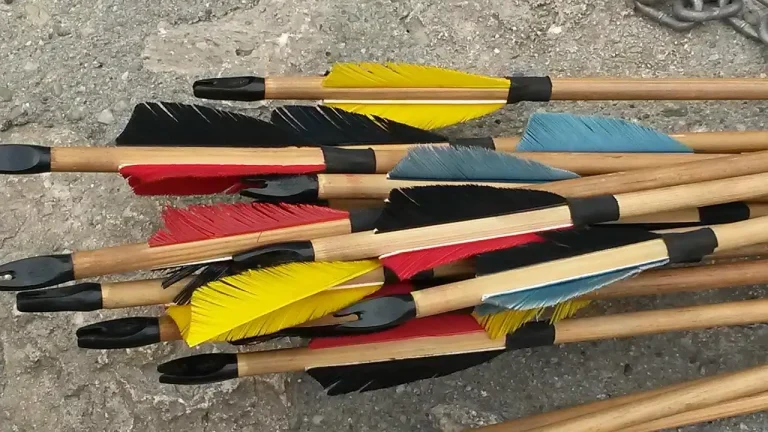
Wood arrows are the traditional option. They commonly come in 5/16-inch, 11/32-inch, and 23/64-inch diameters, and wood arrow shafts come in 5-pound spine groups. That makes them familiar for traditional recurve setups, but they need more care, can vary more from shaft to shaft, and are less forgiving of moisture and impact damage.
Aluminum shafts for tight tolerances and easy tuning
Aluminum shafts offer tight tolerances and are affordable, which helps when a beginner needs predictable flight without a premium price. They can bend on impact, though, so they are not a set-and-forget option. A bent shaft should not stay in the rotation if it no longer spins straight or shows a visible bend.
How much point weight should you use?
Point weight changes total arrow mass and can change how the shaft behaves. Common choices are 100, 125, and 150 grains. Heavier points make the arrow act weaker, while lighter points make the arrow act stiffer. That is why point weight cannot be chosen separately from spine.
The IBO standard is five grains per pound, but that is a standard reference, not a replacement for the bow’s own minimum finished arrow weight or the manufacturer’s instructions. For youth and low-poundage bows, the main goal is a finished arrow that is matched, safe, and consistent rather than simply fast.
Common point-weight ranges and what they do
A 100-grain point is often the simplest starting point when the shaft already looks weak enough for the bow. A 125-grain point is a common middle choice. A 150-grain point adds forward mass and can help a shaft behave weaker, which may help a stiff setup tune better on some bows.
Suppose a beginner recurve is tuned with a shaft that feels a touch stiff. Moving from 100 grains to 125 grains can shift the dynamic spine enough to improve grouping without changing the whole arrow build. That is a normal tuning step, not a guess.
Arrow selection matrix
This matrix is a shop-ready starting point, not a substitute for the bow maker’s manual or a spine chart. It is designed for small-framed beginners, youth archers, and low-poundage adult setups that sit below the “unlimited options” range of heavier bows.
| Draw weight band | Draw length band | Recommended spine range | Safe minimum arrow length | Typical point weight range | Shaft material fit | Red-flag symptoms of a bad match |
|---|---|---|---|---|---|---|
| 15 to 20 pounds | 20 to 24 inches | Very soft to soft; confirm on a spine chart | At least 1 inch longer than draw length, with riser and rest clearance | 100 to 150 grains | Carbon for consistency; wood for traditional setups; aluminum if straightness control matters | Arrow kicks hard left or right, noisy release, weak grouping, shaft contacts the rest |
| 20 to 25 pounds | 22 to 26 inches | Soft to medium-soft; tune with point weight | At least 1 inch longer than draw length, with full-draw clearance | 100 to 125 grains | Carbon or aluminum for most beginners; wood only with regular inspection | Feathers or vanes clip the bow, arrows plane badly, groups open up at short range |
| 25 to 30 pounds | 24 to 28 inches | Medium-soft to medium; check center-shot and rest setup | At least 1 inch longer than draw length, then verify room at full draw | 100 to 125 grains, sometimes 150 grains if the shaft is stiff | Carbon for durability and repeatability; aluminum for fine tuning; wood for traditional bows | Visible fishtailing, weak tune despite rest adjustment, cracked or bent shafts after impact |
| 30 to 35 pounds | 26 to 30 inches | Medium; chart first, then adjust by point weight | At least 1 inch longer than draw length, with clearance at the riser | 100 to 150 grains | Carbon or aluminum; wood only if the archer accepts more maintenance | Bow noise rises, groups scatter, arrow fails to recover after release |
Our picks by need
Youth recurve: PHILOCS 24-inch spine-700 carbon arrows

This is the better fit when a short-shaft youth or low-poundage setup needs carbon consistency and removable tips. The 24-inch shaft suits shorter draw lengths, and the removable tips make it easier to change the setup for target work or light hunting-style practice. Based on the published product details, the 700 spine is a specific starting point, not a universal match.
One drawback is simple: 24 inches is short for many archers, so it only works if full-draw clearance is still safe. Another drawback is the same one that comes with most carbon arrows: inspect them closely for cracks before shooting, because damaged carbon shafts should be removed from service.
Simple practice setup: GPP 30-inch fiberglass target arrows

This is the more forgiving length choice when a beginner needs a longer shaft and a simple practice arrow. The 30-inch length gives more room for growth and makes it easier to avoid a too-short setup. The listing also positions it as a novice arrow for low-poundage bows, which fits first-time practice more than exact tuning.
The drawback is that fiberglass is not the same as a precise tuning shaft. It can suit casual practice, but it is not the first choice when the archer needs tight spine control or a refined fit. It also deserves the same inspection discipline as any other shaft; if it is bent, cracked, or badly scuffed, it should not go back into the quiver.
Mistakes to avoid
A common mistake is choosing arrows from a general chart without checking the bow’s draw weight and actual draw length. A small 12-year-old, a tall teen, and a low-poundage adult may all need different arrow length and spine, even if they shoot similar bows. Measured draw weight and draw length should lead the purchase.
Another error is choosing a shaft that is too short because it looks neat on the shelf. A short arrow can be unsafe if it does not stay beyond the rest and riser at full draw. Too-long arrows are less dangerous, but they add mass and can change balance in ways that make tuning harder.
Say your archer draws 23 inches on a 20-pound recurve and the shaft is cut almost to that exact length. If the nock sits near the back edge of the rest at full draw, the setup is too short. The safe answer is a longer shaft, not a firmer grip on the bow hand.
Do not skip the damage check. Carbon shafts should get a flex test and a close look for cracks. Aluminum shafts should spin and roll straight, with no visible bend. Wood should be checked for splinters, grain splits, and warping. Never shoot a damaged arrow.
Frequently asked questions
What arrows should I use for a youth bow?
Start with the bow’s actual draw weight and the archer’s draw length, then choose a shaft that stays at least 1 inch longer than draw length and clears the riser at full draw. For many youth setups, carbon or aluminum is the easiest path to a consistent fit, with spine chosen from a chart.
How do I choose arrows for a low-poundage bow?
Measure the bow at full draw, not just at the label. Then match arrow length, spine, and point weight together. Low-poundage bows often need softer-spined shafts, and a spine chart or selector is the safest way to avoid a shaft that is too stiff for the setup.
What spine do I need for a beginner bow?
There is no single spine number that fits every beginner bow. A bow’s draw weight, draw length, arrow length, rest style, and point weight all change the answer. Start with the manufacturer’s chart or a selector tool, then move one step at a time if tuning shows a mismatch.
How long should arrows be for a youth recurve?
Long enough to clear the riser and rest at full draw, with at least 1 inch beyond the archer’s draw length as a starting point. If the shaft ends too close to the rest or shelf at full draw, it is too short. Extra length can be trimmed later if needed.
Are carbon arrows better for low draw weight bows?
Often, yes, because carbon shafts are straighter and more durable than wood, and they hold consistency well for beginners. They still need inspection for cracks, and a bad spine match can ruin the benefit. Carbon is a strong option, but the fit still matters more than the material alone.
What is grains per inch on an arrow?
GPI means grains per inch of shaft, before inserts, nocks, and points are added. It is a quick way to compare shaft weight from one arrow to another. Higher GPI means a heavier shaft, which affects speed, total mass, and often forgiveness in flight.
Can I hunt with a low-poundage bow?
Maybe, but check local law first. Many states require a minimum poundage for hunting, usually around forty pounds, and the bow must also meet the arrow and broadhead rules for that state. If the setup is only for target work, do not assume it is legal or suitable for hunting.
How do I know if an arrow is too stiff for my bow?
A too-stiff arrow often shows weak left-right tune, poor grouping, and a flight path that refuses to settle even after small rest or point changes. It can also feel noisy on release. The best fix is not guesswork; it is a spine chart, a length check, and a point-weight adjustment.