How to Store Arrows So They Stay Straight and Safe
Store arrows in a rigid tube, quiver, or divider box that keeps shafts straight, separates fletching, and fits the trip length: fixed home storage for gear that stays put, padded tubes for travel. Poor storage can bend shafts, crush vanes or feathers, loosen inserts, and leave arrows unsafe to shoot. This guide covers the best storage method for carbon, aluminum, and wood arrows, plus how to pack them for home, range, and travel use.
Why arrow storage matters


Arrow damage usually starts with pressure, moisture, or heat. A shaft that looks fine can still crack, splinter, bend, or creep out of true after being crushed in a crowded container or left wet in a warm place.
Direct sunlight and extreme temperatures are hard on bows, and the same conditions are hard on arrows. Wet storage can degrade feathers and cause warping or rot, while moisture can also reach inserts, threads, and nocks.
Arrows should be kept in an arrow quiver or arrow tube, but the best choice depends on how long they will sit, what they are made of, and whether they are staying home or traveling.
What you’ll need
- Arrow tube for short transport; a hard plastic storage option that keeps arrows separated and fits in a bow case or backpack.
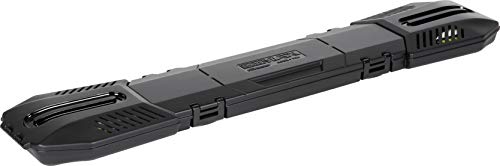
- Hard arrow case with a polymer or plastic shell and foam interior cutouts for impact and moisture protection.
- Quiver for carry during a session, either hip carry or back carry style.
- Arrow divider or foam separator if arrows will sit together in a box or rack.
- Silica gel packs for a DIY storage box.
- Broadhead case or threaded protector for removed heads.
- Clean cloth, light source, and a flat surface for checking roll and warp.
Arrow storage decision matrix
Use this matrix to match shaft material, fletching type, and storage duration to the right setup. The goal is simple: keep shafts straight, keep fletching dry, and keep any metal parts from sitting in moisture.
| Shaft material | Fletching type | Storage duration | Recommended setup |
|---|---|---|---|
| Carbon | Vanes | Overnight | Arrow tube or quiver with loose spacing; dry shafts first and do not crush vanes. |
| Carbon | Feathers | Season | Hard arrow case or divider with foam separators; keep humidity low and avoid rubbing. |
| Aluminum | Vanes | Off-season | Hard arrow case with foam cutouts; inspect for bends and keep dry to limit oxidation at inserts and threads. |
| Aluminum | Feathers | Season | Divider box or hard case; choose foam over plastic contact points to prevent denting and marring. |
| Wood | Feathers | Off-season | Rigid case or divider rack in a dry room; add humidity control and keep away from damp floors or walls. |
| Wood | Vanes | Overnight | Tube or quiver only if the shafts are fully dry; use extra spacing because cramped storage can damage finish and fletching. |
Use the least crowded option that still protects the arrows. An arrow divider can hold about 12 arrows in one competitor example, but foam is preferred over plastic because it prevents denting and marring.
For long-term storage, a hard case is generally better than a tube. Archery Guidance says hard arrow cases are made of polymer or plastic, and Midlife Archery Gal notes that a hard shell case can protect arrows from impacts and moisture.
How do you store arrows at home?
Store arrows at home in a dry, cool, shaded place after inspection and cleaning. The safest setup keeps each shaft separated, keeps broadheads off the shaft, and keeps fletching out of compression. For long-term storage, a hard case or divider box is better than a quiver.
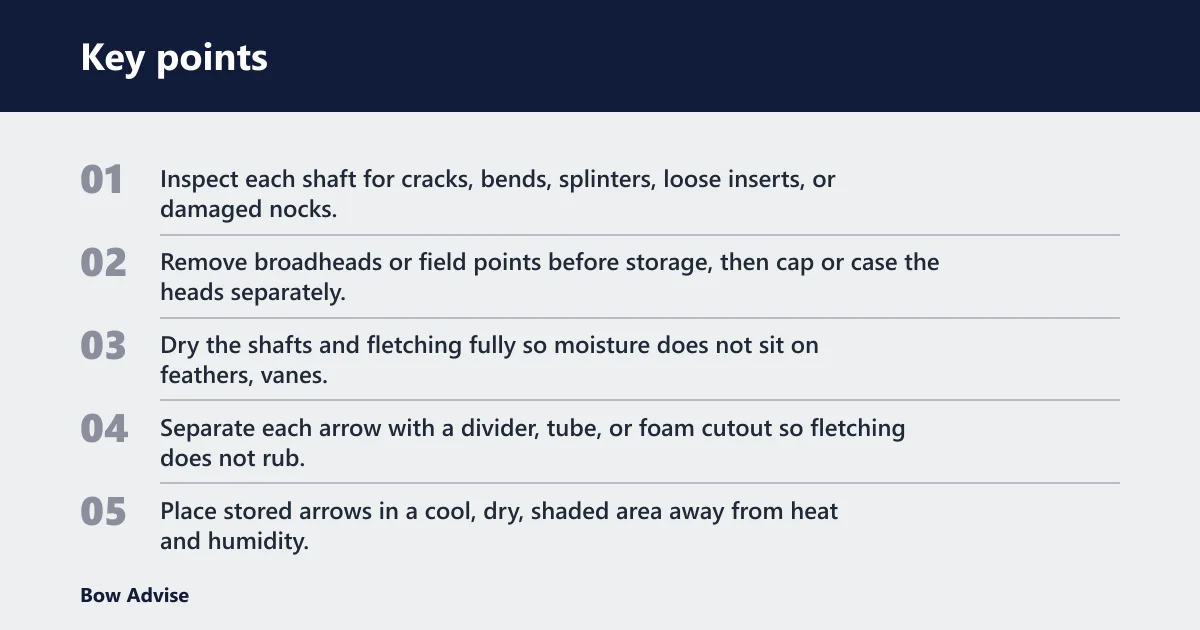
- Inspect each shaft for cracks, bends, splinters, loose inserts, or damaged nocks.
- Remove broadheads or field points before storage, then cap or case the heads separately.
- Dry the shafts and fletching fully so moisture does not sit on feathers, vanes, or metal parts.
- Separate each arrow with a divider, tube, or foam cutout so fletching does not rub.
- Place stored arrows in a cool, dry, shaded area away from heat and humidity.
Legend advises removing nocks, broadheads, and field points before storage, and Legend recommends checking arrows for dents and discarding cracked or bent ones. The same source says damaged arrows can be dangerous to the archer.
Say your carbon arrows have vanes and sit through the whole off-season. A hard case with foam cutouts keeps them separated, while a damp garage shelf can invite trouble at the insert and ruin the fletching edge.
What to remove before storing arrows
Remove broadheads before storage, and store them separately in a protective case. Thread protection matters because exposed threads can chip, rust, or pick up oxidation. Field points should come off too if the arrows will sit for more than a short time.
If the nock is damaged, replace it before the arrow goes back into storage. A loose or cracked nock can hide a larger shaft problem and can make the arrow unsafe to nock later.
How do you store arrows for travel?
For travel, an arrow tube is commonly used for short transport, and a hard arrow case is generally better for longer trips or any route with impact and moisture risk. Travel adds vibration, temperature swings, and the chance that arrows will flex against other gear.
- Load dry arrows into an arrow tube for a range bag, bow case, or backpack.
- Use a hard arrow case for road trips, hunting packs, or airline travel.
- Keep broadheads in a separate protective case with thread covers or caps.
- Do not pack arrows so tight that they flex, rattle, or press hard against the lid or wall.
- Inspect them again after travel if they sat in a hot car, cold truck bed, or airline case.
Vapor Trail says arrows should be dried before storage and protected from direct sunlight and extreme temperatures. Vapor Trail also recommends keeping arrows vertically or horizontally, not leaning on other items. That matters in a vehicle, where a leaning shaft can take a set or rub against hard edges.
Suppose a dozen carbon arrows ride in a backpack on a warm trail day. A hard plastic tube keeps them separated and dry; loose packing in the bottom of the pack can let vanes flatten, which is a fast route to damage.
Can arrows stay in a quiver?
A quiver is fine for carry during a session, but it is not ideal as long-term storage. It is meant to hold several arrows in hip or back carry style, and overpacking can damage shafts, vanes, feathers, or finish.
Remove arrows from the quiver after the session if they will sit for more than a short time. Cramped storage can bend feathers, rub vanes, and press dirt or moisture into the shaft and nock area.
If a quiver is the only option for a few hours, leave some space and keep the arrows dry. If the choice is overnight or longer, move them into a tube, divider, or hard case.
How do you keep arrows dry in storage?
Keep arrows dry by drying them first, using a closed container, and storing them in a room with stable temperature and low humidity. The main failures are wet feathers, corrosion at metal parts, and finish damage on shafts that sit in damp air.
Silica gel helps in a DIY storage box because it absorbs moisture. A few packs can help protect arrows from humidity, especially in a basement, mudroom, or garage cabinet that is not fully climate controlled.
- Wipe each shaft and fletching with a clean cloth.
- Leave arrows in open air until all visible moisture is gone.
- Place silica gel packs inside a sealed box or hard case.
- Store the box away from direct sunlight, a heater, and damp floors.
- Check the packs and replace them if they feel saturated.
Wooden arrows need the most humidity control. They can warp or rot if stored wet, and one competitor example recommends varnish or Danish oil for added surface protection. That does not replace dry storage; it just gives the shaft a better finish.
Can arrows be stored standing up?
Yes, arrows can be stored standing up if they are supported so they do not lean and if the area stays dry and cool. A vertical setup is fine for short or medium storage when the shafts are separated and the fletching is not being crushed.
The problem is leaning. The same source recommends keeping arrows vertically or horizontally, not leaning on other items. Leaning can bend a shaft over time, especially with wood, and it can also press vanes or feathers against a wall or shelf edge.
If a rack is used, choose one that separates shafts. The same source says arrow racks are not good for long-term storage, so use them for staging, not for off-season holding.
Common mistakes
The biggest storage errors are easy to avoid once they are named. Wet arrows, crowded storage, and exposed broadheads cause most of the damage that shows up later as bent shafts, rough fletching, or rusty threads.
- Leaving arrows wet before storage.
- Storing broadheads on the shafts.
- Using direct sun, attic heat, damp basements, or open truck beds.
- Packing arrows so tightly that fletching bends or feathers flatten.
- Ignoring small damage that can grow into a split, warp, or broken shaft.
A common first-timer mistake is mixing good arrows with one damaged one. If a shaft has a shallow dent or a nick near the insert, it can spread under load and turn a minor issue into a failure at release.
Buy arrows with storage in mind, not just draw weight and spine. Choose a shaft material that suits the shooting style, then check whether the planned fletching and broadhead setup can be stored dry, separated, and protected during travel and off-season downtime.
For beginners, carbon shafts are common because they are durable and easy to pack, but they still need inspection before storage. Aluminum can bend, and wood needs extra humidity control. Make sure the arrows fit the case, divider, or tube you plan to use before buying a dozen that will be hard to protect.
Frequently asked questions
Where do you store arrows?
Store arrows in a cool, dry, shaded place with stable temperature and low humidity. A hard case, divider box, or arrow tube works well if the shafts are separated and fully dry. Avoid direct sunlight, damp floors, and any spot where the arrows will lean or get crushed.
Should arrows be stored in a quiver or tube?
Use a quiver for carry during a session, and use a tube for travel or short-term protection. A quiver is not a long-term storage solution because arrows can be crowded and fletching can rub. A tube keeps shafts separated and fits well in a bow case or backpack.
What should you remove before storing arrows?
Remove broadheads and field points before long-term storage, and protect the threads in a separate case. Legend also advises removing nocks before storage when inspection shows wear or damage. That keeps the metal parts from rusting, dulling, or chipping other gear.
How do you store arrows so they stay straight?
Keep them dry, separated, and supported so the shafts do not take pressure from other arrows or from the storage wall. A hard case with foam cutouts is best for long-term protection. For shorter use, an arrow tube works if the arrows are already clean and dry.