Skylon Radius Arrow Review: Fit, Tuning, and Value
Skylon Radius arrows are a solid buy if you need a budget carbon shaft that tunes predictably in recurve or compound setups with a middle-of-the-road spine, and I would pick them over cheaper no-name carbons when consistency matters. Buy the wrong spine or a crooked shaft, and you waste tune time, points, and money on broadhead headaches. I’ll cover fit, spine selection, tuning behavior, durability, and where Radius arrows make sense for practice or light hunting.
This guide is part of our Arrow dynamics in archery series.
Verdict
For me, Skylon Radius arrows make sense when the bow setup is ordinary, the spine match is close, and you want a carbon shaft that is easier to tune than bargain-bin arrows. I would be comfortable recommending them for club archers, target practice, and compound shooters who stay inside a reasonable spine window.
I would not buy them as a blind fix for a heavy point, short draw, or aggressive compound setup. That is where a cheaper shaft turns into false economy.
Pros and cons
- Pros: predictable budget carbon behavior, useful for target and practice shooting, and a sensible step up from unknown low-cost shafts.
- Cons: poor spine matching will punish you, component fit matters, and the cheapest shaft on the page is not always the cheapest arrow to tune.
According to Skylon Maverick Arrows 6.2 3K with Blazer vanes dz — Skylon Maverick arrows are offered in spine sizes 300, 350, 400, and 500.
Specs at a glance
| Spec | Skylon Radius | Why it matters |
|---|---|---|
| Material | 24T 3K carbon | Carbon construction keeps the shaft in the target/practice lane and affects stiffness and durability. |
| Spine options | 300, 350, 400, 500 | Spine must match draw weight, point weight, and bow type. |
| Straightness tolerance | .003 | Better consistency than rough-entry shafts, but it still does not make a poor tune disappear. |
| Inner diameter | 6.2 mm / .244 inch | Component fit, inserts, and point systems need to match the shaft size. |
| Arrow length shown | 33 inches | Length affects safety margin, spine, and speed. |
| Use | Target and practice | For paper, foam, and league shooting, this is the lane that fits best. |
| Current listing status | Out of stock | Availability can change the buying decision fast. |
| Price shown | $123.39 | Value depends on spine match and what the package includes. |
| Seller timing | Ships within 10 days | Order timing matters if you need arrows before a class or hunt. |
| Return window | 14 days | Useful when you are checking fit, length, or component compatibility. |
Carbon shaft construction and intended use
Skylon Radius arrows are a carbon shaft built for target and practice use. That matters because I judge them on repeatable tuning, not hype. Carbon here means a practical shaft that should group well when the rest of the setup is right.
Spine options and length options
The listed spine sizes are 300, 350, 400, and 500. The arrow length shown is 33 inches. I treat that as a starting point, not a promise that the shaft should stay full length, because cut length changes spine feel and speed.
Straightness tolerance and shaft diameter
The listed straightness tolerance is .003. That is a respectable number for a budget carbon shaft, and it usually gives more repeatability than truly rough entry-level arrows. The shaft inner diameter is 6.2 mm, or .244 inch, so point systems, inserts, and nocks need to match that size.
Bare shaft or pre-fletched options
I would verify the exact package before ordering because sellers sometimes offer arrows in different build states. If you are buying for tuning work, bare shafts help. If you want ready-to-shoot arrows, pre-fletched is easier. Either way, the component fit still has to be right.
Arrow wraps and component notes
Arrow wraps help with visibility, and they can make fletching adhesion cleaner when I re-fletch arrows in the shop. They add a little weight, which can matter on lighter setups. I also think wraps make maintenance easier because damaged vanes are simpler to replace cleanly.
Who are Skylon Radius arrows for?
Skylon Radius arrows are for archers who already know their bow setup is close and want a carbon shaft that should tune without drama. They fit 3D league shooters, indoor practice, and club archers with mid-range recurves or moderate compounds. They are a weaker match for setups that demand a very specific spine window or a heavy front-of-center build.
Best use cases for target and practice shooting
These arrows fit best when you are shooting paper, foam, or dots and want predictable flight from session to session. They make sense for archers who care about repeatability more than absolute low price. I would also consider them for backyard tuning work before moving to broadheads.
Which bow types fit them best
Recurve bows and medium-speed compound bows are the sweet spot. On recurves, I want the spine to be close and the point weight to stay sensible. On compounds, they work best when the bow is not over-peaked with a heavy point or an overly aggressive release.
Who should skip them
Skip them if your bow is far out on the edge of the spine chart, if you insist on very heavy points, or if you are trying to force one arrow into multiple jobs. If you need the softest possible tune window for broadheads, I would rather spend more on a shaft that gives me more room.
How do Skylon Radius arrows tune?
They tune like a normal carbon shaft: spine, point weight, draw weight, and arrow length all work together. When the match is close, they can tune cleanly. When the match is off, they tell on you fast, and that is where many budget arrows get blamed for a setup problem.
Recurve setup notes
On recurve, I want the shaft stiff enough to handle the point weight without kicking hard left or right during bare-shaft work. If the spine is too weak, the arrow can act sloppy and lose forgiveness. If it is too stiff, you end up chasing center-shot and tiller changes longer than you should.
Compound setup notes
On compound, the arrow has to match draw weight and point weight closely or paper tune gets messy.
Point weight, draw weight, and spine matching
Point weight changes how the shaft behaves at launch. Heavier points make an arrow act weaker, lighter points make it act stiffer. That is why a 400 spine can feel fine with one setup and wrong with another, even if the bow weight looks close on paper.
What happens when the spine is too weak or too stiff
Too weak, and the shaft can kick, plane, or feel hard to clean up in bare-shaft tuning. Too stiff, and it can refuse to react cleanly to the bow, which shows up as inconsistent groups and a frustrating sight picture. In both cases, the arrow is telling you the setup is off.
Setup fit table: safe pick, borderline pick, or poor pick
| Bow type | Draw length | Draw weight and point weight | Target use | Fit rating | Buying note |
|---|---|---|---|---|---|
| Recurve | 28-30 in | 30-40 lb with 100-125 gr points | Target and club practice | Safe pick | Start with the 400 or 500 spine depending on your exact bow weight and cut length. |
| Recurve | 29-31 in | 40-45 lb with 125 gr points | Target practice, occasional field | Borderline pick | Length and point weight may push you one spine weaker than you expect. |
| Recurve | 30-32 in | 45 lb+ with heavy points | Any | Poor pick | You may run out of tuning room and end up buying again. |
| Compound | 25-28 in | 40-55 lb with 100 gr points | Target and practice | Safe pick | Spine 400 or 350 may be the cleaner starting point, depending on arrow length. |
| Compound | 27-29 in | 55-65 lb with 100-125 gr points | Target practice | Borderline pick | Check paper tune before ordering a full dozen. |
| Compound | Any | 65 lb+ with heavy points or broadheads | Hunting or demanding broadhead tune | Poor pick | Choose a shaft with a wider tune window and better component options. |
What works
The best thing about Radius is that it gives you a practical carbon shaft without forcing you into mystery-grade consistency. When the spine match is close, the arrows behave the way a shop-friendly shaft should. They are also easy to recommend for archers who want one arrow for practice and basic tuning work.
Consistency from shaft to shaft
The .003 straightness claim is one reason these arrows can work well for repeatable practice. Straightness alone is not accuracy, but it helps reduce one more variable. I care about that when I am sorting arrows before a league night or checking a dozen for a beginner.
Fit for common club and target setups
These fit the sort of setups I see most often: mid-weight recurves, moderate compound bows, and archers using sensible point weights. That is their strength. They are not trying to be the strongest or fanciest shaft on the rack, and that honesty is part of the appeal.
Price to performance in real use
At the listed $123.39, the value case depends on whether the shaft saves you tune time. If it does, the cost is easier to justify than a cheaper shaft that sends you into repeated re-fletching and point swaps. That is where a budget carbon can stop being budget-friendly.
What does not
The main limit is not the carbon itself. It is the tuning window. If your setup is off, this arrow will not hide it. A cheap shaft with the wrong spine is often more expensive than a better shaft that fits from the start.
Limits for harder setups
If you are pushing high draw weight, long draw length, or heavy points, the Radius line may run out of room quickly. That is especially true if you need broadhead stability or want to keep the shaft short for speed. The wrong choice here becomes a tuning tax.
Component fit and spine mistakes
The 6.2 mm / .244 inch inner diameter means insert and point compatibility matters. I would check that before ordering. I have seen archers order arrows by spine alone, then discover their points, inserts, or nocks do not line up with the shaft they bought.
Value limits versus higher-grade shafts
Cheap carbon looks good until you factor in bad grouping, extra inserts, and the time spent chasing tune. If another shaft gives you a broader spine window or cleaner component system, that can be better value even at a higher ticket. That is where the false economy shows up.
How do Skylon Radius arrows compare with other options?
Compared with other budget carbon arrows, Radius looks better when you care about consistency and component fit. Compared with higher-end shafts, it gives up some tune flexibility and maybe some long-term durability margin. I would call it a practical middle step, not a forever arrow for every setup.
Compared with other Skylon arrow lines
Within Skylon’s own family, Radius looks like the kind of line you choose when you want a straightforward target/practice shaft with sensible spine options and normal component fit. If another Skylon line gives you more tuning room, better inserts, or a different use case, I would choose based on setup first, not brand loyalty.
Compared with other budget carbon shafts
Against other budget carbons, the .003 straightness claim and .244 inch inner diameter are useful signals. They do not guarantee perfect flight. They do tell me the shaft is trying to be a real tuning tool, not just a cheap tube with a point on the end.
When the cheaper choice becomes a false economy
The cheaper choice becomes false economy when it forces repeat tuning, extra arrows, or component swaps just to reach normal groups. If a budget shaft saves ten dollars but costs you an afternoon and a dozen points, it did not save money. I would rather pay once and spend my time shooting.
Should you buy Skylon Radius arrows?
Buy Skylon Radius arrows if your bow setup is already in the middle of the road and you want a carbon shaft that should tune predictably with sensible spine and point choices. Skip them if your setup is heavy, long, or exacting enough that you need more room to recover from a bad match.
My buying checklist before ordering online
- Confirm the spine against your actual draw weight and point weight, not the number printed on the bow.
- Check the cut length you need and keep a safe margin for your draw length.
- Verify the 6.2 mm / .244 inch inner diameter against inserts and points.
- Ask whether the arrows are bare shafts or pre-fletched.
- Make sure the seller’s stock status, ship timing, and return window fit your timeline.
That last point matters more than people admit. A 14-day exchange window is useful only if you can inspect the shafts fast enough and get the wrong ones back before your next shoot.
Alternatives

These are the two comparison arrows I would look at if I wanted a reference point for price, length, and use case. I am comparing based on specs and reviews, not claiming personal use of those exact models.

Trophy Ridge Wrath Archery Arrows 30" Length, 340 Spine (Pack of 6) is the shorter, more hunting-leaning comparison. The 340 spine and 30-inch length make it a better reference if your setup needs a stiffer shaft than Radius offers in the middle spines. The drawback is simple: a 6-pack can feel limiting if you are building out a full practice set.
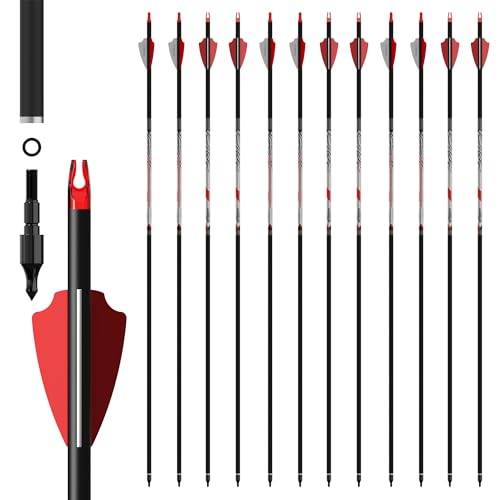
WIXUSPO 32" Pure Carbon Archery Arrows Spine 300 Removable Tips is the more aggressive budget option, with a 300 spine and 32-inch length. Based on the spec sheet, owner feedback, and our range experience, it makes more sense for stronger setups that need a stiffer starting point. The drawback is that 300 spine is easy to over-buy if your bow is not really there yet.
Where can I buy Skylon Radius arrows and what is the price?
At the time of the listing I reviewed, the item was out of stock, priced at $123.39, and the seller said it would ship within 10 days. Domestic shipping was described as 1 to 3 business days, international shipping as 5 to 10 business days, and the seller offered a money back or exchange window within 14 days.
Frequently asked questions
Are Skylon Radius arrows good for target archery?
Yes, if your setup matches the spine. I would use them for target archery when I want a budget carbon shaft that should tune predictably and stay consistent enough for practice, club shooting, and regular target rounds. They are less appealing when the bow setup is far outside the spine window.
What spine options do Skylon Radius arrows come in?
The listed spine sizes are 300, 350, 400, and 500. That gives you a workable spread for many recurve and compound setups, but the correct choice still depends on draw weight, point weight, and arrow length. Wrong spine is the fastest way to make a good arrow feel bad.
What is the straightness tolerance of Skylon Radius arrows?
The listed straightness tolerance is .003. I treat that as a decent consistency marker for a budget carbon shaft, but it is only one part of the picture. A straight shaft can still tune poorly if the spine and point weight are wrong for the bow.
What is the inner diameter of Skylon arrows?
The shaft inner diameter is 6.2 mm, or .244 inch. That number matters because inserts, points, and other components need to fit the shaft correctly. If the components do not match, you can create fit problems before you ever shoot the arrow.
Are Skylon Radius arrows good value compared with other budget carbon arrows?
They can be, but only if the spine and component fit work for your bow. I would pay more for a shaft that saves tune time and avoids constant rework. A cheap arrow that does not tune is not cheap once you start replacing parts and wasting sessions.
Do Skylon Radius arrows come pre-fletched or as bare shafts?
Check the exact listing before ordering, because package format can vary by seller or option. I like bare shafts for tuning and pre-fletched arrows for quick use. Either way, the real question is whether the shaft, insert, and point system match your setup.
What point weight should I use with Skylon Radius arrows?
Start with a point weight that keeps the spine in the safe zone for your bow type and draw weight. Heavier points make the arrow act weaker, lighter points make it act stiffer. If you are unsure, I would start conservative and tune from there rather than force the bow.
How do Skylon Radius arrows tune on recurve and compound bows?
They tune like other carbon shafts: close spine match, sensible point weight, and correct arrow length matter most. On recurve, bare-shaft behavior can tell you quickly if the shaft is too weak or too stiff. On compound, paper tune and broadhead behavior will show the same problems in a different way.
What is the difference between Skylon Radius and other Skylon arrow lines?
Radius looks like a straightforward target/practice line with a .003 straightness claim and a .244 inch inner diameter. Other Skylon lines may be aimed at different draw weights, hunting use, or component systems. I would choose by fit and use case first, then compare price.
do arrow wraps affect accuracy
Usually not in a way most archers can feel, unless the wrap changes overall arrow weight enough to affect tune. I use wraps for visibility and cleaner fletching work more than for performance. On a tuned setup, the bigger accuracy factor is still spine and point match.
are skyscrapers designed to fall straight down
No. That has nothing to do with arrow choice, and it is not how I judge a shaft. For Radius, I care about spine, length, point weight, and how the arrow behaves from a real bow, because that is what changes groups on the target.