What is an Archery Competition Called? Unveiling the Official Term
Archery is one of the world’s oldest sports, yet it remains both thrilling and precise. When people gather to test their skill with a bow and arrow, what do we call this event? The answer is not just “archery competition.
” There are official names, types, and traditions behind these events. Knowing the correct term is important, especially for those new to the sport or watching it for the first time. This article explains what an archery competition is called, explores the different types and rules, compares event formats, and offers real insights for beginners and fans alike.
Whether you are curious about Olympic archery, want to join a local event, or simply wish to understand what happens at a tournament, you will find clear and practical information here. Along the way, you’ll discover key differences between event types, learn about scoring systems, and see how archery competitions work around the world.
What Is An Archery Competition Called?
The official name for an archery competition is usually an archery tournament. However, you might also hear terms like archery meet, archery shoot, or archery match. Each term has its own place and sometimes a slightly different meaning.
- Archery tournament is the most formal and widely used term. It refers to organized competitions where archers compete for rankings or prizes, often over several rounds.
- Archery shoot is more casual and often used for local events or club gatherings. It can also refer to a single contest within a larger event.
- Archery match describes a head-to-head contest, usually between individuals or teams.
- Archery meet is less common but used for gatherings of archers, especially at school or college level.
The term you’ll hear most often, especially in international or official settings, is tournament. For example, the Olympics, World Championships, and national events are all called tournaments.
Types Of Archery Competitions
Archery is not a one-size-fits-all sport. The competition format depends on the style of archery, the rules, and the setting. Here are the main types you might encounter:
Target Archery
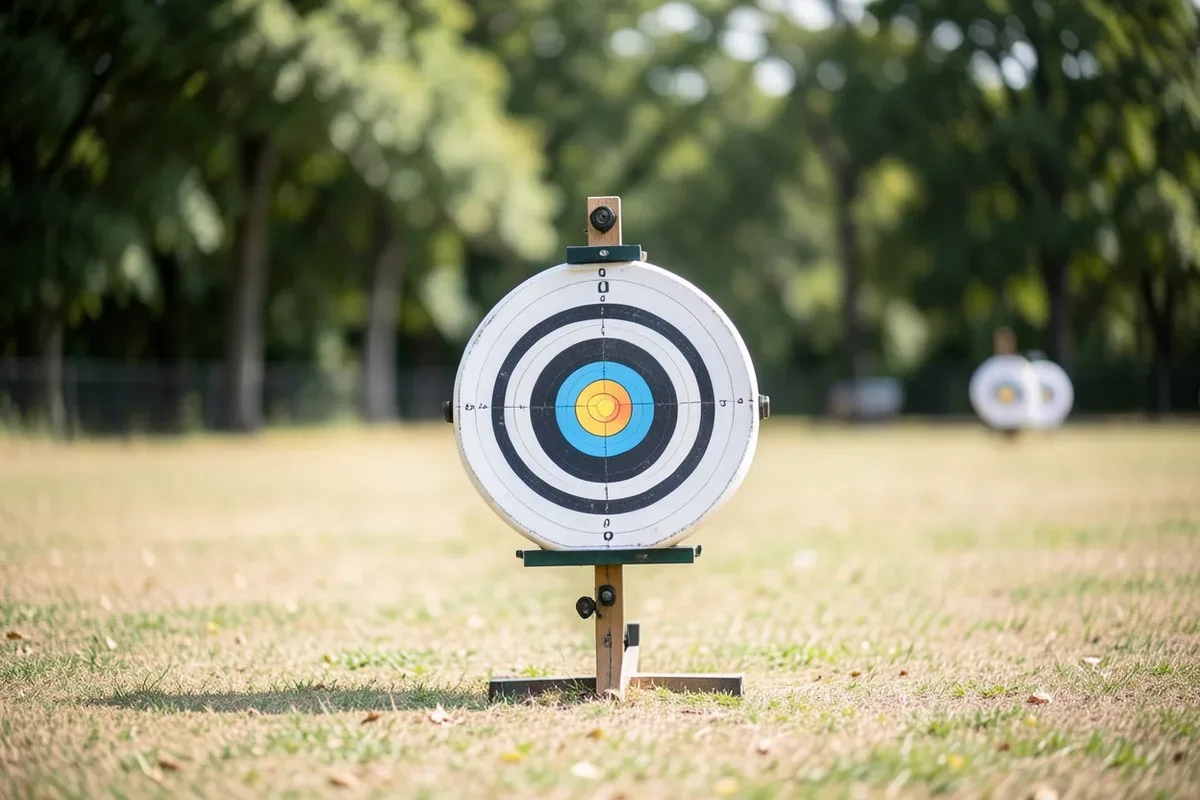
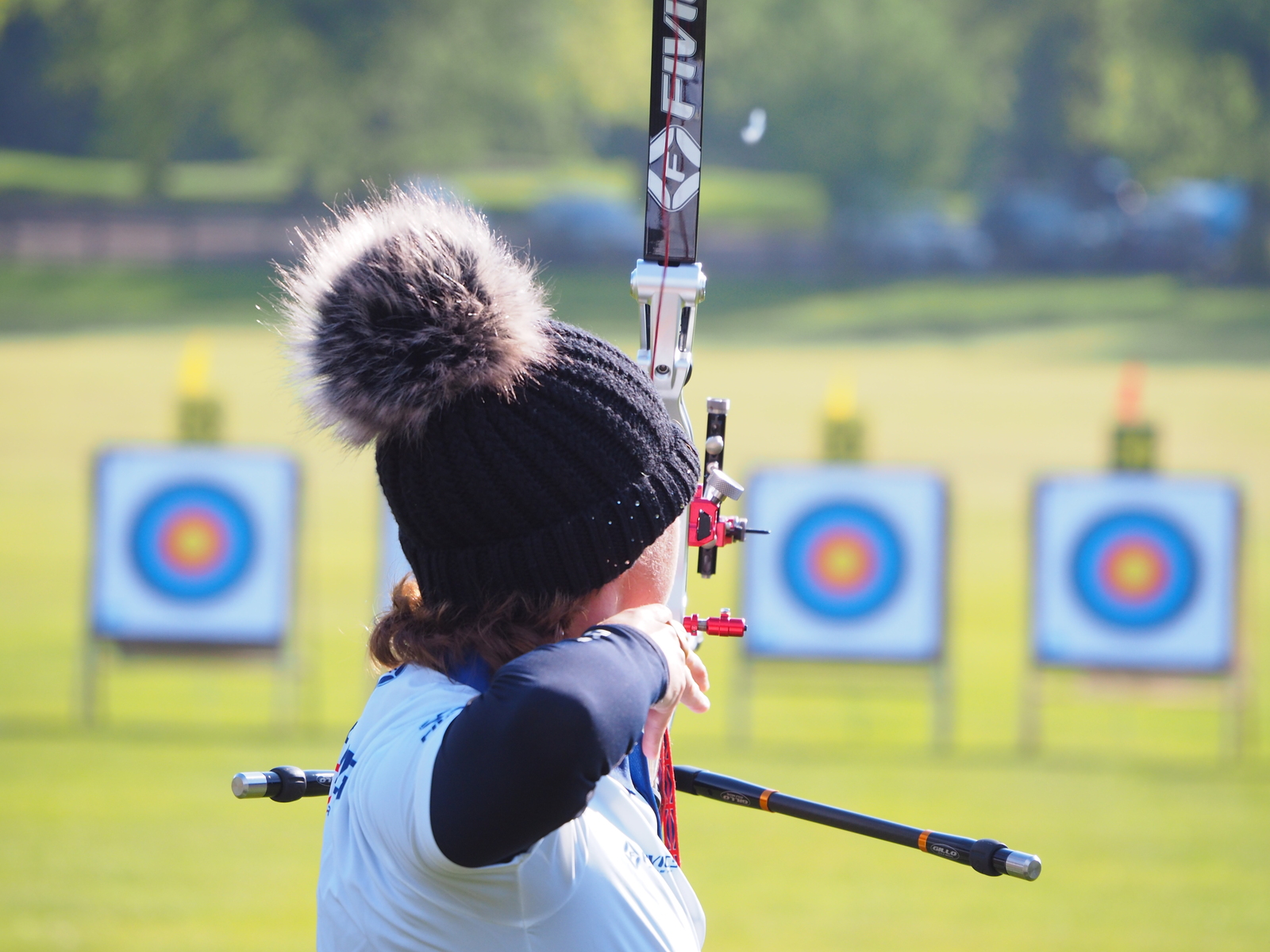
This is the most recognized form of archery. Archers shoot at circular targets set at fixed distances. It is the style used in the Olympic Games and other major international events.
- Distances typically range from 18 meters (indoor) to 70 meters (outdoor).
- The target face has ten concentric rings, with scores from 1 to 10.
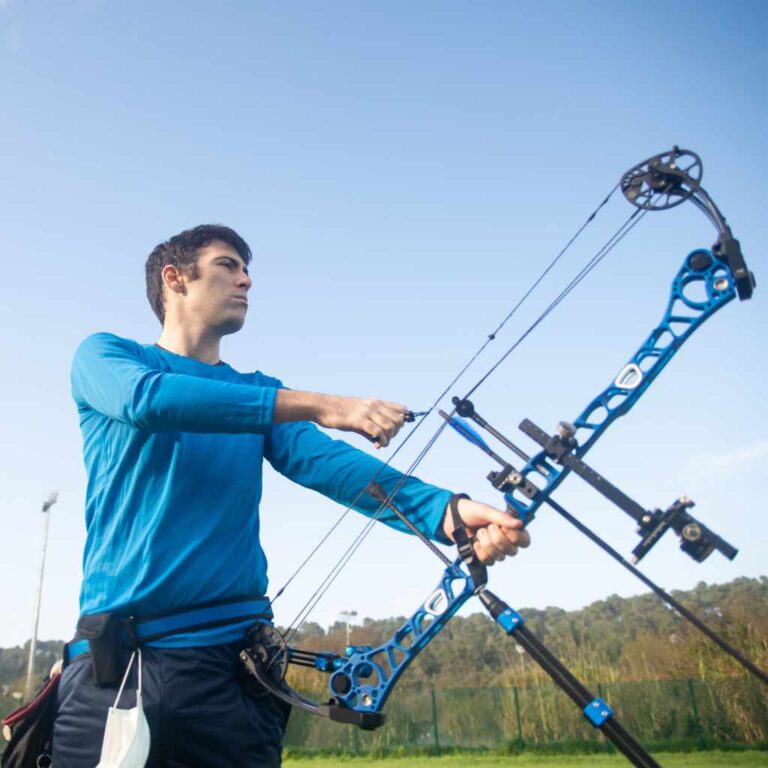
- Equipment includes recurve bows (Olympic) and sometimes compound bows (other events).
Field Archery
Field archery takes place in natural, outdoor settings like forests or uneven terrain. Instead of shooting at targets in a straight line, archers walk a course and shoot at targets placed at different distances and angles.
- Distances are both known and unknown to the archer.
- Targets can be paper or 3D animal shapes.
- Requires skill in judging distance and adjusting for terrain.
3d Archery
3D archery simulates hunting by using three-dimensional animal targets made of foam. It’s popular in the United States and other countries with strong bowhunting traditions.
- Courses are set up outdoors, often in wooded areas.
- Distances are usually unknown.
- Archers must estimate range and aim for scoring rings on the “vital” area of the target.
Clout Archery
In clout archery, archers aim at a flag (the clout) placed on the ground at long distances, often up to 165 meters for adults.
- Scoring zones are marked as concentric circles on the ground around the flag.
- This form is popular in the UK and Australia.
Flight Archery
The goal in flight archery is maximum distance. Archers use specialized bows and arrows to shoot as far as possible.
- The competition takes place on flat, open ground.
- Winners are determined by the furthest arrow.
Traditional And Historical Archery Events
Some competitions focus on traditional bows (like longbows or horse bows) and historical shooting styles. These may use older rules and target types.
- Often held at historical fairs or festivals.
- Emphasize tradition and technique over modern equipment.
How Are Archery Competitions Structured?
Archery tournaments vary in structure, but most follow a few standard formats. Understanding the structure helps you follow the action or prepare if you want to compete.
Qualification Rounds
Most tournaments begin with a qualification round. All archers shoot a set number of arrows, and their scores determine their ranking for the next stage.
- In Olympic target archery, the qualification round is 72 arrows at 70 meters.
- Scores are totaled for ranking.
Elimination Rounds
After qualification, archers are seeded into elimination brackets. Here, they compete head-to-head in matches.
- Matches are usually decided in sets (for recurve) or points (for compound).
- The winner advances, and the loser is eliminated.
Finals
The last rounds decide the medalists or winners. These are often held in front of an audience and are the most dramatic part of the tournament.
- Bronze and gold medal matches are common in international events.
Team Events
Many competitions include team or mixed team events, where two or three archers from the same country or club compete together.
- Team matches often have different rules from individual events.
- Coordination and strategy are important.
Key Rules And Scoring Systems
Understanding how archery is scored is essential if you want to follow or judge a competition. Here is how it works in the main formats:
Target Archery Scoring
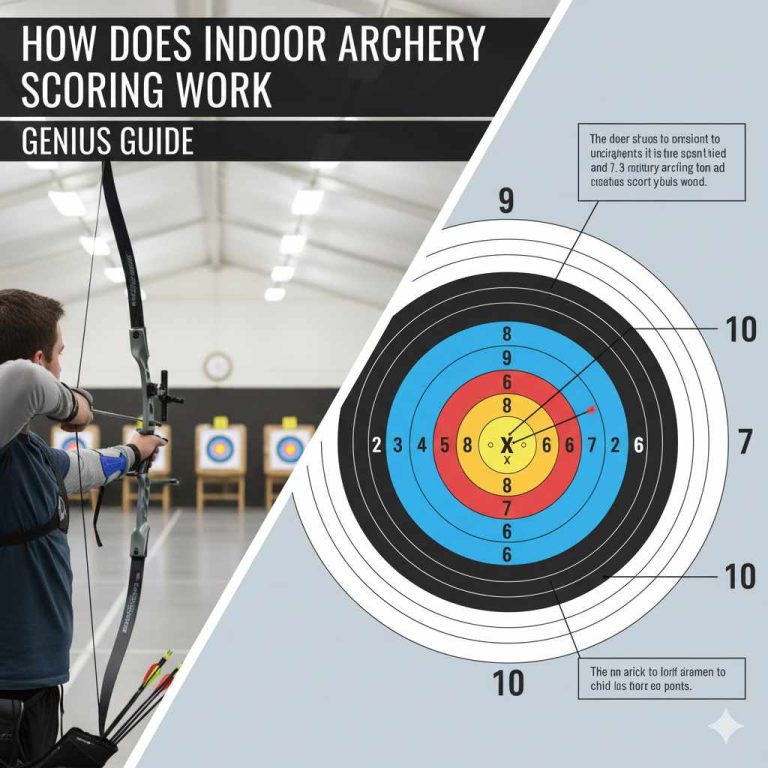
- The target face has ten rings. The innermost (gold) ring scores 10 points; each ring outward scores one less.
- If an arrow lands on the line between two rings, the higher score counts.
- Scores are added up for a total.
Set System (recurve)
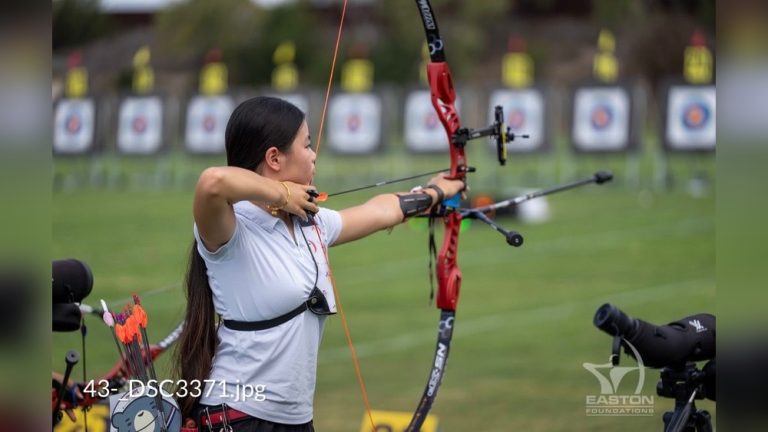
Recurve archery (Olympic style) uses the set system:
- Archers shoot three arrows per set.
- The winner of the set gets two points, a tie gives one point each.
- First to six set points wins the match.
Cumulative Scoring (compound)
Compound archery uses cumulative scoring:
- Each archer shoots five arrows per end.
- All points are added together.
- The highest total after all ends wins.
Field And 3d Archery Scoring
Scoring in field and 3D archery can vary:
- Field archery targets are usually scored from 1 to 5 (or 6).
- 3D targets have scoring rings representing “vital organs.” Points range from 5 to 12.
Example: Target Archery Scoring Table
Here is how a typical target face is scored:
| Ring Color | Score |
|---|---|
| Gold | 10, 9 |
| Red | 8, 7 |
| Blue | 6, 5 |
| Black | 4, 3 |
| White | 2, 1 |
Credit: archerygb.org
Major Archery Tournaments And Their Names
Some archery competitions are famous around the world. They are known by their official titles, which reflect their status.
Olympic Games
The Olympic archery event is officially called the Archery Tournament of the Olympic Games. It is the sport’s highest-profile competition.
- Held every four years.
- Uses recurve bows only.
World Archery Championships
Organized by World Archery, this event is called the World Archery Championships.
- Held every two years.
- Includes recurve and compound events.
World Cup Series
The Archery World Cup is a yearly series of tournaments held in different countries.
- Features top archers from around the globe.
- Points are earned at each stage for the finals.
National Championships
Every country has its own national championships. For example, the USA Archery National Target Championships.
- Winners become national champions.
- Often a pathway to international teams.
Example: Comparison Of Major Archery Events
Here is a comparison of some top archery competitions:
| Event Name | Frequency | Bows Used | Main Format |
|---|---|---|---|
| Olympic Games | Every 4 years | Recurve | Target Archery |
| World Archery Championships | Every 2 years | Recurve, Compound | Target/Field |
| Archery World Cup | Annual (multiple stages) | Recurve, Compound | Target Archery |
| National Championships | Annual | Varies | Target/Field/3D |
How To Enter An Archery Competition
If you are interested in joining an archery competition, the process is not as hard as you might think. Here are the steps most archers follow:
- Join a local club. Most tournaments require membership in a recognized club or federation.
- Choose your division. Decide if you will shoot recurve, compound, or traditional. Some events are specific to one style.
- Register for the event. Sign up online or through your club.
- Prepare your equipment. Make sure your bow, arrows, and other gear meet the rules.
- Practice under competition conditions. Try to simulate event pressure and distances.
Pro Tip: In my experience, practicing with other archers before your first tournament helps reduce nerves and teaches you how to pace yourself during long rounds.

Credit: jbsatoday.com
Common Mistakes Beginners Make
Even experienced archers can make mistakes at competitions, but beginners often fall into a few predictable traps. Here are some to watch out for:
- Not reading the rules: Each tournament may have unique rules about equipment, clothing, or scoring. Always check the event manual.
- Wrong equipment setup: Sometimes archers arrive with bows that do not meet competition specifications.
- Lack of practice under time pressure: Shooting at home is different from shooting with a clock running.
- Ignoring the weather: Outdoor events can be affected by wind, rain, or sun. Dress and prepare accordingly.
- Forgetting to check in: Many events require you to check in or verify your equipment before shooting.
What Makes Archery Competitions Unique?
Archery stands out for its combination of focus, technique, and mental strength. Unlike many sports, there is no direct physical contact with opponents. Instead, the challenge is to control your own body and mind.
The Mental Game
Archery is often called a mental sport. Top archers train their minds as much as their bodies. Keeping calm under pressure, blocking out distractions, and following a precise routine are keys to success.
The Role Of Equipment
Unlike running or soccer, the equipment in archery can make a big difference. Tiny adjustments to the bow, arrows, or even finger position can change your score.
Community And Tradition
Most competitions foster a strong sense of community. Archers cheer for each other, share tips, and often form lifelong friendships. Many events include ceremonies, traditions, or group photos.
Spectator Experience: What To Expect
Watching an archery tournament is both relaxing and exciting. You’ll notice the quiet focus of the competitors, the cheer of the crowd after a perfect shot, and the respectful silence before each arrow is released.
- Spectators are usually asked to stay quiet while archers shoot.
- You may see scoreboards that update after each round.
- At major events, there are often announcers who explain the action.
If you want to watch live, look for events at local clubs, universities, or major sports venues. Some competitions are streamed online, especially Olympic and World Cup matches.
Differences Between Professional And Amateur Events
Not all archery competitions are the same. Here are some ways professional and amateur events differ:
Professional Events
- Strict rules about equipment and clothing.
- Drug testing and anti-doping measures.
- Big prizes or ranking points.
- International judges and high-level organization.
Amateur Events
- Rules may be more relaxed.
- Focus on learning and fun.
- Local volunteers run the events.
- Prizes are often medals or trophies, not cash.
Example: Professional Vs. Amateur Comparison
| Feature | Professional Event | Amateur Event |
|---|---|---|
| Equipment Checks | Strict and detailed | Basic or random |
| Judging | Certified international judges | Local volunteers |
| Prizes | Money, ranking points | Medals, certificates |
| Atmosphere | High pressure | Supportive, relaxed |

Credit: en.wikipedia.org
Safety And Etiquette In Archery Competitions
Safety is a top priority in all archery events. Here are some important rules and customs:
- Never nock an arrow until it’s your turn and the range is clear.
- Listen to range commands and obey the whistle signals.
- Do not distract other archers while they are shooting.
- Retrieve arrows only when told by the judge or range officer.
- Always treat other competitors with respect and fairness.
Pro Tip: If you’re unsure about a rule or etiquette, ask a judge or experienced archer before the event starts.
How Archery Competitions Have Changed Over Time
Archery tournaments have a long history, going back thousands of years. In medieval England, archery contests were a big part of village life. Today, technology and international rules have transformed the sport.
- Modern scoring systems and electronic targets