What Was the Archery Competition Called at a Medieval Tournament?
Medieval tournaments are famous for their grand jousting contests, shiny armor, and loud cheering crowds. But these lively festivals also featured a range of other competitions. One event that often goes unnoticed in popular culture is the archery competition. While lances and swords took center stage, the bow and arrow offered its own brand of excitement and skill. What, though, was this archery contest called at a medieval tournament? And what role did it really play in the life of knights and commoners?
To answer this, we need to look beyond Hollywood and uncover the real history, rules, and culture of medieval archery events. This article explores the traditional names for archery competitions, their place in tournaments, how they were organized, and what made them special.
We’ll also compare different types of archery games, provide examples from actual tournaments, and explain why these contests mattered to both society and warfare.
The Name Of The Medieval Archery Competition
During the Middle Ages, the archery competition at a tournament was commonly known as the “butts” or the “shooting at the butts”. The term “butt” referred to the target, usually a mound of earth, a straw-filled sack, or a painted wooden board, set at a specific distance. The phrase “shooting at the butts” became the standard way to describe organized target archery.
While the word “butt” might sound odd today, it was well-known in medieval England and Europe. For example, King Henry VIII’s laws on archery (the “Unlawful Games Act” of 1541) required every town to maintain butts for regular practice. The word “competition” as we use it today was less common, but records mention “shoots,” “prizes,” and “matches” held at these butts.
In France, the contest was often called “tir à l’arc” (shooting with the bow), and in Germany, “Bogenschießen”. However, the English tradition of “shooting at the butts” is the term most closely linked to medieval tournaments.
Pro Tip: When researching old records, look for phrases like “at the butts,” “archers’ shoot,” or “prize shooting.” These usually mean a formal archery contest.
The Role Of Archery In Medieval Tournaments
Medieval tournaments were not just about knightly combat. They were also important social events, bringing together nobles, soldiers, and townsfolk. Archery competitions played several roles at these gatherings:
A Test Of Skill And Training
Archery was a key military skill, especially in England, where the longbow was famous for its power in battles like Agincourt. Tournaments offered a way for archers to practice and show their accuracy. Sometimes, kings and lords would watch the best archers and recruit them for war.
A Chance For Social Mobility
While jousting was mostly for the noble class, archery contests were often open to commoners. This gave ordinary men the rare chance to win prizes, money, or even favor from local lords. Outstanding archers could improve their social standing, something almost impossible in other areas of medieval life.
Entertainment And Community
Archery events were popular with the crowd. Spectators would gather to watch skilled marksmen hit distant targets, split arrows, or perform trick shots. These contests helped create a festival atmosphere and gave everyone, rich or poor, a reason to celebrate.

Credit: warfarehistorynetwork.com
Types Of Archery Competitions At Tournaments
Not all archery contests were the same. Medieval tournaments could feature several different styles of competition, each with its own rules and traditions. Below are the main types you would see.
1. Shooting At The Butts
This was the most common form. Archers would shoot a set number of arrows at a fixed target (the butt), usually placed 80, 120 yards away. The goal was simple: hit the center as often as possible. Scoring varied, but closest to the mark always won.
2. Popinjay (shooting At The Parrot)
In this event, archers aimed at a wooden bird (the “popinjay” or “papingo”) placed on top of a tall pole. The challenge was to knock it off with a well-placed arrow. This game was especially popular in Scotland and the Low Countries.
3. Clout Shooting
Archers would aim at a small flag or marker (the “clout”) set on the ground at a great distance, sometimes over 180 yards. The winner was the archer whose arrow landed closest to the clout.
4. Wand Shooting
Instead of a round target, a thin stick or “wand” was used. Hitting such a narrow target demanded extreme accuracy. Wand shooting was a test for the very best archers.
5. Running Or Moving Targets
Some tournaments made the contest harder by having targets that moved, either swung on ropes or were carried by assistants. This tested an archer’s speed and ability to judge distance quickly.
Example: At the 1330 tournament in Dunstable, England, archers competed in both shooting at the butts and at running targets, according to local records.
How Archery Contests Were Organized
Setting up a medieval archery competition involved careful planning. Here’s how it usually worked:
Selection Of Archers
Anyone could watch, but only those approved by the tournament’s master-at-arms could compete. Some contests were for local guild members or soldiers; others were open to all comers.
Equipment Rules
To keep things fair, there were usually strict rules about bows and arrows. For example, longbows might be required, with a minimum draw weight. Arrows had to be a certain length and type. Archers sometimes had to use equipment provided by the organizers to prevent cheating.
The Shooting Order
Archers would draw lots for their shooting order. Each would step forward, shoot a set number of arrows (often three or six), and then step back. The next archer would take his place.
Scoring And Judging
Officials, often respected local men or minor nobles, would measure the distance of each arrow from the center of the butt. Sometimes, the winner was the one with the most hits in the center; other times, points were awarded for accuracy.
Prizes
Prizes could be money, a decorated silver arrow, a new bow, or even a small land grant. In some cases, the winner was honored with a special title, like “King of the Archers,” until the next tournament.
Comparison Of Archery Events With Other Tournament Competitions
Archery was just one of many contests at a tournament. The table below shows how archery compared with other popular events:
| Event | Main Participants | Purpose | Typical Prize |
|---|---|---|---|
| Jousting | Nobles/Knights | Martial skill, honor | Money, horses, armor |
| Melee | Knights/squires | Team combat, training | Ransom, equipment |
| Archery (Butts) | Commoners, yeomen | Accuracy, recruitment | Money, arrows, titles |
| Foot races/wrestling | All classes | Entertainment | Food, clothes |
From this, you can see that archery competitions were both a sport and a way to find talented marksmen for military service.
Why Archery Competitions Mattered
Many people think of medieval archery as just a pastime, but it was much more than that. These contests had real impact on society, warfare, and even law.
Military Importance
Archers played a critical role in battles. In England, for instance, the longbow was so effective that kings passed laws requiring regular practice. Tournaments and village shoots kept these skills sharp. Sometimes, the best archers were recruited for royal armies.
Legal Requirements
Practicing archery was not just encouraged, but often required by law. The English statutes of the 13th to 16th centuries ordered men to practice at the butts every Sunday and holiday. Those who skipped could be fined.
Social And Economic Impact
Winning an archery contest could change a person’s life. Prizes were valuable, but so was the chance to earn a place in a noble’s service. Archery guilds grew powerful, and their members often enjoyed special privileges.
Cultural Value
Archery became part of legends and folk tales, think of Robin Hood and his famous shooting contests. The image of the skilled archer was a symbol of fairness and hope for the common man.
Example: In my experience, visiting medieval fairs that recreate these contests shows how deeply rooted archery is in popular history. People gather, cheer, and celebrate the archer’s skill just as they did centuries ago.

Credit: en.wikipedia.org
Famous Archery Competitions In History
Not every tournament featured archery, but many left a mark on history. Here are a few notable examples:
The Scorton Silver Arrow (england)
First held in 1673, but based on much older traditions, the Scorton Silver Arrow contest is the oldest recorded archery competition still held today. Archers compete for a silver arrow and the title of Captain of the Arrow.
The Papingo Shoot (scotland)
This contest, with roots back to the 15th century, involved shooting at a wooden bird atop a church tower. The winner was honored as the “King of the Papingo. ”
English Royal Tournaments
Records show that Edward III and Henry VIII both enjoyed archery contests at their tournaments. In 1545, Henry VIII awarded a golden arrow to the winner at Hampton Court.
The Fête De L’arc (france)
French towns often held “fêtes de l’arc,” or bow festivals, as part of larger tournaments. These included both butts shooting and popinjay events.
Archery Equipment Used In Medieval Tournaments
The tools of the archer were as important as his skill. Let’s look at what was typically used at these competitions.
The Bow
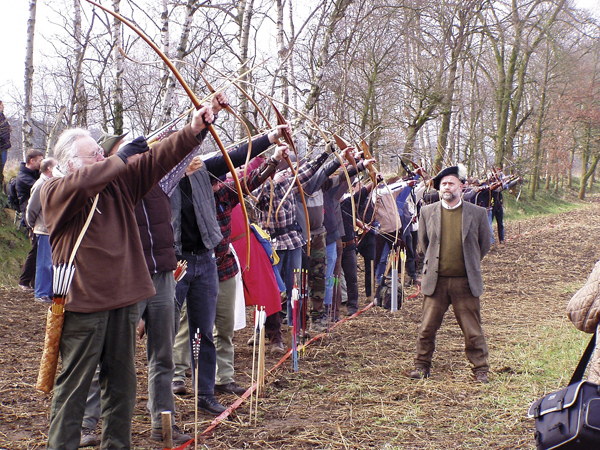
The longbow was the most famous medieval weapon in England. Made from yew or elm, it stood as tall as the archer and could shoot arrows over 200 yards. In other parts of Europe, the shortbow or crossbow might be used, but tournaments usually stuck to the traditional longbow.
Arrows
Tournament arrows had broad, flat heads for safety, unlike war arrows which were sharp and deadly. Each archer often made his own arrows, marked with his personal sign to prevent disputes.
Targets
The “butt” was a mound of earth, straw, or a painted board. In popinjay, a wooden bird was used. For clout shooting, a small flag or disc marked the spot.
Accessories
Archers wore armguards and finger tabs to protect against string burns. Quivers, arrow holders, were often decorated and showed the archer’s status.
Here’s a simple comparison of bows used in tournaments:
| Type of Bow | Length | Draw Weight | Typical Use |
|---|---|---|---|
| Longbow | 6-7 feet | 80-120 lbs | War, tournaments |
| Shortbow | 3-4 feet | 40-60 lbs | Hunting, local contests |
| Crossbow | 2-3 feet | Varies (up to 900 lbs, but not for tournaments) | War, siege (rarely in tournaments) |
Warning: Never use a real war arrow or crossbow in a modern reenactment, these are extremely dangerous.
Credit: www.bow-international.com
Rules And Fairness In Medieval Archery Contests
Keeping the contest fair was essential. Medieval organizers used a range of methods to stop cheating and ensure a level playing field.
Standardization Of Equipment
All competitors often had to use bows and arrows of similar size and strength. Sometimes, they were issued arrows on the spot, and only those could be used.
Marking Of Arrows
Each archer marked his arrows with a unique color, feather, or carving. This made it easy to see whose arrow was closest to the mark.
Officials And Witnesses
Trusted men watched every shot, measured distances, and settled disputes. Sometimes, if two arrows were equally close, the prize was shared or a shoot-off held.
Disqualification For Cheating
Anyone caught tampering with arrows or using hidden aids was banned from future events and might be fined.
How Medieval Archery Competitions Influenced Modern Archery
Many of today’s archery traditions come directly from the medieval “shooting at the butts. ” Modern target archery, Olympic events, and even local club contests borrow rules, scoring methods, and customs from these old tournaments.
Standardized Targets
The round, multi-colored target used in the Olympics is a direct descendant of the medieval butt.
Club Shoots And Championships
Archery clubs, especially in England and Scotland, still hold annual “shoots” for prizes, often using the same names and traditions as their medieval ancestors.
Popular Culture
Stories like Robin Hood keep the legend of the skilled tournament archer alive. Many modern fairs include “have a go” archery events modeled on butts shooting.
Pro Tip: If you want to experience medieval-style archery, look for historical reenactments or clubs that hold “butts” shoots. The rules and spirit are surprisingly similar to those from 600 years ago.
Common Mistakes And Misconceptions
Even experienced historians and film directors sometimes get medieval archery contests wrong. Here are a few things beginners often miss:
- Not all archers were peasants. Some tournaments featured noble archers, and skilled yeomen could win real status.
- The contest was about accuracy, not speed. Fast shooting was for battle, not the tournament field.
- Women rarely competed. Although women sometimes shot for fun, official contests were almost always male-only.
- Prizes mattered. Winning could change a life, sometimes more than a joust.
- Safety was taken seriously. Injuries did happen, but there were rules to prevent accidents.