How Much Does a Bowfishing Reel Replacement Cost?
A bowfishing reel replacement is often around $25-$60 for a part swap, about $60-$150 for a rebuild with line and hardware, and roughly $80-$200+ for a new reel. Replace only the failed part if the frame and drag still work. A bad delay can leave you with slipping drag, line jams, or a full replacement bill. This guide sorts the cost of replacing one broken part, rebuilding a worn reel, and buying a new reel when the damage spreads past the cheap fixes.
Bowfishing reel cost basics


The replacement cost is not one number. Reel type, the broken part, whether that part is sold on its own, and how much line or hardware must be changed all affect the bill. Small parts cost less than a whole reel, but labor and fit checks can close that gap fast.
Line, mounting style, and corrosion damage add the most. A simple fix can stay in the low tens. A reel with bent frame parts, worn drag parts, or saltwater corrosion can move near the cost of a new unit.
What a replacement cost includes
Most bowfishing reel replacement bills include the part itself, replacement line if needed, and any hardware that no longer fits cleanly. Some reels also need a new spool, handle, drag washer, or mounting bracket. If the reel is attached through a stabilizer bushing or a screw-on mount, installation time can change the labor cost too.
Why price varies by reel type and parts availability
Retriever reels, drum-style reels, and spin-cast reels do not fail in the same way. Retriever reels often use more specialized spools and mounts. Spin-cast reels may be easier to source in generic form, but model-specific parts still matter. If the exact part is discontinued, the repair price can jump because the only option is a full swap.
Where labor and line add to the total
Replacement line is not free, and line capacity matters. A reel listed with 25 yards of 250 lb line or 150 feet of 150 lb line needs enough line to restore usable capacity, not just a short top-off. More line means more cost, and heavier line usually adds to the bill. Labor also rises when the reel must be re-mounted or re-lined from scratch.
Bowfishing reel cost table
This table gives a repair-first way to read common failures. The bands are decision ranges, not fixed quotes, because brand, part availability, and mounting style change the final bill.
| Failure | Likely part | Estimated cost band | Compatibility check | Better value |
|---|---|---|---|---|
| Worn or frayed line | Replacement line | $10-$35 | Match line test rating, spool capacity, and reel type | Repair |
| Sticky or slipping drag | Drag washer or drag assembly | $10-$45 | Confirm exact reel model and drag stack size | Repair if frame is sound |
| Cracked handle or loose knob | Handle, knob, or fastener set | $8-$30 | Check shaft size and thread pattern | Repair |
| Broken spool or spool lip wear | Spool | $20-$60 | Verify spool diameter, depth, and axle fit | Repair if available |
| Mount loosens or will not seat | Mounting hardware, bushings, screws | $10-$40 | Match stabilizer bushing or screw-on mount pattern | Repair |
| Heavy corrosion in gears or core | Gear set, frame, or full reel | $40-$120+ | Check for pitting, seized parts, and parts supply | Replace |
| Frame bent or cracked | Frame and major internal parts | $60-$150+ | Confirm structural integrity before buying parts | Replace |
What usually breaks first?
Line, drag parts, handles, and mounting hardware usually fail before the whole reel body does. If those are the only problems, the reel is often worth repairing. If the damage reaches the frame or core gearing, replacement usually becomes the better value because part costs and fit issues rise quickly.
Spool, drag, and handle wear
Spool wear shows up as line digging, rough rotation, or uneven payout. Drag wear often feels like uneven tension or sudden slip under load. Handle problems are usually the cheapest to fix, because a handle, knob, or fastener set is often a small-parts purchase rather than a major rebuild.
Mounting hardware and stabilizer bushing problems
Mounting problems are common on reel setups that use a stabilizer bushing attachment or a screw-on mount. The reel may still work, but it will not stay secure or aligned. That adds labor because the fit must be checked against the bow’s mount pattern, not just the reel brand.
Corrosion and saltwater damage
Saltwater use raises replacement cost because corrosion can spread beyond one visible part. Aluminum and stainless steel resist corrosion better than plain steel, but no reel is immune if it is not cleaned and dried. A reel with surface corrosion may still be repairable. Deep pitting in gears or fasteners often is not.
Suppose a reel used on saltwater trips starts grinding after a trip and the drag slips under pressure. If the frame is straight and parts are available, a drag rebuild and fastener swap may make sense. If the gear housing is pitted and the spool binds, the repair can cost nearly as much as a new reel.
How much do different reel types cost?
Retriever reels usually cost more to replace than a basic spin-cast reel because the hardware and mount details can be more specific. Drum-style reels sit in the middle to upper range when parts are available. Spin-cast reels can be the cheapest to swap if the model is common, but model-specific parts still matter.
Retriever reel price factors
Retriever reels often use specialized mounts and line storage, so the part list can be more expensive. The AMS 610 Retriever Pro is a retriever-style example commonly listed with heavy-duty brass, stainless-steel fasteners, a clear bottle, and 200-yard line capacity. Those material and capacity choices can push replacement cost higher than a generic reel.
The Cajun Winch Pro Bowfishing Reel is another retriever-style example. It is commonly positioned as a durable option and listed with 25 yards of 250 lb line. That short, heavy line capacity affects the replacement bill because a line restock may be small in length but still premium in test strength.
Drum reel price factors
Drum-style bowfishing reels usually cost more when the spool or drag assembly is model-specific. They can be harder to cross-fit than a simple spin-cast setup. If the drum housing or internal core is damaged, a repair quote can move close to the price of a new reel, especially when the maker no longer sells individual parts.
Spin-cast reel price factors
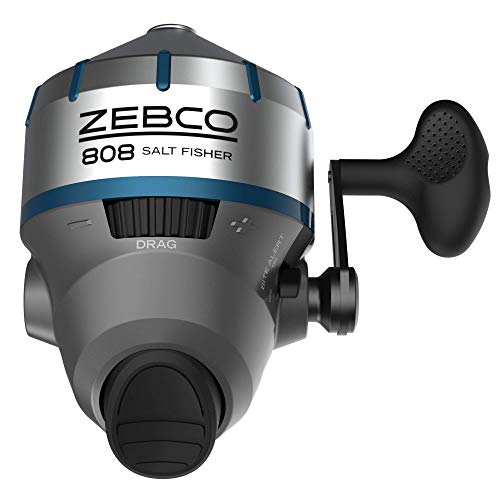
Spin-cast bowfishing reels are often the lowest-cost replacement choice, but the gap narrows when the reel is heavily worn or needs a full line reset. The Muzzy Bowfishing 1069 XD Pro Spin Style Reel is commonly listed with 150 feet of 150 lb line and a visual indicator. The Zebco 808HBOW80BX3 Bow Fisher Spin-cast Reel is also sold as a spin-cast option and is often treated as a backup reel choice.
Say your spin-cast reel only needs a new drag stack and fresh line. That can stay well below the cost of a full reel swap. If the same reel has a warped housing or stripped mount, a low-priced replacement reel may be the better buy.
Brand examples to compare
Brand examples help because price differences often come from fit, materials, and part supply rather than only from the reel style. Always check the exact model number before ordering a part. A similar-looking reel can still use a different spool, mount, or handle shaft.
AMS 610 Retriever Pro specs to verify
The AMS 610 Retriever Pro is a retriever-style reel with heavy-duty brass, stainless-steel fasteners, a clear bottle, and about 200 yards of line capacity as listed by many sellers. That capacity means the replacement bill can include more line than a compact reel, and the material set may cost more to match if parts are OEM only.
Muzzy 1069 XD Pro Spin Style Reel specs to verify
The Muzzy Bowfishing 1069 XD Pro Spin Style Reel is commonly sold with 150 feet of 150 lb line and a visual indicator. Because it is a spin-cast style, replacement can be simpler than a retriever rebuild, but the exact line setup and indicator parts should be matched to the listed model, not just the brand name.
Cajun Winch Pro and Zebco 808HBOW80BX3 comparison points
The Cajun Winch Pro leans toward durable retriever-style use, while the Zebco 808HBOW80BX3 Bow Fisher Spin-cast Reel is often treated as a budget or backup reel. That makes the repair decision different. A low-cost backup reel is less likely to justify an expensive rebuild than a higher-end retriever with reusable hardware.
What adds to the final bill?
The final bill rises with line capacity, line test strength, mounting complexity, and corrosion resistance. Saltwater use can add repeat repair cost because rust and pitting often return if the reel is not cleaned and dried well. Compatibility checks matter before any purchase, because the wrong part can turn a small repair into a second buy.
Line capacity and lb test
More line means a higher replacement line cost. A reel listed at 200 yards will take more line than one listed at 25 yards, and heavier line usually costs more per spool. For bowfishing, the listed lb test matters because a lighter line may not match the reel or the fishery conditions the reel was built for.
Mounting style and installation effort
Reels that attach through a stabilizer bushing or a screw-on mount can require different hardware and more setup time. If the old mount is stripped or the bushing is worn, the hardware bill rises. That is why two reels with the same sticker price can have very different installed replacement costs.
Saltwater resistance and corrosion-resistant materials
Aluminum and stainless steel hold up better against corrosion than plain steel parts, but material alone does not solve saltwater wear. A saltwater reel may need more frequent part replacement, and that changes the total ownership cost. A fresh-water reel used in saltwater without cleaning can become expensive fast.
When should you repair instead of replace?
Repair makes sense when the frame is straight, the drag still has life, and the needed part is available at a sensible price. Replace the full reel when the body is cracked, the gear core is damaged, or the repair quote creeps near the cost of a new reel with warranty support and all new wear parts.
Salvageable reel symptoms
A reel is often salvageable if the problem is limited to line, a handle, a drag washer, or a mount piece. Clean rotation after the broken part is removed is a good sign. If the repair only needs one or two parts and the reel still seats correctly on the bow, repair usually wins on value.
Signs the frame or core mechanism is done
Cracks, warped housings, seized gears, and heavy internal corrosion are the clearest warning signs. If a reel can no longer hold tension evenly or align properly on the mount, a part swap may not fix the underlying problem. At that point, replacement is usually the safer budget choice.
When a new reel is the better value
A new reel makes more sense when part sourcing is poor, the corrosion is widespread, or the repair quote includes several major pieces. If a rebuild costs close to a fresh reel, the new unit often gives better value because it resets wear, corrosion, and compatibility problems at once.
Frequently asked questions
How much does a bowfishing reel replacement cost?
The exact bill depends on reel type, part availability, mount style, and whether corrosion has reached the frame or core parts.
Is it cheaper to repair or replace a bowfishing reel?
Repair is cheaper when the problem is limited to line, drag parts, a handle, or mount hardware. Replacement is usually better when the frame is bent, the gear core is damaged, or the repair quote is close to a new reel. The best choice depends on part availability and the reel’s overall condition.
What is the average price of a bowfishing reel?
A practical budget for a mid-range bowfishing reel is often around $80-$150, with budget models below that and specialty or heavy-duty models higher. Retriever reels can cost more because of mount and material differences, while basic spin-cast reels may sit lower if parts are common and easy to source.
What parts usually add to bowfishing reel replacement cost
The parts that most often raise the total are line, drag washers, spools, handles, knobs, and mounting hardware. Corroded fasteners and worn bushings can also add cost. If the reel needs a model-specific spool or mount, the bill rises faster than for a simple line or handle replacement.
Are saltwater bowfishing reels more expensive to replace?
Yes, often they are more expensive to keep in service because corrosion can spread to fasteners, gears, and mounts. Aluminum and stainless-steel parts resist rust better, but repeated saltwater exposure still raises repair frequency. That means the replacement decision should include the chance of repeat corrosion repairs.
What budget should I set for a complete bowfishing reel replacement?
For a complete replacement, a good starting budget is $80-$200+ for the reel itself, plus extra for line and any missing mount hardware. If the reel is a retriever style or needs a model-specific mount, plan toward the upper end. A full swap is often cheaper than repeated partial repairs on a worn reel.