
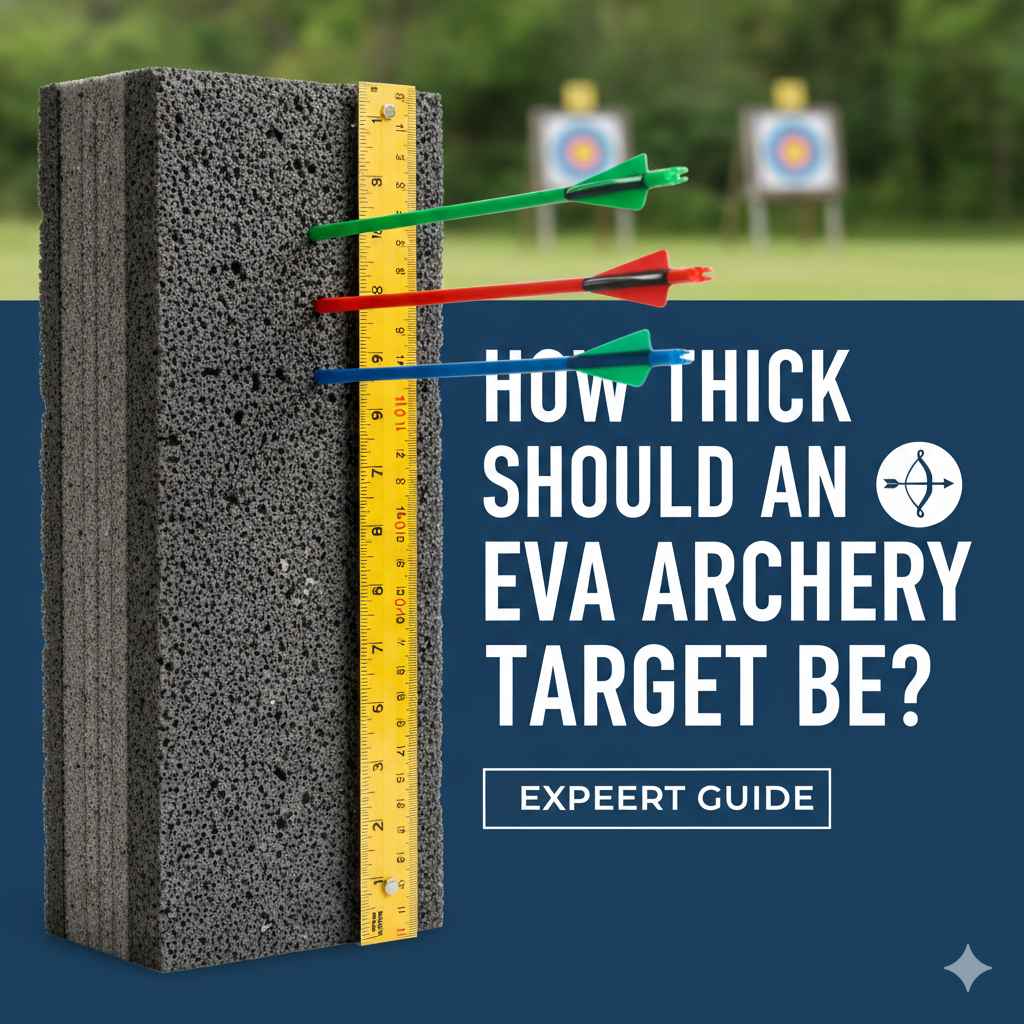
Choosing the right archery target can feel tricky, especially when you first start shooting. You might wonder, How Thick Should an Archery Target Be? Expert Guide.
It’s a common question because you want your arrows to stop safely without going all the way through or causing damage. Don’t worry, we’ll break it down simply. This guide will help you pick the perfect target thickness for your needs, making sure you have a great time practicing your aim.
Let’s get your arrows stopped right.
Understanding Archery Target Thickness
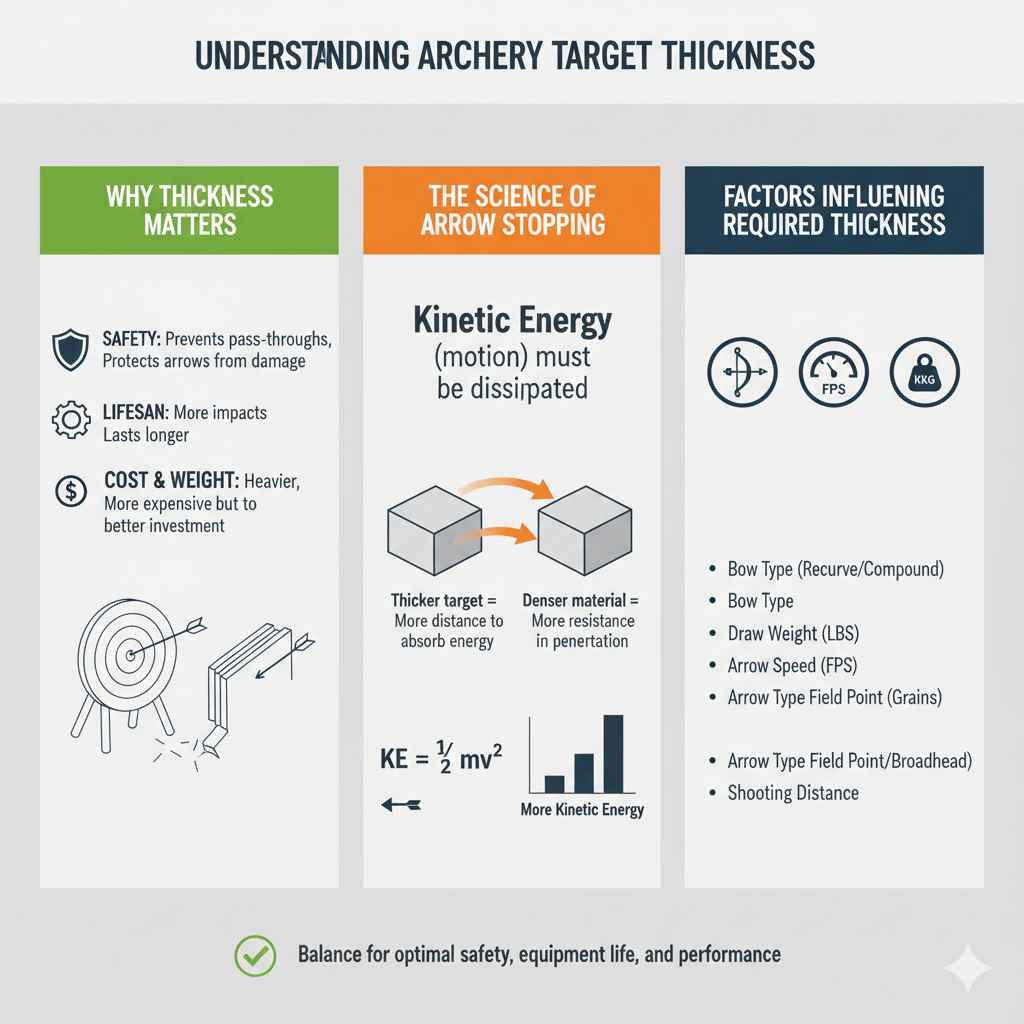
The thickness of an archery target is super important for safe and effective practice. It directly affects how well arrows stop, how long the target lasts, and how much it costs. A target that’s too thin might let arrows pass through, risking injury or damage to your arrows and surroundings.
One that’s too thick might be heavier, harder to move, and more expensive than you need. Knowing the right thickness helps you choose wisely for your specific archery style and equipment. This section explores why thickness matters and the basic principles behind it.
Why Target Thickness Matters
The main reason target thickness is key is arrow stopping power. When an arrow hits a target, it’s moving fast. The target needs to absorb that energy slowly and steadily to bring the arrow to a halt.
A thicker target provides more material for the arrow to travel through, spreading out the impact force over a greater distance. This gradual deceleration prevents the arrow from just punching straight through. It also means less stress on the arrow shaft, reducing the chance of breakage.
Beyond safety, thickness influences the target’s lifespan. A thicker target will generally last longer because there’s more material to shoot into before it becomes too damaged to use. It can withstand more arrow impacts.
Cost is another factor. Thicker targets often use more material, making them more expensive initially. However, a longer-lasting target can be a better investment over time.
The thickness also affects how easily you can pull arrows out. A target that’s too dense or too thick can make arrow removal difficult, which is frustrating during practice sessions.
The Science of Arrow Stopping
Archery targets work by dissipating the kinetic energy of an arrow. When an arrow hits the target, it pushes into the material. This pushing action causes friction and compression within the target’s layers.
The target material deforms, absorbing the arrow’s energy and converting it into heat and internal stress. A thicker target allows for a longer path of this energy dissipation. Think of it like stopping a rolling ball by running into a wall versus running into a thick pile of blankets.
The blankets absorb the energy more gradually.
Materials commonly used in targets, like foam or compressed fibers, are designed to be resilient. They can compress to absorb energy but also return to their original shape to some extent, allowing for reuse. The depth of penetration is directly related to the thickness and density of the target material.
A shallower penetration means the arrow stopped quickly, which might indicate the target isn’t thick enough for the arrow’s speed. A deeper penetration means the energy was absorbed over a longer distance.
The ideal thickness is a balance. It needs to be enough to stop arrows from all types of bows, from low-poundage youth bows to high-poundage compound bows. It also needs to be manageable in terms of weight and size for typical archery setups.
The amount of energy an arrow carries is its kinetic energy, calculated by ½ mass velocity^2. Faster and heavier arrows carry more energy. Therefore, targets need to be thick enough to handle the highest energy levels expected from the user’s equipment.
Factors Influencing Required Thickness
Several things determine how thick your archery target needs to be. The most significant factor is the draw weight of your bow. Higher draw weights generate more arrow speed and energy.
A recurve bow at 40 pounds will require a different target thickness than a compound bow at 70 pounds. Arrow speed also plays a big role. Faster arrows hit harder and require more stopping power.
So, a speed-increasing arrow rest or carbon arrows might necessitate a thicker target.
The type of arrows you use matters too. Heavier arrows will penetrate deeper than lighter arrows of the same speed. Also, the material of the arrow itself can affect how it interacts with the target.
Broadheads, used for hunting, can cause more damage to targets than field points. If you practice with broadheads, you’ll need a target that can withstand this extra wear and tear. The distance at which you shoot also impacts the required thickness.
Shooting at longer distances can sometimes make arrows feel like they have less impact, but the target’s primary job is still stopping them safely.
Finally, your personal preference and shooting style are important. If you want your arrows to stick very firmly, you might want a slightly thicker target. If you prefer easier arrow removal, you might lean towards a target that offers a good balance of stopping power and ease of retrieval.
It’s about finding what works best for your practice routine and equipment setup.
Types of Archery Targets and Thickness
Archery targets come in many forms, and their design often dictates their thickness. The material and construction methods directly influence how thick a target needs to be to perform well. Understanding these different types will help you choose one that suits your needs.
We’ll look at common options and what their typical thicknesses mean for your archery practice.
Foam Targets
Foam targets are incredibly popular for their durability and arrow-stopping capabilities. They are usually made from high-density foam, such as polyurethane or polyethylene. The thickness of foam targets can vary widely.
Smaller, portable foam targets might be 10-18 inches thick. Larger, professional-grade targets can be 24 inches or even thicker. The density of the foam is just as important as its thickness.
Denser foam provides more resistance, stopping arrows more effectively.
One advantage of foam targets is their ease of arrow removal. Arrows typically don’t stick as tightly as they might in other target types, especially when the foam is designed for this purpose. Some foam targets are designed with layered densities.
The outer layers are softer to stop the arrow gradually, while the inner layers are firmer to provide support and prevent pass-throughs. This layered approach is very effective. The lifespan of a foam target depends on its density, thickness, and how well it’s made.
High-quality foam targets can last for thousands of shots.
When considering a foam target, look for specifications about its density (often measured in pounds per cubic foot) and compression rating. A target that is too soft might allow for easy arrow removal but might not stop high-energy arrows. A target that is too hard might stop arrows but make removal difficult.
The thickness is a primary indicator of its stopping power, but it’s best to consider it alongside density and material quality for the best performance.
Block Archery Targets
Block targets, often called layered foam targets or “high-density layered foam targets,” are a specific type of foam target. They consist of many thin, compressed layers of foam stacked together. This construction creates a very effective arrow-stopping surface.
The thickness of these blocks can range from about 12 inches for smaller, portable versions to 20-24 inches for larger, more permanent setups. The layers are designed to interlock and create resistance as an arrow passes through them.
This layered design offers excellent durability and easy arrow removal. As the arrow enters, it pushes the layers apart slightly. When you pull the arrow out, the layers spring back, releasing the arrow with minimal effort.
This feature makes them ideal for high-volume practice sessions where you’ll be shooting many arrows. The thickness of a block target is a good indicator of its ability to stop faster, more powerful arrows. A thicker block provides more layers for the arrow to travel through.
One of the main benefits of block targets is their longevity. The layered construction means that even if a few layers become damaged, the target remains functional for a long time. The wear is distributed across the many layers.
This makes them a very cost-effective option in the long run, despite their initial purchase price. They are suitable for a wide range of bows, from traditional recurves to modern compound bows.
Field Point Targets and Broadhead Targets
Targets are often categorized by the type of arrow point they are designed to stop, with thickness being a key differentiator. Field point targets are designed for standard field points, which have a rounded or blunted tip. These tips do less damage to the target material, allowing for easier arrow removal and longer target life.
A thickness of around 18-20 inches is generally sufficient for most field point targets, especially if they are made from dense foam or layered materials.
Broadhead targets, on the other hand, are built to withstand the sharp, cutting edges of broadheads used in hunting. Broadheads can shred and tear target material much more aggressively than field points. To combat this, broadhead targets need to be significantly thicker and made of materials that can resist cutting.
They are often 24 inches thick or more. The materials might be specially formulated foam or woven fabrics designed to “grab” the broadhead and slow it down without excessive tearing.
It’s important to match your target to your practice arrows. Using broadheads on a target not designed for them will quickly destroy the target and make arrow removal very difficult. If you intend to practice with broadheads, investing in a dedicated broadhead target is essential.
The increased thickness and specialized material offer the durability required for this type of shooting. This ensures your practice is both safe and cost-effective.
Bag Targets
Bag targets are usually made from a tough outer fabric bag filled with various materials. Common fillings include compressed fabric scraps, sawdust, or specially designed filler that absorbs arrow energy. The thickness of a bag target is determined by the amount and density of the filler material.
Smaller bag targets might be around 12-18 inches thick, while larger ones can be 20-24 inches or even more. The key is the density of the packed filler.
Bag targets can be very effective at stopping arrows, especially field points. However, arrow removal can sometimes be challenging. The filler material can pack around the arrow shaft, making it difficult to pull free.
This is especially true for faster arrows or those with larger diameter shafts. They are generally considered a more economical option, especially for recreational archers or those who shoot lighter bows.
The durability of a bag target depends heavily on the quality of the outer bag and the density of the filler. Over time, the filler can become compressed, reducing its stopping power, and the bag itself can wear out. If you use a bag target for high-poundage bows, you will likely need a thicker, more densely packed version to ensure arrows stop safely.
They are less ideal for broadhead practice due to their tendency to snag and tear.
How Thick Should an Archery Target Be For Different Bow Types
The thickness of your archery target needs to match the power of your bow. A lightweight youth bow needs a different target than a powerful hunting compound bow. We’ll explore the recommended thicknesses for various bow types, ensuring you get the right protection for your arrows and your practice area.
This will help you make an informed decision based on your equipment.
Recurve and Longbows
Traditional recurve and longbows, while they can have significant draw weights, generally shoot arrows at lower speeds compared to modern compound bows. This means they require less stopping power. For recreational shooting with a recurve or longbow with draw weights up to about 40 pounds, a target thickness of 12-18 inches is often sufficient.
This is especially true for targets made of dense foam or layered materials.
If you are shooting at longer distances, or if your bow has a higher draw weight (say, 50-60 pounds), you might want to opt for a thicker target. A 20-inch thick target would provide an extra margin of safety and ensure your arrows come to a complete stop without risking pass-throughs. For traditional bows, easy arrow removal is also a common desire, so targets that offer good stopping power without excessive sticking are preferred.
Block targets and high-density foam targets are excellent choices.
Consider the material. Traditional targets made from straw or hay bales were much thicker, often 3-4 feet. While effective, they are cumbersome and less common now.
Modern foam and layered targets provide similar or better stopping power in a much more compact size. The key is to match the target’s ability to absorb energy with the energy your bow is imparting to the arrow.
Compound Bows
Compound bows are known for their speed and power, often reaching much higher draw weights and arrow velocities than traditional bows. This means they require a more robust and thicker target. For compound bows with draw weights from 40 to 60 pounds, a target thickness of at least 18-20 inches is recommended.
This ensures adequate stopping power for moderate speeds.
For higher-poundage compound bows (60-70 pounds and above), which are common for hunting and competitive shooting, a target thickness of 20-24 inches or even more is highly advisable. These bows launch arrows at speeds that can easily pass through thinner targets. The extra thickness provides the necessary material depth to absorb the significant kinetic energy.
It’s crucial to choose a target designed for high-speed arrows.
When selecting a target for a compound bow, look for targets specifically rated for high poundage and speed. Block targets and dense foam targets with layered construction are excellent choices because they distribute the stopping force over many layers, preventing deep penetration and making arrow removal manageable. Practicing with a target that is too thin for your compound bow is a safety hazard and can lead to costly damage to arrows and the target itself.
Youth and Entry-Level Bows
For young archers or those just starting out with lighter bows (typically 10-30 pounds draw weight), the target requirements are much simpler. The lower arrow speeds mean less energy needs to be absorbed. Even a relatively thin target can be effective.
A thickness of 10-16 inches is usually sufficient for these bows.
Portable foam targets or smaller bag targets are ideal for youth archers. They are lightweight, easy to move, and safe for beginners. The primary goal for beginner targets is to provide a clear aiming point and safely stop arrows without creating frustration.
Easy arrow removal is paramount, as young archers may not have the strength to pull arrows from very dense materials. Many beginner targets are designed with softer foam or loose filler to facilitate this.
It’s also important to consider the overall size of the target face for beginners. While thickness is important for safety, a larger target face can help build confidence. As a young archer progresses and moves to a bow with a higher draw weight, they will need to upgrade to a thicker, more powerful target.
This gradual progression ensures safety and optimal practice.
Finding the Right Target Thickness for Your Needs
Choosing the perfect archery target thickness involves considering several personal factors. It’s not just about the bow; it’s also about your shooting style, where you practice, and your budget. We’ll help you weigh these different aspects to find the target that will serve you best.
This means looking at more than just inches and pounds.
Consider Your Archery Goals
What do you want to achieve with your archery practice? If you’re a casual backyard shooter who enjoys plinking, a moderately thick target might be all you need. A 16-18 inch target should suffice for field points and lighter bows.
If you’re training for target archery competitions, you’ll likely shoot more arrows and perhaps use more powerful equipment. This calls for a thicker, more durable target that can withstand heavy use.
For those practicing for hunting, especially with broadheads, you absolutely need a target designed for it. This means it will be thicker and more robust. A target that’s 20-24 inches or more, specifically built to handle broadheads, will be essential.
Practicing with broadheads on the wrong target is a recipe for disaster. It damages the target quickly and can make arrows nearly impossible to remove. Think about the scenarios you want to simulate during practice.
Your shooting distance also plays a role. If you primarily shoot at 10-20 yards, arrow impact velocity might be lower than at 30-50 yards. However, the target’s primary job remains to stop the arrow safely, regardless of distance.
The thickness must accommodate the maximum energy your arrow will carry upon impact at your chosen distances. Some archers also like to challenge themselves with shooting at progressively longer distances, which means a consistently reliable stopping target is key.
Budget and Longevity
Archery targets can range from under $50 for a simple bag target to several hundred dollars for high-end, professional-grade foam targets. Generally, thicker, more durable targets made of higher-quality materials will cost more upfront. However, these targets often last much longer, making them a better value over time.
A cheap, thin target that needs replacing every few months is more expensive in the long run than a single, well-built, thicker target.
When evaluating the cost, consider the expected lifespan. A $100 target that lasts five years is a better deal than a $40 target that lasts one year. Also, factor in arrow replacement costs.
If a target is too thin, you risk losing arrows or damaging them, which adds to your overall expense. A good quality target that stops arrows effectively can save you money on arrow damage in the long run.
Think about where you’ll be shooting. If you have a permanent range, you can invest in a larger, heavier, and thicker target. If you need something portable for occasional trips to different locations, a slightly thinner, lighter option might be more practical, provided it still meets your safety needs.
Balance your budget with your performance and durability expectations.
Portability vs. Durability
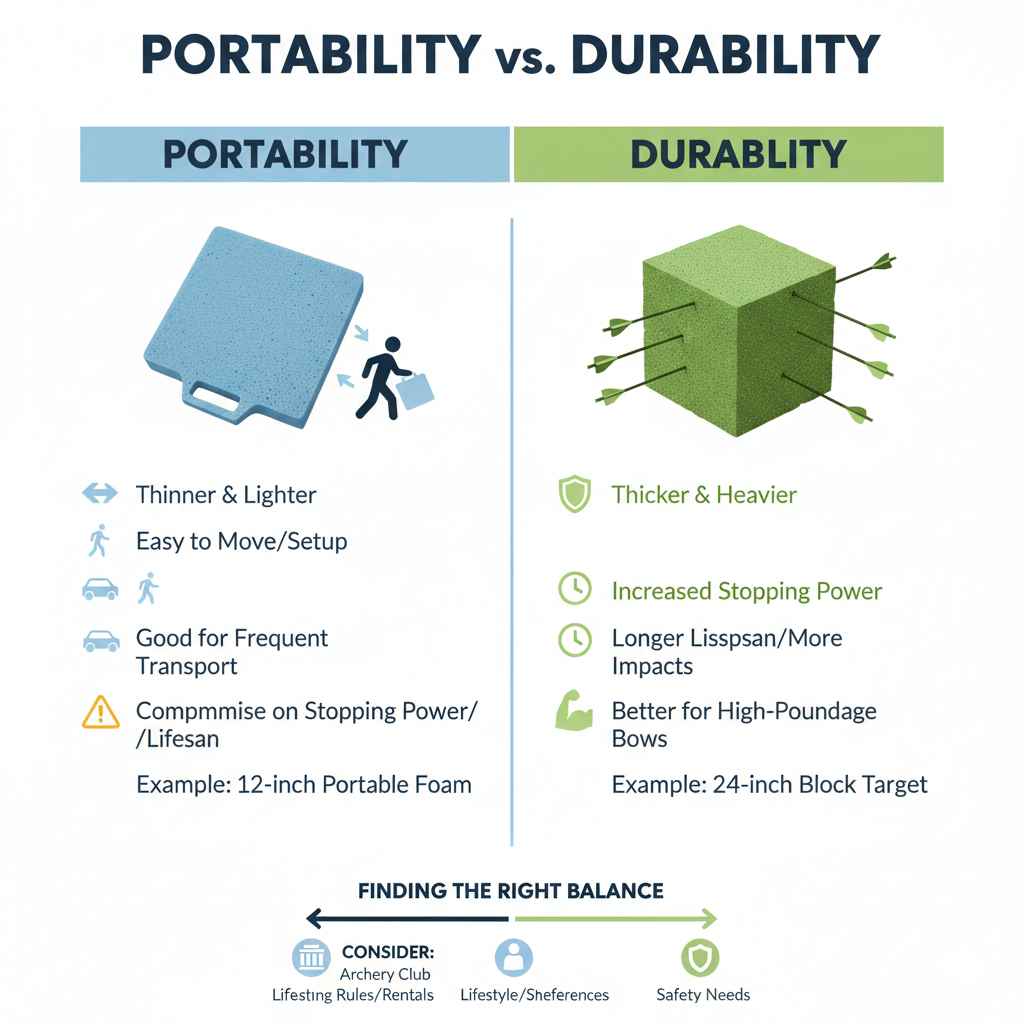
The thickness of a target often correlates with its weight and size, which impacts portability. Thicker targets are usually heavier and bulkier. If you frequently move your target, or if you need to set it up and take it down often, a lighter and thinner option might be more appealing.
However, this often means a compromise on stopping power or durability.
For instance, a 24-inch block target is highly durable and safe for powerful bows, but it can be quite heavy and cumbersome to carry. A 12-inch portable foam target might be easy to transport but may not be suitable for high-poundage compound bows. The best approach is to find a balance that suits your shooting habits.
Some manufacturers offer targets with handles or carry straps to improve portability.
Consider your local archery club or range. If you practice there, they might have specific requirements or recommendations for target types and thicknesses. They may also offer target rental services, which can be a good way to try out different types before committing to a purchase.
Ultimately, the ideal target is one that meets your safety needs while fitting your lifestyle and shooting preferences.
How Thick Should an Archery Target Be? Expert Guide Summary
To answer how thick an archery target should be, consider your bow’s power and your archery goals. For lighter bows, 12-18 inches works. For compound bows, aim for 18-24 inches or more.
Prioritize durable, layered targets for longevity and safety.
Frequently Asked Questions
Question: What is the minimum thickness for an archery target?
Answer: The minimum thickness depends heavily on your bow. For very light youth bows, 10-12 inches might suffice. However, for most adult archery, 16-18 inches is a more realistic minimum for safe arrow stopping.
Question: Can I use a broadhead on a field point target?
Answer: It is not recommended. Broadheads will significantly damage field point targets, making them unusable quickly and potentially making arrow removal very difficult. Use a target specifically designed for broadheads.
Question: How does arrow speed affect target thickness?
Answer: Higher arrow speeds mean more kinetic energy. Faster arrows require thicker targets to absorb this energy safely and prevent pass-throughs.
Question: Will a thicker target make arrows harder to pull?
Answer: Sometimes, but not always. High-density foam and layered block targets are designed to stop arrows effectively while still allowing for relatively easy removal, even at greater thicknesses.
Question: How often should I replace my archery target?
Answer: This depends on the target material, thickness, and how much you shoot. High-quality, thick targets can last for thousands of shots, while cheaper or thinner targets may need
Conclusion
Deciding on the right archery target thickness is key for safe and enjoyable practice. Match the thickness to your bow’s power, whether it’s a light recurve or a strong compound bow. For field points, aim for 18 inches, and for broadheads, go for 24 inches or more.
Invest in quality and durability to protect your arrows and ensure countless hours of shooting fun.