How To Bow Fish At Night
Bowfishing at night combines the thrill of archery with the challenge of angling, offering a unique outdoor pursuit that has surged in popularity across the United States. As daylight fades and waters quiet, nocturnal fish species become more active, providing bowfishers with exceptional opportunities for action-packed outings.
The interplay of specialized lighting, stealth, and precision makes nighttime bowfishing distinct from its daytime counterpart, drawing both seasoned enthusiasts and curious beginners eager to hone their skills.
This after-dark adventure isn’t just about adrenaline; it also plays a vital role in managing populations of invasive species like common carp and Asian carp, which can wreak havoc on local ecosystems. Whether you’re looking to fill your freezer or simply seeking a new challenge, learning how to bowfish at night opens doors to a rewarding and sustainable outdoor activity.
This comprehensive guide walks you through every essential aspect of night bowfishing, from equipment and safety to technique, legal considerations, and real-world success stories.
Key Takeaways
- Night bowfishing increases your chances of success due to higher fish activity and visibility with specialized lights.
- The right gear and lighting setup are crucial for both effectiveness and safety.
- Understanding local regulations and practicing ethical harvest support conservation.
- Stealth, accuracy, and teamwork are essential for a productive bowfishing outing.
- Real-world examples demonstrate tactics that work for both beginners and advanced bowfishers.
- Thorough preparation and respect for the environment ensure both safety and sustainability.
Credit: captainexperiences.com
The Essentials Of Night Bowfishing
Night bowfishing brings together a unique set of skills, equipment, and strategies that differ significantly from daytime fishing or traditional archery hunting. The darkness introduces new variables, making preparation and adaptability critical.
Why Bowfish At Night?
Many species targeted by bowfishers, such as common carp, buffalo, and gar, are more active and visible in shallow waters at night. The cover of darkness reduces fish wariness, allowing bowfishers to approach more closely. Artificial lights illuminate the fish, providing clear targets and making the experience more visually engaging. In my experience, the anticipation that builds as you glide silently over glassy waters under a moonlit sky is unmatched by any daytime equivalent.
Popular Night Bowfishing Species
Night bowfishing primarily targets non-game and invasive fish species. The most common include:
- Common carp
- Grass carp
- Bighead and silver carp
- Longnose gar
- Bowfin
- Buffalo fish
- Suckers
These species are often abundant in lakes, rivers, and reservoirs across North America, making them accessible targets for both shore and boat-based bowfishers.
Basic Gear Overview
The core components of a night bowfishing setup include:
- Bow: Compound or recurve, set at lower draw weights (30-50 lbs) for repeated shots.
- Bowfishing reel: Typically a drum, retriever, or spin-cast style.
- Bowfishing arrows: Fiberglass or carbon, equipped with barbed tips for secure retrieval.
- Lighting: High-lumen LED or halogen floodlights mounted to boats or handheld.
- Polarized glasses: Optional, but can help reduce glare from lights.
A reliable boat or platform and safety equipment (life vests, first aid kits) are also essential for a successful outing.
Choosing And Setting Up Night Bowfishing Gear
The right equipment can make or break your night bowfishing experience. Investing in quality gear, proper lighting, and the correct accessories enhances both your effectiveness and enjoyment.
Selecting The Right Bow
Bowfishing bows are designed for quick, repeated shooting rather than maximum draw weight. Both compound and recurve bows are common, but the choice often comes down to personal preference and budget.
| Bow Type | Pros | Cons | Typical Price Range |
|---|---|---|---|
| Compound | Let-off for easier holding, adjustable draw weight, faster arrow speed | Heavier, more moving parts | $200-$600 |
| Recurve | Lighter, simpler, easy maintenance | No let-off, slower arrow speed | $100-$400 |
Pro Tip: Try several models at an archery shop before purchasing. Comfort and draw cycle matter more than brand.
Bowfishing Reels And Arrows
The reel is crucial for retrieving your arrow and landing fish. The three main reel types are:
- Drum reels: Simple, durable, inexpensive; manual winding.
- Retriever reels: Fast line pickup, less drag, tangle-resistant.
- Spin-cast reels: Familiar to anglers, fast retrieval, but more prone to tangles.
Bowfishing arrows are heavier and sturdier than hunting arrows, usually made from fiberglass or carbon. Barbed tips lock into fish to prevent escape.
Lighting Systems For Night Bowfishing
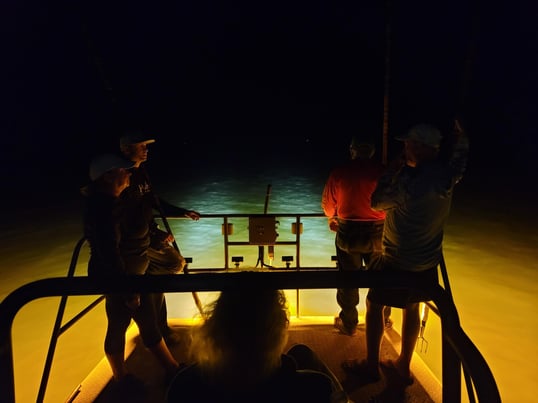
Effective lighting is non-negotiable for night bowfishing. The best setups use high-lumen LED or halogen floodlights, mounted to boats or platforms. Lighting choices include:
- LEDs: Energy efficient, long-lasting, available in multiple color temperatures.
- Halogen: Bright, affordable, but draw more power and generate heat.
- Handheld spotlights: Useful for shore fishing or scouting.
| Light Type | Lumens | Energy Use | Durability | Ideal For |
|---|---|---|---|---|
| LED Floodlight | 5,000-20,000 | Low | High | Boat/platform |
| Halogen Floodlight | 4,000-15,000 | High | Medium | Boat |
| Handheld Spotlight | 1,000-5,000 | Varies | High | Shore/Scout |
Example: Many successful bowfishers report that a basic setup of four 50-watt LED floodlights is sufficient for small boats and provides excellent fish visibility in murky or stained water.
Additional Gear And Accessories
- Boat/platform: Flat-bottom boats offer stability in shallow water.
- Generator or battery bank: Powers lighting systems.
- Polarized sunglasses: Reduces glare when scouting early evening or during bright moon phases.
- Safety gear: PFDs, first aid kits, communication devices.
Credit: huntingiguanas.com
Locating And Approaching Fish At Night
Finding fish at night requires a mix of local knowledge, observation, and stealth. Fish behavior changes after dark, and success depends on reading the water and adapting your approach.
Identifying Productive Water
The most productive spots for night bowfishing are shallow flats, creek mouths, and backwaters where target species feed. Look for:
- Mud flats: Especially in spring and summer.
- Weed beds: Offer cover and attract fish.
- River bends and eddies: Concentrate fish movement.
- Dock lights and boat ramps: Light attracts baitfish, which draw in predators.
Pro Tip: Use fish finders or mapping apps to mark productive spots during daytime scouting.
Reading The Water At Night
Artificial lighting reveals subtle clues in the water. Watch for:
- Muddy swirls: Indicate carp or buffalo rooting.
- Ripples and wakes: Suggest active fish movement.
- Red or glowing eyes: Many species’ eyeshine is visible in strong light.
Moving slowly and keeping lights angled slightly downward minimizes spooking fish.
Boat Vs. Shore Bowfishing
While boats offer maximum mobility and lighting options, shore bowfishing can be highly effective in areas with easy access to shallow water.
- Boat bowfishing: Covers more ground, customizable lighting, best for larger groups.
- Shore bowfishing: Accessible, less gear, ideal for beginners or small waters.
Example: In many Midwestern states, public lakes and rivers have designated bowfishing access points for shore-based anglers.
Stealth And Teamwork
Fish are sensitive to noise and vibration. Keep talking to a minimum, avoid sudden movements, and use trolling motors at low speed. Team coordination, especially between the shooter, light operator, and boat driver, maximizes both safety and success.

Credit: floridabowfishingadventures.com
Bowfishing Techniques And Shot Placement
Accuracy and timing are at the heart of successful night bowfishing. The refractive properties of water and the behavior of nocturnal fish require a blend of instinct and practiced technique.
Understanding Refraction
Light bends as it passes through water, causing fish to appear higher than their actual position. To compensate:
- Aim low: The general rule is to aim 6-10 inches below the apparent target for fish 3-4 feet deep.
- Practice: Repetition builds muscle memory for quick, accurate shots.
Pro Tip: For fish at different depths, remember the “10-inch rule”, for every foot of depth, aim 10 inches lower than where you see the fish.
Drawing And Shooting
Bowfishing shots are often rapid-fire and close-range, so a smooth, instinctive draw is key. Tips include:
- Use both eyes open for better depth perception.
- Draw smoothly and release quickly, fish rarely stay in the open for long.
- Don’t overdraw; bows should be set for easy, repeated shooting.
Shot Placement For Humane Kills
Ethical bowfishing means aiming for the largest mass of the fish, typically just behind the gill plate. This:
- Anchors the fish for easier retrieval.
- Reduces suffering by striking vital areas.
- Minimizes damage to edible portions (if harvesting for food).
Retrieving And Handling Fish
Once a fish is hit:
- Reel in steadily, maintaining tension to avoid losing the fish.
- Use a gaff or glove to handle larger or spiny species.
- Quickly dispatch fish intended for harvest, or release unharmed if required by regulation.
Example: In a Texas bowfishing tournament, teams reported 90% retrieval rates when using retriever reels and aiming for the head/shoulder region.
Safety, Ethics, And Legal Considerations
Night bowfishing carries unique risks and responsibilities. Understanding safety protocols, respecting regulations, and practicing ethical harvest are non-negotiable elements of the sport.
Nighttime Safety Protocols
- Personal flotation devices (PFDs): Required for all boat occupants.
- First aid kit: Address minor injuries on the spot.
- Navigation lights: Ensure your boat is visible to others.
- Communication: Carry a charged phone or VHF radio.
- Weather awareness: Monitor conditions, storms or fog can turn dangerous quickly.
Warning: Never bowfish alone at night; a partner increases safety and effectiveness.
Legal Regulations
Bowfishing is subject to state and local laws, including:
- Permitted species: Typically limited to non-game or invasive fish.
- Licenses: Fishing and/or archery licenses may be required.
- Seasons and bag limits: Vary by location.
- Equipment restrictions: Some areas ban certain light types or power sources.
Consult your state’s wildlife agency or resources like the U.S. Fish and Wildlife Service for up-to-date regulations.
Ethical Harvest And Conservation
Bowfishing can benefit ecosystems by removing invasive species, but ethical practices are essential:
- Take only legal, edible, or invasive fish.
- Do not waste: Use harvested fish for food, fertilizer, or donation.
- Respect private property: Obtain permission for access.
Example: In Illinois, organized bowfishing events have removed thousands of pounds of invasive carp, supporting native fish populations and water quality.
Respect For Other Water Users
Night bowfishers should minimize disturbances to:
- Residential areas (light and noise discipline)
- Other anglers or boaters
- Wildlife and nesting birds
Real-world Night Bowfishing Examples
Learning from the experiences of successful bowfishers provides practical insights and inspiration. Here are three examples illustrating different approaches and outcomes.
Case Study 1: Solo Night Bowfishing On The Mississippi River
A bowfisher in Iowa targeted silver carp from a small flat-bottom boat using three 100-watt LED floodlights powered by a portable generator. Over a four-hour period, he landed 14 carp, averaging 12 pounds each. The key to his success was slow, silent trolling along mudflats, combined with precise shots at fish illuminated near the surface.
Case Study 2: Team Bowfishing In A Southern Reservoir
A group of four bowfishers in Alabama used a custom-built platform on a jon boat, equipped with six 50-watt LEDs and a 12V battery bank. Assigning roles, driver, two shooters, and a spotter, they coordinated silently via hand signals. Over six hours, they harvested 28 fish (carp, gar, and buffalo), attributing their success to teamwork and targeting lighted weed beds.
Case Study 3: Shore-based Bowfishing On A Public Lake
A first-time bowfisher in Minnesota opted for shore-based night fishing with a recurve bow, drum reel, and a 2,000-lumen handheld LED spotlight. Positioning himself near a boat ramp illuminated by overhead lights, he successfully shot four buffalo fish in two hours.
He cited the ease of access and minimal gear as ideal for learning the basics before investing in a boat setup.
Planning And Executing A Night Bowfishing Trip
Proper planning transforms a good night into a memorable, productive outing. From pre-trip checks to post-hunt cleanup, attention to detail pays dividends.
Pre-trip Preparation
- Scout locations: Use maps, apps, or talk to local anglers.
- Check gear: Test lights, bow, reels, and batteries.
- Pack essentials: Food, water, bug spray, extra clothing.
- Review regulations: Ensure you have all necessary licenses and know current rules.
On-the-water Tactics
- Set up lights: Angle lights to maximize visibility and minimize glare.
- Rotate shooters: Allow everyone opportunities and prevent fatigue.
- Monitor conditions: Adjust tactics if fish aren’t active in one area.
Pro Tip: Keep a log of productive spots, water conditions, and fish activity for future reference.
Post-trip Fish Care And Cleanup
- Process fish: Clean, store, or donate harvest promptly to prevent spoilage.
- Dispose of remains: Compost, use as fertilizer, or follow local disposal guidelines.
- Clean equipment: Rinse gear to remove blood, slime, and debris.
- Leave no trace: Remove all trash and restore the site to its original condition.
Troubleshooting Common Issues
- Lights attract insects: Wear head nets or use insect-repellent lighting.
- Murky water: Increase light intensity or target shallower areas.
- Missed shots: Practice aim and adjust for refraction errors.
Example: One bowfisher reduced missed shots by practicing at submerged targets during the day to simulate real conditions.
Upgrading Skills And Gear Over Time
As you gain experience, upgrading your skills and equipment can open new possibilities, enhance safety, and increase your harvest.
Advanced Lighting And Camera Systems
Some bowfishers invest in:
- Color-adjustable LEDs: Penetrate different water types.
- Underwater cameras: Help spot fish before surfacing.
- Action cameras: Capture shots for review and improvement.
Custom Boats And Platforms
Building or modifying boats for stability, storage, and lighting can improve group outings and comfort. Raised shooting platforms, silent generators, and built-in coolers are popular upgrades.
Competing In Tournaments
Bowfishing tournaments offer camaraderie, competition, and the chance to learn from others. Most focus on invasive species removal and have strict rules regarding legal harvest, equipment, and sportsmanship.
Example: The U.S. Open Bowfishing Championship draws hundreds of teams annually and promotes responsible harvest and conservation.
Joining The Bowfishing Community
Connect with others through:
- Local bowfishing clubs
- Online forums and social media groups
- Conservation organizations
Sharing tips, success stories, and even failures accelerates your learning curve and deepens your appreciation for the sport.
Example: The Bowfishing Association of America (BFAA) provides a wealth of resources, tournament listings, and education.
Frequently Asked Questions
What Type Of Fish Can I Legally Shoot While Bowfishing At Night?
Legal species vary by state, but generally include non-game fish such as common carp, gar, bowfin, and suckers. Some states allow the harvest of catfish or certain rough fish, while game fish (like bass, walleye, or trout) are almost always off-limits. Always check your local regulations before heading out, as rules can change seasonally or by water body.
Is Night Bowfishing Safe For Beginners?
Night bowfishing can be safe for beginners if basic safety protocols are followed. Wear personal flotation devices, stay with a group, and ensure all participants are familiar with boat operation and first aid. Starting from shore is a good way to learn before progressing to boat-based fishing. Avoid alcohol and keep emergency contacts accessible at all times.
How Do I Handle And Process Fish After Bowfishing?
After landing a fish, dispatch it humanely if it is to be harvested. Clean fish as soon as possible to ensure quality, using a sharp knife and clean surfaces. Fish not used for food can be composted, used as fertilizer, or donated to wildlife rehabilitation centers.
Always dispose of remains responsibly to prevent attracting predators or causing environmental issues.
What Are The Best Lighting Setups For Murky Or Stained Water?
For murky water, high-lumen LED floodlights with a color temperature around 3000-4000K (warm white) are most effective. Position lights low and angled forward to reduce back-glare. In some situations, halogen lights can penetrate murk better than LEDs. Test different setups, as water clarity can change nightly due to weather or current.
Can I Bowfish At Night During Any Season?
Night bowfishing is possible year-round in many regions, but spring and summer are peak seasons due to spawning activity and warmer temperatures. In colder climates, bowfishing slows in fall and winter as fish move deeper. Some states set seasonal restrictions to protect spawning fish or regulate harvest, so check local laws before planning an off-season trip.
Bowfishing at night blends excitement, challenge, and conservation into a single pursuit. With the right preparation, gear, and respect for laws and the environment, it offers unforgettable outdoor experiences and the satisfaction of contributing to healthy waterways. Whether you’re a seasoned angler or curious newcomer, night bowfishing is a skill-rich adventure worth exploring under the next full moon.