How to Fix Arrow Direction Drift in Windy Field Conditions
Start with the easiest variable: confirm wind direction, hold off into the wind by a repeatable amount, then touch the sight or tune only after the same miss shows up in calm air and across multiple arrows. Bad calls burn arrows fast and can hide a setup issue for weeks. This guide lays out a step-by-step order for separating wind drift from form and tuning problems in field conditions.
What you’ll need

- A target lane with visible wind cues, such as grass, leaves, or a hanging ribbon
- Field points and, if you hunt with them, broadheads
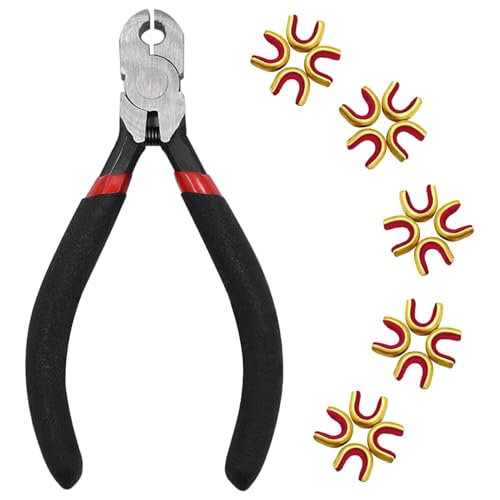
- Basic bow tools for your setup: bow square, hex keys, and a nock point tool or serving tool
- A way to mark impact points at short and long range
- A safe lane where you can shoot the same arrow multiple times at the same distance
Why arrows drift in wind
Crosswind pushes an arrow sideways after release, but the size and direction of the miss depend on wind angle, speed, distance, and how much the arrow slows before it reaches the target. A steady breeze gives a different result from gusts. Left-to-right and right-to-left wind can also expose different form or tune errors.
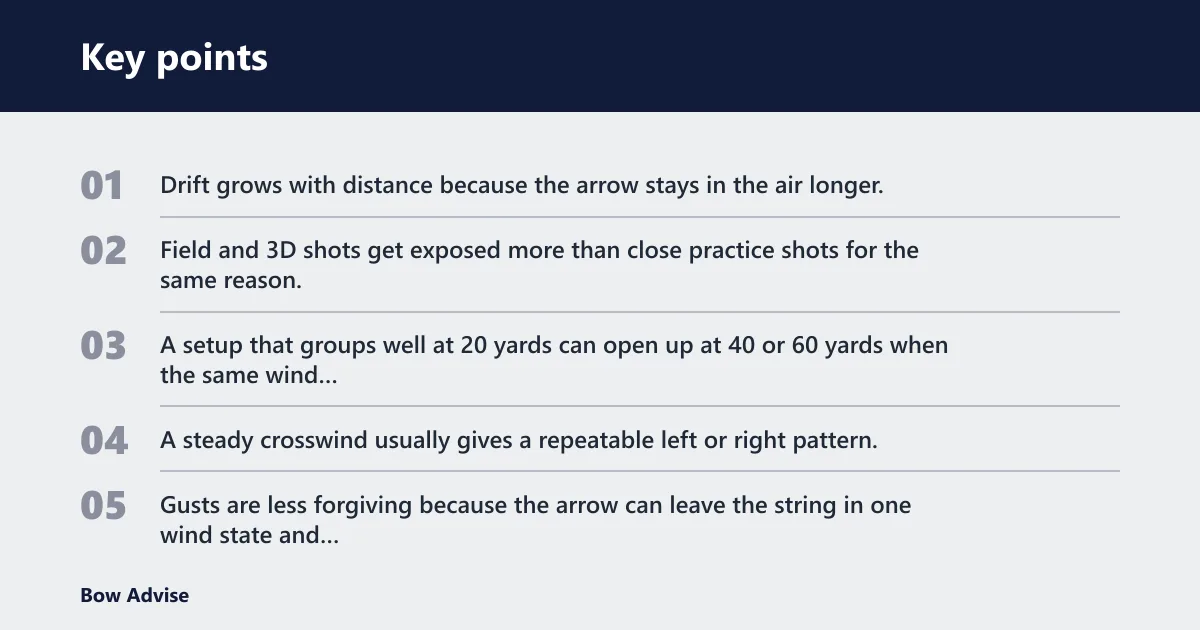
Drift grows with distance because the arrow stays in the air longer. Field and 3D shots get exposed more than close practice shots for the same reason. A setup that groups well at 20 yards can open up at 40 or 60 yards when the same wind has more time to work.
Steady crosswind versus gusts
A steady crosswind usually gives a repeatable left or right pattern. Gusts are less forgiving because the arrow can leave the string in one wind state and arrive in another. If the group changes shot to shot, gust timing may matter more than tune.
Wind angle to the lane
A wind that blows across the lane creates the most side drift. A quartering wind still moves the arrow, but less than a full crosswind. Headwind and tailwind usually change point of impact less than side wind, though they can still affect drop and aiming comfort.
How do I fix arrow drift in windy conditions?
Hold off into the wind with a repeatable sight picture, then check if that same drift appears on calm shots. If it does, check tune and form before making bigger changes. For field use, the smallest useful correction is usually better than a large sight move or a full setup change.
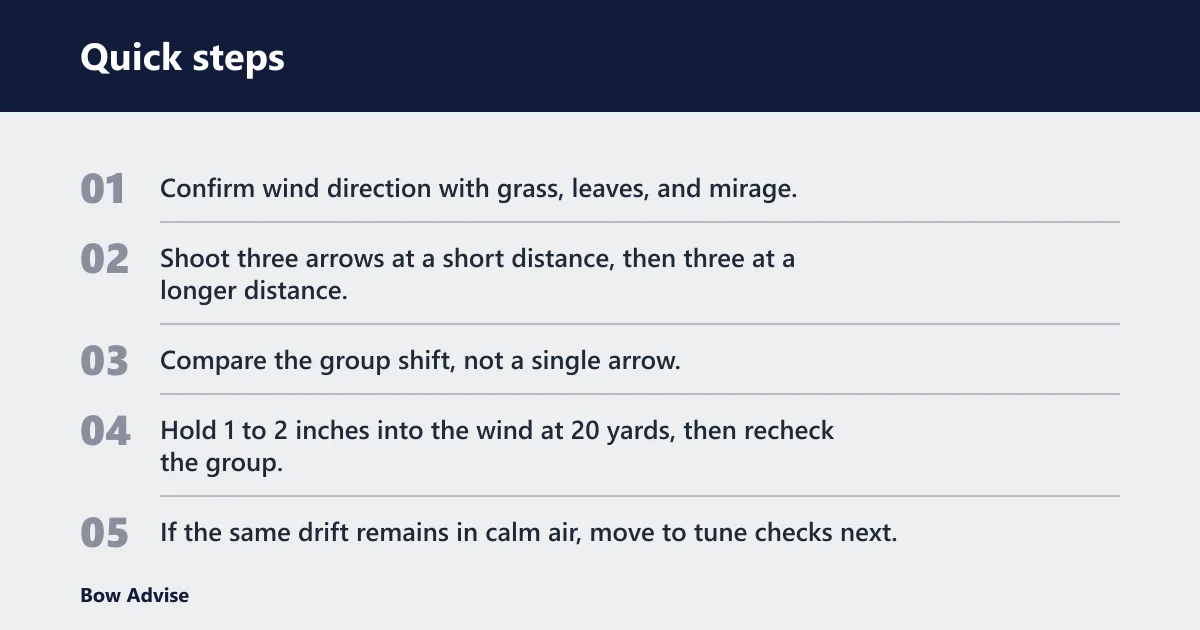
What to change first on the line
- Confirm wind direction with grass, leaves, and mirage.
- Shoot three arrows at a short distance, then three at a longer distance.
- Compare the group shift, not a single arrow.
- Hold 1 to 2 inches into the wind at 20 yards, then recheck the group.
- If the same drift remains in calm air, move to tune checks next.
Recurve bows: smallest useful correction
For a recurve, start with rest alignment, nock fit, and bare-shaft or paper checks if the setup allows it. A too-weak arrow often shows more rightward kick for a right-handed archer, while a too-stiff arrow often shows the opposite. Field points and broadheads will not agree if spine is off.
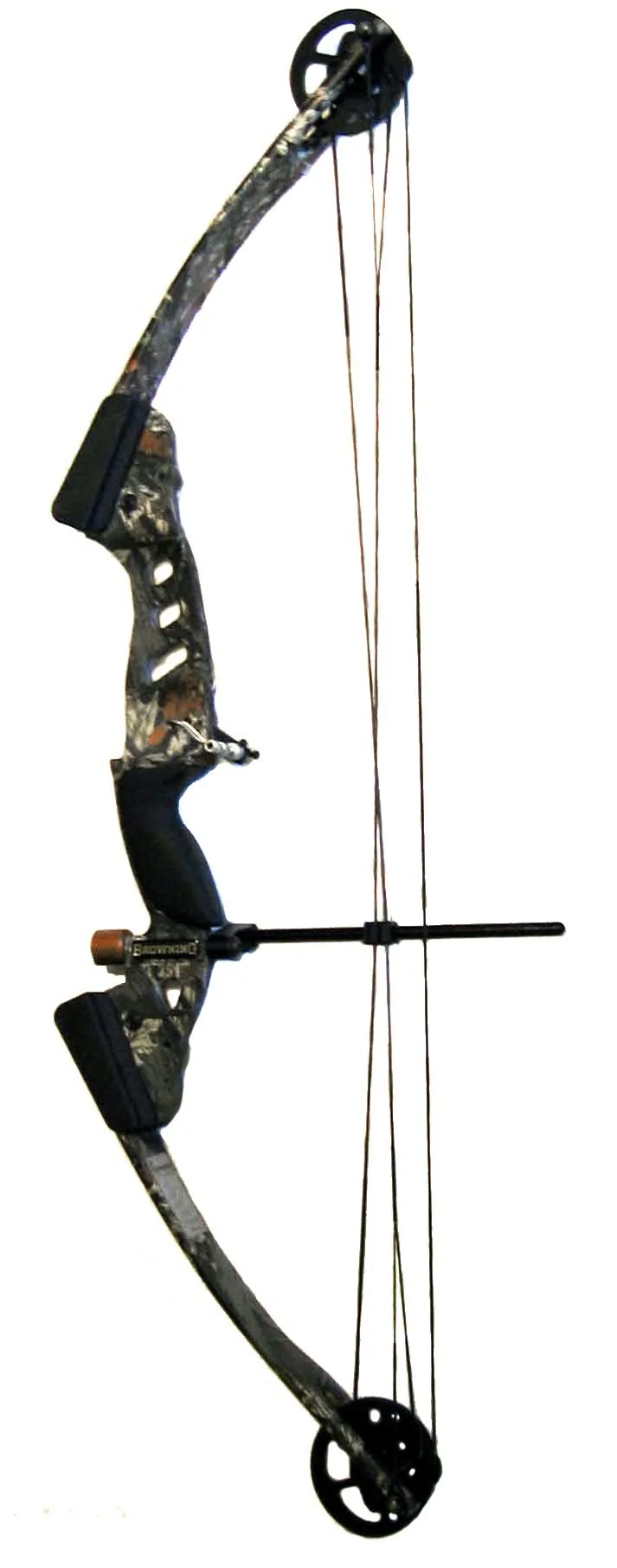
Compound bows: smallest useful correction
For a compound, check cam timing, rest center shot, and nock fit before changing broadhead choice or vane size. A compound that is out of time can group well in calm air and open up when the wind adds drag. If the bow has a tune chart, use it before moving the sight in large steps.
How do I tell if the wind or my bow tune is causing drift?
Use a short-range versus long-range comparison, then compare field points with broadheads. If the miss grows with distance and changes with wind direction, the wind is likely doing most of the work. If the same left or right miss appears in calm shots, the bow tune or release is a stronger suspect.
Separate equipment from form and distance
- Group at 20 yards in calm air.
- Repeat at 40 yards with the same anchor and sight picture.
- Shoot field points first, then broadheads if you hunt with them.
- Watch whether the group moves the same way on every shot.
If field points stay together but broadheads open up, the broadhead surface area is usually the problem, not the wind alone. Fixed-blade heads are usually more wind sensitive than mechanical heads because they expose more surface to side flow.
Common pattern checks
| What you see | Likely cause to check first | Next action |
|---|---|---|
| Same side miss in calm air | Tune or form | Check rest alignment, nock fit, and release execution |
| Group opens only in gusts | Wind timing or vane drag | Use heavier stabilization, then recheck hold and release |
| Field points and broadheads disagree | Spine, broadhead drag, or tune | Check spine match and broadhead flight at short range |
| Miss grows at longer range | Wind plus distance | Hold off more and reduce shot distance if possible |
How do you read the wind?
Use more than one cue. Grass movement shows ground-level flow, leaves show tree-level flow, and mirage shows air movement between you and the target. A wind that looks mild at your feet can be stronger across the shooting lane, especially on open field courses and 3D lanes.
Gust timing between shots
Track whether a gust hits during your anchor, draw, or follow-through. If one shot breaks clean and the next leaves during a gust, the group may still stay usable. If the arrows leave during different gust stages, the lane is changing faster than the group can absorb.
Suppose a 40-yard 3D shot sits in a lane with grass leaning left but tree leaves fluttering right. That mismatch usually means the air is changing by height. A cautious hold-off is safer than trusting only the grass at your feet.
What correction should you make first?
Make the least invasive change that improves group shape: sight hold, then form check, then tune, then equipment changes. In windy field conditions, the best first fix is often not a different arrow. It is a repeatable hold, clean release, and a verified bow setup that does not add its own drift.
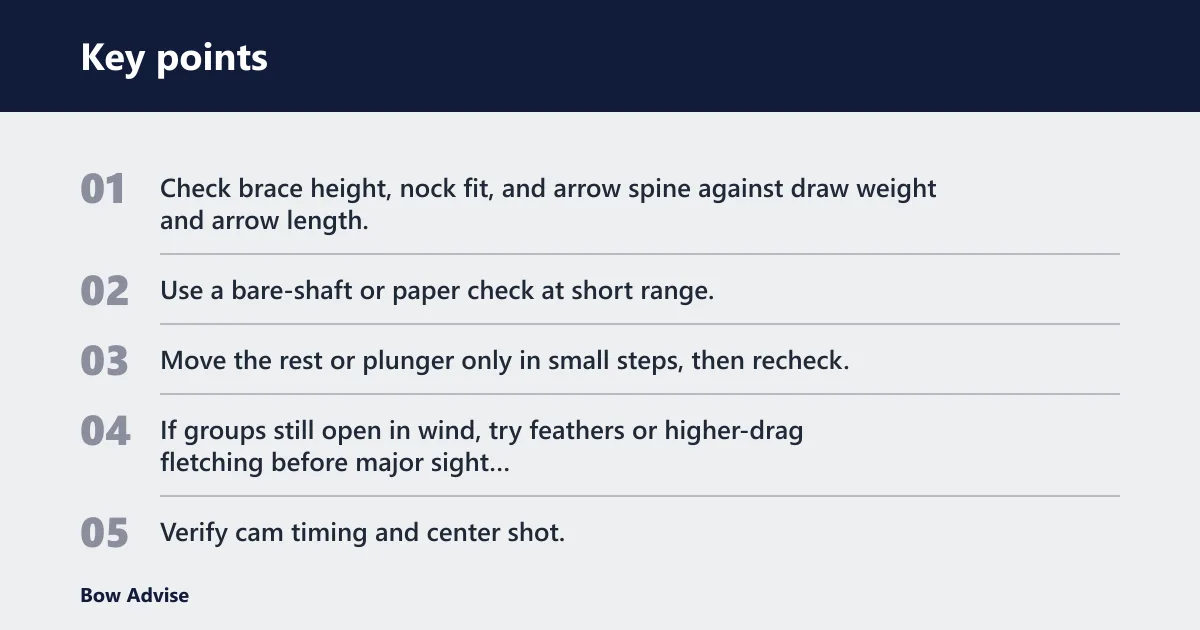
For recurve bows
- Check brace height, nock fit, and arrow spine against draw weight and arrow length.
- Use a bare-shaft or paper check at short range.
- Move the rest or plunger only in small steps, then recheck.
- If groups still open in wind, try feathers or higher-drag fletching before major sight changes.
Feathers usually correct faster than plastic vanes, and 4-fletch setups can stabilize broadheads better than 3-fletch setups. Left or right helical can help, but it should not be the first fix for a bad tune.
For compound bows
- Verify cam timing and center shot.
- Check nock fit and broadhead flight at short range.
- Confirm the rest is square and the arrow leaves cleanly.
- Only then change vane style, arrow weight, or sight hold.
Stabilizers can help the bow hold steadier in wind. Front weight can calm the sight picture, while side weight can resist torque and sway. More weight can also slow aiming movement, so balance should support the hold instead of fighting it.
A common comparison is to check whether a roughly 6-inch right miss at 50 yards is being attributed to the wind before using the same setup for a broadhead shot at 30 yards. If the broadhead lands farther right than the field point in calm air, the issue is setup, not the lane.
Wind drift checklist
| Step | Decision | Action |
|---|---|---|
| 1 | Identify the wind type | Note steady crosswind, quartering wind, or gusty changes using grass, leaves, and mirage. |
| 2 | Separate equipment from form and distance | Compare short and long range, then compare field points with broadheads. |
| 3 | Pick the least invasive correction | Adjust hold first, then tune, then fletching, spine, or arrow choice if the pattern stays. |
Escalation ladder
- Hold into the wind by 1 to 2 inches at 20 yards, then recheck.
- Verify anchor, release, and follow-through for the same shot sequence.
- Check rest alignment, nock fit, and cam timing if the miss repeats in calm air.
- Change only one arrow variable at a time: spine, fletching, or broadhead style.
Common mistakes
Blaming the wind before checking tune is the biggest trap. A bow that is out of tune can still group in calm air and fail as soon as wind adds drag. If the same miss shows up when the lane is quiet, the setup needs attention first.
Changing too many variables at once makes the result useless. If spine, fletching, and sight hold all change on the same day, the cause stays hidden. Broadheads and field points should also be compared separately, because broadhead drag can exaggerate a problem that field points hide.
Ignoring fletching choice is another miss. Low-profile vanes cut wind better, while larger vanes and feathers correct faster. A 3-fletch arrow may carry less drag, but a 4-fletch arrow can hold broadheads better in rough air. The right choice depends on the bow and distance, not habit alone.
Prevention note: when wind is steady, shoot the same lane at two distances and write down the hold-off that keeps the group centered. That record makes the next gusty session easier to read.
Frequently asked questions
Why do my arrows blow left or right in the wind?
A crosswind pushes the arrow sideways, and the direction of the miss depends on wind angle, arrow speed, and distance. If the arrow only drifts in gusts, the air is changing during flight. If it always misses the same side, bow tune or release is more likely.
How much wind can affect arrow flight?
Even a light breeze can move an arrow enough to matter at longer ranges. The effect grows as distance increases because the arrow spends more time in the air. A 20-yard shot may look fine while a 40-yard shot shows a clear side shift.
Should I aim into the wind when shooting arrows?
Yes, but only by a measured amount. Start with a small hold into the wind, then confirm the group before changing the sight. The correct amount depends on distance, wind angle, and whether the wind is steady or gusty.
Does fletching size help arrows handle wind better?
Yes, but the tradeoff matters. Larger or higher-drag vanes steer an arrow more strongly and can help broadheads settle, while low-profile vanes reduce wind drag. Feathers correct fast, but they also catch more wind than many plastic vanes.