How to Keep a Peep Sight Aligned After Changing D-Loop Length
If your D-loop length changes, treat it like a draw-length change: confirm anchor first, then verify the bow still fits your full-draw position before you change peep height, and check rotation separately. A bad peep wastes shots and can push a shooter into a poor anchor. This guide covers the setup check, peep-height reset, and the final rotation check after a D-loop change.
What you’ll need


- Your bow with the D-loop already tied in
- Your usual release aid attached to the loop
- Fine marker, tape flag, or serving-safe reference mark
- Tape measure or a ruler for comparing old and new loop length
- A stable target and enough space for full-draw checks
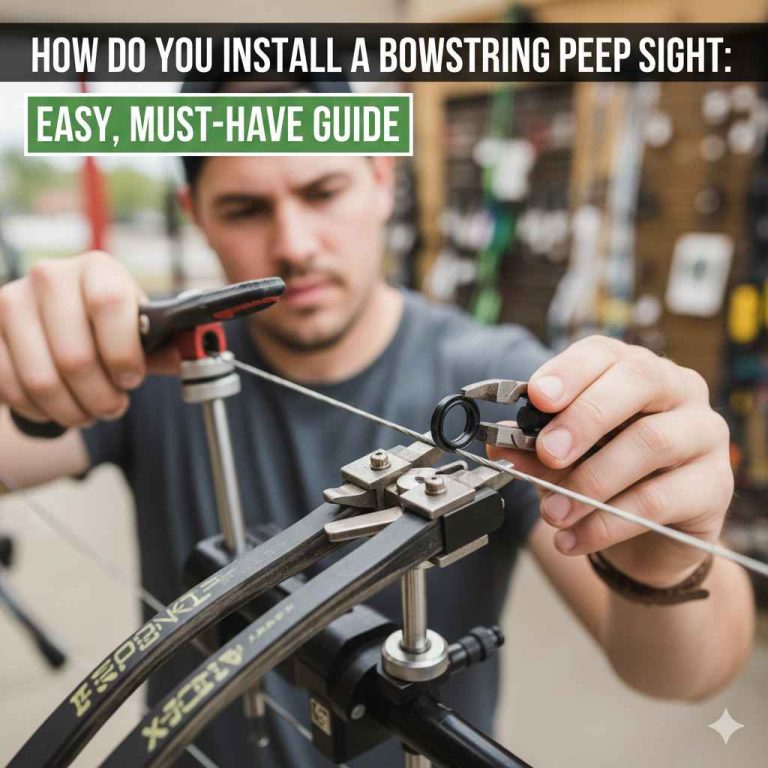
- Bow press or pro shop help if the peep is tied in or serving work is needed
If the peep is tied in or the change needs serving work, use a bow press or a pro shop rather than forcing string work on a compound bow. Follow the bow manual and local shop practices; do not change tied-in components under unsafe string tension.
Peep reset checklist
| Item | Before change | After change | Pass/fail note |
|---|---|---|---|
| D-loop length | Record the old loop from knot to knot | Record the new loop from knot to knot | Pass if the change is intentional and known |
| Anchor reference | Note hand contact, nose-to-string, and head position | Repeat the same anchor and compare | Pass if the anchor is identical shot to shot |
| Peep height mark | Mark the peep center at full draw | Mark the new peep center at full draw | Pass if the new mark matches the eye line at anchor |
| Full-draw eye position | Note where the eye sits behind the peep | Note whether the eye rises, drops, or shifts | Pass if the eye meets the peep without strain |
| Sight housing center | Record the housing center in the peep view | Record the housing center again after the change | Pass if the housing center stays centered with the same anchor |
| Diagnosis | State height, rotation, or anchor drift | Mark the same cause after the change | Pass if only one fault type remains |
Measure old versus new loop length before you change anything else. A D-loop can change effective draw feel and where the anchor settles, so even a short swap can shift the eye line without changing the string itself. That can change peep alignment without changing the string itself.
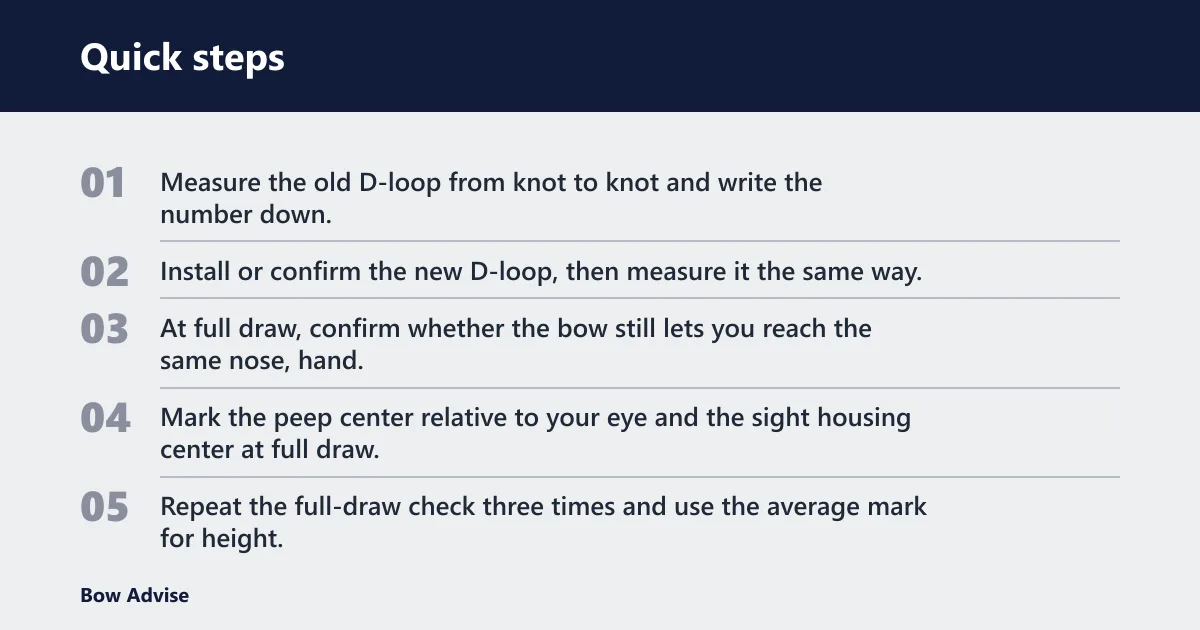
- Measure the old D-loop from knot to knot and write the number down.
- Install or confirm the new D-loop, then measure it the same way.
- At full draw, confirm whether the bow still lets you reach the same nose, hand, and head position you used before the loop change.
- Mark the peep center relative to your eye and the sight housing center at full draw.
- Repeat the full-draw check three times and use the average mark for height.
- Set peep height first, then recheck rotation only after the anchor is repeatable.
Why your peep moved after the loop change
A longer or shorter D-loop changes the way the bow fits the face at full draw. That can move the eye closer to, or farther from, the peep and alter the sight picture even when the string itself has not changed. Brace-height checks miss this because the peep must match the eye position at full draw.
What changed at full draw
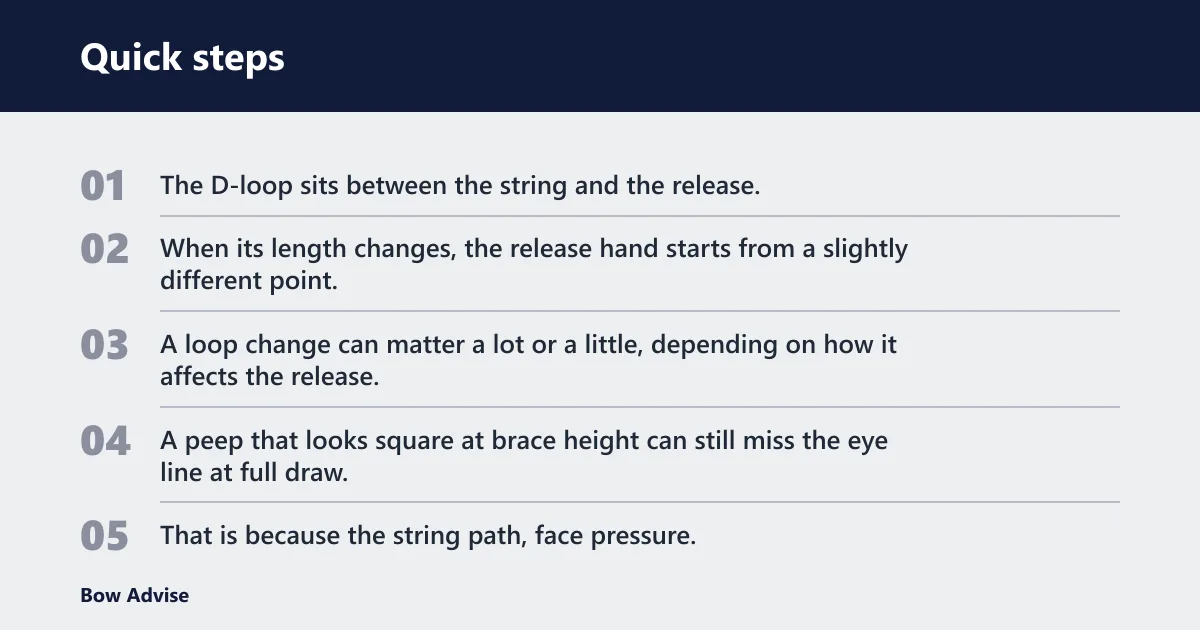
The D-loop sits between the string and the release. When its length changes, the release hand starts from a slightly different point, which can affect anchor feel, face pressure, and where the eye lands behind the peep. A loop change can matter a lot or a little, depending on how it affects the release, anchor, and head position at full draw.
Why brace-height checks mislead
A peep that looks square at brace height can still miss the eye line at full draw. That is because the string path, face pressure, and head angle are different once the bow is drawn. Set peep height with the D-loop already tied and the release attached, then verify it at full draw.
When a small loop change matters
Say a shooter shortens a loop just enough to feel more face pressure. The peep may now sit low at full draw, even though the bow looked correct on the rack. A longer loop can do the opposite and make the peep look high or off-center before the shot breaks.
How do you reset peep height at full draw?
Set peep height with the D-loop and release attached, then use repeated full-draw checks to find the eye’s natural position. The eyes-closed method is commonly used because it reduces aiming bias and shows where the head settles on its own. If the bow no longer gives you the same anchor at full draw, stop and fix that before changing the peep. If the peep still needs to be moved in the string or served differently, use a bow press or a pro shop rather than trying to correct string work from this page alone.
Use the eyes-closed method
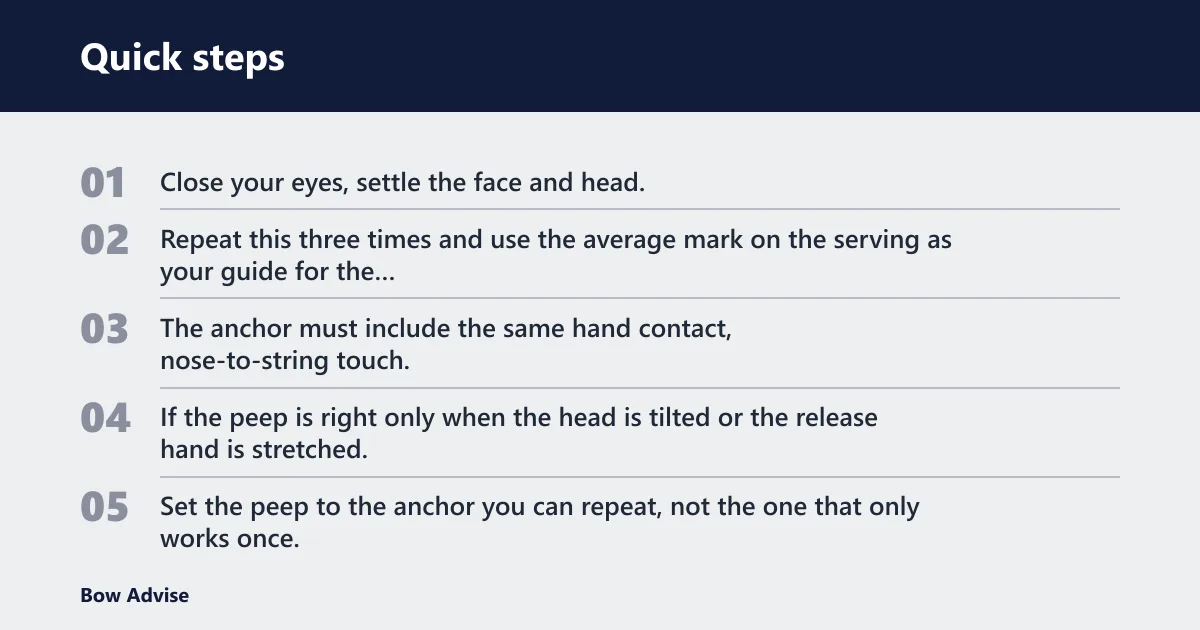
Draw the bow with your normal anchor. Close your eyes, settle the face and head, then open them and note where the peep sits relative to the eye and sight housing center. Repeat this three times and use the average mark on the serving as your guide for the final peep position only if the setup is already close and no string work is needed.
Check the peep at your natural anchor
The anchor must include the same hand contact, nose-to-string touch, and head position every time. If the peep is right only when the head is tilted or the release hand is stretched, the setup is wrong. Set the peep to the anchor you can repeat, not the one that only works once.
Confirm the peep before touching rotation
Do not chase twist until the height is correct. If the eye is too high or too low at full draw, rotation checks can hide the real problem. Fix the vertical position first, then look for a consistent twist direction if the peep still does not settle square.
How do you tell rotation from height?
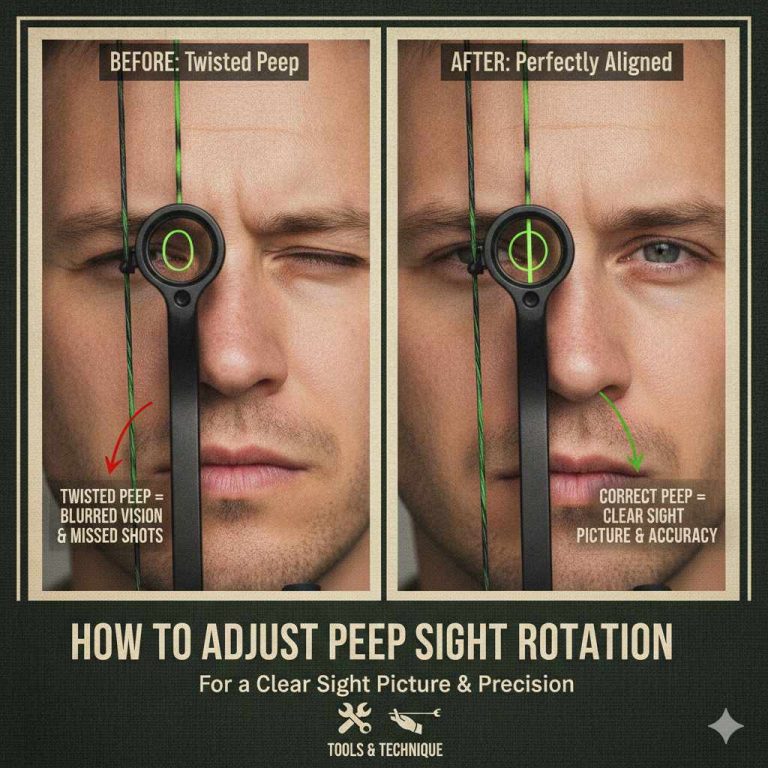
Rotation shows up as the peep turning in one consistent direction. Height is commonly shown by the eye sitting above or below the center line at full draw. Anchor drift looks like the peep changes from shot to shot even when the bow and string have not moved. Those are separate faults.
Spot one consistent twist direction
If the peep always ends up a little left or a little right in the same way, look at string rotation and serving position. Residual twist in the string can drive that pattern. If the peep changes direction from shot to shot, the problem is more likely anchor inconsistency than pure rotation.
Check serving position and residual twist
Look at where the peep sits on the serving and whether the string has leftover twist from earlier setup work. A peep that is installed in the wrong place on the serving can appear off even when the height is correct. If the serving location is wrong, re-serve or get shop help.
Separate string rotation from anchor drift
A common mistake is twisting the peep around instead of rechecking the D-loop length after the anchor point changes. If the hand contact changes, the nose touches the string differently, or the head angle wanders, the peep will look wrong even with a correct tie-in. Lock the anchor first, then judge rotation.
How do anchor, cant, and head tilt affect alignment?
Anchor consistency matters as much as peep position. Bow cant and head tilt can make a correctly served peep look twisted, so the alignment check must use the same body position every time. Standardize the face and bow before changing the peep again.
Standardize hand contact and nose-to-string
Keep the same pressure from the release hand and the same nose-to-string contact on every draw. If one shot has the nose touching firmly and the next does not, the eye line moves. That is anchor drift, and the peep cannot fix it by itself.
Keep bow cant repeatable
A tilted bow changes the relationship between the peep, the sight housing, and the eye. Use the same cant reference each time you check alignment. If the bow is held differently on each shot, the peep can look wrong even when the tie-in and height are correct.
Level the head before changing the peep
Head tilt can rotate the sight picture and mimic a twisted peep. Before moving the peep, bring the head back to a repeatable, neutral position and check the sight housing center again. If the view clears up, the issue was posture, not peep height.
Suppose the peep looks low and slightly twisted after a shorter D-loop is installed. If the archer also raises the head on the shot, the combined change can make the sight picture look worse than the loop change alone. Fix the head position first, then repeat the height check.
Common mistakes
Most repeat alignment problems come from changing one part and ignoring the rest. Fix the setup in order: anchor, height, then rotation. If the bow has a new string, remember that early shooting can still change peep behavior as the string settles.
- Adjusting the peep before confirming a repeatable anchor.
- Using a brace-height view instead of a full-draw view.
- Chasing rotation when the eye line is actually too high or too low.
- Ignoring string break-in on a new string during early shots.
- Skipping shop help when the peep is tied in or serving work is needed.
If that didn’t work, try this next: check whether the peep still centers after three identical draws. If it does not, move back to anchor execution before touching the peep again. If the peep is tied in and still drifts, send the bow to a pro shop for a bow-press adjustment rather than forcing a string correction at home.
Prevention: after any D-loop swap, mark the old loop length, install the new one, then recheck peep height with the release attached before the next range session.
Frequently asked questions
How do I keep my peep sight aligned after changing D-loop length?
Measure the old and new loop lengths, then reset peep height at full draw with the release attached. Repeat the eyes-closed check three times and use the average mark. After that, verify whether any remaining error is rotation or anchor drift, not a height mistake.
Why did my peep sight move after I installed a new D-loop?
The loop changed the effective draw feel and the eye’s position at anchor. That can move the peep even if the string did not change. If the sight picture also changes when the head or hand position changes, the anchor is part of the problem too.
Do I need to move my peep sight after changing draw length with a D-loop?
Usually yes, if the eye no longer meets the peep at full draw. The correct check is done with the D-loop already tied and the release attached. If the peep only looks wrong because the head tilts or the bow cant changes, fix that first.
How do I tell if my peep issue is rotation or height?
Height errors show the eye sitting above or below the center line at full draw. Rotation errors show a consistent twist direction. If the peep shifts around from shot to shot, anchor inconsistency is likely involved, so the peep alone will not solve it.
What is the best way to set peep height at full draw?
Use the eyes-closed method with the D-loop and release attached, then repeat it three times. Mark the peep center relative to the eye and sight housing center each time. The average mark gives a practical height reference that matches the natural anchor better than brace height.
Should I adjust the peep or my anchor after a D-loop change?
Adjust the anchor first if hand contact, nose-to-string, or head position is inconsistent. Move the peep only after the anchor is repeatable and the bow is at full draw. If the peep is tied in or serving work is needed, use a bow press or a pro shop.