How to Upgrade a Basic Bow Setup Without Wasting Money
Upgrade a basic bow in this order: correct draw length and draw weight, matched arrows, then sight and rest. Replace the bow when fit or cam adjustment no longer matches you. Skipping that order wastes money on parts that cannot fix poor setup, inconsistent arrow flight, or a bow that is too heavy or too short for you. This guide covers the highest-ROI upgrades, what cheap parts get wrong, and the point where buying a better bow is smarter than adding more accessories.


Bow upgrade ROI table
The quickest return comes from fit, tune, and arrows. Accessories help after the bow launches an arrow cleanly and fits the shooter. The table below ranks common upgrades by cost, likely accuracy gain, and the chance that a cheap part becomes a second purchase.
| Upgrade | Typical cost | Expected accuracy gain | Compatibility risk | Best choice |
|---|---|---|---|---|
| Draw length / draw weight fit check | $0 to $25 | High | Low | Buy-now |
| Arrow spine match and cut length | $40 to $150+ per dozen | High | High | Buy-now |
| Basic tune: center shot, nocking point, paper tune | $0 to $40 | High | Low | Buy-now |
| Bow sight | $50 to $320 | Medium | Medium | Buy-now for compound; buy-later for simple recurve |
| Arrow rest | $20 to $260 | Medium | High | Buy-now if the current rest is unstable |
| Release aid | $35 to $200 | Medium | Medium | Buy-now for compound with D-loop |
| Stabilizer | $25 to $90 | Low to medium | Low | Buy-later |
| Peep sight / D-loop refresh | $10 to $35 | Medium | Low to medium | Buy-now if the current string setup is poor |
| New bow | $250 to $900+ | Very high when fit is wrong | Low | Buy-now when the old bow no longer fits |
What should you upgrade first?
Start with fit, then tune, then arrows. A bow that is too long, too short, too heavy, or set to the wrong draw length will waste money on every accessory after it. If the bow fits and bareshafts or paper tunes reasonably well, the first real spend should go toward arrows and the parts that make aiming or holding easier.
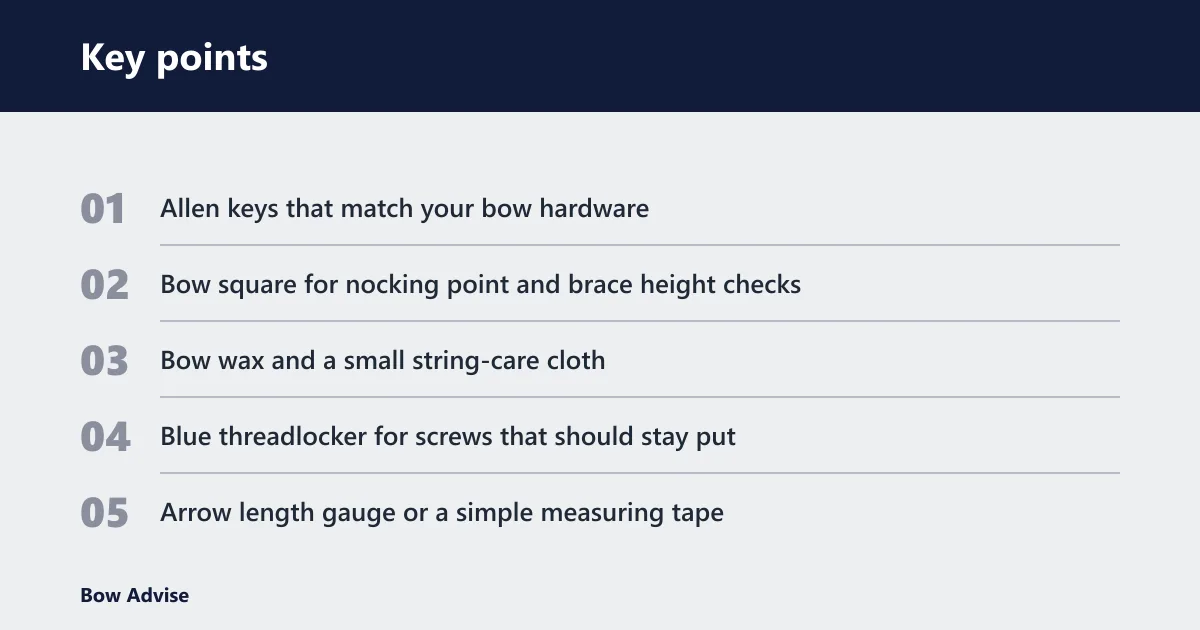
What you’ll need
- Allen keys that match your bow hardware
- Bow square for nocking point and brace height checks
- Bow wax and a small string-care cloth
- Blue threadlocker for screws that should stay put
- Arrow length gauge or a simple measuring tape
- Paper tune target or a sheet of paper
- Spare serving material if the string setup is older
How to decide the first spend
- Set draw length and draw weight correctly in the bow shop or at the range.
- Check arrow spine against the bow’s actual draw weight and your draw length.
- Confirm center shot, nocking point, and brace height before buying add-ons.
- Upgrade the sight or rest only after the arrow flight is repeatable.
- Buy a stabilizer or release aid next only if the current setup limits aim or trigger control.
Suppose a compound is set 2 inches too long. A better sight will not fix the string hand moving forward at anchor. The cleaner fix is to shorten draw length first, then retune the arrow rest and nocking point.
A common first-timer mistake is buying a premium rest for a bow that still shoots a weak-spine arrow. The rest may be precise, but the arrow will still leave poorly and group wide until the shaft match is corrected.
Which bow accessories pay off fastest?
A sight and rest are the first meaningful accessories for most compound bows. For recurve bows, the first payoff often comes from arrows, tiller balance, and a simple plunger or rest setup before any expensive aiming gear. Hunters and target shooters should also split their priorities, because speed of setup and adjustability matter differently.
Must-have
These items solve the biggest problems first: fit, arrow flight, and a reliable anchor. For compound bows, a dependable sight, a workable rest, and a solid D-loop are the core buys. For recurves, the first money usually goes into matched arrows, a rest or pressure button if used, and tune work.
Bow sight
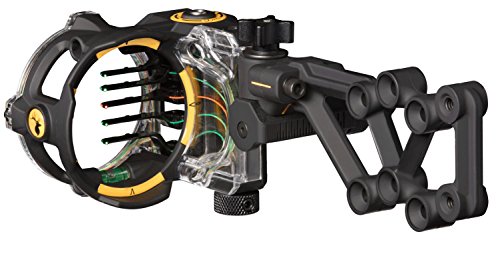
This Trophy Ridge React H5 sight fits a budget-to-midrange compound setup that needs fast pin setup and tool-less adjustment. The .019 pins and rheostat light help in low light, but a five-pin layout can crowd the view for some target shooters, and it is left-hand only.
Arrow rest
The QAD Ultrarest Integrate MX2 suits a compound bow that needs full containment and fine adjustment. Direct riser mounting keeps the profile compact, but the install is more involved than a simple stick-on rest, and that raises the cost if the bow needs extra setup time or replacement hardware.
D-loop and release aid
A D-loop matters when a compound is shot with a release aid, because it gives a repeatable anchor point and reduces string wear at the nock point. A release aid matters most when trigger consistency is a problem. Without a D-loop, many release aids simply do not belong on the string.
Stabilizer
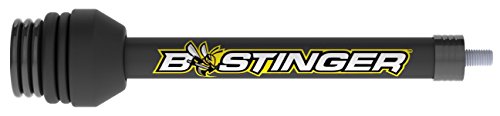
This Bee Stinger 10-inch stabilizer is a reasonable middle step for a compound that feels jumpy or nose-heavy. The adjustable weights help balance the bow, but beginners often expect more accuracy than a stabilizer can deliver. It damps vibration and steadies hold; it does not fix poor form or bad arrows.
Nice-to-have
These parts help after the bow is already shooting cleanly. They make aiming easier, reduce movement, or simplify transport. They are useful, but they should not outrank arrows, fit, or tune work.
Peep sight
A peep sight helps a compound line up the eye, peep aperture, and pin picture. Smaller apertures sharpen the view but dim the image. Rotation problems usually come from string serving or strand layout, so changing the peep without checking the string can waste money and time.
Bow case and maintenance kit
A case protects limbs, cams, and sights during transport. A small maintenance kit matters because loose screws, dry strings, and missing Allen keys cause avoidable downtime. Threadlocker is useful on the right screws, but it should not be used on parts that need regular adjustment.
Consumables and spares
These items are cheap insurance. Wax, spare serving, and a few correctly sized screws cost less than a damaged string or a missed session. Arrows are consumables too, because a bad spine match, broken nock, or cracked shaft turns into replacement cost fast.
How much should you spend on bow upgrades?
Budget in layers, not all at once. A beginner often does best by spending enough to fix fit and tune first, then adding one accessory at a time. If the bow still needs major setup work, a midrange rest or sight is safer than buying the most expensive version first.
Budget setups
| Setup level | Recurve path | Compound path | What to buy first |
|---|---|---|---|
| Starter | Arrow match, basic tune tools, simple rest or plunger | Arrow match, D-loop, basic sight if needed | Fit, arrows, tune |
| Midrange | Better arrows, cleaner rest, small stabilizer if useful | Better sight, dependable rest, release aid if shot with a release | Sight or rest, whichever limits the bow more |
| Serious | Higher-quality shafts and refined tuning parts | Higher-quality sight, better rest, stabilizer tuning, peep refresh | Only after the bow is already fit and tuned |
Budget versus hidden cost
Cheap parts can cost more after install. A low-cost rest that needs repeated retuning, a sight with poor repeatability, or arrows that do not match spine will all create second-order spending. Add in tools, threadlocker, extra arrows, and a replacement string if serving is damaged.
How do arrows affect upgrade value?
Arrows often produce more real improvement than flashy accessories because they affect launch and flight directly. A well-matched shaft can tighten groups faster than a premium sight can. The key is matching spine, length, and point weight to the bow you actually shoot, not the bow label on the riser.
Spine, length, and draw weight
Arrow spine must suit draw weight and arrow length. Too weak, and the shaft flexes excessively. Too stiff, and it can leave the bow poorly or tune badly. Cutting arrows shorter increases stiffness; longer shafts reduce it. That is why arrow length and actual draw length matter together.
Grain weight and fletching
Heavier arrows generally carry more momentum and are often calmer in the wind, while lighter arrows can be faster. Fletching size affects steering and drag. For beginners, consistent build matters more than chasing the lightest shaft. Use the fletching style that matches the setup and intended use.
Picture a 28-inch draw compound shooting a shaft that is too weak and too long. The bow may still feel smooth, but groups open up because the arrow leaves with extra flex and poor clearance. Changing to the right spine often helps more than changing pin count or adding weight to the front.
Budget shafts versus premium shafts
Budget shafts can be perfectly usable if spine and length are right. Premium shafts often bring better straightness consistency and tighter weight sorting, which helps when the bow is already tuned. Spending premium money on a bad match is the expensive mistake; correct match beats premium branding.
Bow tune basics that save money
Good tune work prevents wasted upgrades. Paper tune, center shot, nocking point, and brace height should be checked before blaming accessories. On compound bows, cam timing or limb alignment can matter as much as the rest or sight. On recurves, simple tiller and button setup often decide the result.
Paper tune and center shot
Paper tune shows whether the arrow is leaving cleanly. Center shot sets the rest position so the arrow starts in the right lane. If both are off, a better sight only helps you aim at a bad arrow path. That is money spent in the wrong place.
Nocking point and brace height
The nocking point controls vertical launch. Brace height affects how the string behaves and can change noise, feel, and forgiveness. A small adjustment, then a recheck, is better than chasing random parts. For many bows, 1/16 inch at a time is a practical increment for fine setup work.
Cam timing or limb alignment
Compound bows with mismatched cam timing or poor limb alignment can throw off tune no matter what sight is installed. If the cams do not reach together or the limbs are visibly out of line, that problem comes before accessories. Fixing geometry first prevents buying parts to hide a mechanical fault.
When cheap upgrades backfire
Cheap upgrades backfire when they create repeat work. The worst case is a part that seems simple to install but forces new tuning, new arrows, or a string change. That is how a low-price buy becomes the most expensive option on the shelf.
Wrong-spine arrows and wasted groups
Wrong-spine arrows can make every other upgrade look weak. If the shaft is off, group size and clearance problems remain. Do not buy a more expensive rest to hide a poor shaft choice. Replace the arrow setup first, then retune the bow.
Low-cost rests that need constant retuning
Some budget rests move out of place after repeated shots, transport, or minor screw movement. That is a problem because the sight picture may change even while the bow looks unchanged. If the rest cannot hold zero, a midrange rest is the cheaper choice over time.
Peep rotation and serving problems
Peep rotation usually comes from the string, not the shooter. Installing a peep without checking string serving can lead to twist, alignment trouble, and a second round of labor. If the serving is worn, replacing or re-serving the string may be smarter than chasing the peep alone.
Threadlocker, tools, and install cost
Hidden costs add up fast. A sight may need the right wrench size, a rest may need mounting hardware, and several screws should get a small amount of threadlocker. If the install requires a bow press, shop labor, or replacement hardware, that cost belongs in the budget from the start.
When should you replace the bow?
Replace the bow when fit is wrong, adjustment range is exhausted, or the platform is so limited that upgrades only treat symptoms. If the bow cannot be set to a safe draw weight, cannot accept the parts you need, or forces repeated compromise in draw length, it is time to stop upgrading.
Signs the current bow is holding you back
Common signs include draw length that still feels wrong after adjustment, a bow that is too heavy to hold, or a riser and cam setup that will not tune without constant compromise. If a cheap upgrade only creates more correction work, the platform is probably the problem.
Upgrade ceilings for old or poorly fitted bows
Some older bows simply do not justify a long upgrade path. If the riser, cams, or limb system cannot support the accessories the shooter actually needs, a replacement makes more sense. Spending $200 to rescue a bow that still fits poorly is often the wrong trade.
Used and midrange alternatives
Used or midrange bows can be smarter than piling parts onto a weak setup. A bow that already matches draw length and draw weight can save money across the whole setup, because the sight, rest, and arrows can stay simpler. That is where the real value usually sits.
Frequently asked questions
How do I upgrade my bow setup without wasting money?
Start with fit, then tune, then arrows. Use a bow square, check draw length, and confirm spine before buying accessories. If the bow still groups poorly after center shot and nocking point checks, fix that before paying for a more expensive sight or rest.
What bow accessories should I buy first?
For a compound, the first useful buys are usually a sight, a reliable rest, and a D-loop if you shoot a release. For a recurve, matched arrows and basic tune tools usually beat accessories. Buy the part that fixes the biggest setup flaw first.
Should I upgrade my sight, rest, or arrows first?
Arrows come first if the spine is wrong or the arrow length is off. If the arrows are already matched, a sight or rest comes next depending on what limits the bow more. A poor tune should be corrected before any of them.
Which bow upgrade gives the biggest improvement for the money?
Matched arrows and a correct tune usually give the biggest gain for the least money. A fit correction can beat a premium accessory because it fixes the whole system. After that, a sight or rest is the next best purchase for many compound bows.
How do I know if my bow is worth upgrading instead of replacing?
If the bow can be adjusted to the right draw length and weight, and the platform accepts the accessories you need, upgrade it. If it cannot, replace it. A bow that forces constant workarounds is usually the wrong place to keep spending.