Winter Archery for Traditional Bows: Recurve and Longbow
Winter changes traditional bow performance by stiffening strings, shrinking glove feedback, and exposing tuning faults. If groups open up after the first cold shots, suspect the setup before the shooter. Ignoring it can mean low arrow speed, erratic clearance, sore fingers, and missed game or lost scoring points. This guide covers recurve and longbow winter failure modes, the symptoms that point to the bow, and the checks that keep cold-weather shots consistent.
What winter changes on traditional bows
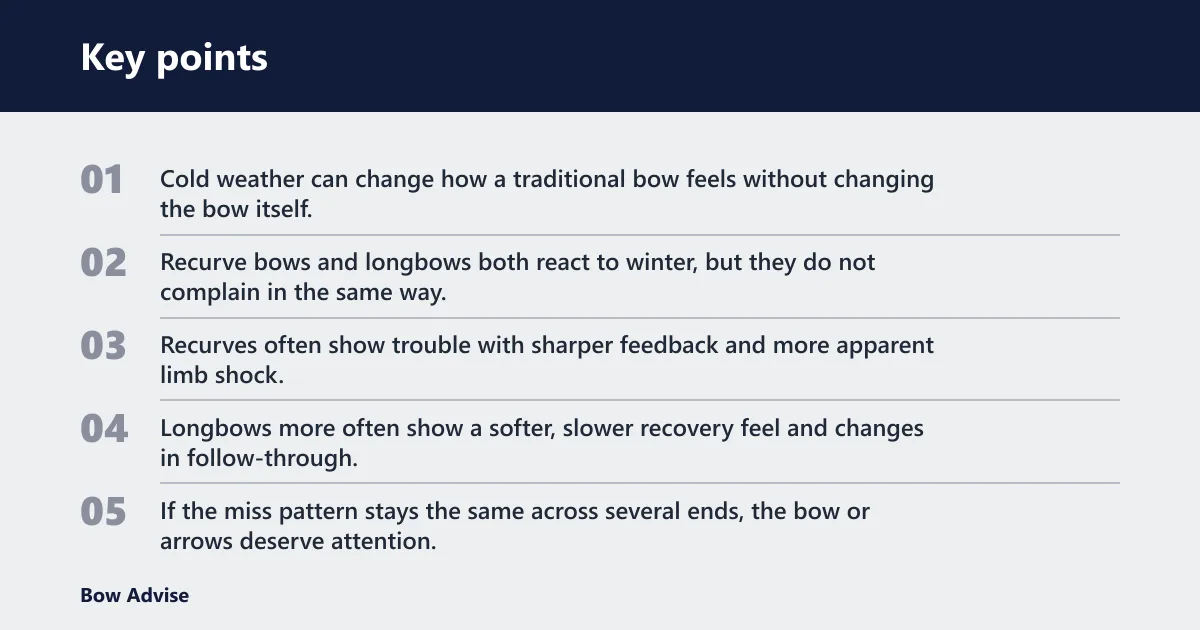


Cold weather can change how a traditional bow feels without changing the bow itself. Strings feel stiffer, gloves blunt grip feedback, and a setup that was marginal at room temperature can act louder, harsher, or less forgiving once temperatures drop.
Traditional bows have no pulleys, cams, or mechanical parts, so winter problems usually show up in the limbs, string, arrow, or hand contact. That helps, because the symptom often points straight to the cause if the shooter separates equipment change from form change.
Why cold changes feel, speed, and noise
Temperature can make string material feel less supple, which can change brace-height behavior and the way the shot transfers into the hand. The bow may also seem slower because cold fingers encourage a rushed release, while heavy layers can shorten draw length and reduce arrow speed.
Recurve bows and longbows both react to winter, but they do not complain in the same way. Recurves often show trouble with sharper feedback and more apparent limb shock. Longbows more often show a softer, slower recovery feel and changes in follow-through.
How to separate equipment change from shooter change
Winter problems are easy to misread. A short draw from bulky layers, a grip shift caused by gloves, or numb fingers on the string hand can all move arrows the same way a tuning issue can.
Look for patterns. If the first few arrows are off, then the group settles after the shooter loosens up, that points toward form and cold stiffness. If the miss pattern stays the same across several ends, the bow or arrows deserve attention.
Recurve-specific winter problems
A recurve bow stores more energy than a longbow of the same draw weight, so winter changes often show up as sharper feedback. The shot may feel faster or harsher, and any weakness in brace height, string choice, or arrow spine is easier to notice.
That is also why recurves can feel less forgiving in cold weather. A setup that is close to the edge may start showing string slap, louder noise, or a more obvious reaction at the riser when the temperature falls.
Longbow-specific winter problems
A longbow is usually a tall, simple design with a smooth draw cycle and quiet shooting. In the cold, that smoothness can hide a setup issue until the bow starts showing longer limb recovery, more follow-through movement, or a different string path after release.
Longbows are often one-piece traditional bows, and they can be more sensitive to brace-height changes than a shooter expects. Small shifts matter because the bow is already relying on clean timing rather than extra mechanical forgiveness.
How to tell bow problems from shooter problems
Cold weather can make a traditional bow less accurate, but the cause is not always the bow. Bulky clothing, gloves, and numb fingers can shorten anchor, alter grip pressure, and change release timing before the archer notices it.
The best clue is repeatability. If a symptom appears only after the shooter adjusts clothing or hand position, that is likely a shooter issue. If the symptom shows up even with a clean, calm shot, the setup may be the real problem.
Layer bulk, short draw, and grip slip
Winter layers can shorten draw length enough to affect impact. That matters because draw weight is measured in pounds, and perceived effort rises when the string hand has to work against thicker clothing, frozen fingers, or a cramped anchor.
Grip slip is another common winter error. Traditional bow grip placement is critical for accuracy, and gloves can push the hand into a different pressure point or rotate the bow without the shooter noticing.
Gloves, numb fingers, and anchor changes
Gloves reduce touch. That can lead to an anchor that is slightly low, slightly high, or inconsistent from shot to shot. On a recurve, the result may look like a sudden change in noise or speed. On a longbow, the same shift may look like a softer but less stable follow-through.
Say your anchor moves forward by only a finger width because a glove makes the string feel thicker. The bow may still release cleanly, but the arrow can leave with a different reaction and the group can open without any change to the bow itself.
When the arrow tune is the real issue
Winter can expose a marginal arrow setup. Arrow spine should match the bow setup, and it should be checked when conditions change because the same shaft can behave differently if draw length, point weight, or string behavior changes in the cold.
If arrows start showing weak or stiff reaction after temperature drops, that is often a tune clue rather than a shooting fluke. Bare shaft tuning is commonly used on traditional bows, and the same adjustment points should be used from one check to the next.
What should I check on a traditional bow before shooting in winter?
Check brace height, string condition, grip fit, and arrow reaction before the first cold session. Those are the parts most likely to move from “fine” to “borderline” when the weather changes, and they tell you whether the bow needs a setup change or the shooter needs a colder-weather routine.
Confirm brace height. Measure from the deepest part of the grip to the string before shooting, and compare it to the bow maker’s recommendation. Brace height varies by model, and small changes can alter forgiveness, noise, and tune.
Inspect the string closely. Look for serving wear, fuzzing, flattened spots, or a string that seems dry and noisy. String material and condition influence performance, and winter can change how the string feels at release.
Check limb and tip condition. Look for twists, cracks, or a tip that no longer tracks the string cleanly. Cold does not excuse damage, and a problem at the limb tip can look like a tuning fault before it becomes something worse.
Test grip clearance. Put on the same glove or hand protection you will use in the field and check whether the bow still settles in the same hand position. If the grip shifts, the shot will change even if the bow is perfectly tuned.
Watch arrow reaction. Shoot a small group and note whether the arrows leave cleanly or kick weak, stiff, or noisy. If the reaction changes in cold weather, revisit spine and brace height before blaming the shooter.
A common first-timer mistake is to keep using the same barehand grip check after switching to thick gloves. The bow may feel “off” when the real change is hand placement, pressure, or anchor depth.
Winter setup checks for traditional bows
Brace height should be confirmed before winter use because even a small shift can change how forgiving the bow feels. For recurves, that may show up as more apparent limb shock or a louder shot. For longbows, it may show up as follow-through changes or a string path that feels less settled.
Arrow spine deserves the same attention. Cold can make a borderline shaft choice more obvious, especially if the setup is already near the edge for draw weight and arrow weight combination.
Winter archery diagnosis table
This table separates recurve and longbow symptoms so the likely cause and fix are easier to read in the field. Use it when winter changes the shot and you need to decide whether the bow needs adjustment, the arrows need review, or the shooter should pause.
| Symptom | Recurve: likely cause and fix | Longbow: likely cause and fix |
|---|---|---|
| String slap or a loud string hand feel | Brace height may be low, the string may be aging, or the grip may be moving under gloves. Confirm brace height, inspect the string, and check hand placement before changing anything else. | Brace height sensitivity is often the first suspect. Raise or confirm brace height within the maker’s range, then retest for quieter release and cleaner follow-through. |
| Short draw from layers | Bulkier clothing can shorten anchor and make the bow feel harsher. Use the same winter clothing setup for tuning, then confirm anchor and draw length before blaming the bow. | Short draw often shows up as reduced follow-through and lower arrow speed. Recheck anchor with winter layers on, because a tall bow can hide the problem until the group opens. |
| Grip slip or hand rotation | Cold fingers and glove seams can change pressure on the riser. Rebuild the grip contact point and shoot a short group before changing brace height or arrows. | Longbow grip errors are often subtler, but the hand can still rotate under cold pressure. Recheck bow hand placement and wrist angle, then retest for left-right spread. |
| Brace-height drift or a different shot feel | String material can feel different in cold weather, making the shot seem faster or harsher. Verify brace height with the same reference points and compare noise and vibration after each change. | Longbows often show stronger sensitivity to brace-height changes. If the bow gets noisier or less settled, confirm brace height first, then inspect string condition and nocking point behavior. |
| Cold-stiff arrow reaction | Arrow spine may be marginal for the setup once temperature and clothing change the shot. Check bareshaft behavior and consider a spine change only after confirming anchor and grip are steady. | Longbows can show slower recovery and a more obvious weak or stiff reaction. Recheck spine against draw weight and point weight, then tune with one variable at a time. |
| Shot feels slower even though nothing moved | The bow may not be slower; the shooter may be drawing less cleanly because cold makes the release rushed. If the issue remains after a controlled warm-up, inspect string condition and tune. | Longbows can feel slower when limb recovery changes in the cold. If the arrow leaves with more follow-through movement than usual, revisit brace height and arrow spine before shooting a full session. |
When to adjust draw weight or stop shooting
Draw weight should match the archer’s strength, and cold weather can make a familiar poundage feel heavier. If the bow starts causing form breakdown, collapsed anchor, or fatigue after only a few shots, reducing draw weight for winter is the safer choice.
That matters even more for new shooters. A common starting point for a recurve is under 40 pounds at your draw length, because lower weight gives more room to keep form clean when gloves, layers, and cold fingers make the shot harder.
Reduce draw weight. If winter form breaks down, move to a lighter bow or lower-poundage limbs rather than forcing the same setup. The goal is a clean anchor and controlled release, not maximum poundage.
Adjust one setup item. If the bow is only slightly noisy or the arrow reaction is only slightly off, change brace height or inspect string condition first. A single change makes the result easier to read.
Stop and wait. If fingers numb out, the string hand slips, or the bow starts to feel unsafe to draw, stop shooting. Winter conditions can hide poor control, and a pause is better than chasing tune with broken form.
Picture a 62-inch recurve shooting 46-pound limbs with a 7 ¾-inch brace height. If a winter session starts producing louder shot noise and a slightly harder reaction at the riser, the first checks should be brace height, grip, and arrow reaction rather than a complete rebuild.
By contrast, a longbow in the 60 to 70 inch range may show a subtler issue: the arrow still leaves cleanly, but follow-through looks different and the group begins drifting. That points toward brace height, string behavior, or a short draw from clothing before anything else.
Frequently asked questions
What changes for a recurve bow in freezing weather?
Recurve bows can show winter issues through harsher feedback, more noticeable limb shock, and greater sensitivity to brace height and string condition. Because recurve limbs store more energy than longbows of the same draw weight, small changes in string feel or arrow tune can show up quickly as noise, vibration, or a different point of impact.
Does a longbow behave differently than a recurve in the cold?
Yes. Longbows are usually tall bows with a smooth draw cycle and quiet shooting, so winter issues often appear as slower-feeling recovery, changes in follow-through, or stronger brace-height sensitivity. A longbow can still be accurate in cold weather, but its symptoms are often softer and easier to misread.
Can cold weather make a traditional bow less accurate?
Yes, but the cause is often indirect. Cold can make gloves bulkier, fingers numb, and anchor points less consistent, which changes release and grip. It can also expose a marginal tune. If groups open in winter, check setup and shot process together instead of assuming the bow has changed on its own.
How do I choose arrow spine for winter shooting with a recurve or longbow?
Start with spine that matches the bow’s draw weight, arrow weight, and intended point weight, then confirm it with bareshaft tuning when winter conditions change. If the arrows suddenly behave stiffer or weaker, do not guess from one target end. Check brace height, grip, and draw length first, then compare reaction again.
Do recurve bows and longbows lose speed in cold temperatures?
They can feel slower, but the reason is not always actual bow speed loss. Cold can stiffen the string feel, alter grip pressure, and shorten draw length through clothing. Recurves may seem faster or harsher in the shot; longbows may seem slower because their recovery and follow-through change more noticeably.