Best Wet-Weather Layers for Bowhunters (2026): Based on Specs and Reviews
Choose a softshell jacket for quiet, close-range bowhunting in light drizzle or damp brush; choose a true rain jacket when steady rain, wind, or long sits matter, and pack both if the forecast changes. Pick the wrong layer, and you get soaked, noisy, or too warm, which hurts draw speed and shot focus. This guide compares camo rain jackets and softshells for the hike-in, the sit, the draw, and the shot so you can match the layer to the hunt.
Quick comparison
The trade-off is direct: a Softshell Jacket is usually quieter and easier to move in, while a Rain Jacket blocks steady rain and wind better. Bowhunters feel that split on the hike, the long sit, and the final draw.
WindRider says the best hunting rain gear has fully taped seams, and Outdoorsman Rentals calls softshells the quieter, more breathable option. That difference shows up fast once a hunt shifts from brief drizzle to all-day wet weather.
How we chose
The comparison here focuses on four things that matter during a bowhunt: noise at close range, breathability on the move, waterproofing in real rain, and mobility at full draw. It also weighs when each layer fits best, since a jacket that works on the hike may fail on a sit.
Published product details and buyer feedback point in the same direction. Light, breathable shells help on active hunts, while fully taped rain gear earns its keep in stands and blinds.
The goal is not to pick a winner for every hunt. It is to match the jacket to the part of the hunt that breaks down first.
Rain Jacket

The Hikevitang lightweight waterproof camo rain jacket appears to be a better pick for wet sits, wind, and steady rain. Based on the manufacturer’s specs and buyer feedback, it is built to keep rain out with a lightweight polyester shell, an adjustable hood, and multiple pockets for stand use.
It fits the common bowhunter problem of staying dry when the weather does not let up. For a tree stand hunt or a blind hunt, that matters more than maximum breathability, and WindRider specifically recommends a full hunting rain suit for stand and blind hunts.
The drawback is the one that comes with most rain shells: it is not the quietest choice at close range, and a waterproof outer layer can feel warm during hard climbs. If a hunt starts with a long hike and ends with a short sit, the jacket can be more shell than you need.
Softshell Jacket
The Softshell Jacket is the better choice for active bowhunts where movement comes first and rain is light or brief. Outdoorsman Rentals says softshells are the quieter, more breathable option and built for movement, which makes them a better fit for spot-and-stalk setups and fast uphill approaches.
That quieter fabric matters when a deer is close and the shot window is small. A softshell also tends to feel better when the hunt alternates between hiking and glassing, because it vents heat better than a fully waterproof shell.
The drawback is plain: softshells are water-resistant, not fully waterproof. Once drizzle turns into steady rain, or once a fabric face layer gets saturated, the jacket can stop keeping up with the weather.
Rain Jacket vs Softshell Jacket decision matrix
| Decision factor | Rain Jacket | Softshell Jacket | Winner |
|---|---|---|---|
| Noise at close range | Often louder, especially with stiffer waterproof fabric | Usually quieter | Softshell Jacket |
| Breathability on the move | Lower breathability, even with vents | Higher breathability for climbs and fast hiking | Softshell Jacket |
| Waterproofing in steady rain | Fully waterproof when seam-taped | Water-resistant, not fully waterproof | Rain Jacket |
| Mobility at full draw | Can feel stiffer, especially over insulation | Usually better stretch and easier shoulder movement | Softshell Jacket |
| Best hunt phase | Tree-stand sit, blind hunt, all-day rain | Hike-in, glassing, spot-and-stalk | Tie |
Noise
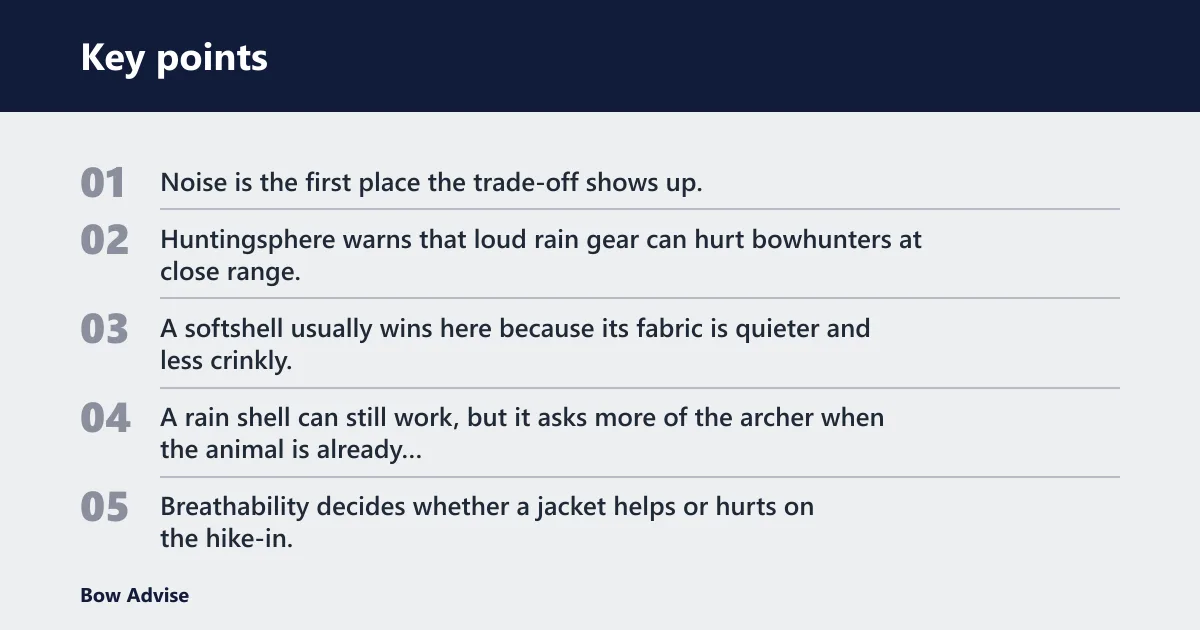
Noise is the first place the trade-off shows up. Huntingsphere warns that loud rain gear can hurt bowhunters at close range, and that warning matters during the draw and while settling into position.
A softshell usually wins here because its fabric is quieter and less crinkly. A rain shell can still work, but it asks more of the archer when the animal is already inside bow range.
Breathability
Breathability decides whether a jacket helps or hurts on the hike-in. Popular Mechanics notes that hunting jackets have become lighter and more breathable, which is exactly why many bowhunters split their gear between active and static hunts.
Softshells are the safer pick for climbs, long walks, and glassing sessions where sweat can build fast. A rain jacket can have pit zips or underarm vents, but it still traps more heat than a softshell.
Waterproofing
Waterproofing matters most once rain is steady, cold, or mixed with wind. The same source says the best hunting rain gear has fully taped seams, and Outdoorsman Rentals says rain shells are fully waterproof and windproof.
That is the line between a true rain jacket and water-resistant outerwear. A softshell can shrug off brief drizzle, but it is not the answer for a long, wet sit.
Mobility
Mobility is easy to overlook until the bow comes up. A jacket that binds across the shoulders or elbows can slow a full draw, especially if insulation sits underneath it.
Softshells usually win because they are built for movement and often have more stretch. WindRider’s layering guide says a shell should be loose enough to layer over insulation, and that advice matters for rain gear that must still allow full draw.
How much weather are you really hunting in?
The right jacket depends less on the forecast headline and more on the kind of wet you are facing. Light drizzle, cold wind, and all-day rain do different things to sound, warmth, and shooting posture.
Light drizzle and humid mornings
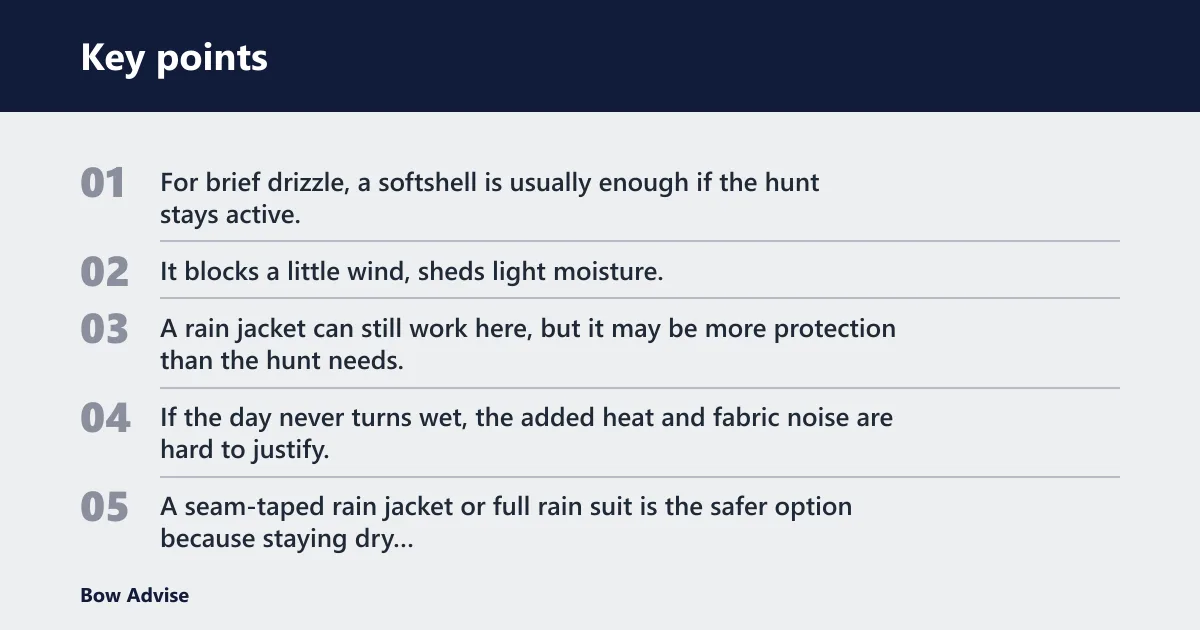
For brief drizzle, a softshell is usually enough if the hunt stays active. It blocks a little wind, sheds light moisture, and stays quieter when a deer walks in close.
A rain jacket can still work here, but it may be more protection than the hunt needs. If the day never turns wet, the added heat and fabric noise are hard to justify.
Steady rain with a long sit
Steady rain changes the choice fast. A seam-taped rain jacket or full rain suit is the safer option because staying dry becomes more important than maximum airflow.
That is especially true on a tree stand hunt or a blind hunt, where movement is limited and soaked insulation can ruin the rest of the sit. WindRider specifically recommends a full hunting rain suit for stand and blind hunts.
Cold rain, wind, and low activity
Cold rain narrows the field even more. A rain jacket does the better job of stopping wind-driven water, and its waterproof barrier helps preserve warmth during a long, quiet sit.
A softshell can feel comfortable at first, but once it wets through, the chill arrives quickly. That is the failure case many bowhunters notice after the first hour.
Mixed days with a wet hike and dry setup
Mixed days are the hardest to dress for. If the hike is steep and the setup is dry, a softshell or a packable rain shell can both work, but the better choice depends on how hard the climb is and how long the wait will be.
Say your route climbs 400 feet through brush and then ends in a dry field edge. A softshell helps on the climb, but if the wind shifts and rain starts before the shot, a rain jacket packed in the bag may save the sit.
What features matter most in hunting rain gear?
For bowhunters, the most important features are breathability, quiet fabric, waterproofing, and range of motion. The right mix changes with the hunt phase, which is why a jacket that feels perfect on the hike can disappoint in the stand.
Pit zips and underarm vents for climb-out heat
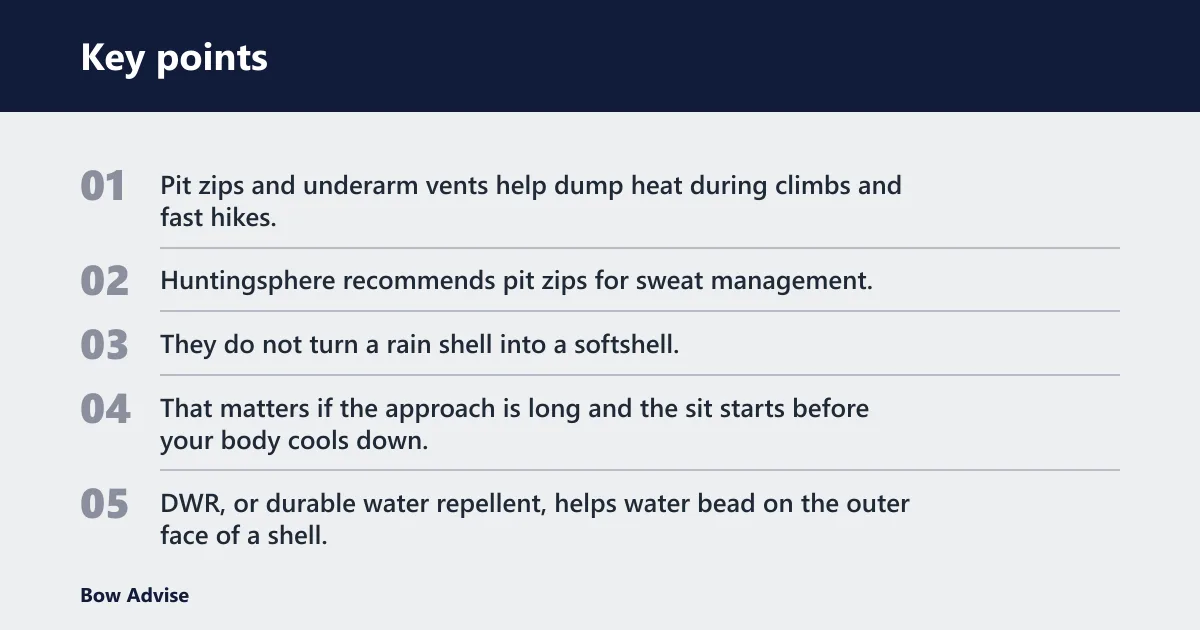
Pit zips and underarm vents help dump heat during climbs and fast hikes. Huntingsphere recommends pit zips for sweat management, and that advice is especially useful when a rain jacket is the only outer layer available.
They do not turn a rain shell into a softshell, but they make a waterproof layer more usable. That matters if the approach is long and the sit starts before your body cools down.
DWR treatment and when it stops helping
DWR, or durable water repellent, helps water bead on the outer face of a shell. It is useful, but it is not the same thing as full waterproofing, and it needs re-treatment over time.
Once the finish wears down, the fabric wets out faster and feels heavier. That is one reason softshells work best in light wet weather rather than all-day rain.
Seam sealing, hood coverage, cuffs, and pocket placement
Seam sealing or taped seams separate true rain gear from water-resistant layers. The same source says fully taped seams are part of the best hunting rain gear, and that is what keeps rain from working through stitch lines.
Hood shape, cuff adjustment, and pocket placement matter too. A hood should turn with your head without blocking the bowstring, cuffs should seal cleanly around gloves, and pockets should stay usable when you are seated in a stand.
Stretch panels and shoulder range at full draw
Full draw is where poor fit shows up fastest. A jacket that pulls across the upper back or catches at the elbow can change the shot before the arrow ever leaves the string.
Softshells usually handle this better because they are built for movement. A rain jacket can still work if the cut is loose enough to layer over insulation, but it needs enough room to avoid binding.
Choose Rain Jacket if… / Choose Softshell Jacket if…
Choose Rain Jacket if you expect steady rain, a long tree stand sit, or a blind hunt where staying dry matters more than ventilation. Choose it too if your forecast includes wind, cold rain, or a wet sit after a long, sweaty approach.
Choose Softshell Jacket if your hunts lean toward spot-and-stalk, short showers, and frequent hiking or climbing. It is the better call when noise and mobility matter more than full waterproofing, especially during the hike-in and the shot.
Choose both if your season mixes steep walks, long sits, and unpredictable rain. A softshell covers active days, and a rain jacket covers the weather that does not stop.
Which one should you buy?
If you only want one jacket, start with the layer that fits your most common hunt. A bowhunter who hikes hard and shoots quickly in light weather will get more use from a softshell. A bowhunter who sits for hours in wet weather will get more value from a rain jacket.
The Hikevitang camo rain jacket makes sense as the first buy for wet stands because it is waterproof, wind-blocking, and priced at $37.99. The tradeoff is plain: it is a rain shell first, so it gives up some quietness and breathability compared with a softshell.
If your hunts swing both ways, buying both is the cleaner solution. That split lets the softshell handle movement and the rain jacket handle the weather that does not stop.
Frequently asked questions
Is a camo rain jacket or softshell jacket better for bowhunting in wet weather?
For active hunts in light wet weather, a softshell is usually better because it is quieter and more breathable. For steady rain, a rain jacket wins because it is fully waterproof and better suited to long sits, tree stands, and wind-driven weather.
Can a softshell jacket keep you dry in steady rain?
Usually not for long. A softshell is water-resistant, so it can handle drizzle and brief showers, but steady rain will soak through over time. Once that happens, the jacket stops protecting warmth and comfort the way a true rain shell does.
Are rain jackets too noisy for bowhunters at close range?
They can be. Loud rain gear can matter when a deer is already in bow range, and stiffer waterproof fabric often sounds more noticeable than a softshell. That is why many bowhunters reserve rain jackets for the sit, not the final approach or draw.
What should I wear for a wet tree stand bowhunt?
A rain jacket or full rain suit is the safer choice for a wet tree stand hunt. The stand rewards dryness more than ventilation, so seam-taped waterproof gear usually beats a softer, quieter layer once rain becomes steady or the sit lasts for hours.
How do I layer a rain jacket over cold-weather hunting clothes?
Keep the rain shell loose enough to fit over insulation without binding at the shoulders. The same source says a shell should be loose enough to layer over insulation, and that matters for a full draw. A roomy cut also helps preserve hood and cuff function.
When is a softshell better than a rain shell for active hunting?
A softshell is better when you are moving hard, sweating on climbs, or hunting in light drizzle and wind. It is also better when quiet fabric matters more than full waterproofing, such as spot-and-stalk setups or short-range bow shots.