How to Choose a Beginner Bow Case: Soft vs Hard Case
I pick a soft case for most beginners who keep the bow at home and drive to the range. I pick a hard case if you travel with the bow assembled, check it, or carry a compound with sights and a rest on it. Pick wrong and you get broken accessories, a twisted limb tip, or a case that never fits your bow correctly. I’ll break down real storage, transport, and fit differences so you can buy the right beginner bow case once.

Soft bow case vs hard bow case: what changes for a beginner?
The real difference is construction and how you plan to move the bow. A soft bow case is a padded fabric bag, usually with a zipper, handle, and shoulder strap. A hard bow case is a rigid shell with foam inside, built for tougher protection and locking latches.
For beginners, the choice is not about which one sounds tougher. It is about whether you carry a bow to the local range, leave it in a closet, or pack it for a long trip. I’ve seen people buy the wrong case because they looked at price first and fit second. That usually ends with a bow that sits crooked, or accessories that get pressed hard against the lid.
| Factor | How to Choose a Beginner Bow Case: Soft Case | Hard Case | Winner |
|---|---|---|---|
| Cost | The budget pick; described as the least expensive path into protected storage, with examples in the lower price range. | Costs more, with examples and descriptions showing a higher price range and “expensive compared to other options.” | How to Choose a Beginner Bow Case: Soft Case |
| Protection / Performance | Padded fabric protects against dust and light bumps, but is less protective and not meant for hard impacts or crushing. | Rigid shell with foam gives stronger crush resistance and better protection from drops, stacking, and road-trip abuse. | Hard Case |
| Air travel | Not airline-safe for checked archery equipment. | Airline-safe with locks; recommended for flying with the bow. | Hard Case |
| Carry weight and daily handling | Light, easy to carry, simple to store, and easy to sling over a shoulder. | Heavier and bulkier, and more awkward in tight spaces. | How to Choose a Beginner Bow Case: Soft Case |
| Storage space at home or in a trunk | Easier to tuck away in a closet, car, or other small storage space. | Takes more storage space in a trunk, garage, or storage area. | How to Choose a Beginner Bow Case: Soft Case |
| Best-fit use | Best for beginners who keep the bow at home, drive to the range, use backyard or closet storage, and have a bow that stays assembled with minimal accessories. | Best for travelers, checked gear, road trips, and bows that stay assembled with sights, rests, quivers, cams, or stabilizers attached. | Tie |
| Fit with accessories | Can work if the bow fits with room to spare, but accessories may be pressed against the fabric if the setup is crowded. | Better for bows with sights, rests, quivers, and stabilizers because it provides more clearance and reduces pressure points. | Hard Case |
| Convenience / setup time | Good for grab-and-go use; simple for short drives and local range trips. | Safer for travel, but heavier and less convenient than a soft bag for everyday carry. | How to Choose a Beginner Bow Case: Soft Case |
| Lifespan / durability | Works for low-risk use, but is less secure for travel and less able to handle repeated abuse or crushing. | Built for tougher protection and stronger long-term defense against repeated loading, unloading, and handling. | Hard Case |
Weight and storage
Soft cases win here because they are light and easy to stash in a closet or the back of a car. If you are already carrying arrows, a quiver, and a backpack, that lighter carry matters. Hard cases are more awkward in tight spaces, and they take up more room in a trunk or garage.
Protection level
Hard cases win when the bow could get dropped, stacked under luggage, or knocked around on a road trip. The rigid shell and foam help protect cams, sight pins, limb tips, and anything else that sticks out. Soft cases still protect against dust and light bumps, but they are not the answer if your gear may get crushed.
Cost and convenience
Soft cases are the budget pick. Hard cases cost more, but they buy you better protection and travel confidence. Comfort and fit beat sticker shock.
A compound bow set 10 lb too heavy can cause flinching until the limb bolts are backed out.
Which bow case should you buy for your setup?
Buy the case that matches how your bow is stored, not how it looks on a product page. A beginner recurve often fits a soft case if it stays assembled and only rides to the range. A beginner compound usually needs more attention because sights, rests, quivers, cams, and long stabilizers can create fit and pressure problems.
Beginner recurve with minimal accessories
If your recurve is mostly bare and goes from closet to car to range, a soft bow case is usually the smarter start. It keeps the bow clean, stays easy to carry, and does not eat up much storage space. If you are flying or packing a takedown recurve for a long road trip, move up to hard protection.
Beginner compound with sight, rest, and quiver attached
If your compound stays assembled with a sight, rest, quiver, and maybe a stabilizer, a hard case is often the safer choice. Those parts create pressure points, and a soft bag can press them against the fabric. If you only drive a few miles and the bow fits with room to spare, a padded soft case can still work.
Fully assembled bow vs stripped-down transport
Fully assembled transport pushes you toward a larger case with more interior clearance. Stripping accessories off the bow can make a soft case workable, but that takes more setup time every time you leave the house. Beginners who want grab-and-go convenience usually do better with a case that fits the bow assembled.
How do you check bow fit before you buy?
Measure the bow as you actually use it, with the sight, rest, and quiver attached if those stay on the bow. The label on the case matters less than the interior length and accessory clearance.
Measure overall bow length
Lay the bow out in its shooting setup and measure the overall length from end to end. Do not assume a case marked for a bow type will fit your exact rig. If you shoot a takedown recurve, measure the bow as it will sit assembled, not in parts.
Measure accessory clearance
Check how far the sight, rest, quiver, and any stabilizer stick out from the bow. The guide says a bow must fit with the sight, rest, and quiver attached, and that is the part many first-time buyers miss. A case can be long enough and still pinch the accessories.
Check case length and internal layout
Look for the usable interior length, not just the outside size. Then check whether the interior has straps, foam cutouts, or a layout that keeps the riser and limbs from shifting. I pay attention to where arrows and tools sit, because loose gear can rub against sensitive parts during transport.
- Set up the bow the way you normally shoot it.
- Measure the bow’s overall length with the sight, rest, quiver, and stabilizer attached.
- Compare that measurement to the usable case length.
- Check depth so tall accessories do not press the lid.
- Make sure pockets or straps hold arrows, release, and small tools without crowding the bow.
When is a soft bow case enough?
A soft bow case is enough when the bow stays close to home, rides in your own car, and is not likely to get crushed. It is also the better pick for beginners who want light carry, simple storage, and a lower price. For many local shooters, that is all the case they need.
Local range trips and short drives
If you drive straight to the range and back, soft cases make sense. They are easy to sling over a shoulder, and they do not fight you when you load them into a trunk. For a bow that is not checked, stacked under luggage, or tossed around, the softer shell is often enough.
Backyard storage and low-risk transport
Soft cases also work well for backyard storage, closet storage, and weekend practice. They keep dust off the bow and reduce small scratches from bumps against shelves or walls. In a humid garage, I still want the bow dry first; the case helps, but it is not a substitute for dry storage.
Budget-first beginners who want light carry
If price matters most, a soft case is usually the practical starting point. It is the least expensive path into protected storage, and it is easier to carry when you are learning the rest of your gear routine. Just do not expect it to stop a hard impact the way a rigid case can.
When is a hard bow case worth it?
A hard bow case is worth it when the bow will take repeated loading, long trips, or airline handling. It also makes sense if your compound has expensive accessories mounted and you want stronger crush protection. You pay more, and you carry more weight, but you get a stronger shell around the bow.
Road trips with repeated loading and unloading
Long road trips create more chances for the case to get stacked, shoved, or knocked over. A hard case gives the bow a firmer shell when luggage moves around in a vehicle. If you travel often, that extra stiffness matters more than the convenience of a soft bag.
Air travel and checked archery gear
Air travel calls for a hard, lockable case. Soft cases are not airline-safe for checked archery equipment, and that rule should not be treated as optional. If you fly with your bow, hard case is the correct answer, full stop.
Long-term storage with stronger crush protection
If the case will sit in a garage, basement, or storage room for weeks at a time, a hard case gives better crush resistance. Dense foam helps keep parts from moving and reduces pressure on cams, limbs, and sights. That matters more when gear is stored near other hard objects.
What features matter most in a beginner bow case?
Padding, storage, and hardware matter more than decorative extras. I want enough foam or padding to stop rubbing, room for arrows and tools, and hardware that does not fail when the case is carried by the handle or shoulder strap. Those are the parts you actually touch every week.
Padding or foam quality
Thicker padding helps a soft case absorb light bumps and reduce wear on the bow finish. In a hard case, dense foam matters because it keeps the bow from sliding and adds crush resistance. Thin foam that only looks padded is not much help when a sight or cam gets pressed against the shell.
Arrow storage and accessory pockets
Bow cases often include storage for arrows, releases, and tools, and that space matters more than people think. Built-in arrow tubes or straps keep shafts from sliding around, while pockets hold a release aid, allen keys, wax, and extra nocks. If the case has no real storage, you end up carrying loose gear in a second bag.
Handles, straps, latches, and lock points
For soft cases, check that the handle feels sturdy and the shoulder strap is comfortable. For hard cases, latches should close cleanly and lock points should be present if you travel. A case that opens easily or shifts under load creates more trouble than it solves.
Our picks by need

Best soft case for a beginner recurve: HTXBOW Longbow Case

This soft case is a practical fit for a beginner recurve or longbow setup that stays local. Based on the spec sheet and reviews, the multiple pockets, lightweight waterproof Oxford cloth, and carry straps make it a useful everyday bag at $39.99. The drawback is simple: it is still a soft case, so I would not pick it for airline travel or rough long-haul handling.
It makes the most sense if your bow lives in the closet and rides to practice in your own car. If your recurve has bulky accessories left on it, measure carefully before ordering.
Best hard case for a beginner recurve: MTM BC34TD Takedown Recurve Case

This is the hard-case pick I would point a beginner recurve shooter toward when protection matters more than carry weight. At $60.70, it is a strong value on paper: lockable storage, airline-approved build, foam padding, and room for 16 arrows. The drawback is the expected one for hard cases, it is heavier and takes more space than a soft bag.
If you travel by plane or want a tougher shell for road trips, this is the kind of case that matches that use. It is a better fit when the bow needs to stay put and the lid needs to stay locked.
Best soft case for a beginner compound: Smasrob Compound Bow Bag
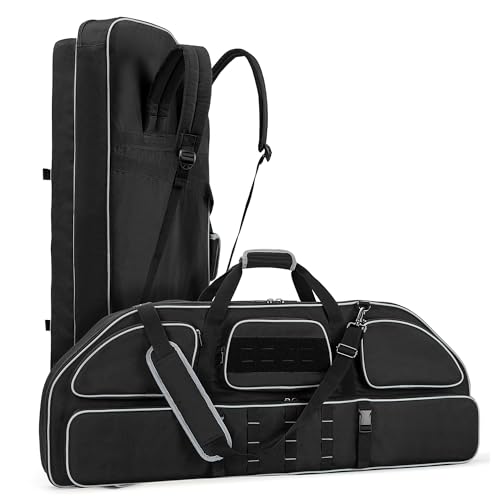
For a beginner compound that mostly drives to the range, this soft case looks like the most balanced pick in the group. The spec sheet lists padded cam slots, thick foam, an arrow pocket, and multiple carry options at $49.99. The downside is that it is still a soft bag, so it is not the right choice for flying or rough transport.
I like that it speaks directly to a compound setup, not a generic bow shape. That matters when cams and accessory clearance are the real fit problem.
Best hard case for a beginner compound: SKB Hard Protective Storage Case

This is the hard-shell option for a compound shooter who wants the strongest storage and travel protection in this group. Based on the listed features, the military-grade construction, hook-and-loop straps, mesh lid pockets, and compact fit for bows up to 41 inches are the draw. The drawback is obvious: at $304.99, it is a big step up in price.
If you fly, road-trip often, or simply want maximum protection for an expensive setup, this is the one that fits that job. If you only drive to a nearby range, it may be more case than you need.
Choose soft bow case if… / choose hard bow case if…
Choose a soft bow case if you drive to the local range, store the bow in a closet, want lower cost, and carry a recurve or a compact compound that fits with room to spare. Choose a hard bow case if you fly, take long road trips, want stronger crush protection, or keep a compound assembled with accessories mounted.
If your bow is fully assembled and the sight, rest, quiver, or stabilizer already crowd the edges, move toward hard case. If your setup is light, short, and easy to store, soft case is usually enough. That is the clean beginner rule.
Mistakes to avoid when buying your first bow case
The biggest mistake is buying on price before fit. A cheap case that crushes your sight or pinches a quiver costs more later than a better case bought once. The second mistake is assuming every beginner bow can live in the same bag. Recurve and compound setups behave very differently.
Ignoring cams, sights, long stabilizers, or quivers
Compound bows bring extra shape and extra stress points. Cams, long stabilizers, and quivers can push hard against a soft wall or foam cutout if the case is too shallow. Check those parts with the bow fully assembled, not after you remove half the gear.
Choosing a soft case for airline travel
This one is easy to fix. If the bow will fly, buy a hard, lockable case. A soft case may be fine for the range or a weekend drive, but it is the wrong tool for checked archery gear.
Forgetting storage at home and in the car
Beginners often forget where the case will live between shoots. If your trunk is small, a hard case may become annoying fast. If your garage is damp, you need a dry storage plan either way. The case should fit your home life as well as your bow.
Frequently asked questions
Should I buy a soft bow case or a hard bow case?
Buy a soft bow case if you mainly drive to the range, keep the bow at home, and want a lighter, cheaper option. Buy a hard bow case if you travel often, need stronger crush protection, or fly with the bow. The right pick follows your storage and transport routine, not the label.
Do I need a hard bow case for airline travel?
Yes. Hard, lockable cases are the correct choice for airline travel, and soft cases are not airline-safe for checked archery equipment. If you plan to fly even once with your bow, start with the hard case so you do not have to replace it later.
Will my bow fit with the sight and rest attached?
It should, but only if you measure it that way before buying. Check the bow with the sight, rest, quiver, and any stabilizer still installed. A case can be long enough for the bare bow and still be too tight once the accessories are on.
How much padding do I need in a bow case?
For soft cases, thicker padding is better because it helps absorb small bumps and keeps the finish from rubbing. For hard cases, dense foam matters because it helps with crush resistance and keeps the bow from shifting. If the foam feels thin or flimsy, I would keep shopping.
What should I look for in bow case storage pockets?
Look for pockets that actually hold what you carry: arrows, release aid, allen keys, wax, and spare nocks. Built-in arrow tubes or straps are useful if you want shafts separated from the bow. Loose pockets that swallow everything without keeping it organized are less helpful than they look.
Which case is better for a beginner on a budget?
A soft bow case is usually the budget pick because it costs less and is easier to carry and store. If you are not flying and your bow stays local, that is often enough. Spend the extra money on a hard case only when your travel or protection needs make it worth it.