Takedown Bow vs One-Piece Bow: Which Should You Buy?
Buy a Takedown Bow if you expect to change draw weight more than once, travel often, or want easy parts replacement; choose a One-Piece Bow if you want the simplest setup and will keep one draw weight. Picking the wrong type can mean extra cost, more hassle, or a bow that no longer fits your strength and shooting goals. This guide compares fit, weight changes, travel, maintenance, and cost so you can pick the right bow.
| Decision factor | Takedown Bow | One-Piece Bow | Winner |
|---|---|---|---|
| Transport and storage | Packs down smaller because the riser and limbs separate. | Harder to carry in a bag because it is one continuous bow. | Takedown Bow |
| Adjustability | You can change draw weight by swapping limbs; many ILF bows add mix-and-match flexibility. | Cannot swap limbs to change draw weight. | Takedown Bow |
| Simplicity | More separate parts to handle, inspect, and keep tight. | Fewer parts and fewer connection points. | One-Piece Bow |
| Long-term cost | Often cheaper to step up or down later by buying limbs instead of a whole new bow. | Changing weight usually means replacing the whole bow. | Takedown Bow |
| Maintenance checks | Limb bolts and limb pockets need periodic checking. | Fewer hardware checks because there are no detachable limbs. | One-Piece Bow |
What is the difference between a one-piece bow and a takedown bow?
A One-Piece Bow has a single continuous construction with no detachable limbs. A Takedown Bow uses a riser plus detachable limbs, so it breaks into smaller parts for storage, travel, and limb changes. The trade-off is direct: fewer parts versus more flexibility.
One-piece recurve
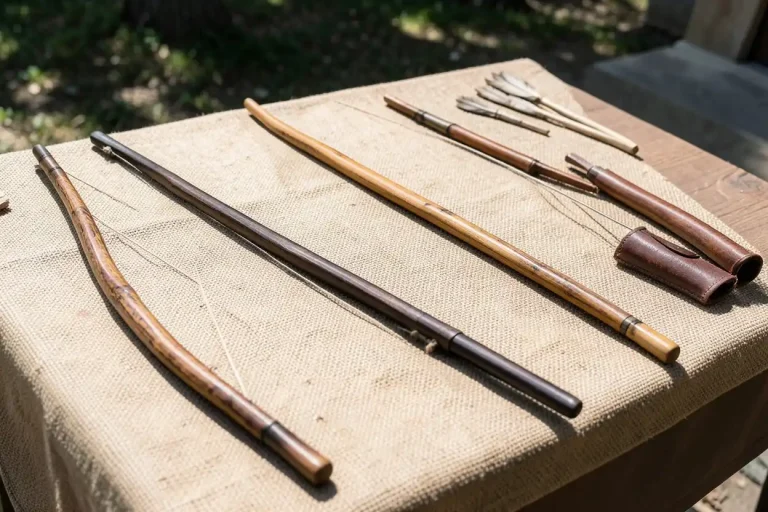
One-piece recurves are built from a single continuous piece of laminated wood or composite materials. That gives them fewer connection points to inspect, but also means you cannot swap limbs to change draw weight. If the draw weight no longer fits, the usual fix is buying a different bow.
Takedown recurve
Standard takedown recurves break into three pieces: a riser and two limbs. That makes them easier to pack and more adaptable over time, which is why they are common for beginners and hunters. The cost is added part handling, including bolt checks and limb pocket checks.
Where ILF fits
ILF stands for International Limb Fitting. It is a standardized limb and riser interface that lets many modern takedown bows mix and match limbs and risers, which adds upgrade and tuning flexibility. Not every takedown bow is ILF, so do not assume all limb systems work the same way.
Which bow should you buy?
This matrix frames the choice in practical ownership terms, such as how often the archer may change draw weight, how often the bow may need to travel, and how much maintenance checking they are willing to accept. Scores are commonly presented on a 1-to-5 scale, with 5 usually indicating the best fit for that profile.
| Buyer profile | Transport | Adjustability | Simplicity | Long-term cost | Maintenance checks | Recommendation |
|---|---|---|---|---|---|---|
| First-time adult | 4 | 5 | 3 | 4 | 3 | Takedown Bow |
| Hunting and travel | 5 | 4 | 3 | 4 | 3 | Takedown Bow |
| Backyard target | 2 | 2 | 5 | 3 | 5 | One-Piece Bow |
| Future upgrade-minded | 4 | 5 | 3 | 5 | 3 | Takedown Bow |
Say your first bow needs to cover a 25 to 35 lb starting range, and you are not sure what draw weight will feel right after a few months. A takedown gives more room to adjust later without replacing the whole bow, which makes the first purchase less risky.
Picture a hunter who flies with gear in a soft case and wants a bow that stores neatly in a vehicle. The takedown’s smaller pack size matters more than the one-piece’s cleaner build, because travel and storage are part of the daily use case.
First-time adult buyer
A takedown bow is usually the safer first purchase because it keeps the door open if draw weight turns out to be too light or too heavy. Many beginners are advised to start around 25 to 35 lb, and a takedown lets that choice stay flexible. That matters more than a small gain in simplicity.
Hunting and travel
A takedown bow usually fits this profile better because it packs down small and is easier to carry in a bag or case. It is also easier to manage if you want separate limbs for practice and hunting. A one-piece can still work, but transport burden is the weak point.
Backyard target
A one-piece bow makes sense when the bow will stay in one place, one draw weight is already chosen, and the shooter wants the fewest parts to inspect. That does not make it better for every target archer. It fits a fixed home setup better.
Future upgrade-minded archer
ILF takedown bows are the natural fit here because the riser and limb standard allows more mix-and-match options. That can reduce replacement cost later, since weight changes often mean buying limbs instead of a whole new bow. If upgrades are likely, the takedown path is easier to grow with.
How do draw weight, draw length, and bow length change the choice?
Draw weight is normally stated at 28 inches on many traditional recurves, but real draw weight changes with actual draw length. Longer draw lengths usually mean more actual poundage, and shorter bows stack sooner, so both fit and comfort can shift fast if the bow length is wrong. That is why the number on the limb is only a reference.
Why the 28-inch number is only a reference
Traditional recurve weight is normally stated at 28 inches. Real weight changes by roughly two to three pounds per inch of draw length, so a bow marked at one number can feel meaningfully different in use. That is one reason a lighter starting weight is safer for beginners.
How draw length changes feel
Longer draw lengths put more load on the bow and can make a short bow feel harsher. If the archer has a long draw, a longer bow often stays smoother through the shot cycle. A short bow may feel fine at first, then stack earlier than expected.
Why bow length matters
Bow length affects smoothness and stacking. Short bows stack sooner, which means resistance rises faster near full draw, while longer bows usually stay smoother for longer draws. That is a fit issue, not a style debate.
What matters more: transport or simplicity?
If the bow will travel often, the smaller pack size of a takedown matters more than the extra hardware. If the bow will live at home and never change weight, the one-piece’s simpler build can be easier to live with. The right answer follows use, not preference alone.
Pack length and storage
The takedown wins on storage because it breaks down into a smaller carry package. That matters for car trunks, gear bags, apartment storage, and airline cases. A one-piece is harder to carry in a bag because the bow remains one long object.
Part count and maintenance checks
A takedown has more separate parts to handle than a one-piece design. Limb bolts and limb pockets need periodic checking, and connection hardware can loosen. A one-piece removes most of that maintenance burden, which some archers will value more than portability.
When a one-piece is easier to live
One-piece bows are easier to live with when the draw weight will stay fixed, the bow will stay home, and the archer wants fewer things to inspect before shooting. That is especially true for someone who wants a bow that feels simple every time it comes off the rack.
Why ILF and limb changes matter
ILF matters because it separates the riser from the limbs and gives the owner more room to change setup later. Standard bolt-down takedowns still offer limb swaps, but ILF usually gives more mix-and-match freedom. That difference matters most when the archer expects to grow into a different draw weight.
Changing draw weight without replacing the whole bow
A takedown comparison table says you change weight by buying limbs, not a whole bow. That is a practical advantage for beginners and for archers who are still learning what poundage they can hold cleanly. A one-piece does not offer that same path.
Long-term cost
Long-term cost often favors a takedown if the archer expects change. Buying new limbs can be cheaper than buying an entirely new one-piece bow, especially when the riser still fits and the shooter still likes the grip, length, and handedness. That is where the ownership math starts to matter.
Which bow shoots better for your setup?
A takedown does not automatically shoot slower than a one-piece bow. Fit, brace height, draw length, string choice, and bow length do far more work than the label on the riser. A well-matched takedown can shoot very close to a one-piece, and poor setup can make either bow feel bad.
Speed, noise, and hand shock
Speed differences are usually small when the bows are matched in length, draw weight, and brace height. A 64-inch 50# @ 29-inch example was discussed as having no meaningful speed difference between one-piece and three-piece versions. Noise and hand shock are often more about fit and tuning than construction type.
Brace height and string material checks
Brace height is the distance from the string to the deepest part of the grip when strung. It must stay in the maker’s recommended range, and it is adjusted by twisting or untwisting the string. String material also matters because not every bow is compatible with fast-flight strings; the maker’s rating has to be followed.
Limb bolt and limb pocket checks
Takedown bows need periodic checks of limb bolts and limb pockets because connection hardware can loosen. If those parts are not checked, the bow can feel noisy, inconsistent, or unsafe. That maintenance does not affect every shot, but it does matter over time.
What should you check before buying?
Before buying, match handedness, draw weight, draw length, and string compatibility to the actual archer, not to a general label. A bow that fits the wrong hand, the wrong length, or the wrong string material can feel worse than it should. That failure case is common enough to avoid.
Handedness and eye dominance
Left-hand or right-hand recurve choice is tied to the arrow shelf side. It should match the shooting side, and eye dominance often helps decide which side is correct. Choosing the wrong handedness can make the bow awkward from the first draw.
Arrow match for the draw weight you will actually shoot
Draw weight affects arrow selection, and the arrow should match the poundage the archer will really hold at full draw, not just the label on the limb. If the arrows are too stiff or too weak, tuning gets harder and the bow may seem worse than it is. That issue is often blamed on the bow when the arrows are the real problem.
Recommended string material and maker limits
Check the maker’s limits on string material and string rating before buying. Some bows are not built for fast-flight type materials, so using the wrong string can create extra stress. The safest choice is the material the maker specifies, especially on a first bow.
Choose Takedown Bow if… / Choose One-Piece Bow if…
Choose Takedown Bow if you expect to change draw weight later, want a smaller carry package, or want easier replacement parts over time. It is also the better fit if you are still learning your draw weight and want a safer first purchase with room to grow.
Choose One-Piece Bow if you want the simplest setup, will keep one draw weight, and want fewer parts to inspect. It fits a fixed backyard or home setup best, especially when travel is rare and the archer values low maintenance more than future flexibility.

Frequently asked questions
Is a takedown recurve better for beginners?
For many beginners, yes. A takedown recurve is often the safer first buy because limb changes are simpler than replacing the whole bow, and many beginners are advised to start around 25 to 35 lb. That keeps the learning curve and the upgrade path more manageable.
Which bow is easier to travel with, one-piece or takedown?
A takedown bow is easier to travel with because it packs down small. A one-piece bow is harder to carry in a bag, which can matter for transport, storage, and airline cases. If travel is common, the takedown usually wins that part of the decision.
Does a takedown bow shoot slower than a one-piece bow?
Not in any simple or reliable way. Speed differences are usually small when the bows are matched for draw weight, bow length, brace height, and string setup. Fit and tuning matter more than whether the bow is one-piece or takedown.
Can I change draw weight later with a takedown bow?
Yes. That is one of the main reasons to buy one. On a takedown bow, you change weight by buying limbs, not a whole bow. ILF systems add even more flexibility because risers and limbs can often be mixed within the same standard.
What should I check before buying a traditional recurve bow?
Check handedness, draw weight, draw length, bow length, brace height range, and string compatibility. Also make sure any takedown limbs, limb bolts, and limb pockets are part of a system you are willing to check periodically. Those details decide fit more than the style name on the riser.