Waterproof Boots vs Insulated Boots for Bowhunting
Waterproofing matters more when the approach is wet. Insulation matters more for long, motionless cold. Choose the boot that fits the first problem your hunt creates. Pick wrong and feet get damp, cold, or both, and cold feet end a sit fast. This guide compares both boot types, explains when each wins, and gives a simple decision rule for bowhunters.
Waterproof boots vs insulated boots at a glance
| Decision factor | Waterproof Boots | Insulated Boots | Winner |
|---|---|---|---|
| Wet ground, slush, puddles, wet snow | Built for external moisture control | Can still wet out if the upper is not waterproof | Waterproof Boots |
| Long sits in dry cold | Dryness helps, but warmth is limited | Heat retention is the main job | Insulated Boots |
| Long hikes and active stalking | Usually cooler and less likely to overheat | Higher sweat risk, especially at 400g to 600g+ | Waterproof Boots |
| Odor control in wet conditions | Rubber versions help trap odor | Insulation does not solve odor by itself | Waterproof Boots |
| Late-season stand warmth | Needs sock help and good fit | Better when the feet will stay still for hours | Insulated Boots |
| Repairability and lifespan options | Depends on material and construction | Depends on material and construction | Tie |
Wet access wins when the trail is the problem
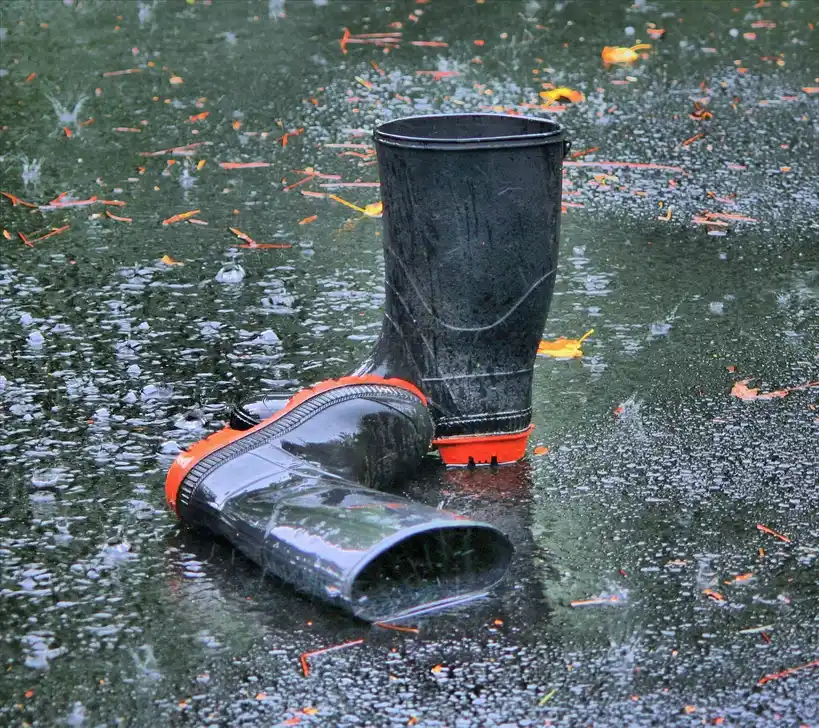
Waterproof boots matter most when the route to the stand crosses dew, slush, puddles, boggy edges, or wet snow. A waterproof membrane blocks outside moisture, but it works best with sealed or taped seams; otherwise water can enter through stitch lines before the membrane ever matters.
Cold stillness wins when the sit is the problem
Insulated boots matter most when the hunt becomes motionless. Typical winter boots are often marketed from 200g to 600g+ of insulation, and more grams can help in dry cold, but they can overheat a hunter who walks hard before settling in. Wet feet can cool much faster than dry feet, so insulation cannot rescue soggy socks.
Why bowhunting changes the decision
Bowhunters do not spend all day in one mode. They hike in, slow down, climb, stand still, and often do it in low light with scent control in mind. That means the right boot is not the warmest one on the shelf; it is the one that handles the first thing that will go wrong on that hunt.
Boot decision matrix

Use this as a scenario check, not a shopping slogan. Match the boot to temperature, exertion, and how long the feet will sit still.
| Scenario | Waterproofing level | Insulation range | Sock setup | Fit tip | Failure mode to avoid |
|---|---|---|---|---|---|
| Treestand sit-only hunts | High; waterproof membrane or rubber upper | 400g to 600g+ | Merino wool with a cushion sock if room allows | Size up half to full size for circulation | Tight boots that compress insulation and pinch toes |
| Cold morning hikes | High, but breathable enough for the walk | 200g to 400g | Merino liner plus midweight sock | Leave toe room so heat can move and sweat can vent | Over-insulated boots that trap sweat before the sit |
| Wet marsh edges | Very high; rubber or sealed membrane boots | 200g to 400g | Moisture-wicking merino with one cushion layer | Check ankle hold for uneven ground | Seam leaks and wet socks from shallow water |
| Snow hunts | High; waterproofing plus seam control | 400g to 600g+ | Heavy merino sock system | Make sure the boot still flexes with layers | Cold-soak from packed snow melting into the boot |
| All-day spot-and-stalk | High, but with breathability prioritized | 200g or less, sometimes uninsulated | Thin merino liner plus medium sock | Use enough room to avoid hot spots on descents | Sweat buildup on climbs that chills later |
| Mixed walk-in and stand hunts | High | 200g to 400g | Merino liner plus cushion sock | Size for the stand phase, not the driveway | Boots that feel fine walking but go cold at the tree |
Do you need waterproof boots for bowhunting?
Yes when wet ground is the main risk. For treestand access, marsh edges, slush, and wet leaves, waterproofing matters more than extra insulation because moisture reaches feet fast and wet feet lose heat quickly. For dry cold with no wet crossing, waterproofing still helps, but it is not the only priority.
How membranes and seams work
A waterproof membrane such as GORE-TEX is a semi-permeable barrier, so it blocks external moisture while still trying to move vapor out. That tradeoff is useful, but the membrane is only part of the system; seams must be sealed or taped, or water can enter where stitching and panels meet.
Where rubber boots fit best
Rubber hunting boots are a strong choice for wet hunts because they repel water and can help keep boot interiors from holding scent, which matters on wet access routes and in whitetail cover. They are not a guarantee against human odor overall. The downside is bulk and less comfort on rough terrain, so they fit best where wetness is the bigger threat than miles of side-hilling.
Say your access route crosses a ditch, a muddy log, and frosted grass before daylight. A waterproof boot with sealed seams is the practical answer, because a dry foot at the stand is worth more than extra warmth left unused during the walk.
How many grams of insulation do you need?
Many bowhunters start at about 200g to 400g for active hunts and move up to about 400g to 600g+ for cold, still hunts. More insulation helps in dry cold, but it also raises sweat risk on climbs, long walks, and spot-and-stalk setups. The right number depends on how much of the hunt is spent moving versus sitting.
200g to 400g for active hunts
This range fits cold morning hikes, mixed walk-in and stand hunts, and many all-day stalks. It gives some heat retention without turning every climb into a sweat event. For bowhunters who cover ground before settling in, this range usually balances warmth and moisture control better than heavy insulation.
400g to 600g+ for cold, still hunts
This range suits treestand sit-only hunts, snow hunts, and long late-season sits where movement is minimal. Some boots are marketed for severe cold, but those labels are not a dependable real-world warmth benchmark. Even then, the boot still needs room for socks and circulation, or the insulation loses effectiveness.
When uninsulated boots plus socks make more sense
Uninsulated waterproof boots can work when the walk is long or the terrain is demanding and the hunter plans to add warmth with socks. That only works if the boot has enough room for a liner sock plus a cushion sock without compressing the foot. Tight boots cut off circulation and can make even good insulation feel weak.
Boot materials and construction
Material choice affects wetness control, weight, break-in, odor, and durability. Construction affects repairability, traction, and how the boot holds together after hard use.
Leather boots
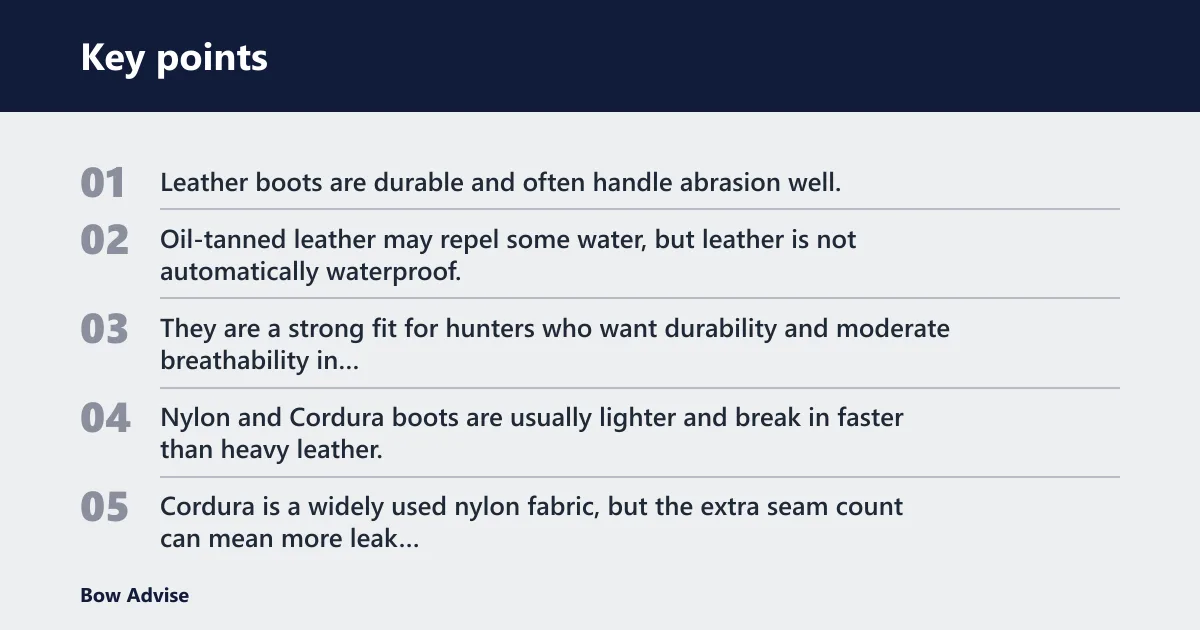
Leather boots are durable and often handle abrasion well. Oil-tanned leather may repel some water, but leather is not automatically waterproof, so many models still need treatment or a membrane for full wet protection. They are a strong fit for hunters who want durability and moderate breathability in variable terrain.
Nylon and Cordura boots
Nylon and Cordura boots are usually lighter and break in faster than heavy leather. Cordura is a widely used nylon fabric, but the extra seam count can mean more leak points and less abrasion protection than tougher leather uppers. They are useful when mobility matters more than maximum wet resistance.
Rubber hunting boots
Rubber boots usually offer the highest resistance to outside moisture and can help with odor management inside the boot, which matters on wet access routes and in whitetail cover. They are not automatically warmer, because warmth depends more on the insulation package, liner, fit, and activity level than on rubber alone. Use them where damp ground is the main enemy.
Goodyear welt versus cement construction
Goodyear welt boots are known for repairable construction, and traction and lateral stability depend mainly on the outsole, last, and overall boot design. Cement construction is usually lighter and less expensive to make, but if the bond fails the outsole can pull loose and the boot is harder to repair. For hard use, construction matters as much as the upper.
Should you size up for winter boots?
Yes. Winter hunting boots should usually be sized up a half to a full size so thicker socks fit without squeezing the foot. That extra room protects circulation and keeps insulation from being compressed, which matters more in a stand than on a short walk.
Half-size versus full-size adjustments
A half size up often works for hunters adding a single warm sock system to an otherwise familiar boot shape. A full size up may be better for heavy insulation, thick socks, or hunts where feet will stay motionless for hours. The goal is space without slop.
Sock room and circulation
Merino wool is the best starting point because it keeps working when conditions turn damp. A liner sock plus a cushion sock can add warmth without changing the boot, but only if the boot leaves enough toe room. If toes feel pinched at the truck, they will feel worse two hours into a sit.
How tight boots can cancel insulation
Insulation works by trapping warm air. If the boot is too tight, that air space disappears and circulation drops, which can make even a heavily insulated boot feel cold. A common first-timer mistake is buying a thicker boot and keeping the same size, then blaming the insulation when the real problem is compression.
Choose Waterproof Boots if… / Choose Insulated Boots if…
Choose Waterproof Boots if your hunt starts with wet ground, slush, puddles, marsh edges, or a long walk that will make you sweat before you ever sit still. Choose Insulated Boots if the main problem is standing motionless in dry cold, especially on treestand sits where warmth matters more than breathability.
For many bowhunters, the right answer is both features in balance, not one feature to the maximum. A mixed hunt often calls for waterproof protection with moderate insulation, plus socks and fit that preserve circulation. The better boot is the one that solves the first problem your hunt creates.
Picture a late-season morning where the trail is frosted, the creek crossing is wet, and the stand is a three-hour sit. If the walk is short, a heavier insulated waterproof boot makes sense. If the walk is long and steep, a lighter waterproof boot with 200g to 400g and better socks may keep feet drier by preventing sweat in the first place.
Frequently asked questions
Are waterproof boots or insulated boots better for bowhunting?
Neither wins every hunt. Waterproof boots are better when wet ground is the main problem, while insulated boots are better for long, still sits in dry cold. Bowhunters should match the boot to the first issue they will face: wet access, standing cold, or sweat from the walk in.
Do I need waterproof boots for treestand hunting?
Usually yes, if the walk to the stand crosses dew, wet leaves, slush, or snow. Treestand hunting often means standing still for long periods, so a dry foot matters a lot. Waterproofing also helps when the site requires quiet entry through damp ground before daylight.
How many grams of insulation do I need for late-season bowhunting?
For active late-season hunts, 200g to 400g often makes sense. For long treestand sits or snow hunts, 400g to 600g+ is the more practical range. The key is to balance warmth with sweat control, since a sweaty foot cools much faster once movement stops.
Can I wear uninsulated waterproof boots with warm socks?
Yes, if the boot has enough room for the socks without squeezing the foot. That setup works best on active hunts or on days when the walk is longer than the sit. Merino wool helps, and a liner plus cushion sock can add warmth without changing boots.
Are rubber boots good for bowhunting in wet conditions?
Yes. Rubber boots are commonly favored for wet hunting because they repel water and can help keep boot interiors from holding scent. They are especially useful for whitetail hunting in marshes, creek bottoms, and muddy access routes. The tradeoff is that they can feel bulky on rough terrain or long climbs.
Should bowhunters size up for winter boots?
Yes, usually by a half to a full size. That leaves room for thicker socks and helps protect circulation, which is critical when sitting still. If the boot is too tight, the insulation gets compressed and the toes lose warmth faster.