Best Budget Quivers for Beginners (2026): We Compared
The best budget quiver for most beginners is the Easton Flipside 2-Tube Hip Quiver because it keeps arrows easy to reach, fits right- or left-hand shooters, and stays simple enough for first-time practice. The wrong style slows arrow access, snags gear, and makes practice more frustrating than it should be. This guide ranks budget options by fit, arrow access, and use case for target practice, lessons, and bowhunting.
Quick comparison
| Product | Badge | Best for | Price | ||
|---|---|---|---|---|---|
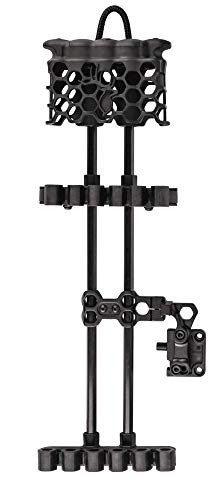 | Trophy Ridge Hex Light Archery Arrow Quiver, BlackTrophy Ridge | Our pick | Black · LED · bow quiver | $74.03 Price as of 11 Nov 2026 | View |
 | Legend SF4 Field QuiverLegend | Budget pick | Purple · 3-tube · hip quiver | $19.99 Price as of 11 Nov 2026 | View |
 | Easton Flipside 2-Tube Hip Quiver for Right and Left-HandEaston | Also great | Black · reversible · 2-tube hip quiver | $20.15 Price as of 11 Nov 2026 | View |
 | October Mountain Products No-Spill Hip & Back Tube QuiverOctober Mountain Products | Pair with it | Black · no-spill · hip/back tube quiver | $25.72 Price as of 11 Nov 2026 | View |
This comparison is built for first-time buyers, so it focuses on the problem each quiver style solves best. Entry-level field quivers usually cost $15 to $40, and budget models often use nylon or leather.
How we chose
The picks below are limited to quivers that fit a beginner’s first six months of shooting better than a specialty setup. The main filters were price, arrow access, carry style, bow compatibility, and whether the design avoids common beginner annoyances like rattle and awkward retrieval.
Also keep the list practical. That means each pick solves a different beginner problem: simple hip carry, reversible fit, back carry, or a bow-mounted setup for archers who start with hunting gear.
| Quiver type | Price | Noise | Ease of use | Bow compatibility | Arrow access |
|---|---|---|---|---|---|
| Hip quiver | 5 | 4 | 5 | 3 | 5 |
| Back quiver | 4 | 3 | 3 | 5 | 3 |
| Bow-mounted quiver | 2 | 4 | 4 | 5 | 4 |
One-line beginner recommendations: recurve beginners should start with a hip quiver; compound beginners who expect to hunt should start with a bow-mounted quiver; target-only beginners usually do best with a hip quiver that stays light and keeps arrows easy to grab.
Quick picks
| Best for | Pick | Why it fits | Price |
|---|---|---|---|
| Most beginners | Easton Flipside 2-Tube Hip Quiver | Reversible for right- or left-hand shooters, with two molded tubes and a secure belt clip | $20.15 |
| Budget field shooting | Legend SF4 Field Quiver | Three tubes, adjustable belt, and light carry for practice days | $19.99 |
| Back carry and mixed use | October Mountain Products No-Spill Hip & Back Tube Quiver | Detachable shoulder strap plus reversible carry options | $25.72 |
| Bow-mounted hunting start | Trophy Ridge Hex Light Archery Arrow Quiver | Low-profile mount, quick attachment, and soft-touch hood | $74.03 |
What is a quiver?
An archery quiver is the holder that keeps arrows organized, protected, and ready to draw. Beginners need one because loose arrows slow practice, scrape against gear, and are easy to drop. A good quiver also matches how the archer stands, walks, and reaches for arrows.
What an archery quiver does
A quiver stores arrows in a fixed place instead of letting them roll around in a bag or lean against the ground. That matters in lessons and practice sessions, where repeated arrow retrieval should be simple and safe.
Why beginners need secure arrow storage
Secure storage matters more than style at the start. A beginner usually needs a quiver that stops arrow tips from knocking together, keeps fletching from catching on straps, and holds up while moving between ends on a target line.
How quiver style changes arrow access
Hip quivers give the fastest access because the arrows sit at the waist. Back quivers free the hands and stay out of the way, but reaching for an arrow takes more motion. Bow-mounted quivers keep arrows attached to the bow, which is handy for hunting but less convenient for some target routines.
Budget quiver decision table
Use this if you are choosing by problem, not by brand. A higher score means the style does that job better for a beginner.
| Problem the beginner wants solved | Hip quiver | Back quiver | Bow-mounted quiver |
|---|---|---|---|
| Lowest entry price | 5 | 4 | 2 |
| Least noise in use | 4 | 3 | 4 |
| Easiest for first-time use | 5 | 3 | 4 |
| Works with more bow setups | 3 | 5 | 5 |
| Fastest arrow access | 5 | 3 | 4 |
How much should a beginner spend?
Most beginners should expect to spend about $15 to $40 for a basic archery quiver. That range usually gets a usable field quiver with simple materials, decent carry comfort, and enough durability for target practice and light field work.
Typical beginner price bands
At the low end, a budget quiver should cover storage and basic comfort without pretending to be a long-term premium rig. Around the middle of the range, buyers usually get better straps, cleaner arrow separation, and less fuss during draw practice.
Where cheap quivers cut corners
The most common tradeoffs are strap fatigue, arrow rattle, thin fabric, and weak tube or hood parts. Some budget quivers also loosen at the belt clip or wear out at the bottom first, especially if they are stuffed with arrows and bounced around in transit.
When spending a little more makes sense
Spend more if the quiver must do two jobs, such as target practice and hunting. It also makes sense to spend more when a quiet hood, a quick-detach system, or a bow-specific mount is needed from the start.
A common first-timer mistake is buying the cheapest possible quiver for a compound bow with hunting plans, then finding out that the grippers are loose and the hood rattles when the bow moves. That is when a higher-priced mounted option starts to look cheaper than replacing a bad one.
Back quiver vs hip quiver
A hip quiver is usually the better beginner choice because it keeps arrows in view and easy to grab. A back quiver can work well for walking, field shooting, or a traditional look, but many beginners find the retrieval motion less natural at first.
Shoulder carry and mobility
Back quivers ride on the shoulder and keep the waist clear. That helps when walking between targets or moving through brush. Hip quivers sit at the belt and stay more stable for line practice, but they can bump against a stool, chair, or pack belt.
Arrow access speed
Hip carry wins on speed. The archer reaches down, takes an arrow, and returns to the shooting line without much movement. Back carry takes more rotation and reach, which can feel awkward for smaller beginners or anyone still learning repeatable form.
Best use cases for practice and field shooting
For backyard practice and lessons, a hip quiver is usually the simpler start. For field shooting or longer walks, a back quiver can feel lighter on the body. In both cases, the key is whether the strap stays put and the arrows do not slap or rattle.
Suppose a 5-foot-2 beginner is shooting at a 10-yard backyard target and keeps missing the first clean grab because the quiver rides too high on the back. A hip quiver fixes that problem faster than a change in arrow count or pocket layout.
Back quiver: best for walking practice
The October Mountain Products No-Spill Hip & Back Tube Quiver is the best fit when a beginner wants shoulder carry and the option to switch carry styles later. The detachable shoulder strap gives more ways to wear it, and the reversible design works for right- or left-hand archers.
This is a good choice for practice and field shooting, especially if the archer wants less weight on the belt and does not mind a slower draw than a hip quiver. The main drawback is that back-style access is still less natural for many beginners, so it can feel clumsy at first.
Legend SF4 Field Quiver: best for budget practice
The Legend SF4 Field Quiver suits a beginner who wants simple hip carry, a low price, and a light feel on the line. Three tubes help organize arrows, and the adjustable belt supports a more comfortable fit for practice sessions.
This quiver works well for target shooting and casual field rounds. The tradeoff is that it is still a budget field quiver, so buyers should check for tube stiffness and belt comfort over time, especially if the quiver gets loaded and unloaded often.
Easton Flipside 2-Tube Hip Quiver: best for most beginners
The Easton Flipside 2-Tube Hip Quiver is the easiest all-around recommendation for a first quiver. It is reversible for right- or left-hand shooters, uses two molded tubes to organize arrows, and has a secure belt clip that helps the quiver stay stable.
This is the cleanest fit for most beginner target shooters because the setup stays simple and the price is still close to the entry-level range. The drawback is obvious: two tubes mean less organization than a three-tube field quiver, so archers who want more separation may prefer a larger hip model.
Trophy Ridge Hex Light Archery Arrow quiver: best for bow-mounted use
The Trophy Ridge Hex Light Archery Arrow Quiver is the best budget-leaning pick for beginners who want a bow-mounted setup from the start. It uses a Picatinny mount, has a soft-touch hood, and offers quick attachment with a low-profile fit.
This is the strongest choice for compound or hunting-focused beginners who want arrows on the bow instead of on the belt. The drawback is price: at $74.03, it sits well above the usual $15 to $40 beginner field-quiver range, so it makes sense only when that mounted setup is the real goal.
Bow-mounted quivers for beginners
A bow-mounted quiver is usually better than a back quiver for beginners who plan to hunt. It keeps arrows attached to the bow, which reduces extra motion in the field. It is less attractive for pure target practice because it adds weight to the bow and can change balance.
Compatibility with recurve and compound bows
Not every mounted quiver fits every bow. The mount type must match the bow, and the buyer should confirm compatibility before ordering. The Trophy Ridge model here uses a Picatinny mount, so it fits the setup that matches that rail system.
Quiet hood and arrow grippers
A quiet hood matters because loose foam and noisy grippers become obvious when a bow moves. Budget quivers can wear out in the hood first, and grippers may loosen over time, so beginner hunters should treat those parts as wear items rather than lifetime pieces.
Weight on the bow and quick-detach features
Bow-mounted quivers add weight where the bow is held and drawn. That can help or hurt depending on the archer’s setup. Quick-detach mounts are useful when the shooter wants to remove the quiver for target sessions and reinstall it for hunting practice.
Budget quiver fit features
Fit is where many cheap quivers fail. The best budget quiver is not the one with the flashiest shape; it is the one with straps that stay put, arrows that do not rattle, and storage that still works after repeated use.
Adjustable and padded straps
Adjustable straps matter because beginner bodies, jackets, and shooting stances are not the same size. Padded straps help when the quiver is worn for a full practice block. One budget back-and-hip quiver uses adjustable straps from 15 to 34 inches, which is the kind of range that helps new shooters fit the carry style more easily.
Reinforced bottom and foldable storage
A reinforced bottom helps the quiver keep its shape when arrows are put in and pulled out often. One budget quiver includes a reinforced safety bottom, which is useful because the lower section usually sees the most wear. Foldable storage matters too, since compact storage makes transport easier when the quiver is not in use.
Quick-release straps and belt attachment
Quick-release straps are useful for beginners who swap between practice and transport often. A belt clip or belt attachment should hold the quiver still without digging into the side. That matters for shorter archers, who can struggle more with a belt setup that sits too low or swings too much.
How many arrows should a beginner quiver hold?
For most beginners, a quiver should hold enough arrows for a normal practice round without becoming bulky. A budget quiver can fit up to 30 arrows, but that number is more capacity than most first-time shooters need. A smaller, cleaner carry usually works better for lessons and backyard sessions.
What matters is the arrow count the archer actually uses between walks to the target. For target-only shooting, a modest capacity is usually enough. For field practice or hunting preparation, a little more space can help if broadheads, practice points, and spare arrows need separate slots.
Which one should you buy?
Choose the hip quiver first unless the bow or the hunting plan says otherwise. The best budget quiver for most beginners is the Easton Flipside 2-Tube Hip Quiver because it keeps access simple, works for both hands, and costs close to the low end of the beginner range.
Best choice for recurve beginners
Recurve beginners should usually buy a hip quiver, and the Easton Flipside is the safest pick here. A recurve setup benefits from easy arrow access and less body motion, especially when the shooter is still learning anchor, stance, and draw sequence.
Best choice for compound beginners
Compound beginners who plan to hunt should move toward the Trophy Ridge Hex Light Archery Arrow Quiver. The bow-mounted format keeps the arrows on the bow, which lines up better with field use than a shoulder or waist carry setup.
Best choice for target-only beginners
Target-only beginners should start with the Legend SF4 Field Quiver or the Easton Flipside, depending on whether they want three-tube organization or simpler two-tube carry. Both are easier to live with than a back quiver when the main goal is steady range practice.
Best choice for mixed practice and hunting
For mixed practice and hunting, the October Mountain Products No-Spill Hip & Back Tube Quiver gives the most flexibility among the budget picks here. If the bow is already set up for hunting and the shooter wants a mounted option, the Trophy Ridge is the better answer.
Say a beginner shoots targets on Saturday and wants a first hunting season later in the year. In that case, a hip quiver makes the practice months easier, and a bow-mounted quiver becomes worth the money only when the hunting setup is actually ready.
Frequently asked questions
What is an archery quiver?
An archery quiver is a holder for arrows. It keeps them secure, easier to carry, and faster to reach during shooting. Beginners need one because loose arrows are awkward, noisy, and more likely to get damaged or dropped between shots.
What is the best budget quiver for a beginner archer?
The Easton Flipside 2-Tube Hip Quiver is the best budget quiver for most beginner archers. It is simple, reversible, stable on a belt, and priced close to the entry-level range. That makes it a strong first pick for target practice and lessons.
How much should a beginner spend on a quiver?
Most beginners should expect to spend $15 to $40 for a basic field quiver. Spending more can make sense if the archer needs a bow-mounted setup, a quieter hood, or a more specialized carry style. Entry-level budget models often use nylon or leather.
Should I get a back quiver or a hip quiver as a beginner?
A hip quiver is usually easier for beginners because arrow access is faster and the motion is more natural. A back quiver is better for shoulder carry and walking, but it can feel awkward when the shooter is still learning repeatable form and clean arrow retrieval.
What features matter most in a cheap quiver?
Adjustable straps, a stable belt clip or mount, quiet arrow contact points, and a reinforced bottom matter most. Beginners should also look for quick-release straps or foldable storage if they will pack the quiver often. Loose grippers and rattling are common weak points.
Is a bow-mounted quiver better than a back quiver for beginners?
For hunting-focused beginners, yes, usually. A bow-mounted quiver keeps arrows on the bow and fits the field use case better. For target-only beginners, a back quiver is usually less practical than a hip quiver because access is slower and less intuitive.
Can one quiver work for both target practice and hunting?
Yes, but only if the quiver has the right fit and noise control. A reversible hip quiver can work for both practice and light field use, while a bow-mounted quiver is better when hunting is the main goal. Loud hoods and loose grippers are poor fits for hunting.