How Team Archery Competitions Work in Club and League Events
Team archery matches are run under different formats, and the number of archers, arrows per end, and scoring method can vary by event and rulebook. Missed check-in, lineup errors, or scoring mistakes can affect the result under the applicable rules. This guide covers roster check-in, match flow, rotation, scoring, and how standings are decided.
Team archery competition basics
Team archery is scored as a group event, but each arrow still belongs to one archer. A team total comes from individual shots in each end, then adds up across the round or match. Roles matter because the team needs order, scorekeeping, and one clear caller for timing and line control. Different formats, including set-system team matches, cumulative-score leagues, indoor rounds, and outdoor target team events, can handle those pieces differently.
What a team score means
A team score is the sum of all valid arrows shot by the team under the event rules. In many club and league formats, the team shoots a set number of ends, and each archer contributes arrows in rotation. In other recognized formats, each archer may shoot more than one arrow in an end. If the event uses a 10-ring target face, each arrow can score from the center outward based on where it lands.
That means a team can lose ground from one bad end, not just one bad arrow. A single missed arrow, a late shot, or an arrow that is not recorded correctly can change the final total.
Common team roles before the first end
Most teams assign a captain, one scorer, and an anchor shooter who helps keep the order steady. A coach or caller may stand with the group in youth or club settings to manage timing and remind archers of the shooting order. In larger events, the range safety officer controls the line and enforces the rules, while the team or event format may determine the shooting order.
Team roles keep the line orderly. They also cut down disputes when an arrow is doubtful, an archer is late to the line, or a scorecard does not match the target face.
How do team archery matches start?
Team archery matches start with roster check-in, equipment check, and lane or target assignment. The team captain usually confirms who is shooting, who is scoring, and who is watching timing. After that, the range safety officer opens the line.
Roster check-in and lane assignment
Teams should check in before the line opens. The roster is matched to the event record, and each shooter is placed on a lane, target, or shooting position. If one archer is absent, some events allow a substitute if the rules permit it; others treat the team as short-handed and score only the arrows that are actually shot.
Lane assignment matters because arrows must be counted on the correct target face. A scoring error often starts here, especially when several teams shoot side by side.
Captain, scorer, and coach duties
The captain confirms the shooting order and keeps the team ready. The scorer writes down arrow values after each end and checks that every arrow is marked before the next end begins. The coach or caller keeps the group moving, but should not interfere with the shooting line once the range safety officer has taken control.
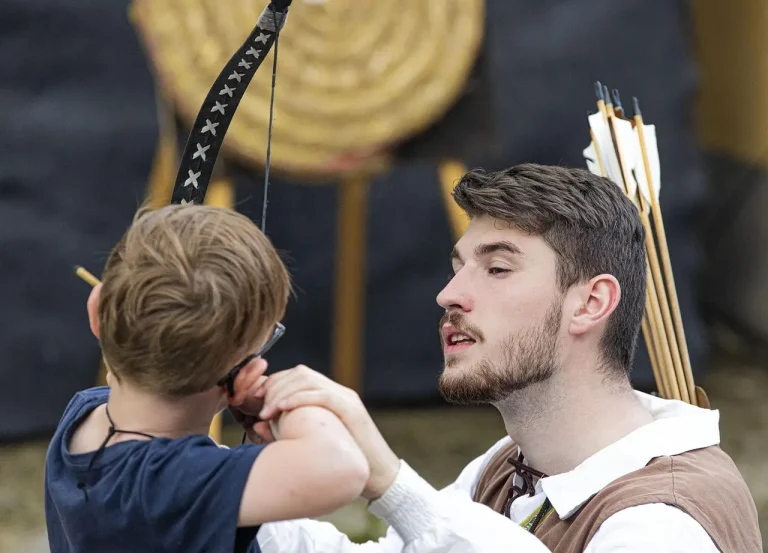
In youth archery programs, adults often handle supervision and line reminders.
Range safety officer control
The range safety officer controls line entry, line exit, and any stoppage. That person can stop shooting if someone moves forward early, turns with an arrow, or ignores a command. A club or league may remove people from firing lines for safety reasons, and safety concerns can include not acting safely and not listening.
For a first-time team event, this is the part parents should watch closely. Safety compliance is not optional, and a safe line is part of match scoring because an unsafe end may be stopped or ruled invalid.
Club event flow
Club events usually begin as practice matches, then move into scored ends once the group is ready. The schedule is often local and repeatable, so a team can learn rotation, scorecard use, and line rules before entering a formal league fixture. Club settings also tend to be more flexible about instruction and beginner equipment.
Practice match setup
A practice match in an archery club often starts with warm-up ends and simple scoring. Shooters learn where to stand, when to step to the line, and how to wait for the command to shoot. The event may still use team totals, but the score is often treated as training first and ranking second.
This step-by-step move matters. A club can take a beginner from blank-bale shooting to target faces, then to short scored ends, then to a full team match.
Supervision and beginner support
Youth archery programs often introduce school-age archers to shooting sports with adult supervision and beginner equipment support. They may provide all required equipment for beginners and allow participants to use their own equipment if approved by program officers.
That model is common in youth archery programs. Beginners can join without buying a full setup first, which makes early team participation much easier.
Moving from practice ends to scored ends
Club archery teams often start with untimed practice ends, then add a scorekeeper, end limits, and a fixed shooting order. Once the team can keep arrows in order and report scores cleanly, the group can treat the same session as a match rehearsal. Some clubs use local membership or registration forms before a shooter can join a scored round.
How do league fixtures work?
League fixtures are scheduled matches that contribute to a season table. Unlike a one-off club practice, a league team usually needs a roster on file, a match result reported after the round, and a standing recorded for the season. Away events can also mean travel, equipment loading, and tighter timing on arrival.
Scheduled matches and season standings
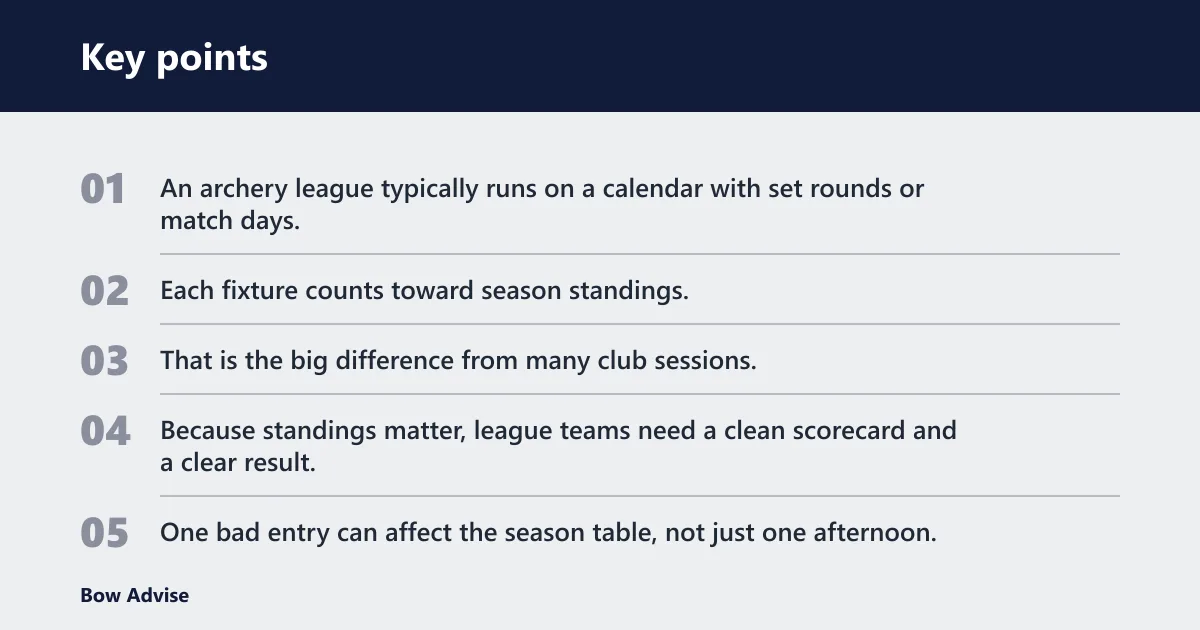
An archery league typically runs on a calendar with set rounds or match days. Each fixture counts toward season standings, so a team score affects position in the league table. That is the big difference from many club sessions, where the score may be recorded for practice but not used in a season ranking.
Because standings matter, league teams need a clean scorecard and a clear result. One bad entry can affect the season table, not just one afternoon.
Roster requirements and score reporting
League rules often require a named roster before the fixture starts. Some leagues limit who can shoot, require a minimum number of archers for a full team, or allow a substitute only under certain conditions. After the match, the score is reported to the league organizer, who updates the season record.
If the team shoots out of order or uses an unlisted archer, the penalty can range from a point loss to an incomplete result, depending on the rulebook.
Travel, away events, and logbook details
League fixtures may be home or away. Away events add check-in time, travel gear, and extra care with bow cases, arrows, and score sheets. Captains should bring a roster copy, a pen, spare nocking points or field tips if allowed, and any logbook or score form the league requires.
Picture a youth league team arriving late because traffic slowed the van. The captain still needs to check in before the line opens; if the roster is incomplete, the team may lose the option to count a missing shooter’s arrows.
Team match walkthrough table
| Phase | Who acts | What happens | Score impact | Common mistakes |
|---|---|---|---|---|
| Check-in | Captain, scorer, range safety officer | Roster is confirmed, target or lane is assigned, equipment is checked | None yet, but only approved shooters count later | Wrong roster, late arrival, missing equipment |
| Line setup | Range safety officer | The line opens and the shooting order is confirmed | None yet | Stepping forward early, talking over commands |
| First end | Each archer | One arrow per archer is shot in order | Team total starts with valid arrow values | Out-of-order shooting, late shot after the whistle |
| Scoring | Scorer, sometimes captain | Arrow values are read from the target face and written down | End total is added to the match score | Recording the wrong ring, forgetting an arrow |
| Next end | Team and range safety officer | Arrows are pulled, the line resets, and the next end begins | Running total grows end by end | Leaving an arrow uncounted, pulling too early |
| Tie or dispute | Officials or range staff | Card is checked, tie rules or a shoot-off may be used | Can change the final result | Arguing before the arrow is confirmed, using the wrong tie rule |
How are team scores and ties decided?
Team scores are decided by adding arrow values end by end until the round is complete. Ties are usually handled by the event’s tie rule, which may count inner rings, compare the last end, or call for a shoot-off. Different disciplines and governing bodies, including World Archery, USA Archery, Archery GB, and NFAA, can publish different tie procedures, so readers should check the rulebook for the format they are entering. If an arrow is missing or late, the score sheet must follow the stated rule, not a guess.
Ends, rounds, and scoring rings
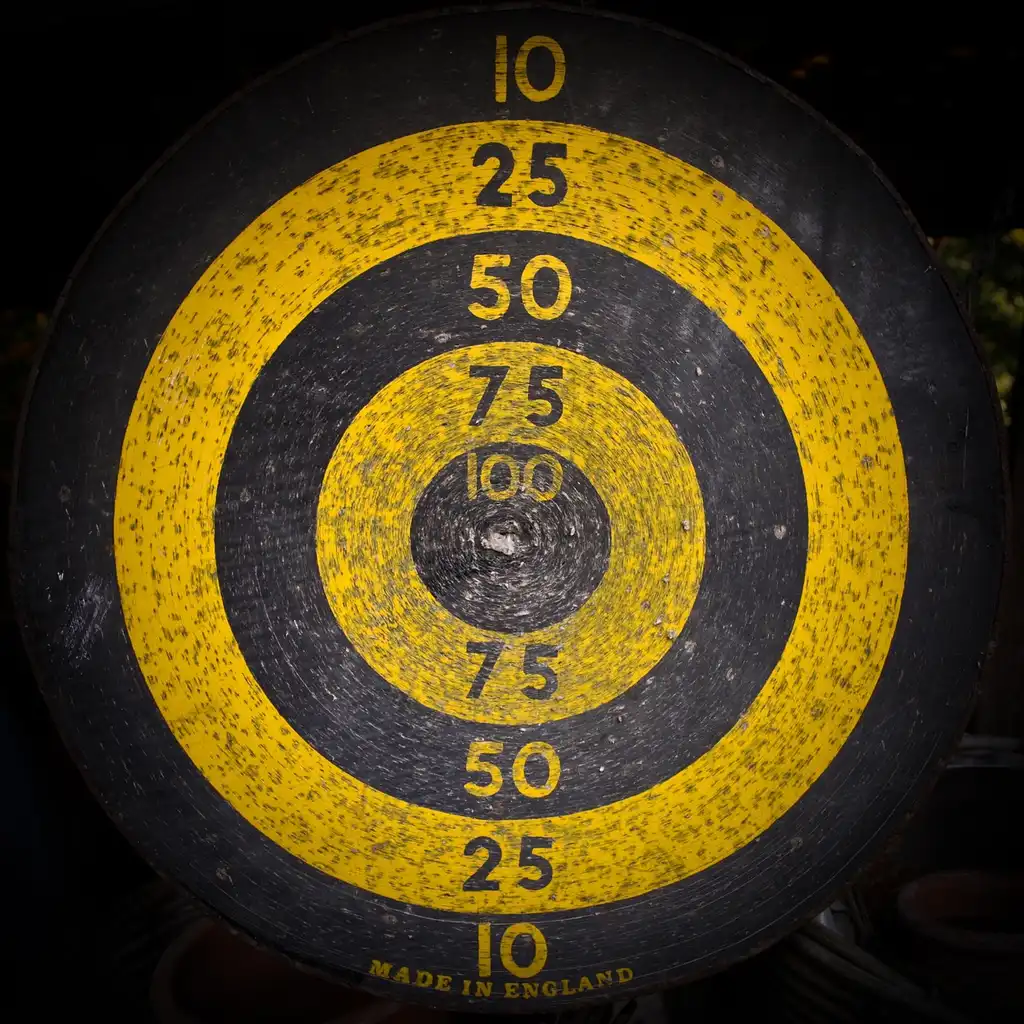
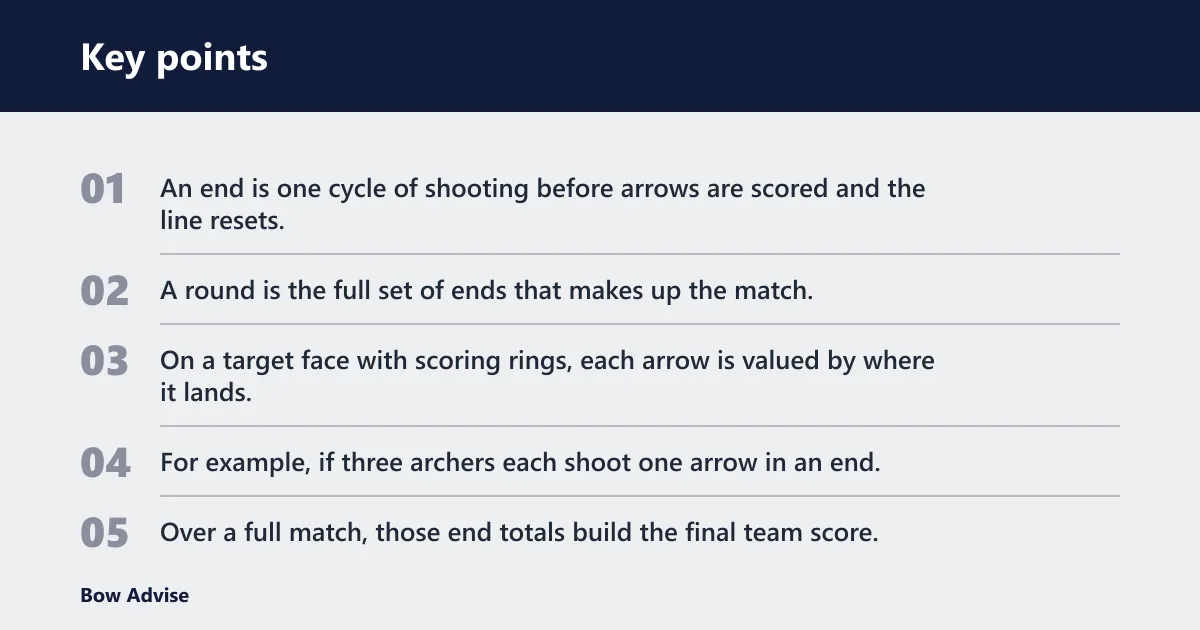
An end is one cycle of shooting before arrows are scored and the line resets. A round is the full set of ends that makes up the match. On a target face with scoring rings, each arrow is valued by where it lands, and the team total is the sum of all counted arrows.
For example, if three archers each shoot one arrow in an end, that end contains three scored arrows. Over a full match, those end totals build the final team score.
Tie counts and shoot-offs
Tie handling depends on the event rules. Some matches count the number of arrows in the highest ring, then the next ring, until one team leads. Others use a single-arrow shoot-off. In a league fixture, the same tie rule must be used for every team in that division.
Say two club teams finish level after 12 ends, and the rule says the most arrows in the 10-ring breaks the tie. The scorer checks the card for 10-ring hits first, not the total number of 9s or the loudest protest on the line.
Missing arrows and late shots
A missed arrow usually counts as zero if it was an allowed shot and simply did not land on the scoring face. A late shot is different. If the line was closed or the whistle had already ended the turn, the arrow may be a penalty or may not count, depending on the rulebook. If a shooter fires out of order, the team can lose the arrow value or the end, depending on the event.
Suppose a teammate steps up one position early in a league fixture and shoots before the order is corrected. The captain should stop the next shot, tell the scorer, and let the official decide whether the arrow stands or the end gets adjusted.
What beginners and parents should expect
Beginners usually start with borrowed or club-supplied gear, simple instruction, and a short team format. Parents should expect a supervised line, clear turn order, and a focus on safe habits before full match pace. Youth archery programs often use team events to help new archers stay involved and build confidence through repetition.
Equipment clubs may provide
For beginners, clubs often provide a basic bow, arrows, armguard, and finger protection. Some programs also allow approved personal equipment. Personal protective gear such as ear and eye protection is not standard guidance for most target archery settings unless a specific range requires it.
That support lowers the barrier to entry. A family can join a first team event without buying a full kit on day one.
Youth age groups and instruction
Age limits vary by league, but some youth programs serve boys and girls ages 8-18. Other youth archery leagues may set different brackets, but age rules are usually written by the club, league, or program. Certified or trained adult instruction is common in youth settings, especially when new archers are learning line commands and safe handling.
For a parent, the key question is not only age eligibility. It is whether the program gives clear coaching, safe equipment, and a match structure that fits a beginner.
Safety rules and match-day behavior
On match day, archers should wait for the command, keep arrows pointed safely, and listen to the range safety officer. That officer has stoppage authority and can remove people from the firing line for safety reasons. Good behavior also means staying quiet during the shot, following the shooting order, and reporting equipment failure before the line opens.
Listening skills matter in shooting sports. That matters most in team events, where one distracted shooter can delay the entire end.
Frequently asked questions
How do team archery competitions work in a club or league?
Team archery competitions work by combining each archer’s arrows into one team total across a set of ends. Clubs often use practice matches and local scorekeeping, while leagues use scheduled fixtures, season standings, and formal result reporting. The team must follow roster order, line commands, and tie rules.
How are team scores calculated in archery events?
Team scores are calculated by adding the value of every valid arrow the team shoots in the match. Each end is scored separately, then those end totals are summed for the full round. If the event uses target rings, the ring value for each arrow is recorded before the next end begins.
How many archers are on an archery team in competition?
Team size depends on the event rulebook. Some club and league formats use about 3 archers per team, but others differ by discipline, division, or match type. Some fixtures allow a substitute, while others require all listed archers to shoot. The key is that the roster must match the event rules before the first end starts.
What happens if one team member shoots late or misses a target in a league event?
A late shot or a shot at the wrong time can bring a penalty, and in some leagues the arrow may not count at all. A miss that happens during a legal shot usually scores zero, while a shot outside the allowed turn can cost the team points or the end. The official rulebook decides the result.
Do club archery teams use the same rules as tournaments?
Often they use similar safety and scoring ideas, but club rules can be simpler than tournament rules. A club may allow more coaching, more beginner support, and more flexible practice ends. Tournaments and leagues are usually stricter about roster, scoring, and tie handling.
What equipment is usually provided for beginners in team archery programs?
Beginner programs often provide a bow, arrows, and basic protective gear such as an armguard and finger protection. Some programs also allow approved personal equipment. Personal protective gear such as ear and eye protection is not standard guidance for most target archery settings unless a specific range requires it.
What age groups can join youth archery leagues?
Age limits vary by league, but some youth programs serve boys and girls ages 8-18. Other youth programs may split archers into younger and older groups, or into beginner and advanced lanes. Parents should check the local registration rules before the first match.
How do you keep a team archery event safe and organized?
Keep the roster clear, follow the shooting order, and let the range safety officer control the line. Use trained adult supervision for youth groups, confirm equipment before the end starts, and stop immediately if someone acts unsafely. Clean scorekeeping and clear commands prevent most problems before they reach the scorecard.