How Big is the Bullseye in Olympic Archery? Essential Guide
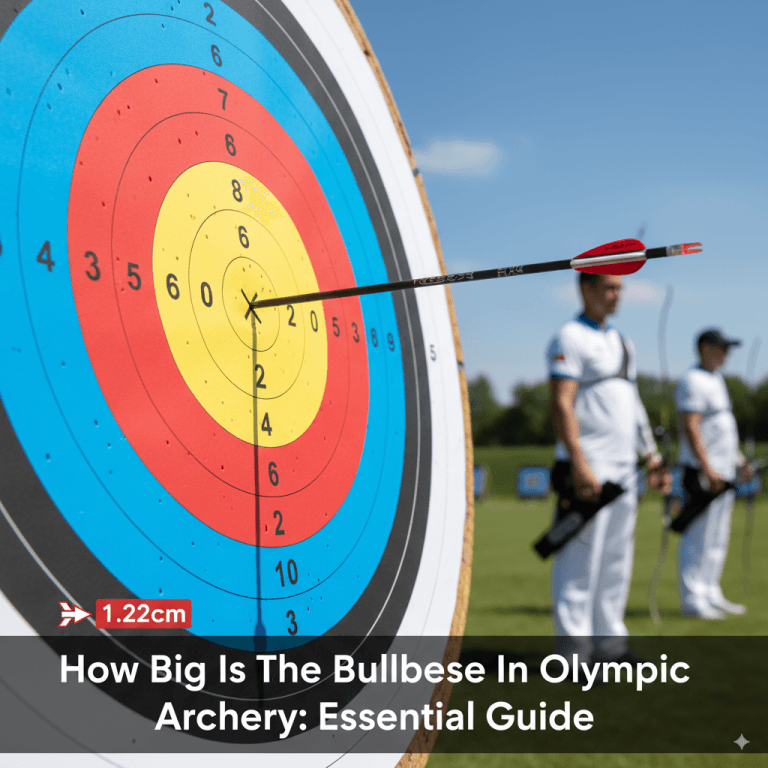
In Olympic archery, the smallest, highest-scoring zone (the bullseye, or X-ring) for a 122cm target face is just 12.2cm in diameter. The central gold ring, from which the bullseye measures, is 24.4cm. Understanding these precise dimensions is key for archers aiming for top scores. For more on this, see our guide on Do Diamonds Reflect Rainbows.
Welcome, aspiring archers! Ever watched the Olympics and wondered just how tiny that absolute center of the target really is? It’s a question many beginners ask, and frankly, it can be a bit intimidating! That small, prime real estate is where all the highest points are scored, and knowing its exact size can demystify your own shooting goals. It’s not about magic; it’s about understanding the target and practicing with purpose. We’ll break down the dimensions of the Olympic archery target, making it easy to grasp exactly what you’re aiming for. Get ready to see those targets in a whole new light!
The Olympic Archery Target: A Closer Look
The standard target used in Olympic archery is a beautiful, colorful circle of concentric rings. Each ring represents a different score, and the closer you get to the dead center, the higher your score. But what exactly are those measurements? Let’s dive in.
Understanding the Target Face Dimensions
The official target face used in Olympic recurve archery measures 122 centimeters (cm) in diameter. This is the standard size seen at the highest levels of the sport. It’s divided into ten concentric circles, each colored differently to represent score zones. While the entire face is 122cm, the scoring zones are what truly matter for precision.
The Scoring Rings Explained
The target face is divided into ten scoring zones, usually colored Gold, Red, Blue, Black, and White. The innermost ring is Gold, followed by Red, Blue, Black, and White.
Gold: This is the center of the target, encompassing the 1st and 2nd scoring zones from the middle.
Red: The next outer ring, representing the 3rd and 4th scoring zones.
Blue: The 5th and 6th scoring zones.
Black: The 7th and 8th scoring zones.
White: The outermost scoring zones, the 9th and 10th.
The “Bullseye” vs. The X-Ring
Here’s where it gets a little nuanced for beginners, and it’s a common point of confusion. In general conversation, people often refer to the entire innermost Gold circle as the “bullseye.” However, in competitive archery, there’s a specific, even smaller zone within the Gold that is designated for tie-breaking and is officially called the “X-ring.”
For the 122cm target face, the dimensions are as follows:
The innermost Gold ring (scoring 10 points) has a diameter of 24.4 cm. This is the entire Gold scoring area.
The X-ring, used for tie-breakers and representing the absolute center for maximum precision, is a smaller circle within the 10-point Gold zone. It has a diameter of 12.2 cm.
So, when people ask “How big is the bullseye in Olympic Archery?”, the answer depends on whether they mean the entire 10-point Gold zone or the precise X-ring used for tie-breaking. For the ultimate precision shot, you are aiming for the 12.2 cm X-ring.
Target Sizes for Other Archery Disciplines
It’s important to note that not all archery uses the 122cm target. Different disciplines and distances have different target sizes. This is crucial for archers who might be practicing at various ranges or in different types of archery.
For example, at shorter distances, especially for indoor archery or training, smaller targets are common. The World Archery Federation specifies target faces for different distances and disciplines. A common target size for indoor competition or shorter outdoor ranges is 80cm.
Here’s a quick look at some other common target face sizes and their corresponding X-ring sizes (where applicable for the 10-point zone):
| Target Face Diameter | Innermost Gold Ring Diameter (10-point zone) | X-Ring Diameter (for tie-breaking) |
|---|---|---|
| 122 cm | 24.4 cm | 12.2 cm |
| 80 cm | 16 cm | 8 cm |
| 60 cm | 12 cm | 6 cm |
| 40 cm | 8 cm | 4 cm |
As you can see, the X-ring is consistently 10% of the target face diameter, and the 10-point Gold zone is 20% of the target face diameter. This consistent ratio helps archers scale their practice and expectations across different target sizes.
Understanding these sizes helps you appreciate the skill involved. Hitting a 12.2 cm circle from 70 meters away is an incredible feat of precision and control!

Why Does Bullseye Size Matter for Beginners?
You might be thinking, “As a beginner, I’m just happy to hit the target!” And that’s a fantastic attitude to have! However, knowing the target dimensions, even the small bullseye, serves a few important purposes for your archery journey:
Setting Realistic Goals
When you’re starting, your goal is simply to improve your shot consistency. Aiming for a large area is perfectly fine. But as you progress, you’ll want to tighten your groups and aim for higher scores. Knowing that the X-ring is 12.2cm (about the size of a large grapefruit) helps you visualize the small area you’re ultimately striving for. It provides a tangible, though challenging, objective.
Understanding Scoring
Archery scores depend on which ring your arrow lands in. While you won’t be shooting on Olympic-sized targets immediately, understanding the concept of a central, high-value zone is fundamental to the sport. You’ll learn to distinguish between an arrow in the 9-ring and one in the X-ring, especially during practice.
Appreciating the Skill of Elite Archers
Knowing these precise measurements offers a new appreciation for what Olympic archers achieve. Their arrows are consistently landing in that tiny 12.2cm circle (or very close to it) from 70 meters away! It highlights the dedication, technique, and mental fortitude required at the elite level.
Focusing Your Practice
As you improve, you’ll start to notice your arrows grouping together. If your arrows are consistently landing around the center, you can start to focus on smaller adjustments to bring them into the X-ring. Knowing the dimensions gives you a concrete target area to mentally adjust for.
Essential Archery Gear for Accurate Shooting
Before you can even think about hitting that tiny bullseye, you need the right gear. As a beginner, it’s important to have equipment that fits you and allows for consistent shooting. Here’s a basic rundown:
Don’t worry, you don’t need to buy the most expensive gear right away. Focus on something that fits you well and is comfortable to use.
Your Bow
Recurve Bow: This is the type used in the Olympics, characterized by its limbs that curve away from the archer. For beginners, a takedown recurve bow is excellent, as its limbs can be detached from the riser, allowing for easier transport and adjustability as you grow stronger.
Draw Weight: This refers to the amount of force needed to pull the bowstring back. Beginners should start with a low draw weight (e.g., 18-29 pounds for adults) to focus on form without straining. You can gradually increase it as you get stronger. You can find resources on how to determine your correct draw weight online from archery organizations like USA Archery.
Arrows
Material: Arrows are typically made of wood, aluminum, carbon, or a combination. Carbon arrows are very popular for their durability and consistency.
Spine: This refers to the arrow’s stiffness. An arrow with the correct spine for your bow’s draw weight and length will fly straighter. Your local archery shop can help you select the right spine.
Essential Accessories
Arm Guard: Protects your forearm from the sting of the bowstring. This is a non-negotiable safety item!
Finger Tab or Release Aid: Protects your fingertips from the bowstring and ensures a consistent release. Finger tabs are common for recurve archers.
Quiver: Holds your arrows, making them accessible and keeping them organized.
Bow Sight: For more precise shooting, a bow sight can be attached to the riser. It features pins that you align with the target.
Arrow Rest: A small support that holds the arrow against the riser before it is shot.
Steps to Improving Your Accuracy and Hitting the Bullseye
Improving your archery accuracy is a journey, not a race. It’s about building good habits and consistent technique. Here’s a step-by-step guide to help you on your way, focusing on the principles that will eventually lead you closer to that bullseye.
Step 1: Find a Qualified Instructor or Club
This is arguably the most important step. Learning from experienced archers is invaluable. They can spot flaws in your form that you might not even notice and provide personalized guidance. Many local archery clubs offer introductory courses. Organizations like Archery GB or USA Archery can help you find a club near you.
Step 2: Master Your Stance
A stable foundation is critical for accurate shooting. Stand with your feet shoulder-width apart, perpendicular to the target. Your weight should be evenly distributed, with a slight bend in your knees. A consistent stance ensures that your body is always in the same position relative to the target.
Step 3: Develop a Consistent Drawing Process
This involves how you nock the arrow, place your fingers on the string, and draw the bow.
Nocking: Place the arrow on the arrow rest and the string so it clicks securely.
Grip: Hold the bow lightly. A “death grip” on the bow will lead to inconsistency.
Drawing: Use the muscles in your back, not just your arms, to pull the string back smoothly. Imagine pulling your shoulder blades together.
Step 4: Anchor Your Draw
This is a crucial point where you bring the drawing hand to a consistent resting position on your face. Find a point that feels natural and allows you to repeatedly place your fingers or knuckles in the same spot. Common anchor points include the corner of the mouth or under the chin. A solid anchor ensures your draw length is consistent for every shot.
Step 5: Aim with Focus
Sight Alignment: If you’re using a sight, align the pin with the target.
Peripheral Vision: Even without a sight, you should be aware of the entire target through your peripheral vision, but focus your conscious attention on the aiming point (e.g., the X-ring).
Breathing: Take a deep breath, draw, hold it briefly, aim, and then release. Some archers exhale slowly during the aiming process. Find what works for you, but avoid holding your breath for too long.
Step 6: Execute a Smooth Release
This is where many beginners struggle. The release should be a surprise to yourself, meaning you don’t consciously “push” the string forward. Instead, relax the fingers holding the string, allowing your back tension to do the work. Think of it as letting the bowstring go rather than forcing it.
Step 7: Follow Through
After releasing the arrow, maintain your stance and your aiming posture until the arrow hits the target. This follow-through helps ensure that no last-second movements disrupt the shot as it leaves the bow. Imagine your bow arm continuing towards the target and your drawing hand moving back smoothly along your face.
Practice Drills to Improve Grouping
Once you have the fundamentals down, these drills can help you tighten your shots and bring them closer to the bullseye.
Blank Bale Shooting: Shoot at extremely close range (a few yards) without aiming at a target face. Focus solely on your form, draw, anchor, release, and follow-through. This helps build muscle memory for good technique.
Closing Your Eyes Drill: At a close distance, shoot several arrows with your eyes closed after you’ve reached full draw and anchored. This forces you to rely purely on your muscle memory and consistent form, revealing inconsistencies you might be compensating for with your eyes.
One-Inch Aiming: Once your shots are grouping reasonably well, mentally divide the bullseye into smaller sections. Your goal for a round of shots might be to get all arrows within a 1-inch (2.54 cm) circle. This significantly smaller target than the X-ring pushes you to focus on extreme precision.
Safety First! Always
Archery is a sport that demands respect for safety. It’s not just about hitting the bullseye; it’s about ensuring everyone stays safe.
Key Safety Rules for Every Archer:
Never Nock an Arrow Until You Are Ready to Shoot: This prevents accidental discharges.
Always Scan Your Surroundings: Ensure no one is in front of or behind you, and that your target backstop is adequate.
Point Your Bow in a Safe Direction: Always point your bow towards the target or a safe direction, never at people or property.
Use Equipment That Fits: A bow that’s too powerful or arrows that are the wrong length can be dangerous.
Never Dry Fire Your Bow: This means drawing and releasing the bowstring without an arrow. It can damage the bow and is dangerous.
* Respect Designated Shooting Areas: Only shoot where it is safe and permitted.
Following these safety rules will not only protect you and others but also allow you to focus on developing your skills with confidence.

Frequently Asked Questions (FAQ)
Q1: What is the official size of the bullseye in Olympic archery?
The official term for the very center of the bullseye in Olympic recurve archery is the X-ring. For the standard 122cm target face, the X-ring has a diameter of 12.2cm. The entire Gold 10-point scoring zone is larger, measuring 24.4cm in diameter.
Q2: Are all archery targets the same size?
No, archery targets come in various sizes depending on the discipline, distance, and level of competition. The 122cm target is for outdoor Olympic recurve, while smaller sizes, like 80cm or 40cm, are used for indoor archery, shorter distances, or different bow types like compound.
Q3: As a beginner, should I worry about the X-ring?
As a beginner, focus on developing a consistent shooting form and hitting the target face reliably. While the X-ring is the ultimate precision goal, it’s more important to build good habits first. As your skills progress, you can naturally start aiming for tighter groups and eventually the X-ring.
Q4: How do I know if my bow is the right draw weight for me?
A bow with the correct draw weight allows you to draw the string back fully, anchor consistently, and aim comfortably without muscle strain. It should feel challenging but manageable. It’s best to get fitted by an experienced archer or at an archery shop. Starting too heavy can hinder your form development.
Q5: Is it important to have a bow sight for learning archery?
For Olympic recurve archery, sights are used. However, many beginners start with traditional or barebow recurve archery, which does not use sights, to focus on feel and instinct. For target archery with a goal of high scores, a sight is highly recommended eventually, but some coaches advocate for learning fundamentals without one initially.
Q6: What is the difference between the Gold ring and the X-ring?
The Gold ring is the innermost large section of the target, scoring 10 points. The X-ring is a smaller, concentric circle within the Gold ring. While both score 10 points, the X-ring is used as a tie-breaker in competitions. Hitting the X-ring is a sign of exceptional precision.
Q7: How far away are the targets in Olympic archery?
In Olympic recurve archery, the targets are set at a distance of 70 meters (approximately 76.6 yards) from the shooting line.
Conclusion
So, there you have it! The “bullseye” in Olympic archery, more precisely the X-ring, is a compact 12.2cm circle on a massive 122cm target face, situated 70 meters away. While that might seem impossibly small to a new archer, it’s a testament to the incredible skill, focus, and practice of elite competitors.