How To Bow Hunt Deer Beginner
Bow hunting deer is a deeply rewarding outdoor pursuit that combines skill, patience, and a profound connection to nature. For beginners, entering the world of bow hunting can feel intimidating; the gear, techniques, and ethical considerations create a steep learning curve. However, mastering this ancient craft offers not only the thrill of the hunt but also a meaningful way to participate in wildlife management and conservation. Deer populations in the United States continue to thrive, with over 11 million hunters contributing to ecological balance annually (U.S. Fish & Wildlife Service). Bow hunting, in particular, is favored for its challenge and its emphasis on stealth and skill rather than technological advantage.
This comprehensive guide distills the essentials for anyone looking to bow hunt deer for the first time. From understanding regulations and choosing the right equipment to developing practical hunting skills and learning ethical practices, you’ll find actionable advice grounded in real-world experience and authoritative sources.
Whether your goal is to fill the freezer or simply savor the experience of the hunt, following these proven steps will set you on the path to success and responsible sportsmanship.
Key Takeaways
- Proper gear selection and understanding of state regulations are foundational to safe and ethical bow hunting.
- Scouting, stand placement, and wind management play crucial roles in increasing your chances of a successful hunt.
- Beginners must practice shooting regularly to achieve consistent accuracy and humane kills.
- Ethical hunting ensures respect for wildlife and compliance with conservation efforts.
- Real-world examples and expert advice provide practical guidance for overcoming common beginner challenges.

Credit: www.northamericanwhitetail.com
Understanding Bow Hunting Regulations And Ethics
Navigating the legal and ethical landscape is the first crucial step for anyone starting out in bow hunting. Rules vary widely across states and even local jurisdictions, so it’s essential to do your homework before stepping into the woods.
State And Local Hunting Regulations
Most states require hunters to possess a valid hunting license and often a specific archery permit. Additionally, there are strict season dates, bag limits, and equipment specifications designed to protect deer populations and maintain ecological balance.
- Always check your state’s Department of Natural Resources website for up-to-date rules.
- Some states, like Pennsylvania and Illinois, mandate hunter safety courses for archery.
- Regulations may specify minimum draw weight for bows (commonly 40 lbs) and restrict certain broadhead types.
Violating hunting laws can result in hefty fines, loss of hunting privileges, and even criminal charges. Compliance is not just about legality, it’s about ensuring the sustainability of deer populations.
Ethical Hunting Practices
Ethical bow hunting goes beyond legal compliance. It encompasses respect for wildlife, fair chase principles, and humane harvest.
- Only take shots within your effective range, typically under 40 yards for most beginners.
- Aim for vital organs (heart and lungs) to ensure quick, humane kills.
- Avoid shooting at running deer or through dense brush that could deflect arrows.
- Retrieve all arrows and respect property boundaries.
Pro Tip: Carry a field notebook to log your shots, track your accuracy, and reflect on ethical decisions throughout the season.
Conservation And Wildlife Management
Bow hunting is a recognized tool for wildlife management, helping to control deer populations and prevent overgrazing. Organizations like the National Deer Association provide resources and research on the impact of ethical hunting.
- Hunters contribute millions to conservation funding through license fees and excise taxes (Pittman-Robertson Act).
- Responsible harvest ensures healthy deer populations and biodiversity.
Consult a wildlife biologist or join a local hunting club to gain insights into ethical practices and conservation efforts in your area.
Credit: www.mossyoak.com
Choosing The Right Bow Hunting Gear
Selecting appropriate gear is one of the most important decisions for a beginner bow hunter. The right equipment not only increases your chances of success but also ensures safety and ethical harvest.
Types Of Bows: Compound Vs. Recurve Vs. Crossbow
There are three main types of bows used for deer hunting: compound bows, recurve bows, and crossbows. Each offers distinct advantages and challenges.
| Bow Type | Pros | Cons | Recommended For |
|---|---|---|---|
| Compound Bow | High accuracy, adjustable draw weight, let-off reduces holding weight | Complex maintenance, heavier | Most beginners |
| Recurve Bow | Simple design, lightweight | No let-off, requires more strength and skill | Traditionalists, experienced archers |
| Crossbow | Easy to aim, minimal practice needed | Heavier, less maneuverable | Disabled hunters, those seeking simplicity |
Most beginners opt for a compound bow due to its balance of power and ease of use. When I tested different bows, the compound’s let-off feature made holding at full draw significantly easier, especially during long waits for deer.
Arrows And Broadheads
Choosing the right arrows and broadheads is critical for penetration and humane kills.
- Carbon arrows are preferred for durability and straightness.
- Broadheads come in fixed-blade and mechanical styles. Fixed-blade broadheads are reliable and suitable for beginners.
- Always match arrow spine and weight to your bow’s specifications.
Pro Tip: Practice with field points but switch to broadheads before hunting to ensure your setup is accurate.
Essential Accessories
Proper accessories enhance safety and effectiveness:
- Rangefinder for accurate distance measurement
- Release aid for consistent arrow release
- Bow sight for improved aiming
- Quiver for carrying arrows
- Safety harness for treestand hunting
Invest in quality gear from reputable brands. Visit a local archery shop to get fitted and receive expert advice.
Clothing And Camouflage
Deer have keen senses, especially smell and sight. Proper clothing and camouflage are vital for remaining undetected.
- Wear scent-free, moisture-wicking layers.
- Camouflage patterns should match your hunting environment.
- Use scent-control sprays and rubber boots.
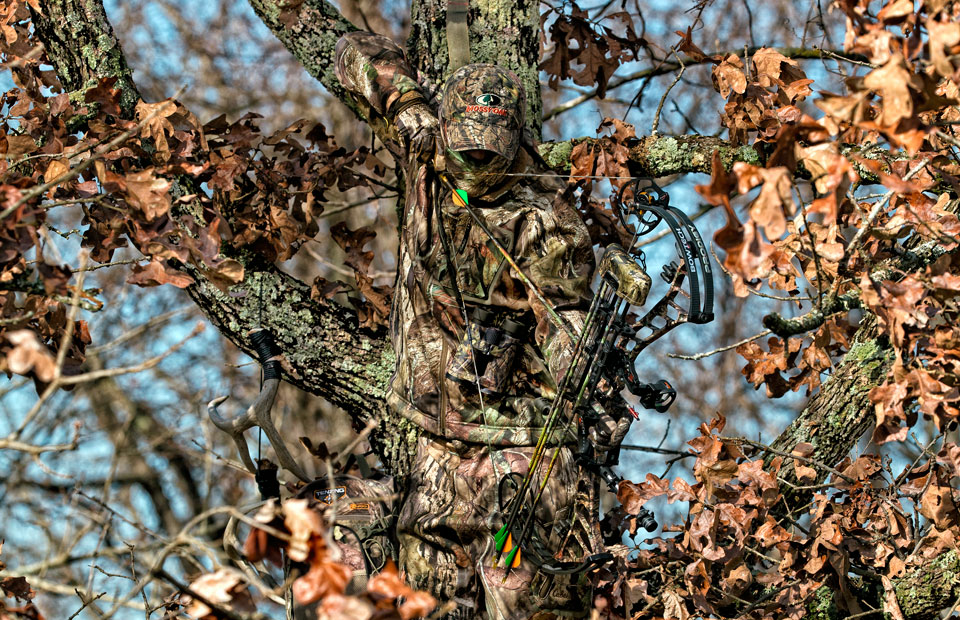
Example: In my experience hunting in the Midwest, wearing Realtree Edge camouflage helped me blend seamlessly into woodland settings, significantly reducing deer detection.
Developing Bow Shooting Skills
Skillful shooting is the foundation of ethical and successful bow hunting. Beginners should dedicate substantial time to practice before entering the field.
Practice Routines
Regular practice builds muscle memory and confidence. The National Archery in the Schools Program recommends beginners shoot at least 100 arrows per week.
- Start at short distances (10-15 yards), gradually increasing to 30-40 yards.
- Practice from sitting, kneeling, and standing positions.
- Simulate hunting scenarios, such as shooting from a treestand.
Proper Shooting Form
Consistent form is key to accuracy:
- Stand with feet shoulder-width apart, perpendicular to the target.
- Draw the bow smoothly, anchoring your hand at the corner of your mouth.
- Focus on the target and release with a relaxed finger or release aid.
- Follow through by holding your position after the shot.
Pro Tip: Video yourself during practice and analyze your form to identify areas for improvement.
Effective Range And Shot Placement
Determine your effective range by grouping arrows consistently within a 6-inch circle. Most beginners’ effective range is under 30 yards.
Aim for the vital zone, the heart and lungs, located just behind the front leg, about one-third up from the belly.
- Avoid spine or gut shots; these can lead to wounded, unrecoverable deer.
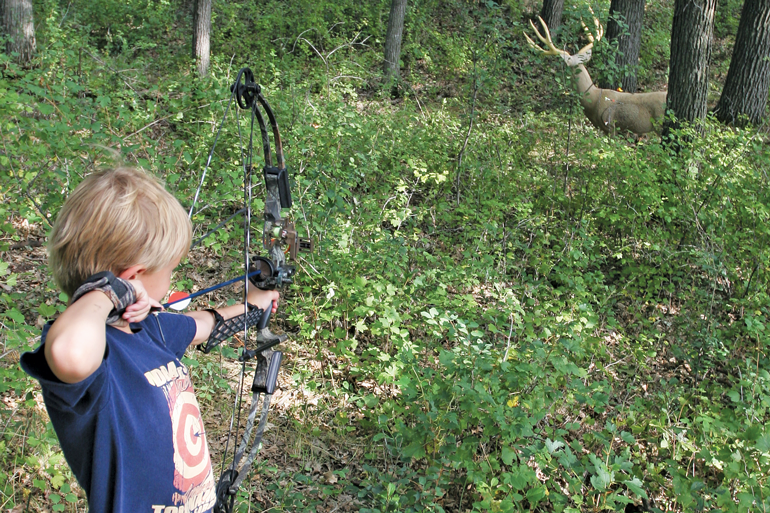
- Practice shot placement using 3D deer targets.
Overcoming Target Panic
Target panic is a common challenge for new archers, causing rushed shots and missed opportunities. Combat it by:
- Using blank bale practice (shooting at a blank target to focus on form).
- Employing breathing techniques to calm nerves.
- Gradually increasing shot difficulty.
Credit: www.bowhunter.com
Scouting And Preparing Your Hunting Location
Scouting is the process of locating and understanding deer activity in your hunting area. Thorough preparation drastically improves your odds of encountering deer.
Understanding Deer Behavior
White-tailed deer are creatures of habit, following established trails between bedding, feeding, and watering areas. Key behavioral patterns include:
- Peak movement during dawn and dusk (crepuscular activity)
- Preference for cover and edge habitats
- Seasonal shifts based on food availability
Use trail cameras and observe tracks, rubs, and scrapes to identify active areas.
Mapping And Access
Modern mapping apps like OnX Hunt and HuntStand provide satellite imagery and property boundaries.
- Mark entry/exit routes to avoid spooking deer.
- Identify stand locations based on wind direction and deer movement.
- Secure permission for private land access well in advance.
Pro Tip: Always carry a printed map and compass as backup in case your phone fails.
Stand And Blind Placement
Choose stand or blind locations based on prevailing winds, deer trails, and visibility.
- Place stands downwind of expected deer movement.
- Ensure safe, stable installation at least 15 feet off the ground.
- Use natural cover or camouflage netting for blinds.
Example: A hunter in Wisconsin placed his stand near a soybean field edge, downwind of a well-used trail. He harvested his first deer after observing consistent evening movement.
Scent Control Strategies
Deer rely heavily on their sense of smell. Scent control can make or break your hunt.
- Store clothing in scent-free containers.
- Use scent-eliminating sprays and soaps.
- Avoid contaminating gear with gasoline, food, or human odors.
Combine scent control with careful wind management for maximum effectiveness.
Executing The Hunt: Strategies And Real-world Examples
The hunt itself is where preparation meets execution. Understanding entry, setup, and shot timing is key to success.
Entry And Exit Strategies
Stealthy entry and exit are crucial to avoiding detection. Follow these guidelines:
- Enter before daylight and leave after dark when possible.
- Move slowly, avoiding noisy brush and leaves.
- Use low-impact routes away from bedding areas.
Example: In my experience, entering from the downwind side and staying silent resulted in deer sightings within 30 minutes of setup.
Waiting And Observing
Hunting from a stand or blind requires patience. Remain still and scan for movement.
- Use binoculars to spot distant deer.
- Track wind shifts and adjust as needed.
- Resist the urge to fidget; movement is easily detected.
Taking The Shot
When a deer approaches, wait for a clear, broadside shot within your effective range.
- Draw the bow slowly and deliberately.
- Aim for the vital zone.
- Release only when confident; never rush.
Pro Tip: Practice holding at full draw for several minutes to prepare for real hunting scenarios.
Tracking And Recovery
After the shot, wait at least 30 minutes before tracking, unless the deer drops immediately.
- Look for blood trails, tracks, and disturbed foliage.
- Use a flashlight for low-light tracking.
- Follow trails carefully; avoid bumping wounded deer.
Example: A Missouri hunter tracked a deer for 200 yards after a well-placed shot, using blood trail markers to aid recovery.
Safety And Emergency Preparedness
Safety is paramount in bow hunting, especially for beginners. Accidents can be prevented with proper planning and vigilance.
Treestand Safety
Falls from treestands are the leading cause of hunting injuries. Follow these best practices:
- Always use a full-body safety harness.
- Inspect stands for wear and secure all attachments.
- Never climb with equipment; use a haul line.
The Tree Stand Safety Association recommends practicing stand setup at ground level before hunting.
First Aid And Survival Gear
Carry a basic first aid kit and know how to treat common injuries, such as cuts, sprains, and hypothermia.
- Include bandages, antiseptic, and emergency blanket.
- Carry a whistle and cell phone for emergencies.
- Know the nearest hospital location.
Pro Tip: Take a hunter safety course, which covers first aid, survival, and rescue procedures.
Weather Awareness
Monitor weather forecasts before and during your hunt. Sudden changes can affect deer behavior and your safety.
- Dress appropriately for cold, wet, or windy conditions.
- Avoid hunting during severe storms.
- Prepare for unexpected overnight stays.
Example: A hunter in Colorado avoided hypothermia by packing extra layers and checking the forecast before his hunt.
Responsible Harvest And Field Dressing
Once you recover a deer, field dressing is essential to preserve meat quality and prevent spoilage.
- Carry sharp knives and gloves.
- Follow step-by-step guides from reputable sources like the National Deer Association.
- Dispose of remains responsibly and follow local regulations.
Consult a professional or experienced hunter if you’re unsure about field dressing techniques.
Comparing Bow Hunting To Other Deer Hunting Methods
Understanding how bow hunting differs from other methods helps beginners appreciate its unique challenges and benefits.
| Method | Effective Range | Skill Required | Season Length | Ethical Considerations |
|---|---|---|---|---|
| Bow Hunting | 20, 40 yards | High (stealth, accuracy) | Often longer | Requires close-range shots, fair chase |
| Rifle Hunting | 100, 300 yards | Moderate | Shorter | Long-range, less challenging |
| Muzzleloader Hunting | 50, 150 yards | Moderate (loading, aiming) | Varies | Traditional, slower reloads |
Bow hunting stands out for its emphasis on close-range encounters, requiring mastery of stealth and patience. The extended archery season allows more hunting opportunities, often in less crowded woods.
Real-world Examples And Short Case Studies
Learning from experienced hunters provides valuable insight for beginners. Here are three real-world examples:
Example: First-time Success In Ohio
A novice hunter in Ohio followed all state regulations, practiced shooting daily, and scouted his property using trail cameras. On opening day, he harvested a mature doe at 25 yards, attributing his success to careful preparation and ethical shot placement.
Example: Overcoming Target Panic In Texas
A Texas bow hunter struggled with target panic for two seasons. By implementing blank bale practice and focusing on breathing techniques, he improved his accuracy and harvested a buck at 35 yards the following year.
Example: Learning From Mistakes In Georgia
A beginner in Georgia rushed a shot from his treestand and missed a deer. After analyzing his form and practicing holding at full draw, he succeeded on his next hunt by waiting for a clear, broadside shot.
These examples highlight the importance of preparation, practice, and learning from both successes and failures.
Resources For Further Learning
Beginners can accelerate their progress by utilizing authoritative resources:
- National Deer Association: Offers educational content and research on deer management and hunting ethics.
- Archery Trade Association: Provides gear recommendations and shooting tips.
- Hunter Safety Courses: Mandatory in many states, covering safety, ethics, and regulations.
External links:
Join local archery clubs and participate in community events to connect with experienced hunters and mentors.
Frequently Asked Questions
What Is The Best Bow For A Beginner Deer Hunter?
Most beginners benefit from a compound bow due to its adjustable draw weight and let-off, making it easier to hold at full draw. Visit an archery shop to test different models and get fitted by a professional. Crossbows are legal in some states and offer simplicity but may limit skill development.
How Do I Know If My Shot Was Ethical And Humane?
An ethical shot strikes the vital zone (heart and lungs), resulting in a quick, humane kill. If a deer runs after the shot, look for a heavy blood trail and monitor the time before tracking. It’s unethical to shoot beyond your effective range or at angles where vital organs are not accessible.
What Should I Do If I Wound A Deer And Can’t Find It?
If you wound a deer, mark the spot, search diligently for blood trails, and enlist help if needed. Contact local conservation officers for advice or assistance. Avoid hunting until you’ve resolved the situation, as leaving a wounded animal is unethical and may violate regulations.
Are There Public Lands Where Beginners Can Bow Hunt Deer?
Many states offer public hunting lands such as state forests and wildlife management areas. Check your state’s Department of Natural Resources for maps and regulations. Some areas require special permits or lottery draws for deer hunting.
How Can I Improve My Scent Control Beyond Sprays And Soaps?
Advanced scent control includes using ozone generators, storing gear in scent-free bags, and hunting only when wind direction is favorable. Avoid eating, smoking, or handling strong-smelling substances before the hunt. Consider using natural cover scents, such as earth or pine, to mask human odor.
Bow hunting deer as a beginner is a journey that requires dedication, respect, and continuous learning. By following proven strategies and ethical practices, you can enjoy the challenges and rewards of this time-honored pursuit while contributing to conservation and wildlife management.
Remember to seek mentorship, prioritize safety, and cherish every moment in the field. Happy hunting!