How To Bow Hunt Deer In Az
Bow hunting deer in Arizona is both a thrilling pursuit and a test of skill, patience, and respect for the wild. Arizona’s varied terrain, ranging from high-country forests to arid desert basins, offers bow hunters some of the most challenging and rewarding opportunities in North America.
Whether you’re a seasoned hunter seeking to refine your tactics or a newcomer inspired by the adventure of the hunt, mastering bow hunting for deer in this unique state requires specialized knowledge, careful preparation, and a deep understanding of local regulations and wildlife behavior.
The challenge is heightened by Arizona’s distinct climate patterns, unpredictable weather, and elusive deer species, such as the Coues whitetail and mule deer. Success doesn’t come easy: it demands a blend of technical proficiency, ethical hunting practices, and a commitment to conservation. This guide brings together practical strategies, legal requirements, equipment recommendations, and field-tested tips to help you bow hunt deer in Arizona safely, effectively, and ethically.
Key Takeaways
- Arizona’s deer bow hunting requires understanding unique species, terrain, and strict regulations.
- Choosing the right compound bow, arrows, and broadheads is crucial for ethical, effective hunting.
- Scouting, camouflage, and scent control are vital for approaching Arizona’s wary deer.
- Success depends on mastering both physical skills and local knowledge, including weather, land access, and wildlife behavior.
- Real-world examples and case studies offer actionable insights for both new and experienced hunters.

Credit: followherarrow.com
Understanding Arizona’s Deer Species And Habitats
The Primary Deer Species: Coues Whitetail And Mule Deer
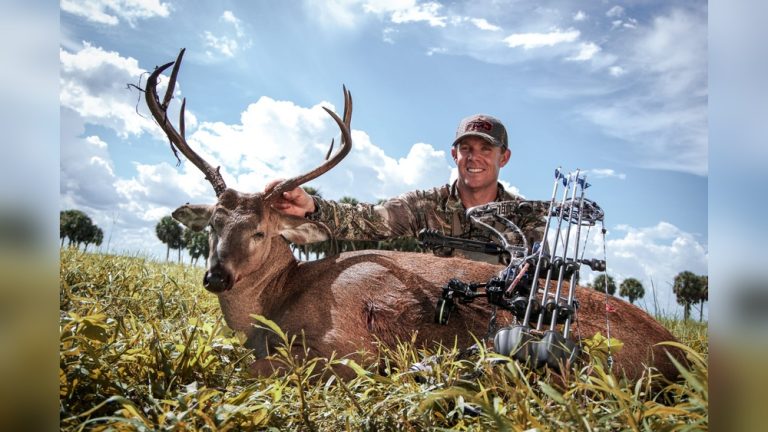
Arizona is home to two main deer species for bow hunters: mule deer and Coues whitetail deer. The mule deer (Odocoileus hemionus) dominates the northern and central forests, thriving in ponderosa pine, juniper, and pinyon habitats. Coues whitetail (Odocoileus virginianus couesi), a smaller subspecies of the whitetail, is found primarily in the southeastern mountains and “sky islands” of Arizona.
- Mule deer: Larger body size, robust antlers, prefer open country and higher elevations.
- Coues whitetail: Smaller, elusive, renowned for keen senses and wariness, typically found in rugged canyons and oak woodlands.
Habitat Diversity And Its Impact On Hunting
Arizona’s public lands offer a patchwork of environments, each demanding distinct hunting tactics:
- Northern forests: Dense cover, easier glassing, long-range spot-and-stalk opportunities.
- Desert basins: Sparse cover, longer shots, emphasis on stealth and patience.
- “Sky island” mountains: Steep terrain, variable weather, rewarding yet physically demanding hunting.
Success often hinges on understanding how deer use terrain for bedding, feeding, and travel. For example, in my experience, Coues whitetail often bed in thick oak patches by midday, making still-hunting nearly impossible and forcing reliance on glassing and long stalks.
Seasonal Movements And Behavior Patterns
Deer behavior in Arizona shifts dramatically with the season:
- Early season (August, September): Bucks in velvet, focused on feeding, visible in open country.
- Pre-rut (October, November): Increased movement, bucks begin marking territory.
- Rut (late November, January): Peak activity, bucks less cautious, best chance for close encounters.
Matching your tactics to seasonal behavior is crucial for success.
Conservation Status And Harvest Data
According to the Arizona Game and Fish Department (AZGFD), annual deer harvest data informs management and tag allocations. In recent years, success rates for archery deer hunters have averaged around 6-12%, reflecting the challenge and skill required for bow hunting in Arizona. Tags are limited and highly regulated to ensure healthy deer populations.
For up-to-date statistics and regulations, consult the official Arizona Game and Fish Department website.

Credit: www.bigchinooutfitters.com
Arizona Bow Hunting Regulations And Licensing
Licensing And Tag Requirements
Arizona maintains strict hunting regulations to preserve wildlife populations and ensure fair chase. To bow hunt deer, you must possess:
- A valid Arizona hunting license (resident or non-resident)
- A deer tag (drawn through a lottery or over-the-counter, depending on hunt unit and season)
- Compliance with archery-only restrictions during designated seasons
Licenses are available online via the AZGFD portal or at authorized vendors statewide.
Hunt Units And Season Dates
Arizona is divided into “Game Management Units” (GMUs), each with specific season dates and tag quotas. Archery seasons typically open in late August and run through January, with some units offering over-the-counter tags and others requiring participation in the annual draw.
Pro Tip: Over-the-counter archery deer tags are available for certain units but often sell out quickly. Monitor the AZGFD updates closely to secure your tag.
Legal Equipment And Bow Specifications
The state mandates minimum draw weights (30 lbs) and prohibits certain broadhead types (explosive or poisoned). Crossbows are permitted only for hunters with qualifying disabilities and require special permits.
| Equipment | Legal for Use? | Notes |
|---|---|---|
| Compound Bow | Yes | Minimum 30 lb draw weight |
| Recurve/Longbow | Yes | Minimum 30 lb draw weight |
| Crossbow | With permit | Medical disability only |
| Mechanical Broadheads | Yes | Must not be explosive/poisoned |
| Laser Sights | No | Prohibited |
Reporting And Ethical Requirements
Hunters are required to report their harvest within 48 hours and follow strict carcass tagging procedures. Arizona also emphasizes ethical hunting, including fair chase, proper shot placement, and minimizing animal suffering.
Penalties For Violations
Violations of Arizona’s hunting laws can result in:
- Fines and loss of hunting privileges
- Confiscation of equipment and game
- Criminal charges for serious offenses
Always consult the current Arizona Hunting Regulations before heading afield.

Credit: www.onxmaps.com
Essential Gear For Bow Hunting Deer In Arizona
Choosing The Right Bow And Arrows
Selecting gear suited to Arizona’s terrain is critical:
- Compound bows: Preferred for their power, adjustability, and accuracy. Brands like Mathews, Hoyt, and Bowtech are popular.
- Recurve/longbows: Offer traditional challenge, lighter weight for long hikes.
- Arrows: Carbon shafts are durable and light, ideal for long stalks. Use fixed or expandable broadheads with a minimum cutting diameter of 7/8 inches.
Camouflage And Concealment Strategies
Arizona’s varied terrain demands adaptable camouflage:
- Desert units: Light browns, tans, muted greens to blend with sparse vegetation.
- Mountain/forest units: Darker greens, browns, and grays for pines and oaks.
- Use face masks, gloves, and consider a leafy suit for high-movement environments.
Pro Tip: In my experience, sitting motionless is just as important as the right camo pattern, Arizona deer spot movement instantly.
Optics And Rangefinders
Quality optics are essential for glassing distant ridges and draws:
- Binoculars: 10×42 or 12×50 models are ideal for scanning large areas.
- Spotting scopes: Useful in open country for detailed observation.
- Rangefinders: Compensate for uphill/downhill shots and increase ethical shot placement.
Packs, Hydration, And Safety Gear
Arizona’s climate and terrain require thoughtful preparation:
- Day pack: Carries water, food, first aid, extra layers, and gear.
- Hydration system: At least 3 liters capacity; dehydration is a real risk, especially in desert units.
- Navigation: GPS or smartphone app (OnX, Gaia GPS), plus paper maps as backup.
- Safety: Whistle, mirror, headlamp, and a basic first aid kit.
Clothing For Arizona’s Climate
Layered clothing is essential due to Arizona’s temperature swings:
- Base layers: Moisture-wicking, lightweight merino wool or synthetic.
- Mid layers: Insulating fleece or down for early morning chill.
- Outer layers: Quiet, breathable, and camouflaged shells.
- Boots: Sturdy, broken-in, and designed for rocky terrain.
Broadhead And Arrow Comparison Table
| Broadhead Type | Cutting Diameter | Penetration | Best Use Case |
|---|---|---|---|
| Fixed Blade | 1 – 1.25 in | Excellent | Dense brush, tough game |
| Mechanical | 1.5 – 2 in | Good | Open country, precise shots |
| Hybrid | 1.5 in | Very good | Versatile, mixed terrain |
Scouting, Pre-season Preparation, And Land Access
Digital Scouting And Map Apps
Modern hunters leverage technology for pre-season scouting:
- Use satellite imagery (Google Earth, OnX, HuntStand) to identify water sources, bedding areas, and travel corridors.
- Mark potential glassing points and stalk routes.
- Overlay public/private land boundaries to avoid trespassing.
Boots-on-the-ground Scouting
Nothing replaces firsthand knowledge:
- Hike target units before the season to verify deer sign (tracks, droppings, rubs).
- Locate water holes, game trails, and bedding cover.
- Note prevailing winds and thermals for planning approaches.
Example: In Unit 36B, I located a hidden seep by following fresh tracks, which became a reliable ambush site during the early season.
Trail Cameras And Patterning
Deploy trail cameras to gather data on deer movement patterns:
- Place near water, trails, or feeding areas.
- Check cameras infrequently to minimize disturbance.
Pro Tip: Set cameras above head height, angled down, to avoid detection and theft.
Securing Land Access
Most of Arizona’s best bow hunting occurs on public land (National Forest, BLM, State Trust). Still, some high-quality deer habitats lie on private ranches or tribal lands:
- Obtain written permission for private land.
- For State Trust Land, purchase a recreation permit.
- Respect all posted signs and boundaries; trespassing is a serious offense.
Preparing For Arizona’s Unique Terrain
Physical conditioning is often overlooked but crucial. Steep climbs, rocky footing, and high elevations are common, especially in “sky island” units. Begin training months in advance with hiking, cardio, and core strength exercises.
Effective Hunting Strategies And Techniques
Spot-and-stalk Tactics
Spot-and-stalk is the most common and effective method for Arizona bow hunters:
- Glass from vantage points early and late in the day.
- Mark the deer’s location relative to terrain features.
- Plan a concealed approach, considering wind and thermals.
- Move slowly, using cover, stopping frequently to glass.
- Close the distance to within ethical archery range (typically 30, 50 yards).
Pro Tip: Arizona’s Coues whitetail are notorious for “disappearing” during a stalk. Stay patient, and be ready for long belly crawls.
Still-hunting And Ambush Tactics
Still-hunting, slowly creeping through cover, works best in thicker units and during the rut. Ambush hunting near water or game trails is effective during dry spells when deer are predictable.
- Build a simple ground blind from natural materials.
- Sit with minimal movement, using optics to scan for approaching deer.
Tree Stands And Elevated Blinds
While less common than in other states, tree stands can be useful in oak woodlands and riparian zones. Ensure stands are well-camouflaged and placed downwind of expected deer travel routes.
Calling And Rattling
During the rut, calling and rattling can attract curious or territorial bucks:
- Use grunt tubes and bleat calls for whitetails.
- Rattling antlers can bring in aggressive mule deer, especially pre-rut.
Experiment with call intensity and frequency. In my experience, subtle calling works best for Coues deer, who are easily spooked.
Scent Control And Wind Management
Arizona’s swirling winds and sharp-nosed deer demand careful scent management:
- Hunt with the wind in your face or crosswind.
- Use scent-free soaps and sprays.
- Store clothing in scent-proof bags with pine needles or dirt.
Real-world Example: Success In Unit 27
A bow hunter in Arizona’s Unit 27 glassed a bachelor group of mule deer at sunrise. Using a circuitous approach to stay downwind and behind cover, he closed from 600 yards to 40 yards over two hours. Patient waiting and precise rangefinding produced a clean harvest, underscoring the importance of stealth and preparation.
Shot Placement, Recovery, And Field Processing
Ethical Shot Placement
Proper shot placement ensures quick, humane kills:
- Broadside or quartering-away shots are ideal, targeting the vital heart-lung area.
- Avoid frontal shots or steep angles, which risk wounding.
Study deer anatomy and practice with life-size targets at varied distances and angles.
Tracking And Recovery
Even the best-placed arrow can require tracking:
- Mark the shot location and note the deer’s reaction.
- Wait 30, 60 minutes before following up unless the deer is visible and down.
- Follow blood trails patiently, marking last blood with flagging tape.
Pro Tip: In Arizona’s arid conditions, blood can dry quickly. Look for kicked-up dirt, broken branches, and tracks to aid in recovery.
Field Dressing And Cooling Meat
Desert heat and sun can quickly spoil venison. Field dress deer immediately and move to shade. If temperatures exceed 50°F, skin and quarter the animal as soon as possible. Use game bags to keep meat clean and cool, and pack out on ice.
Packing Out And Leave-no-trace Ethics
Arizona’s rugged terrain often means a long pack out. Use a sturdy frame pack and plan multiple trips if necessary. Always remove all trash, flagging, and evidence of your camp to preserve the land for future hunters.
Example: Field Processing In High Heat
During a September hunt, temperatures soared above 90°F by noon. I field dressed and quartered a Coues buck within 30 minutes, used game bags, and cached the meat in a shaded canyon until I could return with a pack frame.
This preserved the quality of the meat and exemplified ethical hunting.
Safety, Ethics, And Conservation In Arizona Bow Hunting
Safety Precautions In Remote Terrain
Arizona’s remote units pose real risks:
- Always inform someone of your hunting plans and expected return.
- Carry a charged cell phone, but don’t rely on service in remote canyons.
- Know basic first aid and carry a tourniquet and trauma kit.
Ethical Hunting And Fair Chase
Arizona hunters pride themselves on ethical pursuit:
- Never shoot beyond your effective range.
- Pass on risky shots or uncertain identification.
- Respect other hunters, landowners, and wildlife.
Respect For Wildlife And Habitat
Follow “leave no trace” principles:
- Pack out all trash, including spent broadheads and arrows.
- Avoid disturbing nesting birds, den sites, or sensitive habitats.
- Report violations or poaching to AZGFD.
Conservation And Tagging Programs
Arizona’s deer populations are sustained by science-based management. Hunters’ license and tag fees fund research, habitat restoration, and law enforcement.
Example: The Arizona Deer Association partners with AZGFD to improve water sources and conduct population surveys, directly benefiting both deer and hunters.
Wildlife Disease And Cwd Precautions
While Chronic Wasting Disease (CWD) has not been detected in Arizona as of 2026, hunters are encouraged to report sick deer and avoid transporting brain or spinal tissue across state lines. Stay informed via AZGFD alerts.
Real-world Case Studies: Success And Lessons Learned
Case Study 1: Coues Whitetail In The Sky Islands
A bow hunter in the Chiricahua Mountains spent three days glassing before locating a mature Coues buck. After a patient, three-hour stalk using terrain folds and wind cover, he closed to 35 yards and made a clean shot. The key to success was thorough pre-season scouting and disciplined scent management.
Case Study 2: Early Season Mule Deer In The Desert
Hunting in Unit 24B, a group of friends used waterhole ambush tactics during a late August heat wave. They set up ground blinds before dawn and harvested a buck that approached for a midday drink. The success highlighted the importance of understanding local water sources and adapting to harsh weather.
Case Study 3: Over-the-counter Tag In A High-pressure Unit
A non-resident hunter drew an OTC archery tag for a popular unit. Despite heavy hunting pressure, he scouted overlooked pockets near steep terrain, ultimately tagging a buck on the third evening. This example demonstrates the value of persistence, adaptability, and avoiding crowds.
Frequently Asked Questions
What Is The Best Time Of Year To Bow Hunt Deer In Arizona?
The optimal time to bow hunt deer in Arizona varies by species and region. For mule deer, early season (August, September) finds bucks in open country, while the rut (December, January) increases daytime activity. Coues whitetail are most active and visible during the rut in late December and January. Weather, moon phase, and hunting pressure also influence deer movement, so flexible scheduling is advantageous.
How Do I Find Productive Areas For Coues Whitetail Hunting?
Look for Coues whitetail in southeastern Arizona’s “sky island” ranges, mountains rising from desert basins. Focus on steep, brushy slopes near water and thick oak or juniper cover. Use high-quality optics to glass from ridges at sunrise and sunset. Trail cameras can help pattern movement, but personal observation and persistence are key.
What Are The Biggest Mistakes New Arizona Bow Hunters Make?
Common errors include neglecting wind direction, underestimating the difficulty of terrain, and taking long, low-probability shots. New hunters may also fail to scout adequately or disregard the importance of hydration and safety in remote areas. Taking time to learn local deer habits and regulations will increase both safety and success.
Can I Bow Hunt Deer On Arizona’s Tribal Lands?
Yes, but access requires special permits from the respective tribal authorities. Each tribe sets its own seasons, tag quotas, and regulations, which may differ from state-managed lands. Always obtain written permission and follow tribal rules. Tribal hunts can offer unique opportunities but require advanced planning.
How Does Arizona’s Climate Affect Meat Care After A Successful Hunt?
Arizona’s warm, dry climate can quickly spoil game meat if not properly managed. Field dress deer immediately, move meat to shade, and use game bags to keep it clean and cool. In hot weather, packing out meat swiftly, sometimes in multiple trips, is essential.
Consider bringing a cooler with ice to your vehicle for immediate storage.
Bow hunting deer in Arizona is a demanding yet deeply rewarding pursuit. Mastering its challenges requires not only skill with a bow but also a respect for the land, the deer, and the traditions of ethical hunting. Whether you’re glassing sunlit slopes for Coues whitetail or stalking mule deer through rugged canyons, preparation and perseverance are your greatest allies.
By following the strategies, safety measures, and conservation ethics outlined in this guide, you can experience the adventure and satisfaction of bow hunting in Arizona’s spectacular wild places.