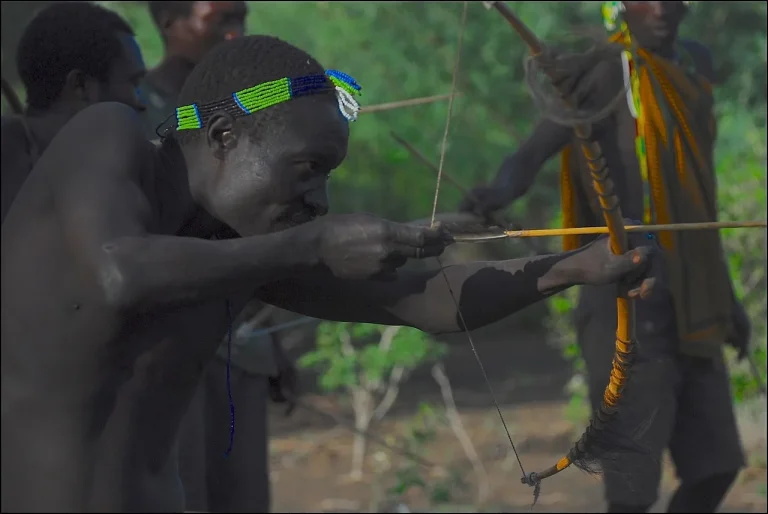
What Made Native American Arrows Good for Small Game?
Native American small-game arrows worked well because they combined a lighter shaft, a blunt or capped point, low-drag fletching, and a tuned bow so the arrow flew fast, quietly, and with limited meat damage. Miss that balance and you get poor flight, loud launch, and broken or wasted arrows. This guide explains each design choice and how the system worked together.
Why speed and stability won close-range shots
Small-game performance came from the full setup, not one feature. A light shaft helped only if the spine matched the bow, the point weight stayed sensible, the feathers steadied the arrow, and the string released it the same way each shot. That is why regional designs varied, yet the same flight goals kept showing up.
Why speed mattered at short range
Birds, rabbits, squirrels, and similar targets are often taken at close distance. A fast arrow gives a flatter path, less time for the animal to move, and a cleaner hit window. At those ranges, speed mattered more than deep penetration.
Light arrows also made it easier to recover usable game. A heavy hunting shaft can punch too hard for small animals, tearing meat or passing through the target with more force than needed. For small game, enough energy for a humane kill mattered more than maximum power.
Why quiet, quick follow-up shots mattered
Small-game hunting rewarded a quiet release and the ability to shoot again without delay. A lighter arrow and a well-tuned bow usually produced less hand shock and a quicker return to aim. That mattered when the first shot disturbed nearby animals.
At about 12 yards, a light, well-stabilized arrow gives less time for the animal to shift again. A light, well-stabilized arrow leaves the bow quickly and gives less time for the animal to shift again. A mismatched arrow may fishtail, slow down, and waste the moment.
Arrow shaft materials and weight
Traditional shafts were often made from straight, even-grained wood such as cedar, dogwood, or ash, or from cane and reed where those materials were available and suited the task. The best shaft was not simply light; it had to be light, straight, and stiff enough for the bow.
Lower mass helped speed, but mass alone did not decide performance. Diameter and spine shaped how the shaft flexed around the bow at release. A shaft that was too weak or too stiff would not clear the bow cleanly, which hurts accuracy far more than a small change in weight.
Straight grain and consistent flight
Straight grain improved flight because it reduced weak spots and made the shaft more predictable. Cane and reed can make very usable shafts when they are selected and finished carefully. Woods such as cedar, dogwood, and ash were also valued where they were available and suitable.
Arrow length was matched to draw length, then trimmed to avoid extra weight. Longer shafts carry more mass and can change dynamic spine. For small game, the aim was usually a shaft long enough to draw safely, but no longer than needed.
How straightening tools shaped the shaft
Shaft straightening used heat, pressure, and scraping. Heat softened the fibers enough to correct bends. Pressure held the shaft against a straight edge or simple guide. Scraping removed high spots and helped keep the shaft even from end to end.
A common first-timer mistake is leaving a shaft slightly bent because it “looks close enough.” At about 15 yards, a bend in the shaft can show up as a left-right wobble or a low-impact hit. Small flaws matter more when the arrow is light and the shot window is short.
Small-game point choices
Small-game points were usually blunt or rounded rather than sharp broadheads. The goal was to stun or kill birds and small mammals without slicing large holes in edible meat or hide. Bone, wood, antler, stone, and later metal all appear in the historical record as point materials in different places and periods.
For birds and small mammals, a blunt often makes better sense than a cutting head. It spreads impact over a wider surface and can transfer energy without a deep cut. That can preserve more meat and still end the hunt quickly when the setup is matched correctly.
When a blunt works best
A blunt is useful when the target is small, the range is short, and the archer wants limited damage. It is especially practical for birds on the ground, rabbits, and squirrels in close cover. In those cases, penetration is usually not the main goal.
But a blunt becomes a poor choice if the setup is too weak or the target is too far away. If the arrow lacks enough energy, impact may only knock the animal off balance or fail to finish the job. Humane use depends on matching the point to the shot.
How fletching stabilized flight
Fletching was usually made from feathers, often in a three-feather setup. Its job was to stabilize the shaft, correct slight flight errors, and keep the point tracking forward. Size and placement had to suit the arrow’s speed and intended range. (Wikipedia)
Large feathers create more drag and more stability. Smaller feathers reduce drag and can keep speed higher. For small-game arrows, that tradeoff matters because close-range shots do not need maximum steering correction, but they do benefit from a clean launch.
Offset and helical placement
Offset or helical placement gives the arrow a controlled spin. That spin helps stabilize flight and can smooth out small imperfections in shaft straightness or release. The benefit is strongest when the bow, shaft, and point are already close to a good match.
Fletching size was tuned to arrow speed and stability. A lighter, faster shaft may use modest feather area to avoid excess drag. If the fletching is too large, the arrow slows more than needed; too small, and it may not correct flight enough.
How did tuning affect performance?
Small-game arrow performance is generally said to depend on matching bow draw weight, shaft mass, point weight, balance point, and string behavior. A bow that is too heavy for the shaft can force poor launch. A bow that is too light may not move the arrow with enough consistency for a humane hit.
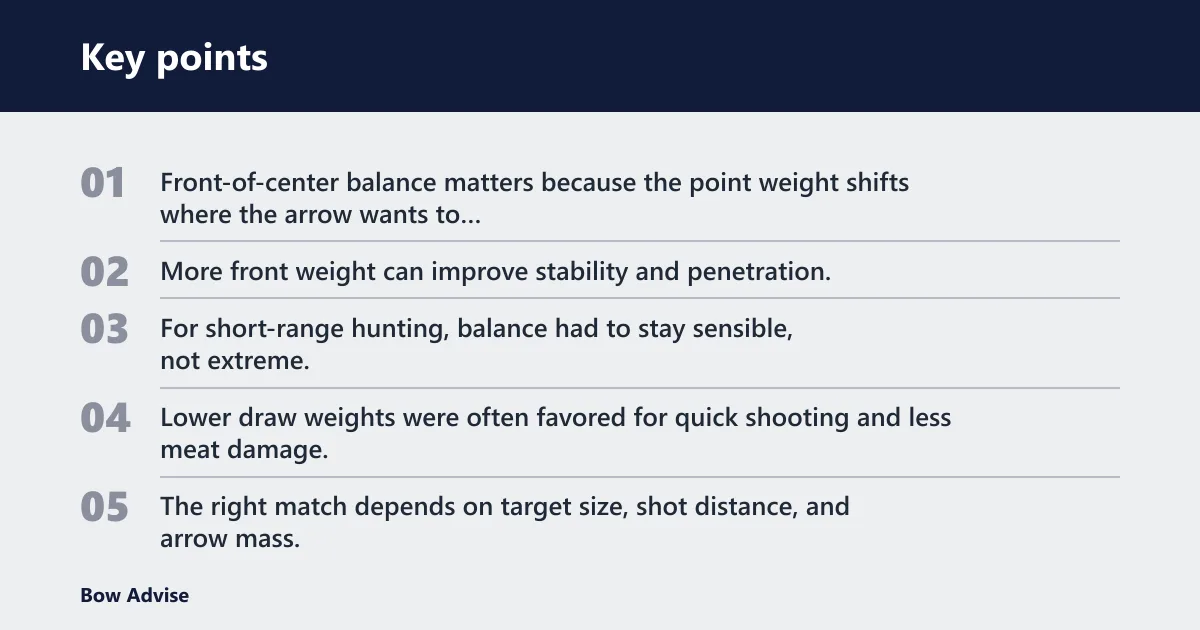
Front-of-center balance matters because the point weight shifts where the arrow wants to fly. More front weight can improve stability and penetration, but too much changes trajectory and can make the shaft sluggish. For short-range hunting, balance had to stay sensible, not extreme.
Bow draw weight and arrow mass
Lower draw weights were often favored for quick shooting and less meat damage, but the bow still had to deliver enough energy for humane kills. The right match depends on target size, shot distance, and arrow mass. A small-game setup is not a weak setup; it is a matched setup.
One practical rule is simple: if the arrow is light, the bow must still launch it cleanly without excessive noise or erratic flex. If the arrow is too heavy for the bow, speed drops and trajectory steepens. Both problems reduce field performance.
Bowstring stretch, brace height, and even twist
Bowstrings were made from plant fiber, sinew, or other traditional materials. String stretch affects how consistently the arrow leaves the bow. Brace height and even twist also matter, because a string that settles unevenly can change launch behavior from shot to shot.
Even twist helps the string track straight and maintain repeatable release. Brace height that is too low or too high can change sound and arrow contact. For small game, consistent launch matters because the shot is usually close, quick, and unforgiving of error.
How balance point changed short-range flight
Front-of-center weight helps the point lead the shaft through flight. That can steady the arrow, especially when the shaft is short or the release is imperfect. Too much front weight, though, can drop arrow speed and change the hold required at close range.
Think of it this way: a small increase in point weight can make the arrow calmer in flight, but a large increase can turn a quick hunting shaft into a slow, nose-heavy one. The best setup keeps speed, stability, and acceptable penetration in the same lane.
Small-game arrow design by use case
| Target type | Recommended point style | Relative shaft weight | Fletching size | Likely tradeoff |
|---|---|---|---|---|
| Bird | Very blunt or rounded head | Light | Small to medium feathers | Fast flight, low meat damage, less penetration |
| Rabbit | Blunt or capped head | Light to medium-light | Medium feathers | Better forgiveness, moderate penetration, controlled damage |
| Squirrel | Blunt, rounded, or capped head | Light | Small feathers with good stabilization | Flat trajectory, quick recovery, limited margin for poor aim |
How were small-game arrows different?
Small-game arrows differed from deer arrows and war arrows in purpose. Deer arrows usually needed more penetration and a stronger terminal setup. War arrows often favored different balance, durability, or point choice depending on the task. Small-game arrows were built for speed, quiet handling, and reduced damage.
That difference shows up in the whole shaft, not only the head. A small-game arrow usually carries less mass, lighter fletching, and a point that fits the target size. It is not simply a smaller version of a big-game arrow.
Compared with deer arrows
Deer arrows generally need more energy retention and deeper penetration than bird or rabbit arrows. For that reason, a setup meant for deer can be too much for small game. It may pass through too violently or damage more meat than needed.
Compared with war arrows
War arrows were shaped by different needs. Impact on armor, shields, and human targets changed the design goals. Small-game arrows were not trying to do that job, so they could be lighter, quieter, and more efficient for close hunting.
What modern traditional archers can copy today is the logic, not every historical detail. Match spine to bow. Keep the shaft straight. Use a blunt when the target and range call for it. Keep fletching just large enough for clean flight. That approach fits both history and practical shooting.
- Choose a straight shaft with the right spine for the bow.
- Trim length to draw safely without extra weight.
- Set a blunt or rounded point for birds and small mammals.
- Use three feathers with only as much size as needed for stability.
- Check brace height and string twist for consistent launch.
- Straighten the shaft with heat, pressure, and scraping before final use.
Frequently asked questions
What made Native American arrows good for small game?
They worked because the whole setup was tuned for close-range hunting: a light shaft, a blunt or rounded point, stabilizing feathers, and a bow that launched the arrow cleanly. That combination gave speed, control, and less meat damage, which is exactly what small-game hunting needed.
Why were Native American hunting arrows so light and fast?
Light arrows accelerated quickly and reached small targets before they moved. They also reduced unnecessary damage to meat and hide. The point was not to hit as hard as possible, but to deliver enough energy at short range with a flatter flight and quieter shot.
What arrow points were used for small game hunting?
Blunt or rounded heads are commonly reported for small game. Historical forms included bone, wood, antler, stone, and later metal. These shapes were used to stun or dispatch birds and small mammals while avoiding the heavy cutting damage that sharp broadheads can cause.
How did Native American arrows balance speed and penetration?
They balanced those traits through shaft weight, point weight, and bow setup. A lighter arrow flew faster, while a slightly heavier front end could improve stability and impact. The best small-game setup kept enough energy for a humane hit without turning the arrow into an overpowered, damaging projectile.
How did fletching affect Native American arrow flight?
Feathers stabilized the arrow and helped it recover from small release errors. Three-feather setups were common, and helical or offset placement could add controlled spin. Larger feathers improve stability, while smaller ones keep drag lower. The best choice depended on the shaft and target distance.
How do traditional Native arrows compare with modern field-point arrows?
They are not direct equivalents. Modern field points are usually practice heads designed for target use, while traditional small-game arrows used blunts or rounded caps for hunting. The comparison is useful for flight behavior, but the historical goal was humane small-game performance, not target practice alone.