Is the Archery Measurement Kit Worth It? Cost vs Shop Visit
Yes, if one Archery Measurement Kit keeps you from buying a bow with the wrong draw length, axle-to-axle, or brace height, it can pay for itself. If you only need one setup, a single pro shop visit is often cheaper. A wrong measurement can turn a bargain bow into an unusable one, waste money on returns, and leave you chasing tuning problems. Here’s how the kit compares with a shop visit, which measurements matter, and when to skip the purchase.
What each option is best
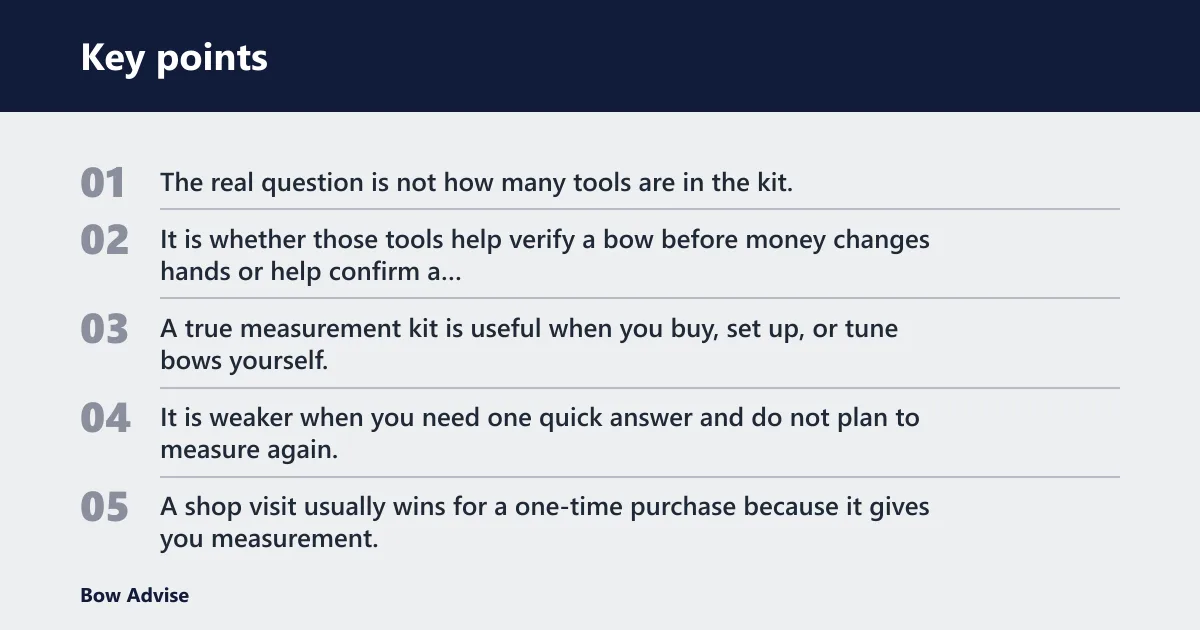


The real question is not how many tools are in the kit. It is whether those tools help verify a bow before money changes hands or help confirm a setup after the bow arrives. A true measurement kit is useful when you buy, set up, or tune bows yourself. It is weaker when you need one quick answer and do not plan to measure again.
A shop visit usually wins for a one-time purchase because it gives you measurement, setup, and correction in one stop. A kit wins when repeated checks are likely, when you screen used bows, when youth gear changes, or when online purchases need verification before you accept the bow.
| Criterion | Measurement kit | One shop visit |
|---|---|---|
| Draw length confirmation | Useful for checking fit on the actual bow | Useful, and the fitter can help confirm fit and form |
| Draw weight verification | Useful if the kit includes a bow scale | Usually measured during setup |
| Axle-to-axle and brace height check | Useful for confirming bow specs before purchase | Useful, with staff support if the numbers do not match |
| Bow press work | Not included in a measuring kit | Often available if the shop has the correct press |
| Expected payback | Best when it prevents one wrong buy or repeated checks | Best when you only need one setup |
Say your online compound bow listing says 29 inches axle-to-axle and 6 inches brace height, but the received bow measures differently once inspected. That gap matters because a bow can look right on paper and still fit badly. A kit helps catch that before the bow becomes a return or a setup headache.
What does an archery measurement kit actually measure?
A real archery measurement kit is for setup verification, not full tuning. A true measurement kit usually centers on a tape measure, a bow scale, Allen keys, and sometimes an arrow checker or inspection tool. The main job is to confirm bow specs and spot obvious mismatches before you spend time or money on deeper work.
Tape measure checks
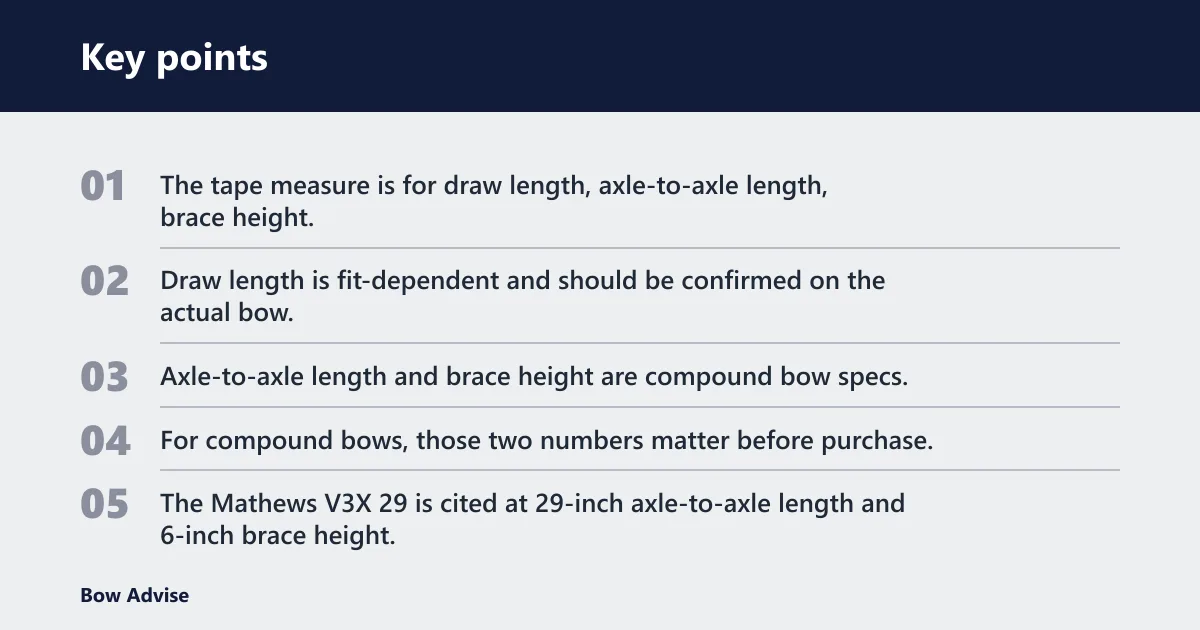
The tape measure is for draw length, axle-to-axle length, brace height, and other basic dimensions. Draw length is fit-dependent and should be confirmed on the actual bow, not trusted from a label alone. Axle-to-axle length and brace height are compound bow specs, both commonly measured in inches, and both help explain geometry and feel.
For compound bows, those two numbers matter before purchase. The Mathews V3X 29 is cited at 29-inch axle-to-axle length and 6-inch brace height. The SAS Siege is cited at 41.5-inch axle-to-axle length and 7.5-inch brace height. Those numbers tell you the bow is a very different geometry even before arrows and accessories enter the picture.
Bow scale checks
Draw weight is measured in pounds, and that requires a bow scale. Labels can differ from actual pull weight, so a tape measure alone cannot tell you whether a bow really draws at the weight you expected. The SAS Siege is cited with a 40 to 55 pound draw weight range, which is the kind of spec that should be verified on the actual bow. (Wikihow)
A scale helps most on used bows and online purchases. A bow marked “easy to draw” may still land heavier than the buyer can hold steady. That can affect anchor point consistency, sight picture, and whether the archer can shoot enough to learn good form.
Allen keys and inspection tools
Allen keys and small inspection tools handle basic setup work. They tighten loose hardware, check rest alignment, and make small accessory changes. They do not solve timing, cam issues, or poor arrow choice. They are useful, but they do not turn a measurement kit into a complete tuning system.
An arrow checker or inspection tool can help spot damage or straightness issues before use. That is different from tuning arrow spine. Spine and rest setup are related, but measuring tools alone cannot solve a weak or stiff arrow choice.
Measurement kit decision matrix
The best buyer type is the one that already has a reason to measure more than once. Beginners who want one bow and one setup often do better with a shop visit. Bowhunters, youth gear buyers, and DIY tuners benefit more when they need repeat checks or buy bows online.
| Buyer type | Needs draw length check | Needs draw-weight verification | Needs axle-to-axle / brace-height verification | Likely needs a bow press | Expected payback versus one shop visit |
|---|---|---|---|---|---|
| Beginner | Yes, if buying the first bow | Yes, if the bow has a marked range | Yes, when comparing models | Usually no at first | Low unless multiple bows will be checked |
| Bowhunter | Yes, because fit affects repeatable anchor | Yes, for hold and control | Yes, for stability and feel | Sometimes, for string or cam work | Moderate if buying or tuning often |
| Parent buying youth gear | Yes, because growth changes fit | Yes, to keep draw manageable | Sometimes, to compare small bows | Usually not for simple fit checks | Moderate if gear will be resized often |
| DIY tuner | Yes, on every setup | Yes, on every setup | Yes, when verifying specs or used bows | Yes, often | High if the bow is handled regularly |
A common first-timer mistake is to buy a bow because the label looks close enough. A 29-inch draw length on paper does not guarantee it fits the shooter once the actual bow, anchor, and release aid are involved. The same bow can feel fine on a chart and wrong at full draw.
How much does archery cost if I buy the tools myself?
The cost question only makes sense against one shop visit. If the kit keeps you from one bad purchase, one return, or one paid setup, it can make sense quickly. If you only need a single check and never plan to measure again, the shop is often the cheaper route.
Kit price versus one shop visit
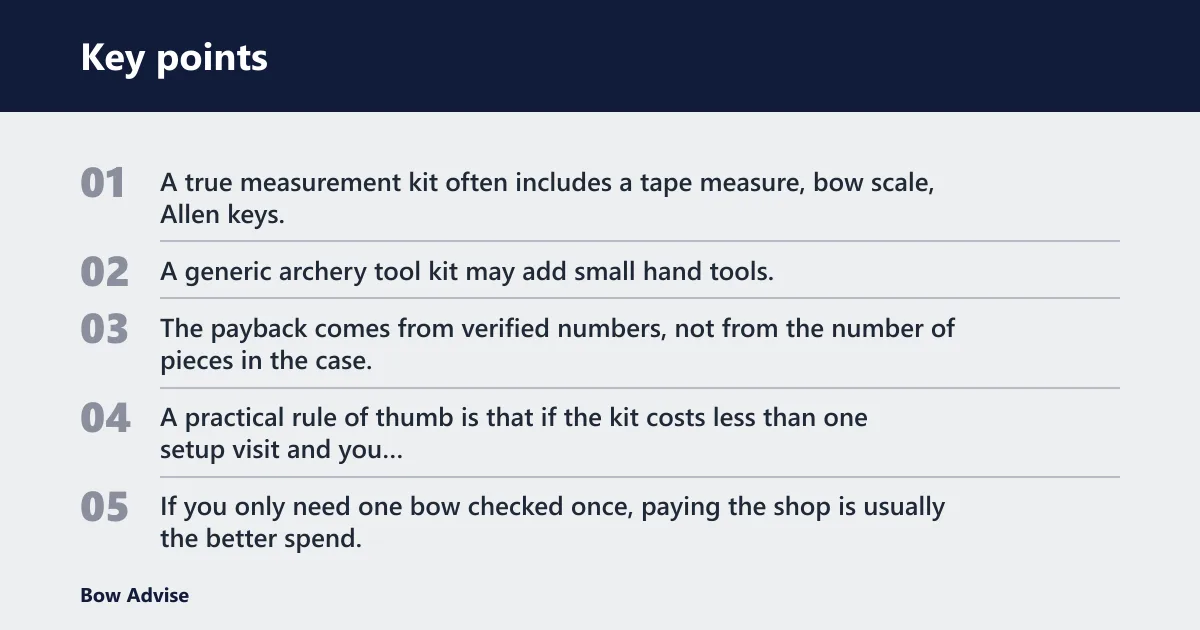
A true measurement kit often includes a tape measure, bow scale, Allen keys, and an inspection tool. A generic archery tool kit may add small hand tools, but that does not make it a full measuring kit. The payback comes from verified numbers, not from the number of pieces in the case.
A practical rule of thumb is that if the kit costs less than one setup visit and you expect at least one more use after purchase, it starts to make sense. If you only need one bow checked once, paying the shop is usually the better spend.
Payback threshold for frequent checks
Frequent checks matter when you buy used bows, change accessories, set up youth equipment, or compare several models. That is where the kit can pay off. Rechecking draw length, draw weight, axle-to-axle length, and brace height on different bows is exactly the kind of job the kit is built for.
What raises the total cost
The total cost rises if you also need a bow press, specialized timing tools, or help correcting rest and cam issues. Those items are separate from the measurement kit. Cam timing is a setup check, not a number you confirm with a tape alone. Arrow spine and rest setup also remain separate problems.
What the kit cannot replace
A measurement kit cannot replace a bow press. It cannot correct cam timing, change string or cable work, or perform rest tasks that require the bow to be pressed. It can confirm numbers. It cannot fix the underlying issue that made the numbers wrong.
Bow press tasks
A bow press is needed for some cam, string, cable, and rest tasks. The kit does not include that tool. If the plan involves swapping strings, changing cables, moving a rest that requires limb relief, or addressing cam issues, a press is a separate purchase or shop service.
Cam timing checks
Cam timing is one of the biggest gaps between measuring and tuning. You can verify dimensions and draw weight, but timing still has to be checked on the bow itself. A scale and tape can confirm numbers but cannot fix bad arrow spine choice, and they also cannot correct a timing problem by themselves.
Arrow spine and rest setup
Arrow spine and rest setup are related, and both affect whether the bow groups well. A kit can help you avoid a wrong purchase, but it cannot make a weak or stiff arrow behave correctly. That distinction matters on compounds and recurves alike.
Picture a compound bought online with the right draw weight range but the wrong arrow setup. The scale confirms the draw is manageable, but the arrows still leave the bow poorly because the spine does not match the setup. The kit helped verify the purchase; it did not solve the tune.
Choose an archery measurement kit if… / Choose a shop visit if…
Choose the kit if you will check bows more than once, compare used or online bows, or set up youth gear that changes over time. Choose the shop if you only need one bow checked once and do not plan to buy measuring tools. The best choice follows how often you need verified numbers.
Choose an archery measurement kit if…
- You want to check draw length on the actual bow before buying.
- You need draw weight verification because the label may not match pull weight.
- You compare compound bow specs such as axle-to-axle length and brace height.
- You expect to inspect used bows, online buys, or youth gear more than once.
Choose a shop visit if…
- You only need one setup and no repeated checks.
- You need bow press work, cam timing help, or rest changes.
- You are unsure whether your arrows match the bow’s spine needs.
- You want an expert to verify fit and solve a setup problem in one stop.
Frequently asked questions
Is the Archery Measurement Kit worth it for a beginner?
For a beginner, it is worth it only if the bow will be measured more than once or bought used or online. If the plan is one first bow and one setup, a shop visit is usually the cheaper, simpler choice. The kit becomes more useful when the beginner starts comparing bows directly.
Do I need a bow scale or just a tape measure?
If you only want dimensions, a tape measure helps. If you want actual draw weight, you need a bow scale because labels can differ from real pull weight. For buying decisions, both tools are better than one. Tape alone does not tell the whole story.
Can an archery measurement kit replace a bow press?
No. A measurement kit is not a substitute for a bow press. Press work is still needed for some cam, string, cable, and rest tasks. The kit can tell you what the bow measures, but it cannot safely perform those mechanical changes.
What numbers should I check before buying a compound bow?
Check draw length, draw weight, axle-to-axle length, and brace height on the actual bow. For a compound, those numbers help you judge fit, stability, and feel. Also confirm cam timing and arrow setup separately, because measuring tools alone do not solve either one.
Where to buy archery equipment
Buy from places that clearly list tools under the right category and explain what each tool does. Lancaster Archery Supply lists Multi-Tools & Tool Kits, Bow Scales, Bow Presses, and Leveling & Alignment Tools under Tools. That separation matters because a measuring kit is not the same thing as a bow press or leveling tool.
What should be included in an archery kit for beginners?
Start with a tape measure, a bow scale, basic Allen keys, and an inspection tool. That is enough for setup verification on most beginner purchases. If the kit is mostly small accessories and no scale, it is a generic tool kit, not a true measurement kit.