Arrow Flight Tuning: Spine, Point Weight, Fletching
Arrow flight tunes best when static spine matches first, then point weight trims dynamic spine, and fletching cleans up only small instability. Skip that order and you get erratic paper tears, broadhead planing, and groups that spread as distance grows. This guide covers how spine, point weight, and fletching work for recurve and compound bows, plus a tuning sequence that actually fits the parts involved.
Arrow flight tuning basics


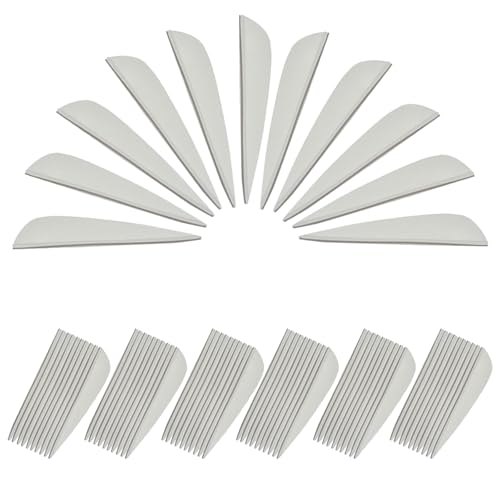
Static spine is the shaft stiffness rating measured under a 1.94 lb load over 28 inches. Lower numbers mean stiffer shafts, so a 340 is stiffer than a 500. Dynamic spine is what the arrow does after you add length, point weight, insert weight, draw weight, draw length, cam aggression, and string material.
That is why the shaft number is only the starting point. A shaft can match the chart and still act too weak or too stiff once you cut it, add a heavy point, or shoot it from a fast setup.
The order of corrections
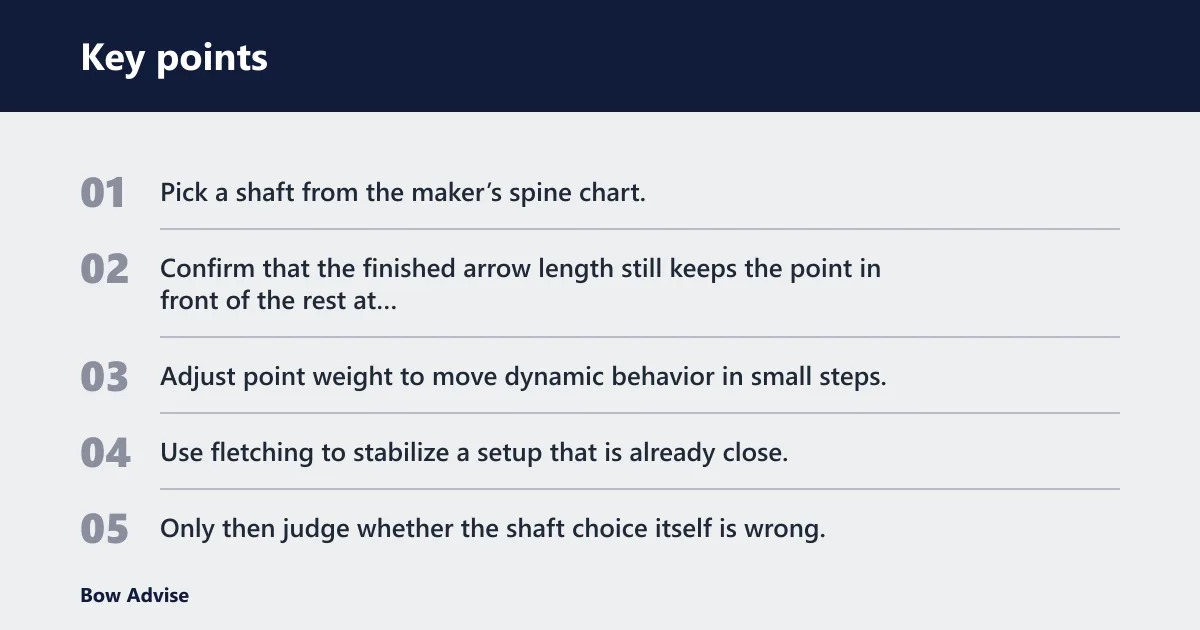
- Pick a shaft from the maker’s spine chart.
- Confirm that the finished arrow length still keeps the point in front of the rest at full draw.
- Adjust point weight to move dynamic behavior in small steps.
- Use fletching to stabilize a setup that is already close.
- Only then judge whether the shaft choice itself is wrong.
That sequence matters because fletching can hide a near-miss setup, but it cannot rescue a badly mismatched shaft. If the arrow is far off, bigger vanes often only make the symptom less visible.
How do spine, point weight, and fletching interact?
Spine sets the starting stiffness, point weight changes how much the shaft bends in flight, and fletching controls how fast the arrow recovers after launch. Heavier points make the arrow act weaker, lighter points make it act stiffer, and vanes or feathers can either mask or reveal how close the shaft choice really is.
What makes a shaft act weaker or stiffer?
Longer arrows behave more flexibly because more shaft can bend. Heavier points, inserts, and broadheads also push the arrow toward a weaker dynamic spine. Shorter arrows and lighter points push the other way. String material and cam aggression matter too, because a sharper launch can demand a stiffer shaft.
What fletching can and cannot fix
Fletching adds drag and steering. Plastic vanes are weatherproof, durable, and consistent. Feathers are lighter than plastic vanes and can stabilize quickly. Helical fletching can help broadhead flight because it starts steering the arrow sooner.
But fletching is a correction tool, not a spine substitute. If a shaft is clearly too weak or too stiff, larger vanes may tighten the group a little while the underlying problem stays in place.
What spine should I choose for my draw weight and arrow length?
Start with the manufacturer spine chart, then verify with tuning. Use arrow length measured from the bottom of the nock groove to the end of the shaft. For recurve bows, arrows are usually cut one to two inches longer than draw length. For compounds, the point should sit about an inch in front of the rest at full draw.
How to measure the shaft correctly
Do not measure to the point tip or guess from overall arrow length. Measure from the nock groove to the end of the shaft. That is the number that matters for clearance, safety, and spine behavior.
Say your draw length is 28 inches on a recurve. A common starting point is a shaft cut to 29 or 30 inches, then tuned from there. If the same archer adds a heavier point, the arrow will act weaker and may need a stiffer shaft or less point weight.
Recurve and compound starting point
Recurve archers often tune with a plunger or button, and finger release changes launch behavior. Compound bows commonly use a drop-away or blade rest, and a release aid reduces archer’s paradox. That means compound tuning often starts from a different baseline, even when the archer’s draw weight looks similar on paper.
How much does heavier point weight weaken dynamic spine?
Heavier points weaken dynamic spine by making the arrow flex more during launch. Lighter points stiffen dynamic spine by doing the opposite. The exact shift depends on the full setup, but the direction is reliable: more front-end weight acts weaker, less front-end weight acts stiffer.
When to change point weight before trimming shaft
Change point weight first when the arrow is close to correct and the symptom is mild. That is usually the cleaner move because it preserves shaft length and keeps safety clearance intact. Trim the shaft only after the charted spine and point weight range have both been tried.
A practical rule is to treat point changes as fine tuning and shaft cuts as a larger correction. Once a shaft is shortened, it only behaves stiffer. There is no easy way to make it behave weaker again without changing the rest of the setup.
Field points and broadheads are not the same test
A field-point tune can look good and still fail with a broadhead. Broadheads add steering surface up front, so they expose small stability issues that a practice point may hide. Hunting setups should be checked with the actual broadhead, not just with target points.
Arrow flight tuning table
This table treats arrow tuning as a sequence. Make one change, retest, and stop as soon as the symptom moves in the right direction. If the needed fix is large, change the shaft instead of trying to hide the mismatch with fletching.
| Setup scenario | Likely symptom | First correction | Change spine, point, or fletching first? |
|---|---|---|---|
| 29 inch arrow, 125 grain point, small vanes | Arrow acts weak; recovery is slow | Drop to 100 grain point | Point weight first |
| 30 inch arrow, 100 grain point, small vanes | Arrow acts weak after the longer cut | Move to a stiffer shaft | Spine first |
| 27 inch arrow, 125 grain point, large vanes | Setup still looks weak even with drag added | Cut less or choose stiffer spine | Spine first |
| 28 inch arrow, 85 grain point, small vanes | Arrow acts stiff and recovers too fast | Increase point weight to 100 or 125 | Point weight first |
| 28 inch arrow, 125 grain broadhead, small vanes | Field points group, broadheads plane | Test with helical vanes or more steering | Fletching first |
| 29 inch arrow, 125 grain point, feathers | Good bare shaft, but broadheads drift | Try helical vanes | Fletching first |
| Short arrow, heavy insert, heavy point | Arrow acts weak and hard to tune | Reduce front-end weight before more trimming | Point weight first |
| Recurve, finger release, arrow cut 2 inches long | Bare shaft lands rough but close | Adjust plunger/button before changing shaft | Point or plunger first |
| Compound, release aid, center-shot rest | Paper tear shows mismatch after rest setup | Verify nock height and center shot, then shaft | Spine first if setup is already correct |
| Compound, blade rest, practice points | Target points fly well, broadheads do not | Test actual broadheads and helical fletching | Fletching first unless the mismatch is large |
| Recurve, stiff shaft, light point | Arrow acts stiff and leaves poorly | Heavier point or weaker shaft | Point first |
| Compound, too much vane drag, weak shaft | Vanes help a little, but the shaft is still off | Move to correct spine instead of bigger vanes | Spine first |
How do recurve and compound tuning differ?
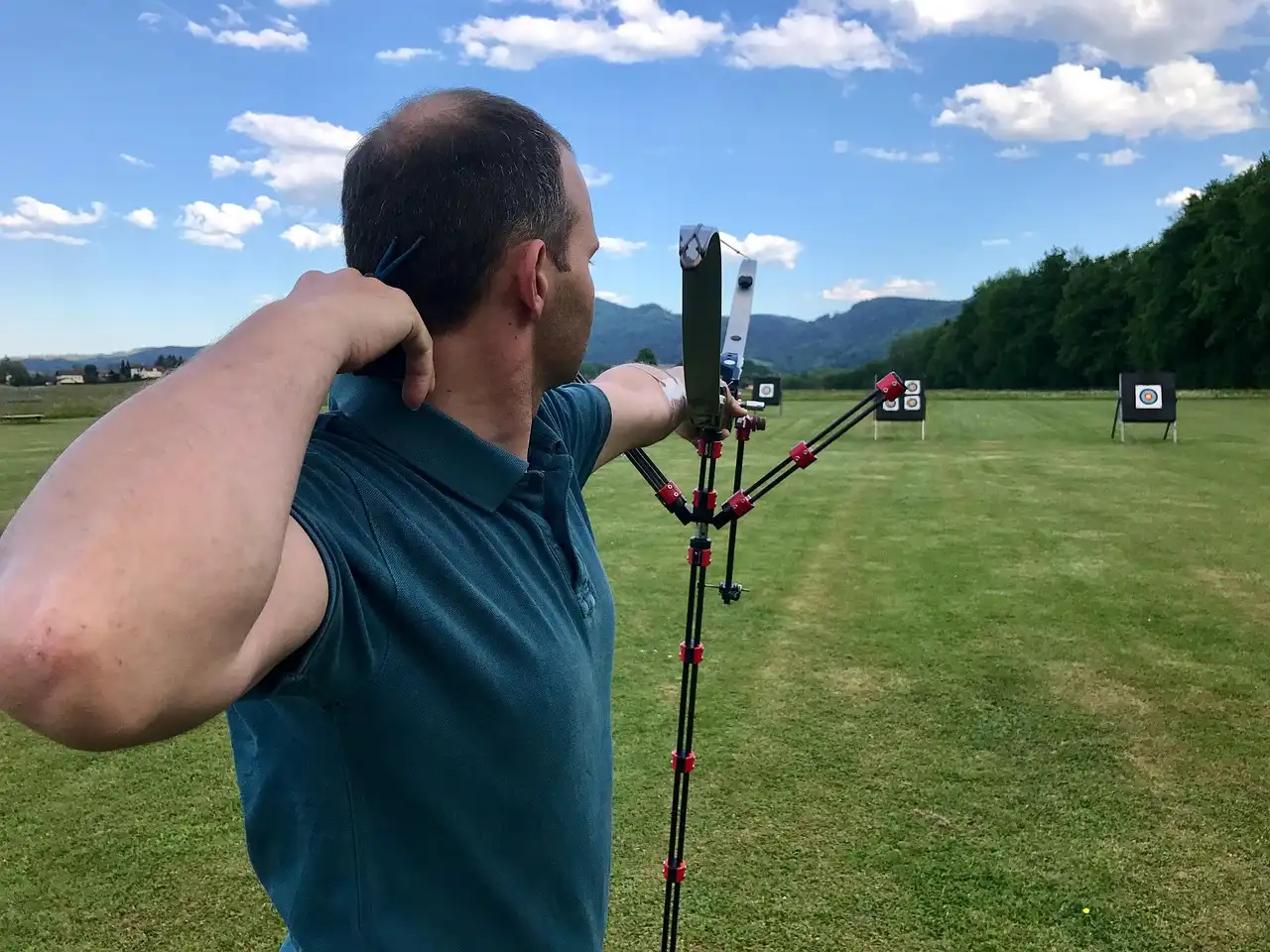
Recurve and compound arrows do not fail the same way. Recurve finger release changes launch behavior and often calls for plunger or button tuning. Compound bows with center-shot rests and release aids reduce archer’s paradox, so paper tune and rest setup matter more, and left-right diagnosis from bare shafts is less reliable.
Recurve finger release and plunger setup
On a recurve, the string leaves the fingers with more sideways disturbance, so the arrow’s initial bend is part of normal flight. Bare-shaft tuning is useful because it compares unfletched and fletched arrows and shows whether the shaft choice and plunger settings are close.
For recurve tuning, start with a shaft cut one to two inches longer than draw length, then adjust point weight and plunger before cutting again. If bare shafts land consistently outside the fletched group after those adjustments, the shaft may be wrong.
Compound rest type, release aid, and paper tune
On a compound, paper tuning is often the cleaner first diagnostic because the release aid and center-shot rest reduce launch noise. But paper tears can still come from rest position, cam timing, nock point height, or grip, so the bow must be set correctly before spine gets blamed.
For compound arrow length, keep the point about an inch in front of the rest at full draw. That is a safety and setup check, not a target length to chase blindly. If the arrow is too long, it behaves weaker; if it is cut too short, it can create clearance and safety problems.
How do I know if my arrows are too stiff or too weak?
Too stiff and too weak show up as tuning problems, poor recovery, and groups that fail to tighten when other variables are corrected. On recurves, bare-shaft and group behavior are useful clues. On compounds, paper tune and broadhead flight give cleaner evidence, while left-right bare-shaft impact alone is not a dependable spine diagnosis.
What to look for in real tuning
- If a recurve bare shaft sits consistently outside the fletched group after plunger and point changes, the shaft may be wrong.
- If a compound paper tear stays poor after rest and nock setup are confirmed, spine or point weight may need to change.
- If broadheads drift while field points group, the setup may be close but not fully stable.
- If bigger vanes only reduce the symptom, the shaft is probably masking a mismatch.
Suppose a compound shooter gets a clean paper tear with a 100 grain field point, then switches to a heavier broadhead, and broadheads may hit high and drift. That points toward a setup that was close with the field point but not stable enough for the added steering of the hunting head.
When to stop tuning and change shafts
Stop tuning and re-spec the shaft when point weight changes no longer move the result in the right direction, or when the needed fletching correction gets so large that it is only hiding a mismatch. A bow can be made to shoot acceptable groups with heavy drag, but that is not the same as matching the shaft to the bow.
Broadhead tuning for hunting arrows
Broadheads can expose problems that field points hide. Because they steer differently, a setup that groups practice points well may still plane with hunting heads. The fix is not always more vane. Sometimes the arrow needs a different spine, a different point weight, or a shorter finished length.
How to confirm broadhead flight
Start with paper or bare-shaft tuning, then shoot broadheads at a short distance and compare them with field points. If broadheads are the only arrows that drift, first confirm that the shaft is close and that the fletching is adequate. If the drift is large, the shaft choice is probably wrong and more tuning will not solve it.
Why a field-point tune can still fail
Field points are streamlined. Broadheads are not. A bow that looks tuned with practice points can still show planing when the hunting head adds more front-end steering, especially if the shaft is already on the weak side or the fletching is too small for the setup.
Frequently asked questions
How do spine, point weight, and fletching affect arrow flight together?
Spine gets you close, point weight shifts dynamic behavior, and fletching stabilizes the arrow after launch. If the shaft is close, point changes and vane choice can finish the tune. If the shaft is far off, fletching only hides the problem for a while.
What is the difference between static spine and dynamic spine?
Static spine is the shaft stiffness rating measured under a 1.94 lb load over 28 inches. Dynamic spine is how that shaft behaves in the real bow after length, point weight, insert weight, draw weight, draw length, cam aggression, and string material are added to the picture.
Do bigger vanes fix a weak or stiff arrow?
Bigger vanes can add drag and help stabilize an arrow that is already close. They do not fix a true spine mismatch. If a shaft is too weak or too stiff, bigger vanes may reduce the symptom without solving the cause.
Can bare-shaft tuning confirm whether my arrow setup is correct?
Yes, bare-shaft tuning is one of the best ways to confirm a recurve setup, and it is useful as a cross-check on compounds. It compares fletched and unfletched arrows and shows recovery problems. On compounds, use it with paper tuning and do not rely on left-right bare-shaft impact alone.
Should recurve and compound arrows be tuned the same way?
No. Recurve tuning must account for finger release and plunger or button setup. Compound tuning must account for release aid use, center-shot rests, and paper tune. The same symptom can come from different causes on each bow, so the diagnosis must match the bow type.