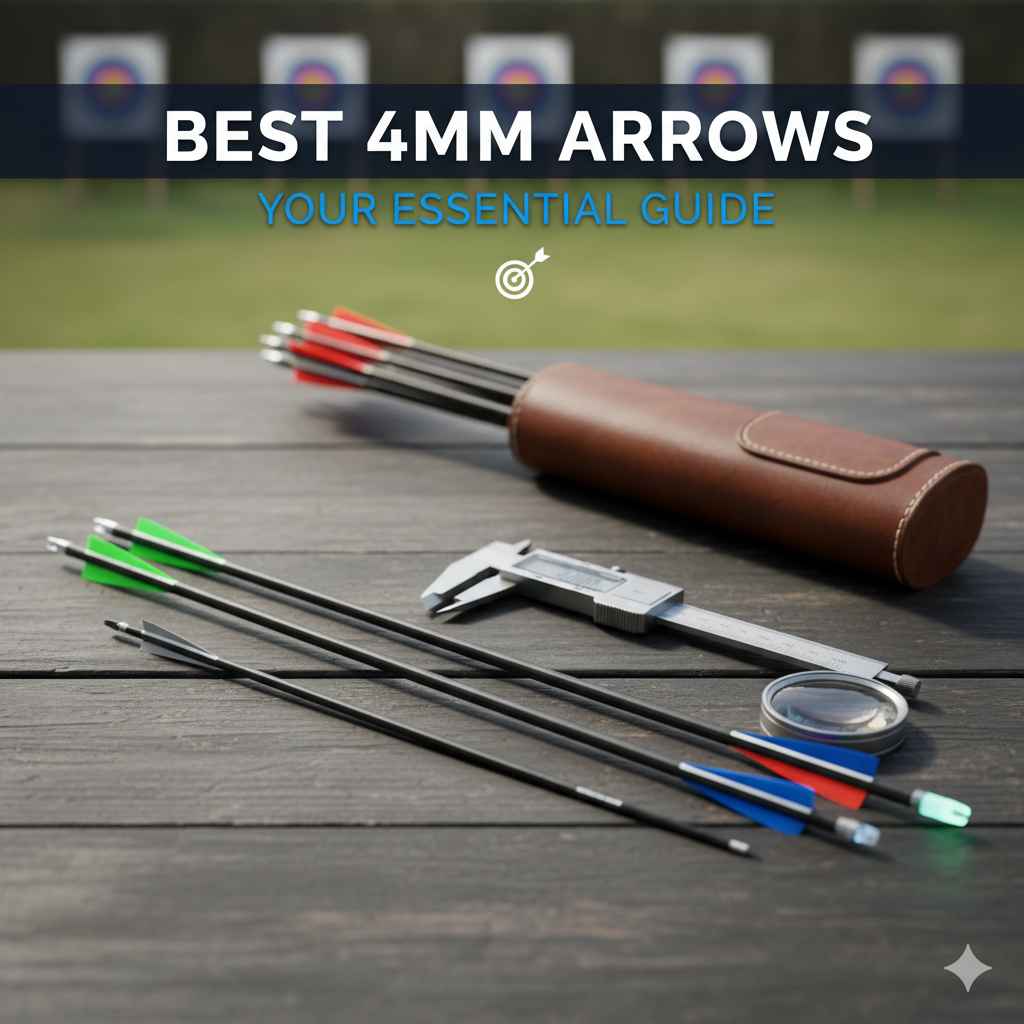
Best 4mm Arrows: Your Essential Guide
Thinking about 4mm arrows? The best 4mm arrows for beginners offer a balance of accuracy, durability, and affordability, making practice sessions enjoyable and rewarding. Look for carbon shafts with consistent spine and a reliable nock system, suitable for your bow’s draw weight for optimal performance and shooting confidence.

Easton
Easton Archery Axis 4MM 340 Arrows -…
- EASTON ARROW 4MM AXIS LONG RANGE (.003) 2" BLAZER VANES 340 (6)
As an Amazon Associate I earn from qualifying purchases.
Learning archery is an exciting journey, and choosing the right gear can make all the difference. Sometimes, figuring out the best arrows feels a bit like trying to hit a bullseye in the dark! Many beginners find themselves wondering about arrow sizes, especially the popular 4mm options. Are they the right choice for you? Will they fly straight? Stick with me, and we’ll break down everything you need to know about 4mm arrows with simple, practical advice. We’ll cover what makes them great, how to pick the best ones for your setup, and how to care for them so you can focus on enjoying your archery experience.
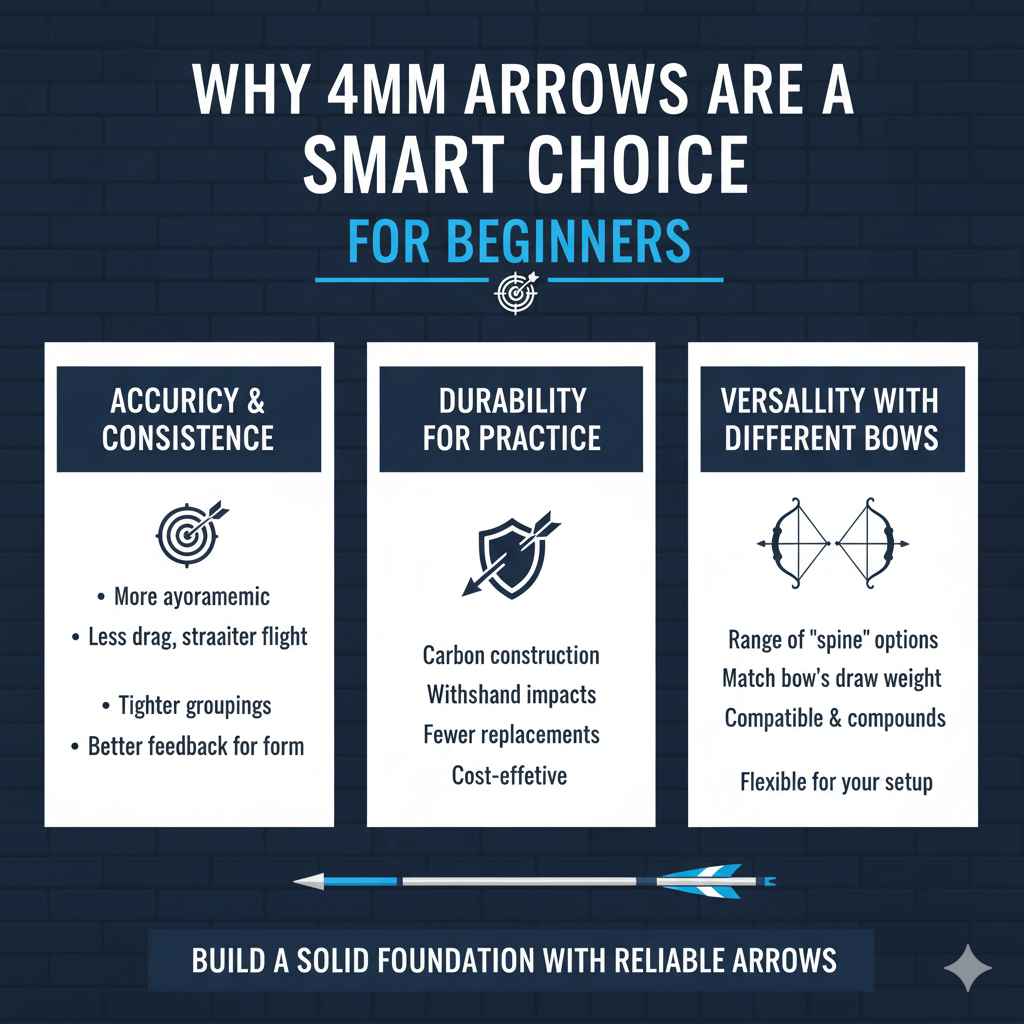
Why 4mm Arrows Are a Smart Choice for Beginners
When you’re starting out in archery, the goal is to build a solid foundation. You want equipment that’s forgiving enough to help you learn proper form and accurate enough to give you satisfying feedback. This is where 4mm arrows really shine for beginners.
Accuracy and Consistency
Smaller diameter arrows, like those in the 4mm size, tend to be more aerodynamic. This means they cut through the air more efficiently, leading to less drag and more consistent flight paths. For a beginner, this translates to tighter groupings on your target, which is incredibly encouraging. When your arrows fly true, you get better feedback on your shooting, helping you to refine your technique faster.
Durability for Practice
Archery, especially when you’re learning, involves a lot of shooting. Arrows can sometimes hit each other or the ground. 4mm arrows, particularly those made from carbon, are known for their durability. They can withstand more impacts and flex without breaking compared to some other materials, meaning fewer replacements and more time spent shooting. This makes them a cost-effective option for frequent practice.
Versatility with Different Bows
4mm arrows come in a range of spine options, which is a crucial factor in matching them to your bow’s draw weight and your draw length. This versatility means you can often find 4mm arrows that work well with a variety of beginner-friendly bows, from recurves to some compound bows. This flexibility is a big plus when you’re just getting your archery setup dialed in.
Understanding Key Features of 4mm Arrows
To make an informed decision about the “best 4mm arrows,” you need to understand what makes one arrow different from another. It’s not just about the diameter; several other components play a vital role in how an arrow performs.
Shaft Material
Most beginner-friendly 4mm arrows are made from carbon. Carbon shafts are lightweight, strong, and offer excellent straightness. This combination leads to good speed and accuracy. While aluminum and wood are also arrow materials, carbon is generally the preferred choice for its durability and consistent performance in the 4mm class.
Spine (Arrow Stiffness)
Spine is perhaps the most critical measurement for arrow performance. It refers to the stiffness or flex of the arrow shaft. An arrow’s spine needs to be matched to your bow’s draw weight and your draw length.
- If the spine is too stiff, the arrow will tend to fly high.
- If the spine is too weak, the arrow will tend to fly low.
The correct spine ensures the arrow exits the bow cleanly and flies straight. For beginners, it’s often best to consult charts or an experienced archer to find the right spine. Many arrow manufacturers provide spine charts based on bow poundage and draw length.
Straightness Tolerance
Arrow straightness is measured by how perfectly cylindrical and straight the shaft is along its entire length. A straighter arrow will fly more consistently. For 4mm arrows, look for specifications indicating a tight straightness tolerance, often measured in thousandths of an inch (e.g., +/- 0.003 inches or +/- 0.001 inches). Tighter tolerances mean better accuracy.
Weight (Grains Per Inch)
Arrow weight is usually expressed in grains per inch (GPI). Heavier arrows generally offer more momentum and penetration, while lighter arrows provide more speed. For target archery and general practice, a moderate weight is often ideal for a balance of speed and stability. The total weight of the arrow also depends on the point (field tip or broadhead) and any added inserts or components.
Inserts and Nocks
Inserts: These are small pieces, typically made of aluminum or plastic, that are glued into the front of the arrow shaft. They provide a strong connection point for the arrow point (field tip, broadhead, etc.).
Nocks: These are attached to the rear of the arrow shaft and are designed to snap onto the bowstring. For 4mm arrows, you’ll commonly find press-fit or glued-in nocks. Ensure the nock fits your bowstring securely.
Fletching (Vanes)
Fletching refers to the fins or vanes attached to the rear of the arrow. They stabilize the arrow in flight.
- Vanes: Typically made of plastic, they are more durable and weather-resistant, making them a popular choice for target practice and general shooting.
- Feathers: Traditional fletching, often used for outdoor or traditional archery.
For 4mm arrows, vanes are very common. You’ll see them in different shapes and sizes, and sometimes an offset or helical (curved) orientation to induce spin for better stability.
How to Choose the “Best” 4mm Arrows for Your Setup
Selecting the right 4mm arrows involves matching them to your specific archery equipment and your shooting style. It’s less about a single “best” arrow and more about the “best fit” for you.
1. Match Arrow Spine to Your Bow
This is the most critical step. Using arrows that are the wrong spine can lead to poor accuracy and potentially unsafe shooting conditions.
Consider these factors:
- Bow Draw Weight: Your bow will have a poundage rating (e.g., 30-50 lbs). This gives a general idea of the arrow spine needed.
- Your Draw Length: The distance you pull the string back affects how the arrow flexes. A longer draw length generally requires a stiffer (higher spine number) arrow, while a shorter draw length needs a more flexible (lower spine number) arrow.
Most bow manufacturers and arrow companies provide spine charts. For example, a bow with a 40 lb draw weight and a 28-inch draw length might require a 4mm arrow with a spine of 400. Always refer to the specific charts for your bow and arrows.
2. Arrow Length
The length of your arrow needs to be slightly longer than your comfortable draw length. A common method is to measure from the nock groove (where the string attaches) to the back of the arrow insert. Your arrow should extend about 0.5 to 1 inch past the riser (the part of the bow you hold) when in the bow.
- Measure Accurately: Use a tape measure and have someone watch your draw to ensure you’re at your natural anchor point.
- Err on the Side of Slightly Longer: For beginners, it’s safer to have an arrow that’s slightly too long than too short. A too-short arrow can be dangerous if it falls off the rest before being released.
3. Straightness and Durability
As a beginner, you want arrows that are forgiving and durable. Look for 4mm carbon arrows with a straightness tolerance of +/– 0.003 inches. While tighter tolerances (+/– 0.001 inches) offer slightly better accuracy, +/- 0.003 is an excellent starting point that balances quality with cost. Brands like Easton, Victory Archery, and Black Eagle are known for producing quality carbon arrows.
4. Price and Quantity
Beginners tend to purchase more arrows than experienced archers due to frequent practice and occasional accidents. Therefore, finding a balance between quality and cost is important.
- Start with a Dozen: Buying arrows in a half-dozen or dozen pack is usually more economical than buying them individually.
- Consider Entry-Level Models: Many reputable brands offer excellent entry-level 4mm carbon arrows that provide great performance without breaking the bank.
5. Arrow Points (Field Tips)
For practice and general target shooting, you’ll want to use field tips. These are blunt, screw-in points designed for durability.
- Weight Matching: Field tips come in various weights (e.g., 100 grains, 125 grains). The weight of your field tip, combined with the arrow shaft and any inserts, contributes to the overall arrow weight and balance (its “front of center” or FOC).
- Start Standard: For general target shooting with a 4mm arrow, 100-grain or 125-grain field tips are common starting points. Consult your arrow manufacturer’s recommendations if you’re unsure.
Popular 4mm Arrow Options for Beginners
While a definitive “best” can vary, here are some highly-regarded 4mm arrow lines that are excellent choices for beginners due to their performance, durability, and availability.
Easton Arrow Series
Easton is a giant in the archery world, known for quality and innovation.
- Easton XX75 Platinum Plus (Aluminum/Carbon Composite): While not pure carbon, these offer a good blend and are often a budget-friendly option. They are very durable.
- Easton Inspire: These are specifically designed for recreational and beginner archers. They offer good durability and consistent performance in a smaller diameter suitable for many beginner bows.
- Easton Sonic: A step up, offering tighter tolerances and excellent performance for those looking for a bit more accuracy.
Victory Archery VAP (Victory Apache Project) Series
Victory Archery is a favorite among many archers for its high-quality carbon arrows. The VAP series offers excellent accuracy and strength. While some VAP arrows are built for competitive archery with very tight tolerances, they also have options that are suitable for serious beginners looking for top-tier performance.
Black Eagle Arrows X-Impact or Carnivore Series
Black Eagle is another brand renowned for its high-quality archery shafts.
- Black Eagle X-Impact: These are designed as a smaller diameter, high-performance arrow that is still very durable and suitable for a wide range of archery disciplines, including target shooting.
- Black Eagle Carnivore: Often favored for hunting, but their durability and accuracy make them a solid choice for practice if budget allows.
When looking at these, focus on the spine ratings that match your bow. For instance, if you have a 40 lb recurve, you’d look for 4mm shafts in the 400-500 spine range, depending on your draw length.
A Table of Common 4mm Arrow Specifications
Understanding the specs helps you compare different 4mm arrows. Here’s a look at what you might see.
| Specification | Description | Beginner Importance |
|---|---|---|
| Diameter | Typically around 5/16 inch (approx. 7.9mm) for traditional, but 4mm refers to the internal diameter or a specific series classification by manufacturers, leading to a smaller outer diameter (around 0.20-0.25 inches or 5-6.35mm). | Key for aerodynamics and fitting certain accessories. |
| Shaft Material | Carbon, Aluminum/Carbon composite. | Carbon is preferred for durability and consistency. |
| Spine | Stiffness of the arrow shaft (e.g., 400, 500). | CRITICAL. Must match bow draw weight and draw length. |
| Straightness Tolerance | How perfectly straight the shaft is (e.g., +/- 0.001″, +/- 0.003″). | Important for accuracy; +/- 0.003″ is good for beginners. |
| Weight (GPI) | Grains per inch; contributes to arrow momentum and speed. | Less critical for beginners than spine, but affects feel. |
| Inserts | Used to attach arrow points. Available in various materials (aluminum, plastic). | Standard, but ensure compatibility with points. |
| Nocks | Connects arrow to bowstring. Usually press-fit or glued-in. | Ensure a snug fit for positive engagement. |
| Fletching (Vanes) | Stabilizing fins. Vanes are common for durability. | Affects flight stability; various sizes and shapes. |
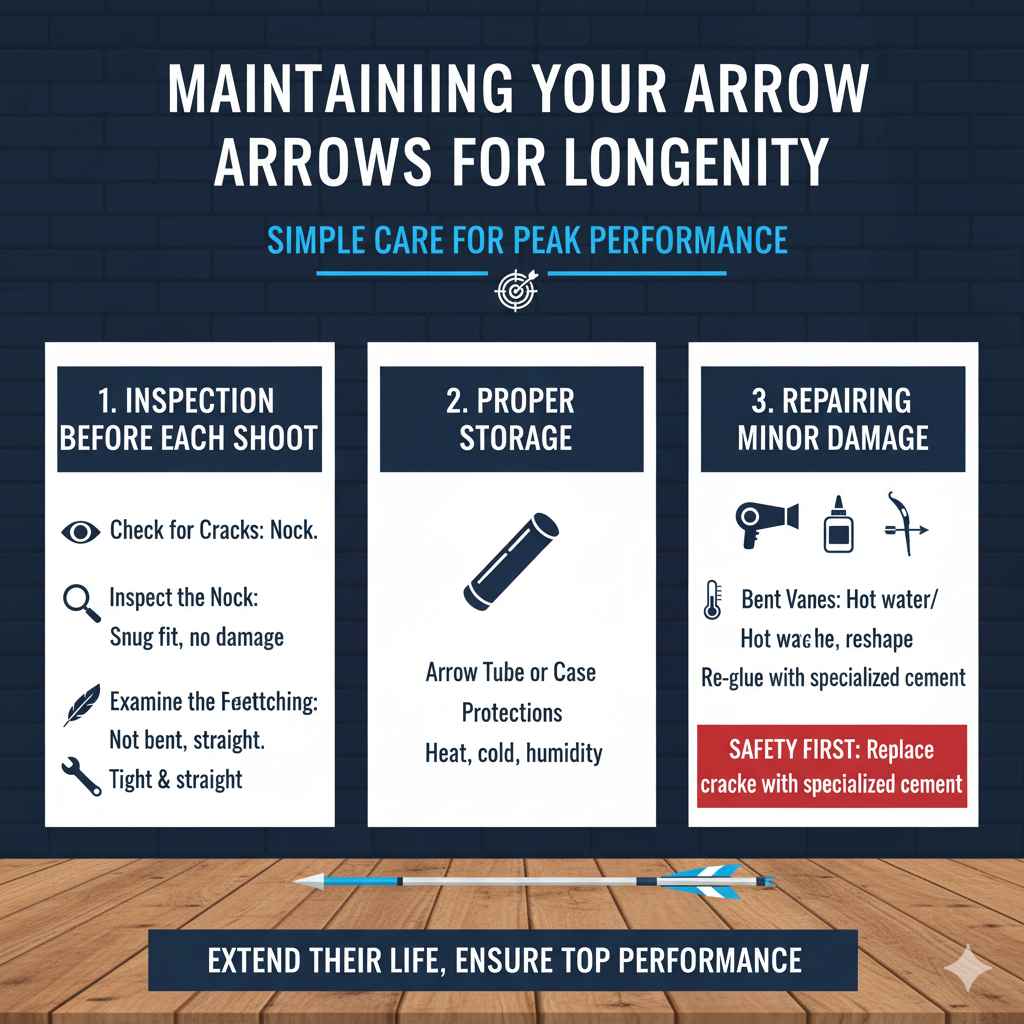
Maintaining Your 4mm Arrows for Longevity
Caring for your arrows properly will extend their life and ensure they perform at their best. It’s simple maintenance that makes a big difference.
Inspection Before Each Shoot
Before you even step up to the shooting line, take a moment to inspect each arrow you plan to use.
- Check for Cracks: Look for any signs of cracks, especially around the nock area and the front of the shaft. A cracked carbon arrow can be dangerous and should be retired immediately. A quick way to check is to gently bend the arrow away from your ear; if you hear a cracking sound, discard it.
- Inspect the Nock: Ensure the nock is not damaged and fits snugly on your bowstring. A loose nock can misfire, potentially causing damage to your bow or arrow.
- Examine the Fletching: Make sure vanes or feathers are not bent, torn, or coming loose. Damaged fletching will negatively impact arrow flight.
- Check the Insert and Point: Ensure the insert is secure and the field tip is screwed in straight and tight.
Proper Storage
How you store your arrows when you’re not shooting is also important.
- Arrow Tube or Case: The best way to store and transport arrows is in an arrow tube or a dedicated arrow case. This protects them from impacts and keeps them straight.
- Avoid Extremes: Don’t leave your arrows in very hot or very cold conditions for extended periods, as extreme temperatures can sometimes affect the adhesive holding components together or, in rare cases, shaft integrity.
Repairing Minor Damage
Sometimes, minor issues can be fixed.
- Bent Vanes: A bent vane can often be straightened by carefully exposing it to hot water or a hairdryer on a low setting for a short period, then reshaping it and holding it until it cools.
- Loose Inserts/Nocks: If an insert or nock comes loose, it can usually be re-glued using specialized arrow-bonding glue or fletching cement. Always use glues designed specifically for archery equipment.
For any significant damage, like cracks in the shaft, it’s always safest to replace the arrow. Safety is paramount in archery.
Frequently Asked Questions (FAQ) About 4mm Arrows
Here are some common questions beginners have about 4mm arrows.
Q1: What draw weight bows are 4mm arrows best suited for?
4mm arrows are quite versatile. They are commonly used with modern recurve and compound bows in various draw weights, typically ranging from 30 lbs up to 60 lbs or more, depending on the specific spine of the arrow. The key is matching the arrow’s spine to your bow’s draw weight and your draw length.
Q2: How do I know if a 4mm arrow is the right size for my bow?
The “size” of the arrow for your bow is primarily determined by its spine and length, not just the 4mm diameter. You need to find a 4mm arrow with the correct spine rating for your bow’s draw weight and your draw length. Arrow manufacturers provide spine charts to help you choose. Measure your draw length accurately to make the best selection.
Q3: Are 4mm arrows good for outdoor target archery?
Yes, 4mm arrows are excellent for outdoor target archery. Their smaller diameter means they are more aerodynamic, cutting through the wind better than larger diameter arrows, which leads to more consistent shots in windy conditions. Their durability also makes them suitable for frequent use.
Q4: Can I use 4mm arrows for hunting?
Generally, 4mm arrows are considered a good option for hunting, especially for medium-sized game. Their smaller diameter can offer better penetration in some situations. However, for larger game or situations demanding maximum momentum, some hunters prefer slightly heavier or larger diameter arrows. Always ensure your arrow and broadhead combination is legal and appropriate for the game you are pursuing.
Q5: What kind of points should I use with my 4mm arrows?
For practice and general target shooting, you should use screw-in field tips. Common weights are 100 or 125 grains. For hunting, you would use broadheads, which also come in various weights and configurations. Ensure the points you use are designed to fit the insert system of your 4mm arrows.
Related pick: Check today's price on Amazon