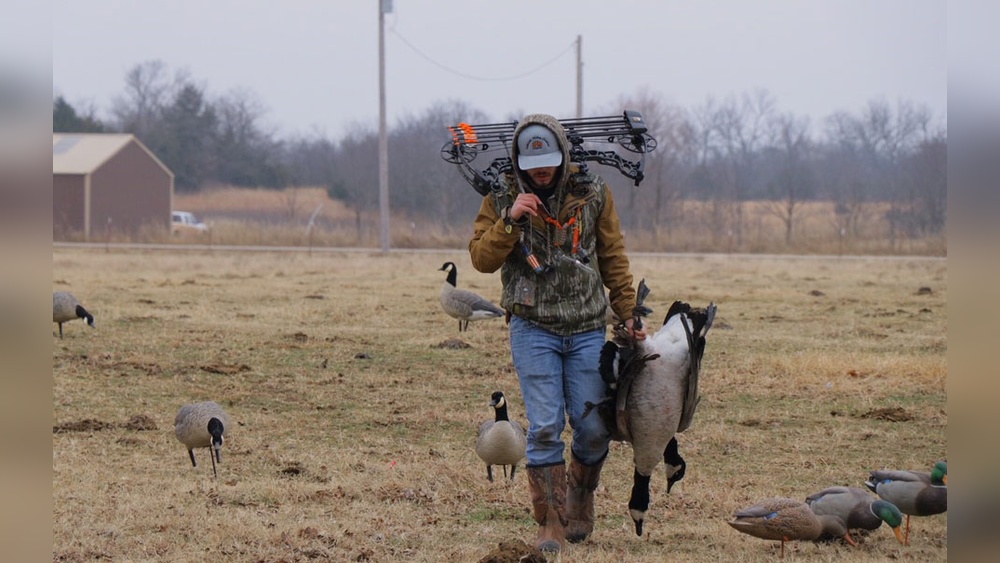
How To Bow Hunt Geese
Waterfowl hunting is often synonymous with shotguns, vast marshes, and the wild honking of geese overhead. But for those looking for a thrilling challenge, bow hunting geese offers an entirely new level of skill, patience, and satisfaction. Bow hunting these wary birds is not for the faint of heart; it requires keen observation, meticulous preparation, and the willingness to embrace steep odds.
The reward? A deeply immersive hunt and the ultimate test of stealth and marksmanship.
While shotgun hunters can rely on a broad pattern of pellets, the bow hunter must get close, often within 30 yards, where every movement, sound, and scent can mean the difference between success and a flock of startled geese vanishing into the sky.
As waterfowl populations remain strong in North America, more archers are exploring this ancient pursuit, blending modern gear with time-honored woodsmanship. In this comprehensive guide, you’ll discover proven strategies, gear advice, legal considerations, and real-world tips for making your next goose hunt with a bow both ethical and effective.
Key Takeaways
- Bow hunting geese requires special gear, advanced concealment, and a focus on short-range shooting.
- Understanding goose behavior and migration patterns is critical for getting within bow range.
- Effective decoy spreads and calling techniques increase your chances of drawing birds close.
- Proper shot placement and arrow selection are essential for quick, humane harvests.
- Legal regulations vary widely; always check local and federal laws before hunting.
- Preparation, patience, and persistence are the keys to a successful bow hunt for geese.
Essential Gear For Bow Hunting Geese
Bow hunting geese demands specialized equipment built for stealth, accuracy, and close encounters. Using the right gear not only improves your odds but also ensures your hunt is ethical and humane.
Bows And Arrow Selection
Most bow hunters opt for modern compound bows due to their power and accuracy. Draw weights between 50-70 pounds are recommended for clean penetration, but the exact setup depends on your physical ability and local regulations. Some traditionalists prefer recurve bows, but these demand more practice to achieve consistent results at waterfowl ranges.
Arrows should be constructed from sturdy carbon or aluminum, with a total weight of at least 400 grains. Broadheads must be sharp and durable; fixed-blade broadheads with a cutting diameter of at least 1 inch are ideal, as mechanical broadheads may not deploy reliably at lower velocities.
Decoys And Concealment
Decoys play a crucial role in coaxing geese within bow range. Use full-body or shell decoys with realistic feather detail and flocked heads for maximum appeal. For concealment, a layout blind or well-camouflaged ground blind is essential. Ensure your blind matches the environment, corn stubble, grass, or shoreline reeds, and avoid any shiny or unnatural materials that could betray your presence.
Clothing And Accessories
Wear camouflage clothing suited to your environment, including gloves and face masks to hide exposed skin. Waterproof boots and insulated layers are necessary for cold, wet conditions. Rangefinders are invaluable for judging the precise distance to decoys, as misjudging range is a common cause of missed shots. Carry a quality goose call, extra arrows, and a small repair kit for field fixes.
Comparison Table: Gear For Bow Vs. Shotgun Goose Hunting
| Category | Bow Hunting | Shotgun Hunting |
|---|---|---|
| Main Weapon | Compound/Recurve Bow | 12 or 10 Gauge Shotgun |
| Effective Range | 20, 35 yards | 30, 60 yards |
| Arrow/Shell | 400+ grain arrow, fixed-blade broadhead | Steel shot, #2 or BB |
| Concealment | Layout/ground blind, full camo | Layout/boat blind, camo |
| Decoys Needed | High realism, close set | Large spread, wider set |
| Calling | Soft, close-range calling | Varied, long-range calling |

Credit: www.youtube.com
Understanding Goose Behavior And Habitat
The secret to bow hunting geese lies in understanding their daily routines, seasonal migrations, and preferred habitats. By anticipating their movements, you set yourself up for close-range opportunities.
Migration Patterns And Seasonal Timing
Geese are migratory birds, traveling thousands of miles between northern breeding grounds and southern wintering areas. The best bow hunting occurs during peak migration, when birds are moving in large numbers and are more likely to visit new feeding fields.
Early morning and late afternoon are prime times, as geese leave roosts to feed.
Example: In the Central Flyway, hunters in Nebraska have found exceptional success by targeting harvested cornfields during late October, when snow and Canada geese arrive in force.
Feeding And Roosting Habits
Geese typically roost on large bodies of water overnight, then fly out to feed in agricultural fields during the day. Identify where geese are feeding, often freshly harvested grain fields or green pastures, and set up on travel routes or landing zones.
Scouting is critical; use binoculars to observe flight paths and landing patterns from a distance to avoid spooking birds.
Weather And Wind Considerations
Weather strongly influences goose movement. Overcast, windy days keep geese flying low, making it easier to intercept them within bow range. On calm, clear days, birds may fly higher and be more cautious. Wind direction is crucial for setting up decoys and blinds; always position yourself upwind from decoys so incoming geese approach head-on.
Reading Goose Body Language
Geese communicate through posture, wing movement, and vocalizations. Relaxed birds have upright heads and feed calmly. Alert geese stretch their necks and scan for danger. If geese begin to circle high or “flare” away from your setup, reassess your blind, decoy arrangement, or movement.

Credit: www.bowhunting.com
Scouting And Pre-hunt Preparation
A successful bow hunt starts long before opening day. Diligent scouting, landowner relationships, and meticulous setup are the foundation for close encounters.
Locating Productive Fields
Use aerial maps, such as Google Earth or state wildlife agency resources, to identify likely feeding sites near water. Look for fields with recent harvest activity or green growth. Driving local roads at dawn and dusk allows you to spot flocks and pinpoint entry/exit points.
Securing Permission And Access
Much of the best goose hunting occurs on private land. Always gain permission from landowners, offering to share part of your harvest or help with chores. Some hunters form long-term relationships with farmers to secure annual access. Public lands can also be productive, but may require early arrival to claim a spot.
Patterning The Birds
Geese are creatures of habit, often returning to the same fields day after day if undisturbed. Note the exact locations where geese land, their preferred entry points, and how they respond to changing weather. Use a notebook or mapping app to track these details over several days.
Setting Up The Blind And Decoys
Arrive well before shooting light to set up your blind and decoys without disturbing the area. Place decoys in a “U” or “J” shape, leaving an open landing pocket 20-30 yards in front of your blind. Position the blind so the sun is behind you, and brush it in thoroughly with natural vegetation.
Pro Tip: Avoid over-hunting the same location. Rotate fields or rest spots to keep geese from becoming wary of your setups.

Credit: www.mossyoak.com
Decoy Spreads And Calling Techniques
Effective decoy spreads and calling are vital for drawing geese within bow range. Unlike shotgun hunting, your goal is to entice birds to land precisely where you want them.
Choosing And Placing Decoys
- Use high-quality, full-body decoys with flocked heads for realism.
- Set 12, 24 decoys in a loose grouping, simulating a relaxed, feeding flock.
- Leave an open pocket downwind for geese to land, ideally 20-30 yards from your blind.
- Mix in a few sentry (upright) decoys to add realism but avoid too many, as these can signal caution.
Adjusting Spreads For Conditions
Adapt your spread based on weather and flock behavior:
- On windy days, face decoys into the wind, as geese land into the breeze.
- In heavily pressured areas, use fewer decoys and increase realism.
- Space decoys to prevent a “traffic jam” appearance that can spook incoming birds.
Calling Strategies For Bow Hunting
Bow hunters must call softly and sparingly, focusing on subtle clucks and moans rather than loud hail calls. The goal is to reassure, not attract from afar. As geese approach, quiet your calling to avoid drawing attention to your blind.
Flagging And Motion
Adding motion, such as a flapping decoy or simple black flag, can catch the eye of distant geese. Use flagging sparingly; overuse can make birds suspicious. When geese commit, stop all movement and prepare to draw your bow.
Concealment, Movement, And Shot Opportunities
Geese have keen eyesight and are quick to spot anything unusual. Flawless concealment and minimal movement are critical to getting a shot.
Building The Perfect Blind
Layout blinds are the gold standard for field hunting. Choose a model that allows you to shoot comfortably from a seated or reclined position. Brush the blind with local vegetation until it disappears into the surroundings. Ensure shooting windows are large enough for unobstructed bow movement.
Minimizing Movement
Draw your bow only when the goose is focused on decoys or has its head down feeding. Practice drawing smoothly and slowly to avoid sudden movements. Keep gear organized and within reach to prevent scrambling at the moment of truth.
Shooting Angles And Timing
Wait until the goose is fully committed and stationary or moving slowly within your effective range. Broadside or slightly quartering-away shots provide the best angle for vital organ penetration. Avoid shooting at geese flying directly overhead, as the risk of wounding is higher.
Real-world Example: A Close Encounter In The Field
In my experience hunting Canada geese in Kansas, patience was everything. After two hours in a frosty cornfield, a small flock finally committed to the decoys. When the lead bird dropped its head to feed, I drew my bow, released, and watched my arrow find its mark at just 22 yards, a testament to the payoff of careful concealment and timing.
Shot Placement And Ethics
Taking ethical shots is the bow hunter’s responsibility. Proper shot placement ensures a quick, humane harvest and maximizes meat recovery.
Goose Anatomy And Vital Zones
Geese have robust bodies with thick feathers and down. The vital organs, the heart and lungs, are located just behind the wing, low in the chest. The spine and neck are also quick-kill zones but are smaller targets.
Shot Placement Tips
- Aim just behind the wing joint on a broadside goose.
- For quartering-away shots, angle the arrow forward toward the opposite wing.
- Avoid shooting at the breast, tail, or heavily shielded back.
- Head and neck shots are effective but demand high precision.
Broadhead Selection
Fixed-blade broadheads with a cutting diameter of 1, 1. 5 inches create wide wound channels and ensure better penetration. Practice with your hunting setup to ensure arrows fly true.
Pro Tip: Recovering Wounded Geese
If a goose is hit but not immediately downed, mark its fall and pursue quickly. Geese can travel surprising distances on foot or in water. Use a dog for retrieval if possible, or enlist a partner to track.
Legal, Ethical, And Conservation Considerations
Bow hunting geese is governed by strict regulations and ethical guidelines to ensure sustainable populations and fair chase.
Federal And State Regulations
In the US, waterfowl hunting is regulated by the Migratory Bird Treaty Act and enforced by federal and state agencies. Most states allow bow hunting for geese, but specifics vary:
- Non-toxic arrows are required in many areas.
- Electronic calls are prohibited.
- Bag limits, season dates, and shooting hours are strictly enforced.
Always consult your state wildlife agency and the US Fish & Wildlife Service for the latest rules.
Licensing And Tagging
A valid state hunting license, federal duck stamp, and HIP registration are typically required. Some states mandate special archery endorsements for waterfowl.
Ethical Considerations
- Only take shots within your proven effective range.
- Practice regularly for consistent accuracy.
- Respect private property, crops, and livestock.
- Retrieve all downed birds and use as much of the animal as possible.
Conservation And The Role Of Hunters
Hunters fund much of North America’s waterfowl conservation through license and stamp purchases. By practicing ethical, legal hunting, you contribute to the stewardship of wild goose populations for future generations.
Real-world Success Stories And Lessons Learned
Learning from the experiences of other bow hunters can provide valuable insights and inspiration.
Case Study: Public Land Bow Hunt In Missouri
A dedicated archer spent weeks scouting a large wildlife management area. He identified a secluded backwater roost and discovered geese flying low over a narrow field edge. By setting a minimalist spread of 10 decoys and using a brush blind, he successfully harvested two geese at 28 and 31 yards.
Case Study: Late Season Snow Goose Bow Hunt
Late in the season, snow geese become wary. An Illinois bow hunter found success by targeting a small flock using motion decoys and subtle calling. The key was remaining patient until a single bird separated from the flock and landed in the decoy pocket.
Lessons From Missed Opportunities
Many archers report missed shots due to poor range estimation or drawing too early. Practice with your rangefinder and wait for the bird to commit before drawing. Every failed attempt is a chance to refine your tactics for next time.
Pro Tip: Network With Experienced Waterfowlers
Joining a local waterfowl or bow hunting club can provide access to knowledge, land, and mentorship. Many veteran hunters are happy to share strategies and may welcome new partners for field hunts.
Comparing Bow Hunting Goose Techniques Across Regions
Bow hunting geese varies by geography, bird species, and local traditions. Understanding these differences can help you adapt your approach.
Table: Regional Goose Bow Hunting Differences
| Region | Common Species | Typical Habitat | Best Tactics |
|---|---|---|---|
| Midwest (e.g., Iowa, Nebraska) | Canada, Snow | Cornfields, river bottoms | Layout blinds, aggressive decoys |
| Pacific Northwest | Cackling, Western Canada | Wetlands, grass fields | Natural blinds, subtle calling |
| Atlantic Flyway (e.g., Maryland) | Atlantic Canada, Brant | Shorelines, tidal flats | Boat blinds, mixed spreads |
| Southern US | Greater White-fronted | Rice fields, reservoirs | Edge cover, small spreads |
Adapting To Local Conditions
- In high-pressure areas, use fewer, more realistic decoys.
- For snow geese, consider mobile setups and lighter gear for fast-moving flocks.
- Along rivers, natural cover may eliminate the need for commercial blinds.
Example: Pacific Northwest Adaptation
Hunting cackling geese in Oregon, one bow hunter relied on a simple hide of willow branches and wore muted greens. By calling softly and using only six decoys, he consistently brought birds to within 25 yards, a strategy tailored to smaller, more cautious geese.
Frequently Asked Questions
What Special Permits Are Needed To Bow Hunt Geese?
In addition to a standard state hunting license, you must purchase a federal duck stamp and typically register with the Harvest Information Program (HIP). Some states require a waterfowl or archery endorsement. Always check with your state’s wildlife agency and the US Fish & Wildlife Service for current requirements.
Can Crossbows Be Used For Goose Hunting?
Laws regarding crossbow use for waterfowl vary. Some states allow crossbows during archery seasons, while others restrict them to certain hunters (such as those with disabilities). Crossbows must meet minimum draw weight requirements and use non-toxic broadheads where mandated. Review local regulations before hunting.
How Do I Keep My Bow And Gear Dry During Wet Conditions?
Use a waterproof case or dry bag to transport your bow to the blind. Once set up, keep gear elevated on a stool or mat to avoid standing water. Consider a bow sling with a rain cover. Wipe down metal components after the hunt to prevent rust.
Are There Effective Bow Hunting Strategies For Snow Geese?
Snow geese are notoriously wary and travel in large flocks. Use a small, mobile decoy spread and focus on isolated birds or small family groups. Motion decoys and subtle calling help create a realistic landing zone. Persistence and flexibility are essential for success.
What Should I Do If I Wound A Goose But Can’t Find It?
Mark the last known location and search methodically, expanding your grid outward. Use a trained retriever if possible, or recruit a partner to help. If the bird falls in water, use waders or a small boat for recovery. Ethically, every effort should be made to retrieve and use all harvested birds.
Bow hunting geese is a pursuit that demands dedication, adaptability, and deep respect for the birds and the land. With the right preparation, gear, and mindset, archers can find incredible satisfaction in this challenging form of waterfowl hunting. Whether you’re hunting the vast fields of the Midwest or the tidal marshes of the Atlantic, every close encounter is a hard-earned reward. For further reading on waterfowl hunting ethics and techniques, visit the Ducks Unlimited Hunting Resources or explore the latest migration reports at the US Fish & Wildlife Service.
No matter the outcome, each hunt offers a chance to hone your skills, connect with nature, and participate in a rich tradition. As more hunters discover the unique challenge of bow hunting geese, the future of this demanding sport looks bright, rooted in skill, patience, and a passion for wild places.