Are Bear Super Kodiak Recurve Bows Sold? Essential Guide
Yes, Bear Super Kodiak recurve bows are indeed sold and are a popular choice for traditional archery enthusiasts. While not always readily available in every local shop, they can be found through specialized archery retailers, online stores, and sometimes even directly from the manufacturer. This guide will help you find one and understand what makes them special.

Bear Archery
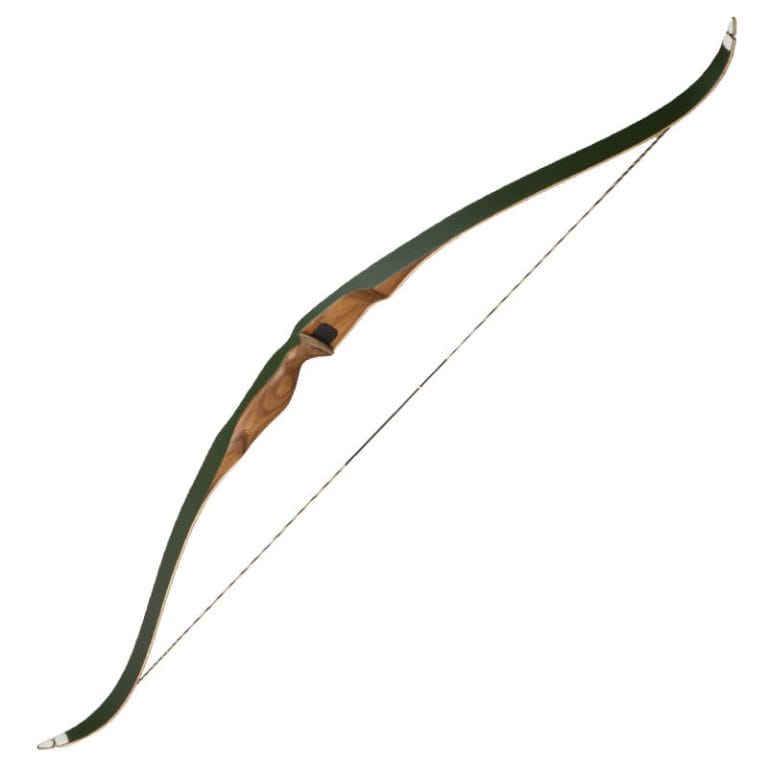
Bear Archery Super Kodiak 60 Recurve Bow…
- Product Type: Sporting Goods
- Package Dimensions: 6.4 L X 15.9 W X 153.7 H (Centimeters)
- Package Weight: 2.495 Kilograms
As an Amazon Associate I earn from qualifying purchases.
Welcome, fellow archery adventurers! Are you setting your sights on a classic recurve bow, perhaps one with a legendary name? If you’ve heard whispers about the Bear Super Kodiak and are wondering if you can get your hands on one, you’re in the right place. Many beginners feel a bit lost when hunting for their first “real” bow, and the Super Kodiak is a name that pops up often.
It can be frustrating when you’re excited to start shooting but aren’t sure where to begin your search. Don’t worry, I’m here to guide you through it, step-by-step, so you can confidently find your perfect bow. We’ll cover where to look, what to expect, and why this bow is so sought after. Get ready to discover the path to owning a piece of archery history!
What is a Bear Super Kodiak Recurve Bow?
The Bear Super Kodiak is more than just a bow; it’s a piece of archery heritage. Crafted by Bear Archery, a company with a long and storied history in bow making, the Super Kodiak is a traditional recurve bow. This means it has limbs that curve away from the archer when unstrung and then curve back to create power when drawn. It’s designed for a classic shooting experience, often favored by archers who appreciate simplicity, reliability, and a connection to the roots of archery. It’s known for being a shootable, forgiving bow, making it a great choice for those new to traditional archery or looking for a solid bow for hunting or target practice.
Where Can You Buy a Bear Super Kodiak Recurve Bow?
Finding a Bear Super Kodiak might require a little focused effort, but the reward is a bow with a fantastic reputation. They aren’t typically found on the shelves of every big box sporting goods store, but with a bit of searching, you’ll discover several reliable avenues.
Online Archery Retailers
This is often the easiest and most common way to find a Bear Super Kodiak. Many online stores specialize in archery equipment and carry a wide selection of Bear bows, including the Super Kodiak. These retailers often have detailed product descriptions, customer reviews, and various draw weights and right/left-handed options available. When shopping online, always look for reputable dealers with good return policies and customer service.
Some well-regarded online retailers include:
Lancaster Archery Supply: Known for their extensive inventory and expert staff.
3Rivers Archery: Specializes in traditional archery gear and is a great resource for information.
Cabela’s/Bass Pro Shops: While larger retailers, they often have dedicated archery sections and can carry popular models.
Direct from Bear Archery
You can also purchase directly from the manufacturer, Bear Archery. Their official website is a reliable source for current models and specifications. Sometimes, buying direct can offer insights into the bow’s manufacturing and even special deals.
Used Marketplaces and Specialty Forums
For those looking for a bargain or perhaps even a vintage model, the used market can be a treasure trove. Websites like eBay, dedicated archery forums (like ArcheryTalk.com), and Facebook Marketplace are places where archers often sell their used equipment. When buying used, it’s especially important to:
Ask for detailed photos of the bow from all angles.
Inquire about its history (how old is it, has it been repaired, what has it been used for).
Check for any cracks, delamination, or significant wear.
If possible, arrange to see and test the bow in person.
Local Archery Shops
While less common for this specific model, it’s always worth checking your local archery pro shops. The staff can offer invaluable hands-on advice, help you find the right draw weight, and let you try different bows. If they don’t have a Super Kodiak in stock, they might be able to order one for you. This personal service can be incredibly beneficial, especially for beginners.

Understanding the Bear Super Kodiak
The Bear Super Kodiak has earned its legendary status for several reasons. It embodies classic recurve design and offers a shooting experience that resonates with many archers.
Key Features of the Super Kodiak
Traditional Recurve Design: It features a simple, one-piece construction with limbs that flair out. This classic profile is instantly recognizable.
Durability and Reliability: Bear Archery has a reputation for building tough, dependable bows, and the Super Kodiak is no exception. It’s built to withstand the rigors of the field.
Comfortable Grip: The riser (the part you hold) is typically designed for a comfortable and natural feel, which is crucial for consistent shooting.
Smooth Draw: Archers often describe the Super Kodiak as having a smooth draw cycle, meaning it doesn’t get excessively heavy or “stack” (become very difficult to pull) as you reach full draw. This contributes to a more relaxed and accurate shot.
Arrow Speed: While not the fastest bow on the market by modern standards, the Super Kodiak offers respectable arrow speed for its class, making it effective for hunting and target archery.
Aesthetics: Many archers appreciate the handsome, classic look of the Super Kodiak, often featuring beautiful wood laminations.
What to Consider When Buying a Bear Super Kodiak
When you’re ready to purchase, here are some essential factors to keep in mind:
Draw Weight
This is perhaps the most critical decision. Draw weight refers to the amount of force (in pounds) required to pull the bowstring back to your anchor point. For beginners, it’s vital to choose a draw weight that is manageable. Trying to shoot a bow that’s too heavy can lead to poor form, injury, and frustration.
Beginner Recommendations:
Men: 25-35 lbs
Women: 20-30 lbs
Youth: 15-25 lbs
It’s always better to start lighter and build strength. You can always move up in draw weight later if needed. Many archers compete and hunt successfully with lower draw weights using proper techniques and arrow selection.
Bow Length
Recurve bows come in different lengths. While the Super Kodiak is typically a takedown bow with separable limbs for easier transport and storage, its total length is a factor in how it will feel and perform for you. Longer bows are generally more stable and forgiving, while shorter bows can be quicker to maneuver in dense brush for hunting. The Super Kodiak is often available in lengths suitable for most adult archers.
Handedness
Bows are made for right-handed or left-handed shooters. A right-handed archer shoots with their right hand on the bow riser and draws the string with their left hand. A left-handed archer does the opposite. Make sure to select the correct handedness for your dominant shooting eye and hand.
Condition (for used bows)
As mentioned earlier, if you are buying a used Super Kodiak, thoroughly inspect it. Look for:
Delamination: Where the layers of wood or fiberglass in the limbs are separating.
Cracks or Chips: Especially on the limb tips or the riser.
String Wear: Check the condition of the bowstring and cables (if applicable).
Twist in Limbs: Ensure the limbs are straight and not warped.
A reputable seller will be upfront about any damage.
Price Range
The price of a new Bear Super Kodiak can vary depending on the retailer and any current promotions. Generally, you can expect to pay somewhere in the range of $300 to $500 for a new model. Used models can be significantly less, but their price will depend heavily on age, condition, and scarcity.
Here’s a general idea of where prices might fall:
| Condition | Typical Price Range | Notes |
|---|---|---|
| New | $300 – $500 | Latest model, comes with full manufacturer warranty. |
| Excellent | $200 – $350 | Lightly used, minimal wear, functions like new. |
| Good | $150 – $250 | Some cosmetic marks or signs of use, but performs well. |
| Fair | $100 – $180 | Noticeable wear or older model, still functional for casual use. |
Note: These are estimated ranges and can fluctuate based on market demand and seller.
Why is the Bear Super Kodiak So Popular?
The enduring popularity of the Bear Super Kodiak isn’t by accident. It’s a combination of history, performance, and a sense of tradition that appeals to a wide range of archers.
Legacy and Heritage: Bear Archery was founded by Fred Bear, a legendary figure in archery. His name is synonymous with innovation and quality. Shooting a Bear bow, especially a model like the Super Kodiak, connects you to that rich history. Many people grew up with Bear bows, and the Super Kodiak is often seen as a direct descendant of some of Fred Bear’s personal favorites.
Beginner-Friendly Performance: As touched upon, its smooth draw and forgiving nature make it an excellent gateway bow into traditional archery. It allows new archers to focus on learning good form without fighting the bow.
Proven Hunting Bow: Over decades, the Super Kodiak has been used successfully by countless hunters. It’s known for its reliability in the field, from the treestand to the backcountry.
Timeless Design: The classic recurve profile simply looks beautiful. It’s a bow that many archers find aesthetically pleasing, appreciating its elegant lines and craftsmanship.
Value for Money: While not the cheapest bow, the Super Kodiak offers excellent value. You get a high-quality, durable bow with a great shooting experience for a reasonable price, especially when considering its longevity.
Support and Community: Because it’s such a popular bow, there’s a large community of Bear Super Kodiak owners. This means plenty of resources, advice, and accessories are available.
Essential Gear to Go With Your Super Kodiak
Once you’ve secured your Bear Super Kodiak, you’ll need a few other essential items to get started safely and effectively.
Arrows
Choosing the right arrows is crucial for accuracy and safety. They need to be matched to your bow’s draw weight and your draw length.
Types: You’ll typically choose between wood, aluminum, carbon, or fiberglass arrows. For beginners, carbon arrows are often recommended due to their durability and straightness.
Spine: This refers to the arrow’s stiffness. An arrow with the correct spine will flex properly when shot from your bow, flying straight. Your bow’s draw weight, string type, and your draw length all factor into selecting the right spine.
Fletching: The feathers or vanes on the back of the arrow that help stabilize its flight.
Tips: For target practice, you’ll use blunt tips or field points. For hunting, you’ll use broadheads. Always use the appropriate tips for your activity.
A good resource for understanding arrow selection can be found on sites like the Archery Trade Association (https://www.archerytrade.org/) which often publishes guides and best practices.
Bowstringer
Never try to string or unstring a recurve bow by hand. This can damage the bow and cause serious injury. A dedicated bowstringer is absolutely essential. It uses leverage to safely bend the limbs and install or remove the string.
Armguard
An armguard protects your shooting arm from the sting of the bowstring. This is a non-negotiable piece of safety gear.
Finger Tab or Shooting Glove
These protect your shooting fingers from the abrasion of the bowstring and can help you achieve a more consistent release. A simple leather finger tab is a good starting point.
Quiver
A quiver holds your arrows safely and conveniently. There are several types:
Hip Quiver: Worn at the hip.
Back Quiver: Worn over the shoulder.
Bow Quiver: Attaches directly to the bow (more common on compound bows but available for recurves).
Bow Square (Optional but Recommended)
A bow square is a T-shaped tool used to check and set your brace height (the distance between the bowstring and the deepest part of the riser). Proper brace height affects arrow flight and bow performance.
Sight (Optional for Traditional)
While many traditional archery purists shoot “instinctively” without a sight, you can add a simple sight to your Super Kodiak if you prefer. This can help with aiming, especially for beginners still developing their shooting eye.
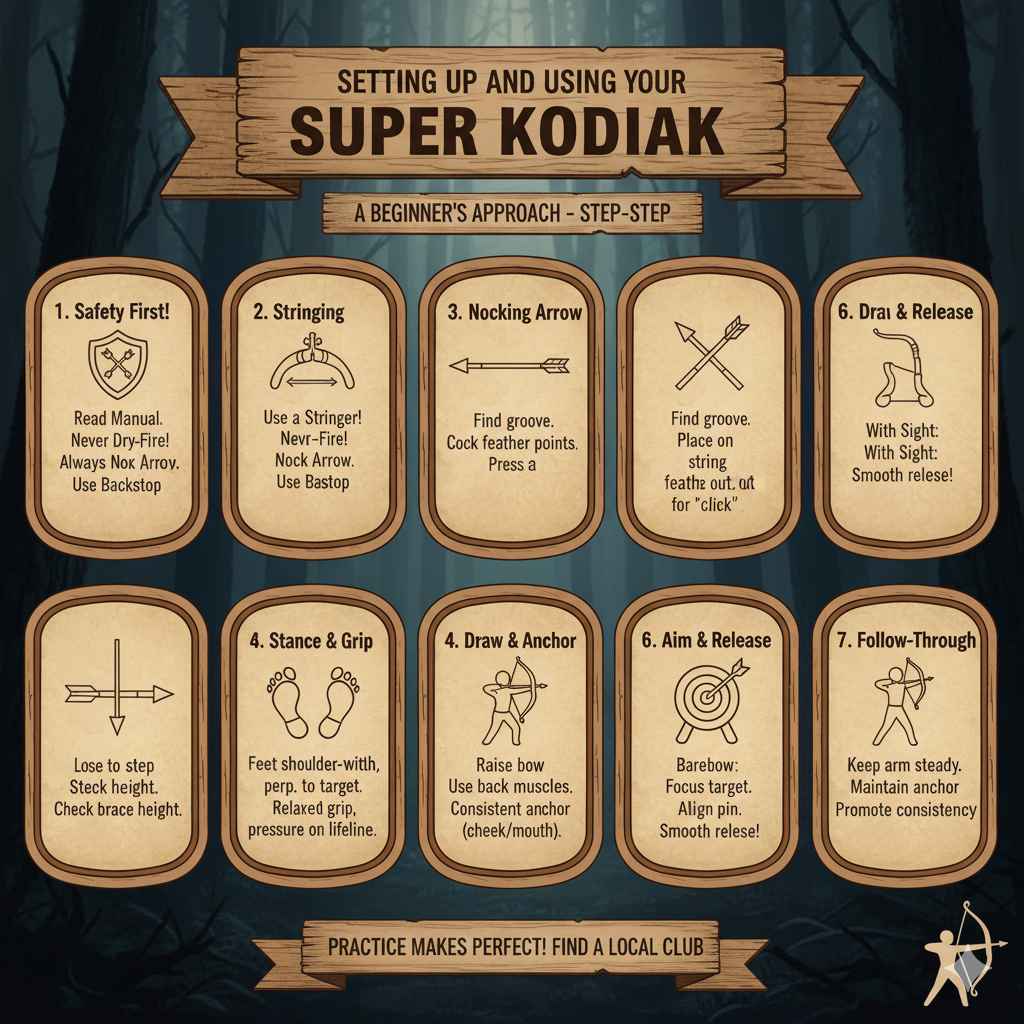
Setting Up and Using Your Super Kodiak: A Beginner’s Approach
Once you have your bow and essential accessories, it’s time to get ready to shoot. Safety and proper technique are key from the very first shot.
Step 1: Understand Your Bow and Safety
Read the Manual: If your bow came with instructions, read them!
Never dry-fire: This means never drawing and releasing the string without an arrow nocked. It can severely damage the bow.
Always nock an arrow: Before drawing the string.
Aim away from people and property: Be aware of your surroundings and what is behind your target.
Use a proper backstop: For target practice, ensure your target butt is substantial enough to stop arrows.
Step 2: Stringing Your Bow
1. Get your bowstringer.
2. Place the large loop of the bowstring over the tip of the bottom limb.
3. Place the small loop over the string nock of the top limb.
4. Place the bowstringer’s pocket near the tip of the top limb, under the string.
5. Place the bowstringer’s foot on the ground.
6. Gently but firmly bend the bow away from you, taking tension off the string.
7. Slide the string loop into the nock on the top limb.
8. Slowly release tension, allowing the string to seat firmly in the nocks.
9. Check that both string loops are securely in their nocks and the string is centered on the grip for the correct brace height.
Step 3: Nocking an Arrow
1. Ensure the bow is held securely.
2. Locate the nock groove on the arrow.
3. Place the nock onto the bowstring. There is usually a “cock” feather (often a different color) that should point away from the bow riser.
4. Press firmly until you hear/feel a click, ensuring it’s securely attached.
Step 4: Getting into Stance and Grip
1. Stance: Stand with your feet shoulder-width apart, perpendicular to your target. Imagine an “X” marking your feet.
2. Grip: Hold the bow riser lightly in your bow hand. Don’t “death-grip” it. The grip should be relaxed, with the pressure point on your lifeline. The bow should be able to pivot slightly in your hand.
Step 5: Drawing and Anchoring
1. Raise the bow: Lift your bow arm towards the target.
2. Begin the draw: Use the muscles in your back and shoulders to pull the string back smoothly with your drawing fingers (usually index and middle finger, or three fingers in a pistol grip).
3. Anchor: Bring the drawing hand to a consistent point on your face for each shot. Common anchors include touching your cheekbone, the corner of your mouth, or your jawline. Consistency is key!
Step 6: Aiming and Release
This is where practice really pays off.
Barebow/Instinctive Shooting: You will focus intently on the target, letting your subconscious mind guide your aim. Your anchor point and release must be consistent.
Using a Sight: If you’ve added a sight, align the sight pin with your target.
The Release: Once you are aligned and holding steady at your anchor point, relax the muscles in your drawing hand, allowing the string to slip cleanly from your fingers in a smooth, controlled motion. Avoid “plucking” the string.
Step 7: Follow-Through
After releasing the arrow, keep your bow arm steady and your drawing hand in its anchor position for a moment. Good follow-through helps ensure a clean release and promotes consistency.
Frequently Asked Questions About Bear Super Kodiak Recurve Bows
Here are some common questions beginners have about the Bear Super Kodiak.
Q1: Is the Bear Super Kodiak a good bow for a complete beginner?
A1: Yes, the Bear Super Kodiak is often considered an excellent choice for beginners looking to get into traditional archery. Its smooth draw and forgiving nature make it easier to learn proper shooting form compared to some other, more aggressive recurve designs. However, you must select a manageable draw weight.
Q2: Can I hunt with a Bear Super Kodiak?
A2: Absolutely. The Bear Super Kodiak has a long and successful history as a hunting bow. Many hunters choose it for its reliability, classic feel, and effectiveness. Ensure your chosen draw weight meets the legal requirements for hunting in your area and that you are proficient with your chosen broadheads.
Q3: How do I find the correct draw weight for me?
A3: It’s best to visit an archery shop and have an experienced staff member help you determine this. They can guide you through trying different draw weights. For self-assessment, start with the lower end of the recommended ranges (20-30 lbs for women, 25-35 lbs for men). The goal is to draw, hold, and release the bow smoothly, without excessive strain.
Related pick: Check today's price on Amazon